
Earth’s Next Ice Age Had Already Begun — Then Climate Change Stopped It, Scientists Say
Earth’s next ice age may have already started — about 2,000 years ago. And then, according to a new study, human-driven climate change stopped it in its tracks.
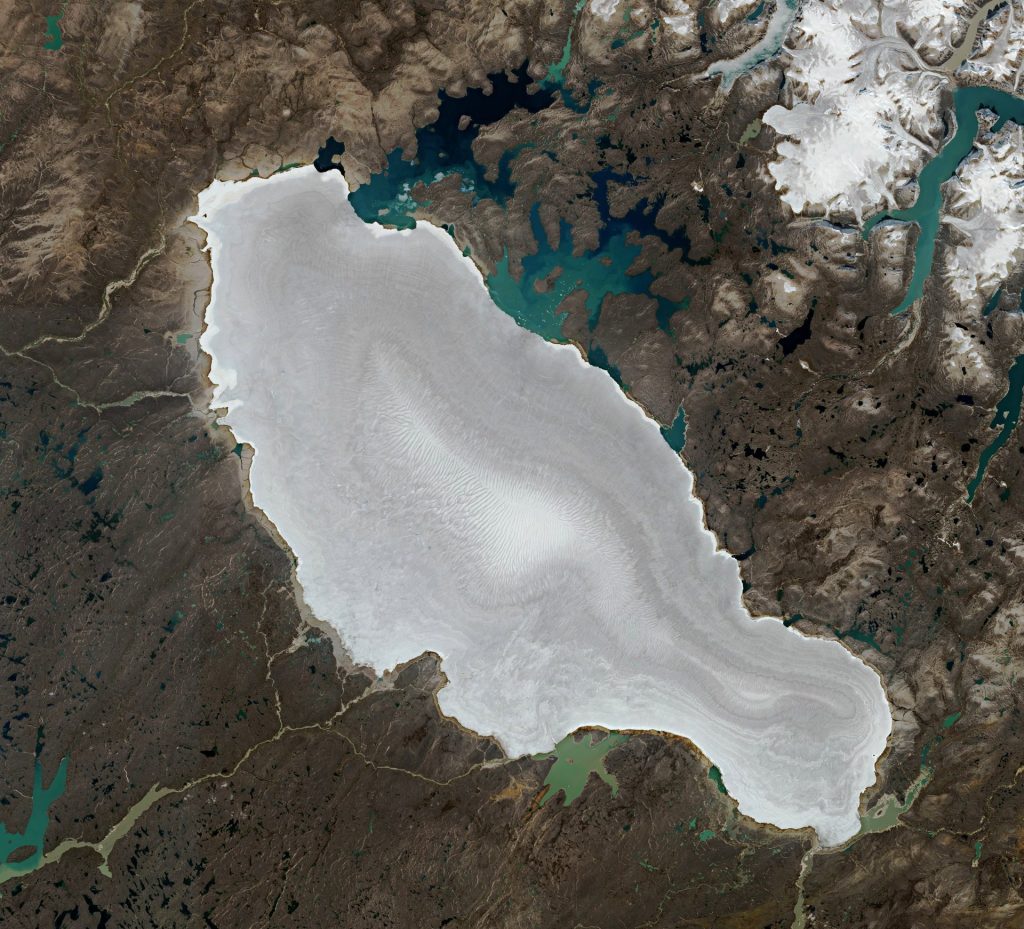
The finding, published in the journal Science, comes from a small ice cap in the Canadian Arctic that holds the last surviving piece of one of the greatest ice sheets Earth has ever known. Researchers say the ice cap began growing again around 2,000 years ago, marking the first step toward a new glacial period. It kept growing until about 1960 — then warmer summers reversed the process, and it has been shrinking ever since.
“It was just getting started, everything was normal, the next glaciation was about to happen — and yet it stopped,” said Nicolás Young, a geochemist at Columbia University’s Lamont-Doherty Earth Observatory and the study’s first author. “It’s a very powerful example of how we have jolted the system.”
The result does not mean global warming is good news. The scientists are clear about that. But it does show, in unusually direct evidence, how far human activity has already pushed Earth’s climate away from its natural path — and it arrives as world leaders gather in Antalya, Turkey, for the COP31 climate summit, which opens today.
What the scientists found
The study focused on the Laurentide Ice Sheet, the largest ice sheet of the Pleistocene, the geological period that included the last great ice ages. From about 95,000 to 20,000 years ago, the Laurentide covered much of Canada and the northern United States. At its largest, it stretched from above the Arctic Circle all the way down to Illinois, with ice more than 3.2 kilometres (two miles) thick in places. It held enough frozen water to equal around 80 metres of global sea level.
Most people assume the Laurentide disappeared completely when the last ice age ended. It did not. A piece of it survives today as the Barnes Ice Cap, a mass of ice roughly the size of Delaware sitting on central Baffin Island in Nunavut, Canada.
“People always say that it disappeared, but that’s not true,” Young said.
Young and his colleagues — including fellow Lamont geochemist Joerg Schaefer — wanted to answer a simple question: had the Barnes Ice Cap ever shrunk to a size even smaller than it is today, and then grown back? If it had, that regrowth could mark the beginning of the next ice age.
Their answer was yes. After shrinking through most of the warm period that followed the last ice age, the Laurentide reached its smallest extent roughly 3,000 years ago. About 1,000 years later, conditions had cooled enough for the ice to start accumulating again. That renewed growth, the researchers argue, should count as the beginning of Earth’s next glacial period.
The ice cap kept growing for nearly 2,000 years and reached its largest size of this growth phase around 1960. Then the trend flipped. Summers grew warmer, and the ice cap began losing more ice in the warm months than it could gain back in winter. It has been retreating ever since.
How scientists read ice like a history book
Finding the moment an ice sheet stops shrinking and starts rebuilding is difficult, because advancing glaciers usually erase the evidence of where they used to end. They scrape the ground clean as they move. The Barnes Ice Cap offered the researchers an unusual way around that problem: plants preserved beneath the ice.
Unlike most glaciers, the Barnes Ice Cap is frozen solid to the rock beneath it. It does not slide over the ground. So when it expanded, it buried the plants growing in its path instead of scraping them away. As the ice has retreated since 1960, those preserved plants have gradually been exposed again.
The team dated the plants using carbon-14, a naturally radioactive form of carbon that living things absorb from the air. Once a plant dies, its carbon-14 decays at a steady, predictable rate. By measuring how much is left, scientists can work out when the plant died — in this case, when the advancing ice buried it.
“If you do this enough times, you can actually develop a timeline of that ice margin systematically advancing over plants. You’re actually tracking the expansion of that ice margin,” Young said.
The researchers also studied rocks exposed by the retreating ice, measuring a different natural clock: beryllium-10, a rare form of the element beryllium created when cosmic radiation from space strikes the Earth. Beryllium-10 builds up in rocks exposed to the sky, and stops building up when ice covers them. Together, the two clocks let the team build a detailed timeline of the ice cap shrinking and then growing again.
The work was published on 22 October 2026 in Science under the title “Late Holocene reexpansion of the Laurentide Ice Sheet”. An accompanying article in the same issue of the journal asked the question plainly: “Has the next ice age already come and gone?”
What is an ice age, anyway?
The phrase “ice age” can be confusing, because Earth is technically in one right now.
Geologists define an ice age as a long period when large ice sheets cover parts of the planet. By that definition, Earth has been in an ice age for about 2.6 million years. Within that long cold period, the climate swings between colder stretches called glacial periods — when ice sheets grow large — and warmer stretches called interglacial periods, when they shrink back.
We are living in one of those warm stretches, called the Holocene, which began about 11,700 years ago. The warmest part of this interglacial, at least in northern regions, may have come around 11,000 to 10,000 years ago, driven by changes in Earth’s orbit known as Milankovitch cycles. After that, the planet slowly began cooling again.
Earlier computer models had suggested the next glacial period was still thousands — or even tens of thousands — of years away. Young and his colleagues argue those models were looking for the wrong thing. They were waiting for enormous continental ice sheets to form. But an ice age does not begin with a continent covered in ice. It begins with small ice caps starting to grow. And that, they say, is what happened 2,000 years ago.
There is a catch, though. Even without human-caused warming, the process would have been unimaginably slow by human standards. Noticeable cooling would have taken thousands of years. Restoring the Laurentide Ice Sheet to its old continental size would have taken about 30,000 years, Young said. In the team’s reading, warming interrupted the process near its very beginning.
The 1970s warnings were partly right
The findings also revisit a famous episode in climate science. In the 1970s, some scientists warned that Earth might be heading toward a new ice age. The idea was later dismissed as a media exaggeration, and it has been used ever since by people who want to cast doubt on climate science.
According to this study, those early warnings were not entirely wrong.
“It actually was happening,” Young said. “They couldn’t quite prove it, but now we sort of have the evidence.”
What the 1970s scientists could not have known was how quickly human activity would overwhelm the natural cooling. Greenhouse gas emissions have been rising since around 1750, when the Industrial Revolution began filling the atmosphere with carbon dioxide from burning coal, oil and gas. That warming, the researchers say, grew strong enough by the 1960s to overpower a cooling trend that had been building for thousands of years.
Why this is not good news
It would be a mistake to read this study as a reason to feel relaxed about climate change. The scientists themselves warn against it, and the details explain why.
First, the ice age that was stopped would have been a very distant problem. It would have taken thousands of years to bring noticeable cooling, and tens of thousands of years to bury northern continents under ice again. The warming that stopped it is happening now, within a single human lifetime, and it is already reshaping weather, sea levels and ecosystems around the world.
Second, the Barnes Ice Cap itself is disappearing. Computer models project that it will melt completely within the next few centuries. “That will be the true very last remains of the Laurentide, disappearing for good,” Young said.
That matters for more than sentiment. The Laurentide once provided a ready starting point for new ice sheets whenever the climate cooled. Its cold, heavy mass helped create the conditions for more ice to accumulate. Once it is gone, any future ice age would have to start from scratch — if it starts at all.
“With greenhouse gas concentrations elevated, scientists cannot say when another glaciation might begin,” the researchers note. “What has been an extremely natural and predictable phenomenon is now gone,” Young said.
In other words, humanity has not just warmed the planet. It has switched off a cycle that had run, predictably, for millions of years.
Why it matters for Pakistan and the world
The finding lands at a moment when climate change is already a daily reality, not a distant forecast. The COP31 climate summit opens today in Antalya, Turkey, where governments will argue over how fast to cut the emissions that are driving the warming.
For Pakistan, the stakes are direct. The country’s northern mountains hold some of the largest glaciers outside the polar regions, and those glaciers feed the rivers that millions of people depend on for drinking water, farming and power. The same warming that reversed the Barnes Ice Cap is melting glaciers in the Hindu Kush, Karakoram and Himalaya ranges — only far faster, because mountain glaciers respond to warming within years and decades, not centuries.
The Barnes Ice Cap story is also a reminder of how scientists measure climate change. They do not rely on a single thermometer or a single computer model. They read the evidence written into ice, rocks and buried plants, and they cross-check one natural clock against another. When two very different methods — carbon dating and beryllium dating — tell the same story, the conclusion becomes much harder to dismiss.
That is what makes this study striking. It is not a prediction about the future. It is a measurement of the past. And the past, the researchers say, shows that the next ice age had already begun — until we stopped it.
Frequently asked questions
Was Earth really about to enter a new ice age?
According to the researchers, yes — in the sense that the first step had already happened. The Barnes Ice Cap, the last piece of the Laurentide Ice Sheet, began growing again about 2,000 years ago after shrinking to its smallest size. The team argues that this renewed growth counts as the start of the next glacial period. But it would have taken thousands of years for the cooling to become noticeable, and about 30,000 years for a continental-scale ice sheet to rebuild.
Does this mean global warming is a good thing?
No. The study’s authors are clear that the warming which stopped the ice age is a problem, not a benefit. The ice age would have developed over tens of thousands of years. Human-caused warming is happening within decades, and it is already causing heatwaves, floods, droughts and sea-level rise. The study also projects that the Barnes Ice Cap itself will melt away entirely within a few centuries.
How do scientists know the ice cap grew 2,000 years ago?
They used two natural clocks. Plants buried by the advancing ice were dated with carbon-14, which decays at a known rate after a plant dies. Rocks exposed by the retreating ice were dated with beryllium-10, which builds up when rocks are exposed to cosmic radiation and stops building up under ice. Both methods pointed to the same timeline.
What is the Barnes Ice Cap?
It is the last surviving piece of the Laurentide Ice Sheet, which once covered much of Canada and the northern United States. It sits on central Baffin Island in Nunavut, Canada, and is roughly the size of Delaware. Unlike most glaciers, it is frozen to the rock beneath it, which is why it preserved the plants that made this study possible.
Will there ever be another ice age?
Scientists cannot say. With greenhouse gas levels as high as they are now, nobody knows when — or whether — the next glaciation will begin. The researchers warn that once the Barnes Ice Cap melts completely, the starting point for any future ice age will be gone.
Conclusion
A small patch of ice in the Canadian Arctic has told scientists something remarkable: Earth’s next ice age did not lie in the distant future. It had already begun, quietly, 2,000 years ago, as the last remnant of a giant ice sheet started to grow again.
It lasted less than 2,000 years. By 1960, warming driven by human activity had reversed it, and the ice has been shrinking ever since. Within a few centuries, the models say, it will be gone entirely — taking with it the seed from which the next ice age might have grown.
The study is a measure of how much humanity has already changed the planet’s natural rhythms. The ice ages ran on a schedule set by Earth’s orbit, repeating for millions of years. That schedule, the researchers say, has now been broken — and nobody can say when, or if, it will resume.
Sources
- SciTechDaily: “Scientists Discover Climate Change May Have Stopped Earth’s Next Ice Age” — https://scitechdaily.com/scientists-discover-climate-change-may-have-stopped-earths-next-ice-age/
- ScienceAlert: “We’d Be Entering an Ice Age Right Now If Climate Change Hadn’t Terminated It, Study Suggests” — https://www.sciencealert.com/wed-be-entering-an-ice-age-right-now-if-climate-change-hadnt-terminated-it-study-suggests
- Science (DOI): “Late Holocene reexpansion of the Laurentide Ice Sheet” — https://www.science.org/doi/10.1126/science.aed3379
This article is for general information and education only. It is not legal or financial advice.
