
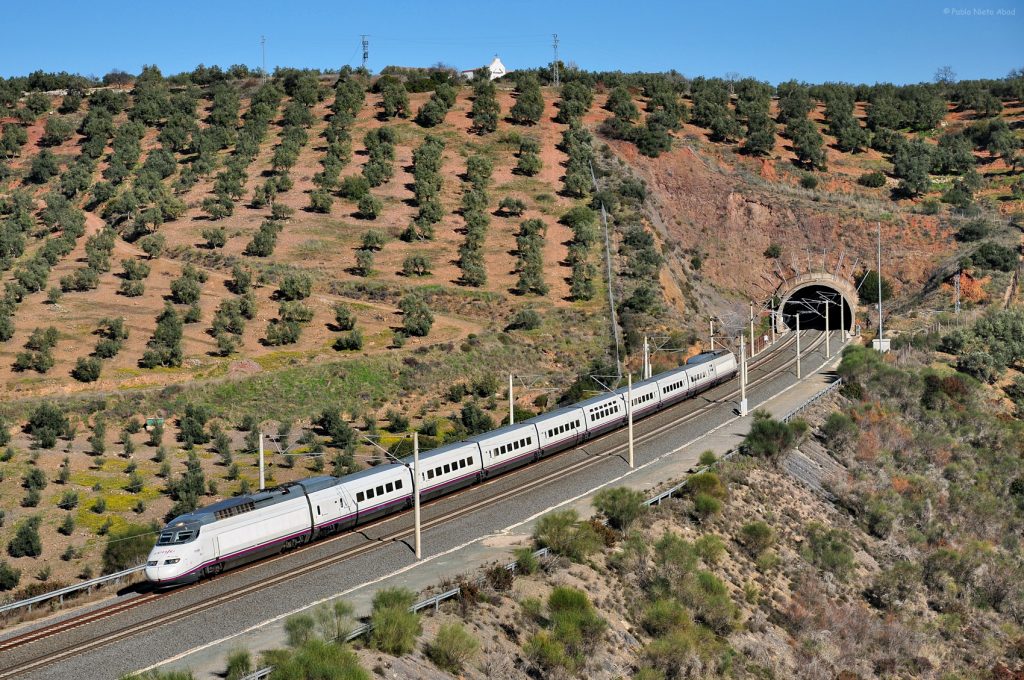
EU Prosecutors Search Spain’s Rail Bodies in Fraud Probe Into Funds for Madrid–Seville High-Speed Line
European prosecutors have searched the offices of Spain’s railway infrastructure manager, its rail safety agency and the country’s Court of Auditors as part of a fraud investigation into European Union money spent on the Madrid–Seville high-speed line. The searches on Friday, 6 November 2026, came nine days after a crash on the same line near Urda killed 69 people — the second deadly accident on the route this year.
The European Public Prosecutor’s Office, known as the EPPO, said it is investigating possible fraud affecting EU funds allocated to renovating and upgrading the safety, signalling and communications systems on the line. It is the second EPPO investigation into the Madrid–Seville line this year. No one has been charged, and the prosecutors say they will not release further details at this stage.
The move adds a criminal-fraud dimension to a disaster that has already forced the resignation of Spain’s transport minister, shaken confidence in the country’s flagship high-speed railway, and become a central issue in the run-up to a general election on 29 November.
What happened on Friday
In a statement issued from Luxembourg on Friday, the EPPO said its Madrid office was carrying out investigative measures at three institutions: Adif, the state-owned company that manages Spain’s railway infrastructure; the State Railway Safety Agency, known as AESF; and Spain’s Court of Auditors, the body that audits public spending.
The investigation concerns possible fraud involving EU funds allocated to the renovation and upgrading of safety, signalling and communications systems on the Madrid–Seville high-speed railway line — the line on which the crash near Urda, in the province of Toledo, happened on 28 October 2026.
The EPPO said the investigation was opened on its own initiative and is being carried out with the support of the Central Operational Unit of the Guardia Civil, Spain’s UCO police unit. It described its public confirmation as exceptional, made because of high public interest, and said no further details would be made public at this stage.
Adif confirmed that EPPO staff had visited its headquarters and said it had supplied all the information requested, according to Reuters. Neither the safety agency nor the Court of Auditors has publicly commented on the searches.
What is the EPPO, and what is it looking for?
The EPPO is the European Union’s independent public prosecution office. Its job is to investigate, prosecute and bring to judgment crimes against the financial interests of the EU — in plain terms, the misuse of EU money. Spain is one of the countries that takes part in the EPPO system.
The prosecutors have not said which contracts or payments they are examining, or how much money may be involved. But Spanish press reports point to the scale of the spending at stake. In September 2021, Adif Alta Velocidad, the high-speed division of Adif, awarded three contracts worth more than €136 million to renew installations on the Madrid–Seville line, including signalling, telecommunications, train protection, track circuits and switches.
It has not been confirmed whether any of those contracts form part of the new investigation. What is known is that Spain’s Court of Auditors had already identified deficiencies in the way Adif and Adif Alta Velocidad managed and controlled EU funds — a finding that will now be read in a new light.
It is important to be clear about what an investigation means. The EPPO has said it is looking into “possible fraud”. That is an allegation to be tested, not a finding. No individual or company has been named as a suspect, and no charges have been brought. The prosecutors may conclude that the money was spent properly, or they may find evidence of wrongdoing and bring a case. At this stage, neither outcome can be assumed.
Two deadly crashes on the same line
The fraud investigation cannot be separated from the two disasters that have hit the Madrid–Seville line in 2026. Together, they have killed 115 people.
The most recent crash happened on Wednesday 28 October near the town of Urda, in Toledo province, about 130 kilometres south of Madrid. A Renfe AVE high-speed train, service 2080, was travelling from Madrid towards Seville with 397 passengers on board when it ran into the back of a stationary Iryo train, service 6076, carrying 147 passengers. Investigators have estimated that the Renfe train hit the stationary train at between 160 and 200 kilometres per hour.
Sixty-nine people were killed and more than 100 were injured. It is Spain’s deadliest rail accident since the Santiago de Compostela disaster in 2013, and one of the worst in Europe in modern times. Spain’s transport minister resigned and the government approved €30 million in aid for the victims’ families days after the crash.
The Urda crash was the second fatal accident on the same line this year. In January, a collision at Adamuz in Córdoba province killed 46 people. The Madrid–Seville line remains closed, with no confirmed date for reopening.
The official investigation into the Urda crash is focusing on the failure of the automatic signalling system, known as LZB, and on the instructions given by the Adif control centre in Madrid after the failure stopped trains on the affected stretch. Several trains were automatically stopped after the signalling failure, and control of the line passed to controllers in Madrid, who took over manually. Investigators need to establish why the Renfe train was allowed to proceed at high speed towards a stationary train on the same line.
That is exactly why the new fraud investigation matters. The EPPO is examining EU money spent on the safety, signalling and communications systems of the very line where the signalling failed. The two investigations — one into what caused the crash, the other into how the safety money was spent — are separate, but they ask questions that overlap. If the money allocated to renew the signalling system was not spent as intended, that would be a matter of the greatest public importance. But no link between the fraud probe and the cause of either crash has been established, and it would be wrong to assume one.
This is the second EPPO investigation into the line
The EPPO has been looking at the Madrid–Seville line since March 2026, when it opened its first investigation into possible fraud involving EU funds for the maintenance of the track near Adamuz, where the January crash happened.
The new investigation is broader in one sense: it covers the renovation and upgrading of safety, signalling and communications systems across the line, rather than track maintenance in one area. The EPPO has not said whether the two investigations are connected or are being run as separate cases.
The pattern is now familiar in Spain: a deadly accident, followed by questions about the money spent on the infrastructure involved, followed by prosecutors stepping in. After the Adamuz crash in January, the EPPO opened its first investigation. After the Urda crash in October, it has opened a second.
The minister’s resignation and the political fallout
The political damage was already severe before the prosecutors arrived. Óscar Puente announced on Tuesday 3 November that he was stepping down as Minister of Transport and Sustainable Mobility, six days after the Urda crash. He told lawmakers that a transport minister could not stay in office after two accidents of such seriousness in less than a year.
The same day, the government approved a €30 million emergency aid package for the victims and their families. Each family of a person killed receives €72,121.46 in direct aid, plus the same amount again as an advance on insurance compensation — a total of €144,242.92 per death.
Puente, 57, had been transport minister since November 2023. His deputy, Carlos Cuerpo, is provisionally running the Transport Ministry. Puente also said he would not stand as a candidate in the general election on 29 November, which comes less than four weeks after the EPPO searches.
The election was already shaping up to be fought over the government’s record. The two rail disasters, the resignation, and now a European fraud investigation into the same line give the opposition powerful material. Prime Minister Pedro Sánchez’s government will face questions about why warnings were not acted on after the first crash in January — and about how EU money for railway safety was managed.
A separate investigation: The Koldo case raids
The EPPO searches were not the only law-enforcement action touching Spain’s transport sector this week — but the other one is a separate investigation, and the two should not be confused.
On Thursday 5 November, officers from the Guardia Civil’s UCO unit searched the Valencia home of former transport minister José Luis Ábalos and detained six people in Madrid, Córdoba, Valencia and Seville. Those detained included Ábalos’s partner, Andrea de la Torre, and businessman Cristian Corvillo. All six were released later the same day after giving statements.
The operation was ordered by National Court judge Ismael Moreno under a newly opened, sealed branch of the long-running “Koldo case”, which examines alleged irregularities in the award of public works contracts during the period when Ábalos led the Transport Ministry. Investigators also requested documentation from Adif and the construction company Grupo Azvi.
The Koldo case and the EPPO fraud investigation are different cases, run by different authorities, looking at different questions. What they have in common is that both put the spotlight on how contracts and public money were handled in Spain’s transport sector — and both landed in the same week, three weeks before a general election.
Why this matters
For the families of the 115 people killed on the Madrid–Seville line this year, the fraud investigation will not bring anyone back. But it may help answer the question that matters most to them: was the line as safe as it should have been?
Spain’s AVE high-speed network is a source of national pride, and the Madrid–Seville line was the first in Spain, opened in 1992. Two fatal crashes on the same line in ten months have shattered its safety record — and public trust with it.
The EPPO investigation raises a specific and serious question: did the European money meant to keep the line’s safety systems modern actually deliver the upgrades it was supposed to pay for? If the answer is yes, the probe will close and the focus will return to the technical investigation into the crashes. If the answer is no, the consequences could be criminal charges, demands for the money to be repaid, and a much wider inquiry into how Spain manages EU infrastructure funds.
What happens next
Several things will now move in parallel, and each will matter.
First, the EPPO investigation will continue in private. The prosecutors have said they will not give updates, so the next public sign of progress may be a long way off — a charge, a decision to close the case, or a further round of searches.
Second, the technical investigation into the Urda crash continues. Its final findings will decide whether the cause was a technical failure, human error, a problem with procedures, or a combination of all three. That investigation is being carried out separately from the fraud probe.
Third, the Madrid–Seville line stays closed until the safety authorities are satisfied it is safe to reopen. New emergency safety measures have already been announced, including a rule that drivers must slow to 40 kilometres per hour after a signalling failure so they can check the track ahead.
Fourth, the politics will not wait. Spain votes on 29 November, and the government will spend the campaign defending its handling of the two disasters and the money spent on the railway. The opposition will argue that the government failed to act after the first crash in January.
For now, the facts are these: European prosecutors are investigating possible fraud in EU funds for the safety systems of a high-speed line where 115 people have died this year. Nothing has been proven. But the questions the investigation raises — about money, safety and accountability — will not go away.
Frequently asked questions
What did EU prosecutors do on 6 November 2026?
The European Public Prosecutor’s Office carried out investigative measures at the headquarters of Adif, Spain’s railway infrastructure manager, the State Railway Safety Agency (AESF) and Spain’s Court of Auditors, as part of an investigation into possible fraud affecting EU funds for the Madrid–Seville high-speed line.
What money is being investigated?
EU funds allocated to renovating and upgrading the safety, signalling and communications systems on the Madrid–Seville high-speed line. In September 2021, Adif Alta Velocidad awarded three contracts worth more than €136 million for work on those systems, although it has not been confirmed whether those contracts are part of the investigation.
Has anyone been charged?
No. The EPPO has said it is investigating possible fraud and will not release further details at this stage. No individual or company has been named as a suspect.
What is the EPPO?
The European Public Prosecutor’s Office is the EU’s independent public prosecution office. It investigates, prosecutes and brings to judgment crimes against the financial interests of the European Union — in other words, the misuse of EU money.
How is this connected to the train crashes?
The Madrid–Seville line is the line where two fatal crashes happened in 2026: at Adamuz in January, killing 46 people, and near Urda on 28 October, killing 69 people. The fraud investigation concerns money spent on the line’s safety systems. No link between the fraud probe and the cause of either crash has been established.
Was there an earlier investigation?
Yes. The EPPO opened a separate investigation in March 2026 into possible fraud involving EU funds for track maintenance near Adamuz, after the January crash.
What happened to Spain’s transport minister?
Óscar Puente resigned on 3 November 2026, six days after the Urda crash, saying a transport minister could not remain in office after two accidents of such seriousness in less than a year. His deputy, Carlos Cuerpo, is provisionally running the ministry.
What is the Koldo case, and is it the same investigation?
No, it is separate. On 5 November 2026, the Guardia Civil searched the home of former transport minister José Luis Ábalos and detained six people as part of a sealed branch of the Koldo case, which examines alleged irregularities in public works contracts. It is run by a Spanish National Court judge, not by the EPPO.
Conclusion
The EPPO searches on 6 November mark a turning point in the story of Spain’s deadliest railway year in decades. What began as a question about a signalling failure is now also a question about public money: whether the European funds meant to keep the Madrid–Seville line safe were spent as they should have been.
Sources
- EPPO official statement — “Spain: EPPO launches second investigation into possible fraud involving EU funds for maintenance of Madrid-Seville high-speed rail line” (6 November 2026): https://www.eppo.europa.eu/media/news/spain-eppo-launches-second-investigation-possible-fraud-involving-eu-funds-maintenance-madrid-2026-11-06_en
- Reuters via Devdiscourse — “EU prosecutor searches Spanish rail bodies in fraud probe” (6 November 2026): https://www.devdiscourse.com/article/international/4002708-eu-prosecutor-searches-spanish-rail-bodies-in-fraud-probe
- Reuters via SRN News — “EU prosecutor searches Spanish rail bodies in fraud probe” (6 November 2026): https://srnnews.com/eu-prosecutor-searches-spanish-rail-bodies-in-fraud-probe/
- Demócrata — “The European Public Prosecutor’s Office opens a new investigation into possible fraud in the funds intended for the security of the AVE Madrid-Sevilla” (6 November 2026): https://www.democrata.es/en/courts/the-european-public-prosecutor-s-office-opens-a-new-investigation-into-possible-fraud-in-the-funds-intended-for-the-security-of-the-ave-madrid-sevilla/
- Demócrata — “Koldo case: what is known about the new UCO operation and what remains to be clarified” (6 November 2026): https://www.democrata.es/en/courts/koldo-case-what-is-known-about-the-new-uco-operation-and-what-remains-to-be-clarified/
- Brussels Signal — “Spanish police raid Ábalos residence and arrest six in secret probe into rigged infrastructure contracts” (6 November 2026): https://brusselssignal.eu/2026/11/spanish-police-raid-abalos-residence-and-arrest-six-in-secret-probe-into-rigged-infrastructure-contracts/
This article is for general information and education only. It is not legal or financial advice.
