
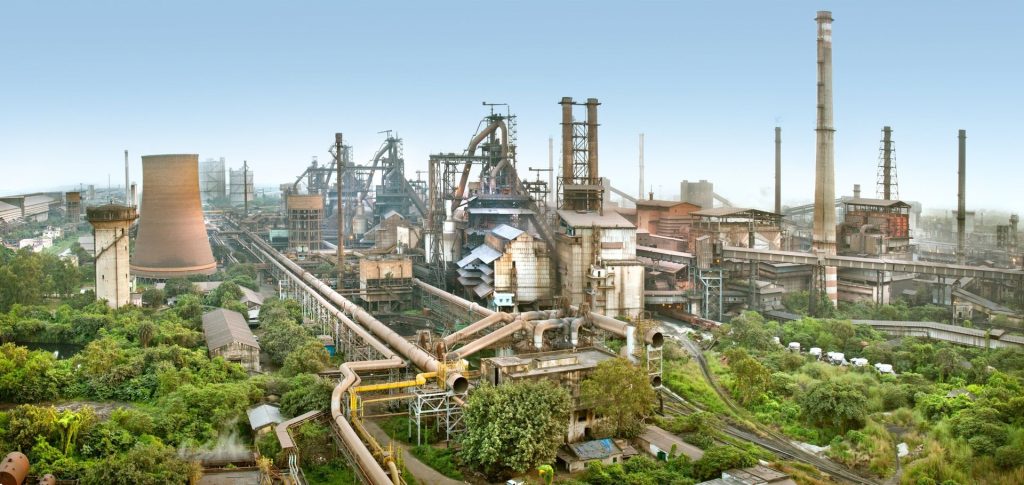
Explosion at Steel Plant in Western Turkey Kills at Least 10 Workers as Rescuers Search for Four Missing
A huge explosion and fire tore through an iron and steel plant in western Turkey on Monday, 9 November 2026, killing at least 10 workers and injuring 15 more. Rescue teams were still searching for four people believed to be trapped under the rubble hours after the blast, and officials warned the death toll could rise further.
The explosion struck the HABAS iron and steel plant in Aliaga, an industrial district in Izmir province, about 60 kilometres north of the port city of Izmir. It happened just before noon local time, while workers were casting liquid steel — one of the most dangerous moments in any steelworks.
President Recep Tayyip Erdogan later put the death toll at 16, a higher figure than the one given by the local governor. The two counts had not been reconciled by Monday evening, and with rescue work still under way, the final number of dead and missing was still not known.
What happened at the HABAS plant
According to the Izmir governor’s office, the blast happened when an overhead crane toppled into a furnace during the casting of liquid steel. The falling crane triggered a massive explosion, which set off a fire inside the plant and brought part of the building down.
The governor’s office said the explosion happened at around noon (0900 GMT). In a later update, Governor Suleyman Elban said it happened at about 11:46 a.m. local time. Either way, it struck in the middle of the working day, when the plant was full of workers.
Television pictures from the scene showed a huge column of thick smoke rising over the plant and flames engulfing a tall structure inside the complex. Emergency teams rushed to the site as workers tried to escape and rescue crews began digging through the wreckage.
Witnesses described a blast so powerful that it felt like an earthquake. “The ground shook. It was very intense,” witness Nuri Ali Ulker told Turkey’s state-run Anadolu news agency. Another witness, Deniz Ulker, said the explosion “felt like the earth’s crust was shifting beneath us. I thought it was an earthquake.”
Interior Minister Mustafa Ciftci said emergency teams fought the blaze while searching for casualties. “Our injured compatriots have been taken to hospitals and their health is being closely monitored,” he posted on social media.
The rescue effort and the rising death toll
The official casualty figures changed several times during the day, as rescue teams pulled more bodies from the rubble and injured workers died in hospital.
The governor’s office first reported three people dead, 14 injured and 10 trapped under the debris. It later raised the toll to six, after one injured worker died in hospital and two more bodies were recovered from the wreckage.
In a televised update later in the afternoon, Governor Elban announced that the death toll had risen to 10 and that 15 people were in hospital, at least two of them in critical condition. Four people were still believed to be trapped under the wreckage, he said.
Izmir Mayor Cemil Tugay said rescue teams were continuing their work to remove a collapsed platform and that those affected were factory workers. “Unfortunately, we have received preliminary information indicating a large number of deaths and injuries among people working at the factory. The exact number will become clear once the wreckage has been removed,” he said.
President Erdogan, speaking after a Cabinet meeting on Monday evening, said 16 people had died, two were seriously injured and 13 were hurt. That figure was higher than the governor’s on-site count, and officials did not immediately explain the difference. Until the search of the damaged plant is complete, the final toll will remain uncertain.
What caused the blast?
The cause is not yet known for certain. The governor’s office gave a preliminary assessment: an overhead crane broke loose and fell into an electric arc furnace while molten steel was being cast.
An electric arc furnace is a large vessel in which scrap metal is melted using powerful electric arcs. It holds liquid steel at temperatures of more than 1,500 degrees Celsius. If a heavy object such as a crane falls into the furnace, it can disturb the molten metal violently, causing an explosion and throwing burning material across the plant.
Investigators will need to establish why the crane fell. Was it a mechanical failure? Was it overloaded? Was maintenance missed? Those questions will be central to the investigation now under way.
The governor’s office said an investigation had been launched. Justice Minister Akin Gurlek said four public prosecutors had been assigned to the case. Labour and Social Security Minister Vedat Isikhan said the Social Security Institution had assigned a chief inspector to investigate the incident.
The governor also said the plant was in a maintenance period rather than normal production, which meant about 200 people were on site instead of the 300 or more who would normally be working on that line. That may have kept the toll lower than it could have been — but it also raises questions about what work was being done, and whether safety rules were being followed during the maintenance.
The plant and the town of Aliaga
The HABAS plant, formally known as Habas Demir Celik, was established in 1987 and is one of Turkey’s leading steel producers. According to the company’s website, it can produce 4.5 million tons of liquid steel a year.
Aliaga, about 60 kilometres north of Izmir on Turkey’s Aegean coast, is a major industrial hub. It has a large port and is known for shipbreaking — the dismantling of old ships for scrap metal — which critics say has caused serious environmental damage and has led to calls to remove its shipbreaking yard from the European Union’s list of approved ship recycling facilities.
The disaster came on the same day that world leaders and environmental campaigners were gathering in Antalya, on Turkey’s Mediterranean coast, for international talks on curbing climate change.
A troubling safety record
Monday’s explosion was not the first fatal accident at the HABAS plant. Two other workers had died at the site in recent weeks, according to Turkish media reports, and at least 11 workers had died there over the past decade, according to the Evrensel daily newspaper.
That history will sharpen the focus of the investigation. If the crane that fell into the furnace had shown signs of wear, or if safety checks had been skipped, the families of the dead and the injured will want to know — and so will Turkey’s labour inspectors.
Steel plants are among the most dangerous workplaces in the world. Workers handle molten metal, heavy machinery, high-voltage equipment and toxic gases, often in extreme heat. A single failure — a crane, a furnace, a cooling system — can kill many people at once. That is why steelworks are supposed to be governed by strict safety rules, regular inspections and detailed maintenance schedules.
The question now is whether those rules were followed at HABAS on Monday.
Turkey’s wider workplace safety problem
The explosion has also thrown a spotlight on workplace safety across Turkey, where fatal accidents are far more common than in most of Europe.
At least 1,736 workers died in Turkey during the first nine months of 2026, including 226 in September alone, according to the Health and Safety Labour Watch (ISIG), an independent group that tracks workplace deaths in the country.
Labour rights campaigners in Turkey have long argued that the true toll is higher, because many deaths go unreported or are recorded as something else. They also say enforcement is weak: inspections are rare, fines are low, and employers who cut corners on safety often face little punishment.
The government has tightened workplace safety laws in recent years, but campaigners say the laws are not enforced properly, especially in heavy industries such as construction, mining and steel, where the risks are greatest and the pressure to keep production running is intense.
Monday’s disaster is likely to renew those arguments. Ten — or possibly 16 — workers went to a steel plant in the morning and did not come home. For their families, the question is not just what went wrong, but whether it could have been prevented.
What happens next
Rescue teams were still working at the plant on Monday evening, clearing rubble and searching for the four missing workers. Their chances of survival fall with every hour that passes, but rescuers will continue until the site has been fully searched.
In the coming days, the focus will shift to the investigation. The four prosecutors and the labour inspector will examine the crane, the furnace and the plant’s maintenance and safety records. They will interview workers, managers and engineers. If they find that safety rules were broken, criminal charges could follow.
HABAS said in a statement that the accident happened during scheduled maintenance work on one of the electric arc furnaces, and that an investigation is under way in coordination with the relevant authorities.
The company will face questions about the crane, the maintenance work under way at the time, and the two earlier deaths at the site in recent weeks.
The plant’s production will also be affected. The explosion damaged part of the facility, and it is not yet clear how much of the plant was destroyed or when production will be able to restart.
Frequently asked questions
What happened at the HABAS steel plant in Turkey?
An explosion and fire ripped through the HABAS iron and steel plant in Aliaga, Izmir province, on Monday, 9 November 2026, just before noon local time. An overhead crane fell into an electric arc furnace during the casting of liquid steel, according to the governor’s preliminary assessment.
How many people were killed?
At least 10 workers were killed, according to Izmir Governor Suleyman Elban’s televised update. President Recep Tayyip Erdogan later put the death toll at 16. Four workers were still missing, and the figures had not been reconciled by Monday evening.
How many people were injured?
Fifteen people were taken to hospital, at least two of them in critical condition, according to the governor.
Where is the HABAS plant?
The plant is in Aliaga, an industrial district about 60 kilometres north of Izmir, on Turkey’s Aegean coast. It was established in 1987 and can produce 4.5 million tons of steel a year.
What caused the explosion?
The governor’s office said an overhead crane toppled into a furnace during the casting of liquid steel. The exact cause — why the crane fell — is still under investigation. Four public prosecutors and a labour inspector have been assigned to the case.
Has this happened at the plant before?
Two other workers died at the HABAS site in recent weeks, and at least 11 workers have died there over the past decade, according to Turkish media reports.
Conclusion
Monday’s explosion at the HABAS steel plant was a disaster that unfolded in seconds and will be felt for years. At least 10 workers were killed — possibly 16 — and 15 more were injured, in a plant that had already seen two other workers die in recent weeks.
The immediate task is to find the four missing workers and care for the injured. The longer task is to find out why a crane fell into a furnace full of molten steel, and whether it could have been prevented.
Turkey loses hundreds of workers every year to workplace accidents. Each one is a reminder that safety rules only matter if they are followed and enforced. The investigation into Aliaga will show whether they were — and, if they were not, who is responsible.
Sources
- The Associated Press, “Explosion at Steel Plant in Turkey Leaves Six Dead” (via Fire Engineering), 9 November 2026: https://www.fireengineering.com/fire-safety/explosion-at-steel-plant-in-turkey-leaves-six-dead/
- Agence France-Presse, “6 dead in blast at steel factory near Turkey’s Izmir: officials” (via The Korea Times), 9 November 2026: https://www.koreatimes.co.kr/amp/world/20261109/6-dead-in-blast-at-steel-factory-near-turkeys-izmir-officials
- Daily Sabah, “Explosion at steel plant in western Türkiye kills 6, injures 13”, 9 November 2026: https://www.dailysabah.com/turkiye/explosion-at-steel-plant-in-western-turkiye-kills-6-injures-13/news/amp
- AAJ English, “Turkey steel factory blast kills 10”, 9 November 2026: https://english.aaj.tv/news/330480002/turkey-steel-factory-blast-kills-10
- The New Indian Express, “Turkey steel factory blast kills 16: President Erdogan”, 9 November 2026: https://www.newindianexpress.com/amp/story/world/2026/Nov/09/turkey-steel-factory-blast-kills-16-president-erdogan
- Stockholm Center for Freedom / Turkish Minute, “At least 10 workers killed in explosion at steel plant in western Turkey”, 9 November 2026: https://stockholmcf.org/at-least-10-workers-killed-in-explosion-at-steel-plant-in-western-turkey/
This article is for general information and education only. It is not legal or financial advice.
