
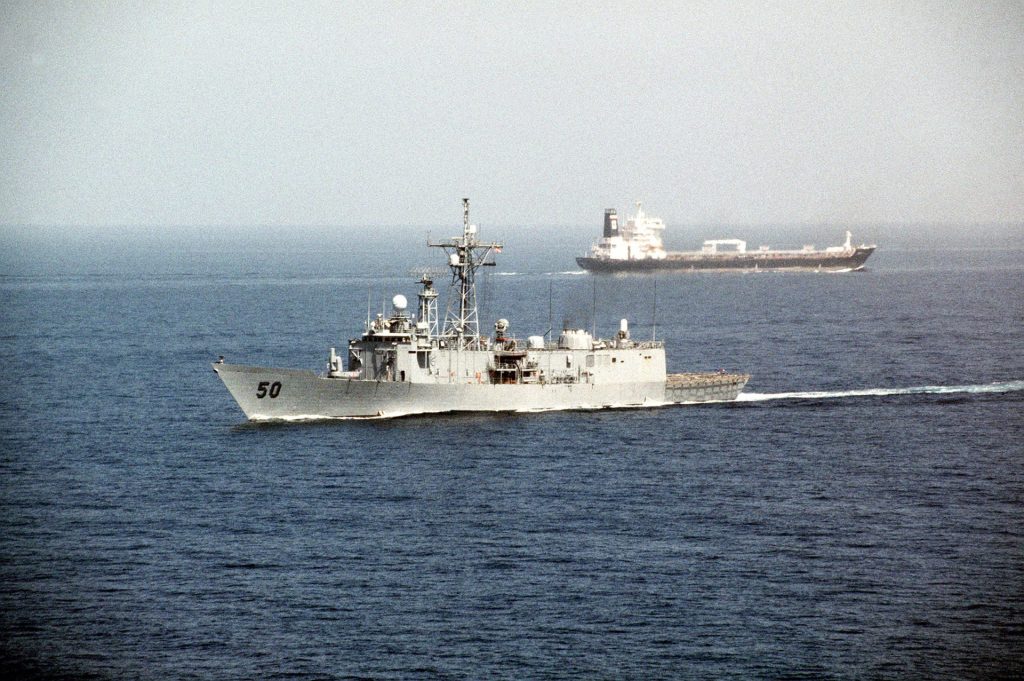
Four Oil Tankers Hit by Explosions in Strait of Hormuz as Iran Enforces Shipping Ban
Four oil tankers have been hit by explosions in the Strait of Hormuz, Iran’s military said on Thursday, in the latest and most serious escalation yet in the campaign of attacks on commercial shipping in the world’s most important oil waterway.
Iran said the vessels had ignored warnings and entered areas it considers restricted. Two were supertankers carrying more than four million barrels of oil between them, according to Iran’s Revolutionary Guards. The claims have not been independently verified, and Iran has not named any of the four ships.
The incidents come in what is already the worst month on record for attacks on shipping in the region. At least 10 ships were hit in the first 10 days of November alone, after 37 attacks in October — the highest monthly total since the conflict between the United States and Iran began in late February, according to data cited by Reuters.
Oil prices jumped on the news. Brent crude, the international benchmark, rose 3.3 per cent to $95.82 a barrel on Thursday, after US President Donald Trump said Washington no longer needed a deal with Iran.
What Iran says happened
Iran’s account describes two separate incidents, about a day apart, in the narrow strait between Iran and Oman. The first came on Wednesday night, 11 November. Iran’s Revolutionary Guards Navy said two supertankers were disabled by explosions after they ignored warnings against using what it called an “unauthorised route” through the southern part of the strait. Iranian state media reported that the two vessels “exploded after hitting naval mines” and broadcast what it said was video footage of the incidents. The Revolutionary Guards said the two supertankers were carrying a combined total of more than four million barrels of oil, which were now ablaze. The second incident followed on Thursday afternoon, 12 November. Iran’s army said two more tankers had hit mines in the eastern Strait of Hormuz after ignoring warnings and disabling their radar systems, according to Iranian state television. The Revolutionary Guards framed the incidents as the consequence of ships defying its orders, saying the tankers had acted “in violation of regulations and despite repeated warnings” about the “unauthorised and dangerous” southern route. It blamed the outcome on “the blind trust placed in the aggressive American military”.What we know — and what we do not know
It is important to be clear about what has been confirmed and what has not. What is confirmed is that Iran’s military has made these claims, reported by Reuters and other major news outlets on Thursday. What has not been independently confirmed is the Iranian version of events itself — Reuters said it “could not immediately verify the Iranian account”. Iran has not disclosed the names or the nationalities of any of the four vessels, and no shipowner has publicly confirmed that one of its ships was involved. There have been no independent reports of casualties among the crews of the four tankers. That uncertainty matters, because both sides have an interest in how these incidents are understood. For Iran, the claims show it can enforce its restrictions on the strait. For the United States and its allies, they are part of a pattern of attacks on civilian shipping condemned throughout the conflict. What is not in doubt is the wider pattern. The Washington Institute for Near East Policy counted 37 attacks on ships in October — the highest monthly figure since the conflict began in late February — and at least 10 more ships were hit in the first 10 days of November. The International Maritime Organization, the United Nations body responsible for shipping safety, has documented 130 maritime incidents across the region since the war began, most of them attacks, and at least 25 seafarers have been killed.A separate attack near the United Arab Emirates
A separate incident in the same waters on Wednesday has not been linked to the four tankers, but it adds to the picture of danger facing ships in the Gulf. The United Kingdom Maritime Trade Operations agency (UKMTO), the British body that monitors shipping security in the region, and the maritime security firm Ambrey reported that a vessel was hit by an unidentified projectile about 14 nautical miles northwest of Ras Al-Khaimah in the United Arab Emirates. Reuters named the vessel as the Liberia-flagged MT Dominica Prosperity. All 22 crew were evacuated safely, India’s shipping minister said. That incident happened inside UAE waters, rather than in the narrowest part of the strait, underlining how the danger to shipping has spread across a much wider area of the Gulf. It also followed an attack two days earlier on another tanker in the Persian Gulf. On Tuesday, 10 November, four crew members were injured when a projectile struck the Liberia-flagged very large crude carrier MT Fujairah Energy as it sailed from Al Ruwais in the UAE to Dubai. Six Indian seafarers were among the crew; one injured Indian national was taken ashore for medical checks, while the other 18 crew members were reported safe.Oil prices jump as traders react
The market reaction was immediate. Brent crude rose 3.3 per cent to $95.82 a barrel in trading on Thursday, after President Trump said Washington no longer needed a deal with Iran. The rise reflects a simple fear: if the Strait of Hormuz becomes too dangerous for tankers, the world’s oil supply tightens. The strait is the only sea route out of the Persian Gulf, and around a fifth of the world’s oil passes through it, according to the US Energy Information Administration. Every attack adds to the cost of shipping — through higher insurance premiums, longer routes and, in some cases, ships refusing to sail at all.Why the Strait of Hormuz matters so much
To understand why four damaged tankers can move the price of oil around the world, it helps to understand the geography. The Strait of Hormuz is a narrow channel of water, about 33 kilometres wide at its narrowest point, between Iran to the north and Oman and the United Arab Emirates to the south. It is the only sea passage from the Persian Gulf to the open ocean, and oil from Saudi Arabia, Iraq, Kuwait, Qatar, the UAE and Iran itself must all pass through it. There is no practical alternative. Pipelines that bypass the strait exist, but they can carry only a fraction of the oil that normally moves by sea — which is why any threat to shipping there sends a shiver through energy markets within hours. The strait has been a flashpoint before: during the Iran–Iraq war of the 1980s, the so-called “tanker war” saw hundreds of commercial ships attacked. The logic is the same today.The wider confrontation between the US and Iran
The attacks on shipping are taking place inside a much larger confrontation. The United States and Iran have been at war since late February, and the fighting at sea is only one part of it. On land and in the air, the two sides have exchanged strikes for months. At sea, each side is now enforcing its own restrictions: Iran warns ships against using what it calls unauthorised routes through the strait, while American forces enforce a naval blockade of Iranian ports. In the latest reported incident in that blockade, US Central Command said an American military aircraft fired on and disabled a St Kitts-flagged cargo vessel, the Huda, that had visited an Iranian port. The timing is striking: mediators, including Qatar, have been trying to bring Washington and Tehran towards a settlement. US Secretary of State Marco Rubio said in Paris on Tuesday that the economic pressure campaign against Iran was so effective that “there is no need for major combat operations” right now, though the United States might still respond with force if Iran crossed certain red lines. Iran’s security chief, Mohsen Rezaei, said on Tuesday that Tehran was still waiting for a US answer to its seven conditions for peace talks, and that the Strait of Hormuz will not reopen until those conditions are met. The continued attacks suggest that maritime pressure remains an important part of the confrontation, even as diplomats talk. Those elections are now over — the Democrats won control of both houses of Congress — but the attacks have continued. That suggests the maritime campaign serves a longer-term purpose: maintaining leverage over Washington, particularly over the US blockade and the reopening of the Strait of Hormuz. There is a significant danger in that approach. Continued attacks could undermine confidence in negotiations, increase pressure on Washington to respond militarily, and make shipping companies reluctant to return even if an agreement is reached.A port city hit by “enemy fire”
The same day Iran announced the tanker incidents, there was a separate and still unexplained incident on Iran’s own southern coast. Iran’s southern port city of Sirik, in Hormozgan province east of the Strait of Hormuz, was hit by what the authorities described as “enemy fire” on Thursday, according to the state news agency IRNA. The report came after several consecutive explosions were heard in Sirik County. Iran’s semi-official Tasnim news agency had earlier reported the blasts, saying their cause was initially unclear. IRNA reported that the incident involved a military strike but did not identify the attacker or provide details about the targets, the damage or possible casualties. Sirik sits along Iran’s southern coastline, close to the strait itself. The incident underlines how the confrontation is now playing out on both sides of the waterway. Iran’s Revolutionary Guards later said they had targeted a US early-warning radar in Bahrain in response to what they described as an “enemy air attack” on a telecommunications tower in Sirik.The human cost for seafarers
Behind the figures for oil prices and shipping attacks are the civilian crews who keep the world’s oil moving. At least 25 seafarers have been killed since the conflict began, according to the International Maritime Organization. ADNOC Logistics and Services, the shipping arm of the Abu Dhabi National Oil Company, has said 15 of its vessels had been attacked by missiles and drones since the conflict began, resulting in one death and 20 injuries among crew members. Merchant ships in the Gulf are now caught between two armed forces, each enforcing its own restrictions. The cost is paid by civilian crews who are not parties to the conflict. The 25 seafarers killed so far, and the four injured aboard the MT Fujairah Energy this week, are a reminder that the people on these ships are workers doing their jobs, not combatants.What happens next
On Friday, Iran’s Revolutionary Guards said a tanker carrying liquefied natural gas had struck a naval mine and suffered an explosion in the strait while using what they called an “unauthorised and dangerous route” — no details about the vessel were immediately available, Reuters reported. Several things will decide what happens in the strait from here. First, verification. Independent confirmation — the tankers’ names, flags, crews and the extent of the damage — would settle the most basic questions. Ship tracking data, satellite imagery and statements from shipowners usually emerge within a day or two. Second, the oil market. If the attacks continue, Brent crude is likely to stay high or climb further, and the extra cost will eventually reach drivers and businesses as higher fuel prices. If the incidents stop, prices could ease just as quickly. Third, the diplomacy. The attacks are happening while mediators are trying to arrange talks between Washington and Tehran. Iran appears to see the maritime campaign as leverage. The risk is that it hardens the American position instead, or triggers a military response. Fourth, the shipping industry’s response. Analysts at the London Stock Exchange Group have warned that restoring shipping through the strait would depend on mine clearance, insurance costs and shipowners’ willingness to return. None of those problems is solved quickly. Finally, the risk of miscalculation. With warships, mines, missiles and drones all operating in a narrow stretch of water, the chance of an incident neither side intended — a strike on the wrong ship, or a response that goes further than planned — is real.Frequently asked questions
What happened in the Strait of Hormuz? Iran’s military said on Thursday, 12 November 2026, that four oil tankers were hit by explosions in the strait — two supertankers disabled on Wednesday night after using an “unauthorised route”, and two more tankers hitting mines on Thursday afternoon. The claims have not been independently verified. Were the four tankers named? No. Iran has not disclosed the names or nationalities of any of the four vessels. How much oil was involved? Iran’s Revolutionary Guards said the two supertankers hit on Wednesday were carrying a combined total of more than four million barrels of oil, which were ablaze after the explosions. Why did oil prices rise? Brent crude rose 3.3 per cent to $95.82 a barrel on Thursday. Traders fear continued attacks could disrupt oil shipments through the strait, which carries around a fifth of the world’s oil. How many ships have been attacked? According to data cited by Reuters, 37 ships were attacked in October 2026, the highest monthly total since the conflict began in late February. At least 10 more ships were hit in the first 10 days of November. The International Maritime Organization has documented 130 maritime incidents in the region since the war began, and at least 25 seafarers have been killed. What is the Strait of Hormuz? It is the narrow waterway between Iran and Oman that connects the Persian Gulf to the open sea. At its narrowest it is about 33 kilometres wide, and it is the only sea route for oil exported from the Gulf states. Is there a separate incident near the UAE? Yes. On Wednesday, a vessel was hit by an unidentified projectile about 14 nautical miles northwest of Ras Al-Khaimah in the UAE. Reuters named the vessel as the Liberia-flagged MT Dominica Prosperity. This has not been established as one of the four tankers Iran described.Conclusion
Four tankers hit by explosions in two days. More than four million barrels of oil ablaze, according to Iran. Oil prices jumping to nearly $96 a barrel. And a shipping lane that carries a fifth of the world’s oil growing more dangerous by the week. The Strait of Hormuz has become the sharpest edge of the confrontation between the United States and Iran — a place where the war is fought not with armies but with mines, missiles and warnings to civilian ships. The claims about the four tankers remain unverified, and the full facts may take days to emerge. But the pattern is clear: October was the worst month yet for attacks on shipping, November has started worse still, and neither side is backing down. For the seafarers who sail these waters, for the countries that depend on Gulf oil, and for anyone who pays for petrol, what happens in the strait in the coming days will matter far beyond the Gulf.Sources
- Reuters (via Sports Radio KWSN) — https://kwsn.com/2026/11/12/four-tankers-struck-by-explosions-in-strait-of-hormuz-iran-says/
- News18 — https://www.news18.com/world/explosions-rock-irans-sirik-as-tehran-claims-port-city-near-strait-of-hormuz-hit-by-enemy-fire-ws-l-10423791.html
- Crisis.Zone — https://crisis.zone/iran-says-four-tankers-were-hit-by-explosions-in-strait-of-hormuz/
- Reuters — https://www.reuters.com/world/iran-says-tanker-carrying-lng-hit-mine-suffered-explosion-hormuz-2026-11-13/

Pingback: Iran Says It Destroyed a US Radar in Bahrain. Washington Says It Shot Down the Drones — What We Know - Findivoza