
France Minimum Wage to Rise to €1,502 From 1 December After Weeks of Cost-of-Living Protests
France will raise its national minimum wage by 1.6 percent from 1 December 2026, a month earlier than planned, after weeks of strikes and street protests over the cost of living pushed the government to act. The rise takes the minimum wage — known in France as the SMIC — to about €1,502 net a month, up from €1,477.93 today.
Prime Minister Sébastien Lecornu announced the move on Monday, 9 November, after a morning of talks with trade unions and employers at Matignon, his official residence in Paris. He described it as the second-biggest increase in the minimum wage in 20 years, and insisted it was “not merely symbolic”.
The unions disagree. France’s two biggest unions called the rise far too small within hours of the announcement, and one of them has already called a new day of strikes for 17 November. The government has bought itself a month — but it has not bought peace on the streets.
Here is what was announced, what it is worth, and why the argument is far from over.
What the government announced
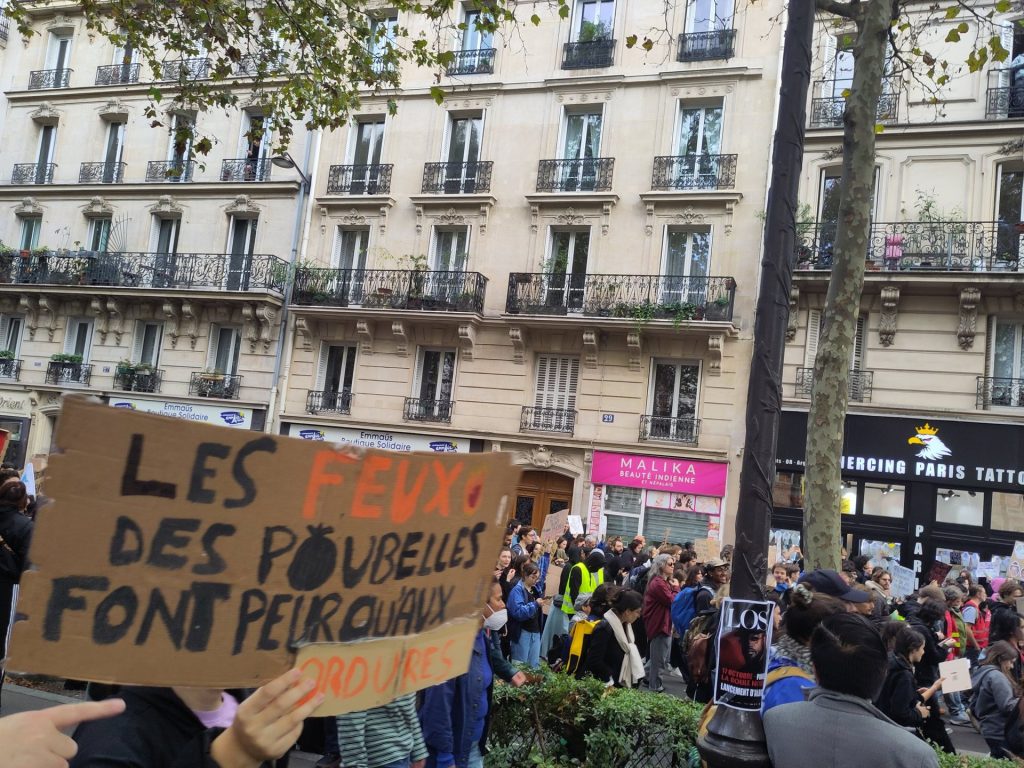
The announcement came at the end of a “social conference” on wages and purchasing power, which Lecornu opened on Monday morning with union leaders and employer organisations. The meeting was called in response to a wave of protests and strikes that began in schools in mid-September and has since spread across the country.
Labour Minister Jean-Pierre Farandou set out the figures at a press conference after the meeting. “Regarding the SMIC [minimum wage], we have decided two things: to bring forward the increase to 1 December as opposed to 1 January, and to raise this increase to 1.6 per cent,” he said.
That sentence contains two separate decisions, and both matter:
- The date moves forward. The minimum wage would normally rise on 1 January, when it is adjusted each year to keep pace with inflation. The government is bringing that rise forward by a month, to 1 December.
- The size grows. The increase will be 1.6 percent, rather than the roughly 1 percent that the automatic inflation adjustment alone would have produced.
The extra 0.6 percent is a discretionary top-up from the government — what the French call a “coup de pouce”, a helping hand. It is the first time a French government has added such a top-up to the minimum wage since 2012.
Lecornu defended the scale of the move. “This increase represents ‘the second-largest rise in 20 years; it should not be underestimated’,” he told reporters. He also said the increase had been “carefully planned to ensure it does not lead to job losses” — a message aimed at employers, who often warn that higher minimum wages can cost jobs.
What the rise is worth in real money
For a worker on the minimum wage, the rise is worth about €24 a month. The net monthly minimum wage — the amount a worker actually takes home after deductions — rises from €1,477.93 (about $1,656) to about €1,502 (about $1,683). The gross monthly figure, before deductions, is €1,867.02.
€24 a month is roughly €288 a year. That is real money for a household struggling to pay for food, rent and energy. But it is also small next to the price rises that have driven people onto the streets: food, fuel and rents have all climbed sharply, and a €24 rise does not restore the purchasing power many families feel they have lost.
It is worth putting the rise in context. The minimum wage has already gone up twice in 2026: by 1.18 percent on 1 January, and by 2.41 percent on 1 June, when inflation crossed the threshold that triggers an automatic mid-year rise. The last rise, in June, was worth €35 a month.
So this is the third rise of the year. Even so, the unions say it does not go far enough — and they have numbers of their own.
Why the unions say it is not enough
The reaction from the unions was fast, and it was blunt.
The CFDT, France’s largest union, has called for a €100-a-month rise in the minimum wage. Its leader, Marylise Léon, described the government’s €24 offer as “insufficient”. The left-wing CGT union has gone further, demanding a 10 percent rise — about €150 a month. Its leader, Sophie Binet, called the increase “crumbs”.
The gap between what the government offered and what the unions demanded explains why the announcement changed so little on the streets. The CGT has called a new day of strikes and demonstrations for 17 November, eight days after the announcement, to keep the pressure on.
The unions also want more than a higher minimum wage. They are demanding across-the-board pay rises for all workers, not just those on the minimum, and they want wages linked to prices so that pay keeps up with inflation automatically. Those demands were on the table at Monday’s meeting, and they have not been met.
How France got here: from school protests to a national movement
The minimum wage announcement did not come out of nowhere. It is the government’s first concrete answer to a protest movement that has been building for almost two months — and that began in an unlikely place: French high schools.
In late September, high-school students began protesting about conditions in their schools, which they say are underfunded and overcrowded. The student protests quickly widened. Within weeks, the movement had grown into a broader protest about the cost of living, public services and wages, drawing in trade unions, teachers, railway workers and the Yellow Vests.
The scale of the mobilisation has grown with each week:
- 17 October: Large demonstrations took place in Paris and other major cities, with clashes in some places as crowds dispersed.
- 5 November: A nationwide strike brought hundreds of thousands of people onto the streets. The Interior Ministry counted about 575,000 demonstrators across France; the CGT put the figure at about 1.6 million. It was the largest day of action of the autumn.
- 7 November: A fourth consecutive weekend of demonstrations drew about 146,000 people by the Interior Ministry’s count, and about 250,000 according to the unions. In Paris alone, the ministry counted 46,000 marchers. Clashes broke out in Paris and Marseille as the marches dispersed.
Lecornu himself only became prime minister recently, and his government is weak. The National Assembly rejected the revenue section of the 2027 budget bill just days before the wage announcement. That is the background to Monday’s meeting: a government with little room to spend, facing a movement with little patience left.
For readers who want the fuller story of how the protests built up, Findivoza has followed the movement from the start — including the nationwide strike on 5 November, when hundreds of thousands marched across France demanding higher pay and better public services, and the return of the Yellow Vests to Paris as the cost-of-living protests spread.
What else the government promised
The minimum wage was the headline, but it was not the only announcement to come out of Monday’s meeting.
Lecornu also announced decrees that will compel industry sectors to open negotiations on pay rises. In France, wages are often set sector by sector — for example, in retail, construction or hospitality — through agreements between unions and employers in each industry. Many of those sector agreements have fallen behind, leaving workers in some industries earning barely more than the minimum wage even after years of service.
The decrees are designed to force those sectors to the negotiating table. If they work, the effect could reach well beyond the minimum wage itself, lifting pay for workers who earn slightly above it. But decrees take time to produce results, and the unions will judge the government on what actually lands in pay packets, not on what is promised.
The election in the background
There is another clock ticking behind this story: the presidential election, now about five months away.
President Emmanuel Macron’s term ends in May 2027, and the campaign is already under way. Far-right leader Marine Le Pen is the frontrunner in the polls, and the government is worried that months of street protests and strikes will help her — and hurt the parties of the centre that have governed France for the past decade.
The far left is also on the move. Jean-Luc Mélenchon, the leader of the France Unbowed party, unveiled his programme on Saturday, 7 November, to some 17,000 supporters. He has been accused by his critics of encouraging the unrest, and he has pledged to boost the economy through consumer spending.
That is the political calculation behind the minimum wage rise. Lecornu needs to show voters that the government hears their anger about the cost of living, and that it can deliver something concrete, before the campaign proper begins. A €24 rise is a start. Whether voters see it as a genuine answer or as a token gesture will shape the months ahead.
What is the SMIC, and how does it work?
For readers outside France, the SMIC can seem confusing. Here is a simple explanation.
SMIC stands for “salaire minimum interprofessionnel de croissance” — the statutory national minimum wage. It is the lowest hourly rate an employer in France is legally allowed to pay an adult worker, and it applies across the whole country and in almost every industry.
The SMIC is unusual because it rises automatically. By law, it is adjusted every 1 January under a formula based on two things: the rate of inflation, and the purchasing power of the hourly wage of ordinary workers. If prices rise, the SMIC rises to match. It can also rise during the year if inflation crosses a 2 percent threshold, as it did in June 2026.
On top of that automatic rise, the government of the day can add a discretionary increase — the “coup de pouce”. Governments have been reluctant to use it, because employers warn that it costs jobs. The last time one was granted was in 2012, fourteen years ago.
That is why Monday’s announcement matters beyond the money involved. By adding 0.6 percent on top of the automatic adjustment, Lecornu has broken a fourteen-year taboo. The unions will now argue that if the government can do it once, it can do it again — and do it bigger.
What happens next
Four dates matter in the coming weeks:
- 1 December 2026: The new minimum wage takes effect. Workers on the SMIC will see about €24 extra in their monthly pay.
- 17 November 2026: The CGT’s day of strikes and demonstrations. The turnout will be the first real test of whether the government’s offer has calmed the movement — or hardened it.
- The sector pay talks: The decrees compelling industry sectors to negotiate will start to bite in the weeks ahead. Watch for the first agreements, and for the sectors that refuse to move.
- The presidential campaign: With the election five months away, every protest and every pay announcement will be read through the lens of the campaign. Le Pen, Mélenchon and the government will all be watching the same streets.
The bigger question is whether €24 a month is enough to end a movement that began in the schools and has now spread to almost every part of French working life. The unions have already answered that question: no. The government is betting that the rise, plus the sector pay talks, will be enough to take the heat out of the protests. The next few weeks will show who is right.
Frequently asked questions
How much is France’s minimum wage going up?
By 1.6 percent, from 1 December 2026. The net monthly minimum wage rises from €1,477.93 (about $1,656) to about €1,502 (about $1,683) — an increase of about €24 a month.
Why is the rise happening in December instead of January?
The minimum wage normally rises on 1 January to keep pace with inflation. The government brought the rise forward by a month, to 1 December, as part of its response to the cost-of-living protests.
What is the “coup de pouce”?
It is a discretionary top-up that the government can add to the automatic inflation adjustment. Of the 1.6 percent rise, 1 percent is the automatic adjustment and 0.6 percent is the top-up. It is the first such top-up since 2012.
Why do the unions say the rise is not enough?
The CFDT, France’s largest union, wants a €100-a-month rise. The CGT wants a 10 percent rise, about €150 a month. The government’s €24 falls far short of both demands, and the unions also want pay rises for all workers, not just those on the minimum wage.
When is the next protest?
The CGT has called a day of strikes and demonstrations for 17 November 2026.
How did the protests start?
They began in late September with high-school students protesting about underfunded schools. The movement then widened to cover the cost of living, wages and public services, drawing in trade unions and other groups across France.
Who is Sébastien Lecornu?
He is France’s prime minister. He announced the minimum wage rise on 9 November 2026 after talks with unions and employers at Matignon, his official residence in Paris.
Conclusion
France’s minimum wage will rise to €1,502 a month from 1 December — a month early, and by more than inflation alone would have delivered. For a government under pressure from weeks of strikes and protests, it is a real concession, and the first discretionary boost to the minimum wage in fourteen years.
But €24 a month is a small sum next to the anger on the streets, and the unions have already said so. The CFDT calls it insufficient. The CGT calls it crumbs. And on 17 November, the CGT will test whether the streets agree, with a new day of strikes.
Lecornu has shown that his government can move. The question now is whether it can move far enough — and fast enough — to calm a country where the cost of living has become the defining political issue, five months before a presidential election that could change everything.
Sources
- Al Jazeera, “France accelerates minimum wage hike in bid to quell protest”, 9 November 2026: https://www.aljazeera.com/amp/news/2026/11/9/france-accelerates-minimum-wage-hike-in-bid-to-quell-protest
- Reuters (via ThePrint), “French PM brings forward hike in minimum wage to calm protesters”, 9 November 2026: https://theprint.in/world/french-pm-brings-forward-hike-in-minimum-wage-to-calm-protesters/3094421/
- Le Temps, “Minimum wage rise, pay negotiations… Under social pressure, the French government makes announcements to a mixed reception”, 9 November 2026: https://www.letemps.ch/en/world/france/minimum-wage-rise-pay-negotiations-under-social-pressure-the-french-government-makes-announcements-to-a-mixed-reception
This article is for general information and education only. It is not legal or financial advice.
