
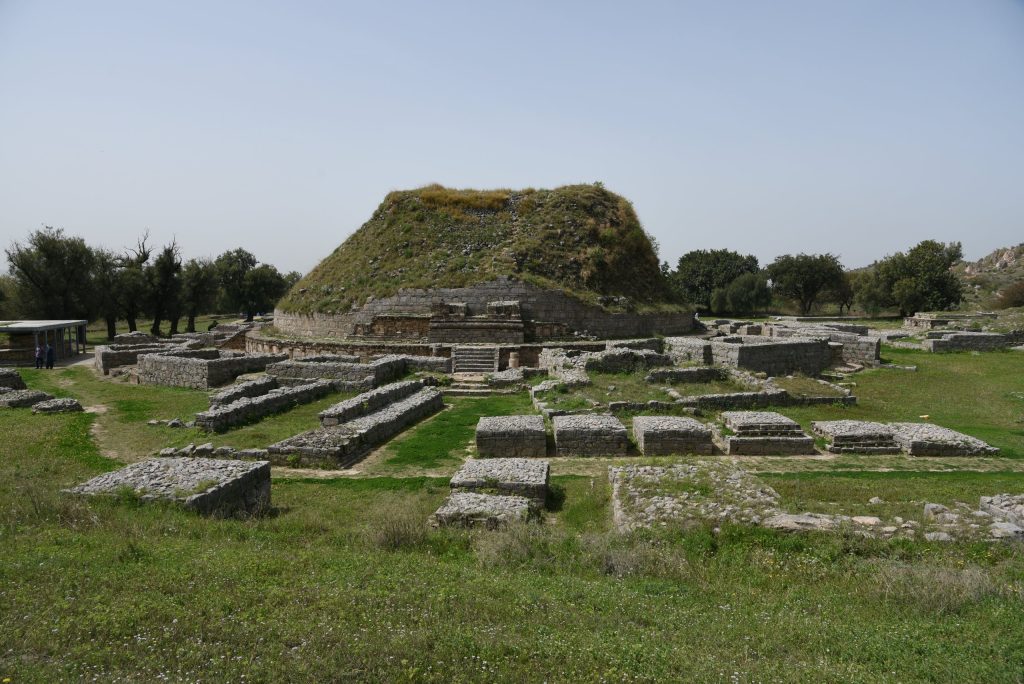
Gandhara Strategic Dialogue Opens in Islamabad: Pakistan Puts Its 2,000-Year-Old Buddhist Heritage at the Centre of Tourism and Diplomacy
Pakistan is opening a four-day international gathering in Islamabad today to talk about one of the oldest and most remarkable chapters of its history: Gandhara, the ancient Buddhist civilisation whose monasteries, stupas and sculptures still stand in the valleys of Punjab and Khyber Pakhtunkhwa.
The Gandhara Strategic Dialogue 2026, held under the theme “Towards a Shared Future”, begins on Tuesday, 17 November, and brings together Buddhist religious leaders, scholars and international delegates to discuss how Pakistan’s Gandhara heritage can be preserved, promoted and recognised around the world. The meeting is also about something very practical: turning that heritage into religious tourism, cultural cooperation and new friendships with Buddhist-majority countries across Asia.
It is the latest step in a push that has been building all year. In September, federal and provincial officials met in Islamabad to plan an international Gandhara conference, and now that plan has become a real event, with delegates from several countries expected in the capital.
What is the Gandhara Strategic Dialogue?
The dialogue is a four-day event, running from 17 to 20 November in Islamabad. According to the Associated Press of Pakistan, it will bring together Buddhist religious leaders, international delegates, experts and other stakeholders from various countries to talk about the preservation, promotion and global recognition of Pakistan’s Gandhara heritage.
The programme focuses on three big questions: how to look after the ancient sites, how to welcome Buddhist pilgrims and travellers to them, and how to use shared heritage to build closer cultural ties between Pakistan and the Buddhist world.
Federal Minister for National Heritage and Culture Aurangzeb Khan Khichi will deliver the special address at the inaugural ceremony, and Deputy Prime Minister and Foreign Minister Mohammad Ishaq Dar will give the keynote address on Wednesday, 18 November. The presence of the foreign minister as keynote speaker is a signal in itself: Pakistan sees Gandhara not just as archaeology, but as diplomacy.
The event has been organised on the directions of the prime minister, and preparations have been coordinated by the prime minister’s Gandhara Task Force, led by coordinator Imran Shokat, working with the Ministry of National Heritage and Culture, the Pakistan Tourism Development Corporation (PTDC) and the provincial archaeology and tourism departments.
What is Gandhara, and why does it matter?
Gandhara is the ancient name of a region in what is now north-western Pakistan, centred on the Vale of Peshawar and reaching into the valleys of the Swat and lower Kabul rivers. Its chief cities were Taxila, known in Sanskrit as Takshashila, and Peshawar, ancient Purushapura.
Under the Mauryan emperor Ashoka in the 3rd century BCE, Gandhara became a stronghold of Buddhism. Under the Kushans, in the early centuries CE, it flowered into a land of monasteries, stupas and workshops. Its sculptors produced some of the earliest images of the Buddha in human form, blending Indian Buddhist subjects with Greek, Roman and Persian artistic styles. That blend — often called Greco-Buddhist art — is what most people mean when they talk about “Gandhara art” today, and examples of it are treasured in museums from Peshawar, Lahore and Taxila to London and Tokyo.
Gandhara was also a crossroads. Taxila sat where trade routes from the subcontinent, western Asia, Kashmir and Central Asia met, and for roughly a thousand years the valley hosted a succession of cities and a dense ring of Buddhist monasteries. Pilgrims, traders, scholars and monks passed through it, carrying ideas as well as goods. In Buddhist tradition, the Swat valley was known as Uddiyana, a sacred land in its own right.
That is why a dialogue about Gandhara is about more than old stones. It is about a heritage that belongs to the shared history of Pakistan, Central Asia, China, South-East Asia and beyond — and about the hundreds of millions of Buddhists around the world for whom these sites are sacred.
The sites at the heart of the story
Three places sit at the centre of Pakistan’s Gandhara story, and all three are likely to feature in the dialogue’s discussions.
Taxila: a valley of cities and monasteries
Taxila lies about 35 kilometres north-west of Rawalpindi, a short drive from Islamabad, and it is the most accessible starting point for anyone wanting to understand Gandhara. UNESCO lists Taxila not as a single monument but as a serial property of 18 archaeological sites, inscribed on the World Heritage List in 1980.
The valley holds four successive ancient cities — Saraikala, the Bhir Mound, probably founded under the Persian Achaemenids in the 6th century BCE, the grid-planned fortified city of Sirkap from the mid-2nd century BCE, and Sirsukh, built under the Kushans in the 1st century CE. Around them stand stupas and monasteries such as the Dharmarajika Stupa, Jaulian and Mohra Moradu, whose stone and stucco sculpture is among the finest expressions of Gandhara art.
The Taxila Museum, founded in 1918, holds one of the most comprehensive collections of Gandhara sculpture anywhere, alongside coins, jewellery, relic caskets and household objects from the valley’s sites. For most visitors, the museum is the best first stop, before walking the ruins themselves.
Takht-i-Bahi: the monastery on the hill
About 80 kilometres from Peshawar, near Mardan in Khyber Pakhtunkhwa, stands Takht-i-Bahi, a hilltop monastic complex founded in the early 1st century CE and used until the 7th century. Because it sits on a hill, it escaped much of the later destruction that damaged other sites, and it is now considered the most complete Buddhist monastery in Pakistan. UNESCO inscribed it, together with the neighbouring ancient city of Sahr-i-Bahlol, on the World Heritage List in 1980 — the same year as Taxila.
Visitors climb to a main stupa court, a quadrangle of monks’ cells, and the remains of assembly halls and shrines, all in stone, with views across the plain below. It is the single most evocative Gandhara site in the country.
Swat: the sacred valley
The Swat valley, known in Buddhist texts as Uddiyana, brings stupas, archaeological settlements and a monumental Buddha carved into a rock face into the same journey. Its sites include Butkara, one of the great stupas of the region, and the Swat Museum, which displays sculpture and artefacts from the valley. For pilgrims, Swat is a destination in its own right; for travellers, it pairs ancient history with some of Pakistan’s most beautiful mountain scenery.
Together, Taxila, Swat and Takht-i-Bahi form the backbone of what Pakistan calls the Gandhara Heritage Trail — a route that links the main Buddhist sites for pilgrims, researchers and cultural travellers.
Why Pakistan is pushing Buddhist tourism now
The dialogue is part of a wider strategy. Pakistan’s Ministry of National Heritage and Culture, working with provincial authorities and tourism organisations, is trying to position the country’s ancient sites as destinations for international pilgrimage and cultural travel, with a focus on visitors from Thailand, Sri Lanka, South Korea, Japan and China.
The groundwork has been laid over the past few months. In September 2026, federal and provincial representatives met to discuss plans for the international Gandhara conference and coordinated tourism initiatives, with the PTDC and the archaeology departments involved. The Gandhara Task Force has been in contact with the ambassadors of Thailand, Sri Lanka, Cambodia, Vietnam and Nepal about the conference and related arrangements. In the same month, representatives of the Korea Heritage Agency visited Taxila Museum and the ancient archaeological sites, a sign of the international interest Pakistan is trying to build on.
The logic is straightforward. Religious and heritage tourism is one of the fastest-growing parts of the global travel industry, and Pakistan already owns the sites — it does not need to build them. What it needs is to look after them, make them easier to visit, and tell the world they exist. A successful Gandhara trail could bring in pilgrims and travellers from across Asia, create work for guides, hotels, transport operators and craftspeople in the areas around the sites, and give Pakistan a story about itself that is about culture and history rather than conflict.
There is a diplomatic logic too. Pakistan has been hosting a run of international gatherings in Islamabad — including the 30th meeting of the ECO Council of Ministers this week — and events like the Gandhara Dialogue let it present itself as a guardian of a heritage that many Asian nations share. When Buddhist leaders from Thailand, Sri Lanka or Nepal walk through Taxila, the conversation is about a common past, not a contested present.
Pakistan has been using big international platforms to tell the same kind of story about culture and heritage. Its pavilion for Expo 2030 Riyadh, for example, will sit in the fair’s Culture District, and the government has described the Expo as a platform for showcasing the country’s rich legacy in culture, trade and tourism. The Gandhara Dialogue fits the same pattern: heritage as a way of opening doors.
What the dialogue hopes to achieve
The organisers have set out three aims for the four days: preservation, promotion and global recognition.
Preservation means practical work — conservation of the stonework and stucco, protection of sites from weather, encroachment and looting, and better facilities for visitors. Many Gandhara sites are outdoors and exposed, and looking after them properly takes money, expertise and long-term planning.
Promotion means making the sites known and visitable: clearer itineraries like the Gandhara Heritage Trail, better information for pilgrims and tour operators, and cooperation with Buddhist organisations and travel companies in the countries whose citizens are most likely to come.
Global recognition means something broader: getting Gandhara the same kind of international profile that other great Buddhist heritages enjoy, and making sure Pakistan’s role as its custodian is understood. That is why the dialogue brings religious leaders and scholars together, not just officials — their endorsement carries weight with the communities who would travel.
What happens next
The dialogue runs until 20 November, and its outcome will be judged by what follows it. The key questions are whether the delegates agree on concrete steps — joint conservation projects, pilgrimage routes, academic exchanges or tourism packages — and whether the government follows through with funding and facilities at the sites.
For now, the opening itself is the news: Pakistan is putting Gandhara on the international stage, in its own capital, with its foreign minister giving the keynote. For a heritage that is two thousand years old and still standing in the hills and valleys of the north-west, that is a moment worth noting.
Frequently asked questions
What is the Gandhara Strategic Dialogue 2026?
It is a four-day international event in Islamabad, from 17 to 20 November 2026, held under the theme “Towards a Shared Future”. Buddhist religious leaders, scholars and international delegates are discussing the preservation, promotion and global recognition of Pakistan’s Gandhara heritage.
What is Gandhara?
Gandhara is the ancient name of a region in what is now north-western Pakistan, centred on the Vale of Peshawar. Under Ashoka in the 3rd century BCE it became a stronghold of Buddhism, and under the Kushans it became famous for monasteries, stupas and a distinctive style of sculpture blending Indian Buddhist subjects with Greek and Roman art.
Which sites are part of Pakistan’s Gandhara heritage?
The main sites are Taxila, Takht-i-Bahi and the Swat valley. Taxila and Takht-i-Bahi were both inscribed on UNESCO’s World Heritage List in 1980. They are linked by Pakistan’s Gandhara Heritage Trail.
Who is speaking at the dialogue?
Federal Minister for National Heritage and Culture Aurangzeb Khan Khichi is delivering the special address at the inaugural ceremony, and Deputy Prime Minister and Foreign Minister Mohammad Ishaq Dar is giving the keynote address on 18 November.
Why does the dialogue matter for tourism?
Pakistan is trying to develop its Buddhist sites as destinations for pilgrims and cultural travellers from countries such as Thailand, Sri Lanka, South Korea, Japan and China. Religious and heritage tourism could bring visitors, jobs and income to the areas around the sites.
Can tourists visit Gandhara sites today?
Yes. Taxila is an easy day trip from Islamabad, Takht-i-Bahi is near Mardan, and Swat is a longer trip into the mountains. The Taxila Museum and the Peshawar Museum hold the finest collections of Gandhara sculpture, and visitors should check opening times and local conditions before travelling.
Conclusion
The Gandhara Strategic Dialogue is a small event with a large idea behind it: that Pakistan’s oldest heritage can also be one of its most useful assets. The monasteries and stupas of Taxila, Takht-i-Bahi and Swat have survived for two thousand years. If the dialogue succeeds, more of the world will know they are there — and more people will come to see them.
Sources
- UrduPoint, “Gandhara Strategic Dialogue to Begin in Islamabad on November 17”: https://www.urdupoint.com/en/pakistan/four-day-gandhara-strategic-dialogue-2026-to-2291043.html
- Press Information Department (PID), press release on arrangements for the Gandhara Conference in Pakistan in 2026: https://pid.gov.pk/site/press_detail/34109
- Sabah News, “Federal, Provinces Principally Agree to Hold Gandhara Conference in Pakistan in 2026”: https://sabahnews.net/english/news/federal-provinces-principally-agree-to-hold-gandhara-conference-in-pakistan-in-2026/
- Travel Daily News Asia, “Gandhara Buddhist tourism gains momentum in Pakistan”: https://www.traveldailynews.asia/special-interest-travel/gandhara-buddhist-tourism-pakistan-heritage-trail/
- DailyLife.pk, “Taxila: Travel Guide”: https://dailylife.pk/travel/destinations/taxila/
- DailyLife.pk, “Gandhara: Where Buddhism Met the Greek World”: https://dailylife.pk/history/gandhara/
This article is for general information and education only. It is not legal or financial advice.

Pingback: Pakistan Tourism, Sports and Family Festival 2026: Islamabad's Three-Day Celebration of Adventure, Culture and Food - Findivoza