
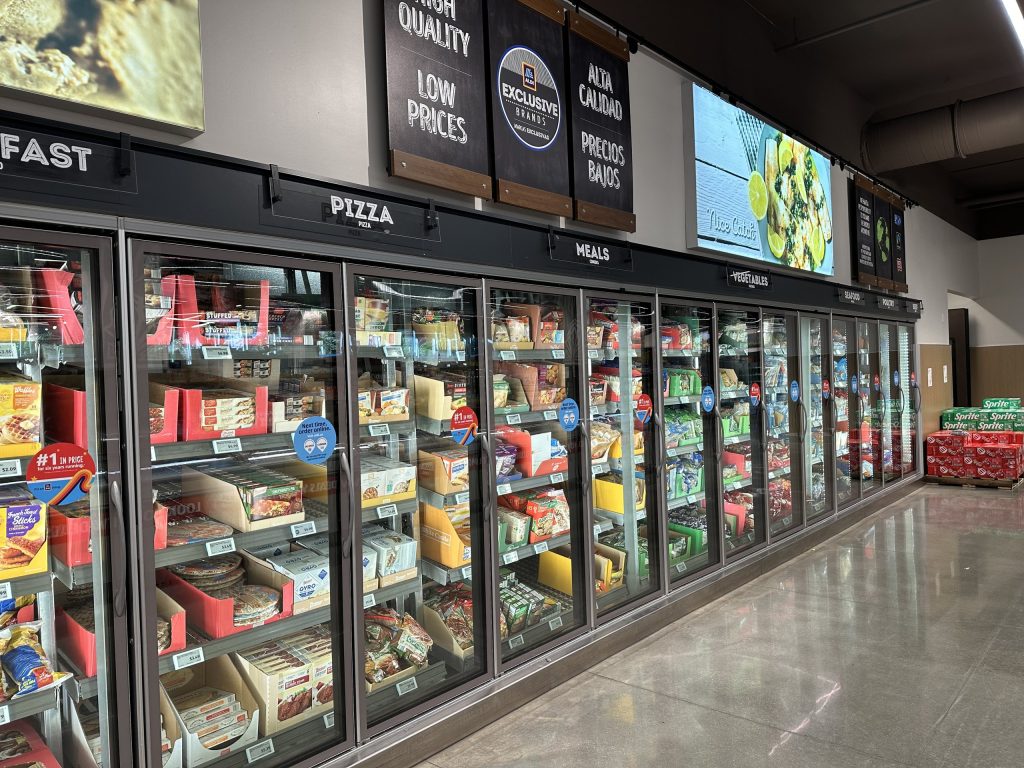
Hackers Heated Supermarket Freezers to 50°C Across 11 European Countries — and the EU Says It Was an Attack on the Food Supply
Hackers broke into the refrigeration systems of supermarkets across at least 11 European countries this week and turned the freezers up so high that food spoiled on the shelves. In some shops, temperatures inside fridges and freezers climbed to 50°C (122°F) — hot enough to ruin everything stored inside.
The attacks began overnight on Sunday 1 November into Monday 2 November, when staff arrived at work to find warm fridges, defrosting freezers and tonnes of food that had to be thrown away. By Tuesday, Germany, Romania and the United Kingdom had also reported incidents, and the European Union warned that the attacks were “not isolated” and promised a collective response.
No one has claimed responsibility, and investigators have not said who is behind the attacks. But officials and security experts say the incident shows how a simple, everyday piece of technology — a supermarket fridge — can become a target when it is connected to the internet.
What happened
The first reports came on Monday morning, 2 November. Shop workers across northern and western Europe opened their stores to find that the refrigeration had failed overnight. Fridges were warm. Freezers were defrosting. Chilled meat, dairy and frozen food had to be pulled from the shelves and thrown away.
The BBC reported that dozens of supermarkets in seven countries were hit in that first wave: Belgium, Luxembourg, Sweden, Ireland, the Netherlands, Estonia and Finland. In several shops, temperatures reportedly rose as high as 50°C (122°F).
Belgium was hit hardest. Around 40 Delhaize supermarkets in Belgium and Luxembourg were affected, along with 15 Carrefour stores in Belgium and five Spar shops run by the Colruyt Group. An Ikea store in the Belgian city of Mons was also affected, and Ikea said it could not rule out more locations.
In Sweden, a small number of ICA stores outside the chain’s central network were hit. One ICA shop in the town of Sjöbo posted on social media that its refrigerators and freezers “have been hacked overnight and they have set the temperature to 50 degrees”. The store closed for a time and later reopened. Coop, another Swedish chain, said seven of its 800 stores were affected but that the situation was contained and under control.
In Ireland, 13 SuperValu supermarkets were hit — the chain’s owner, the Musgrave Group, said a “cyber incident” had affected one specific refrigerator model. In Finland, the Kesko group reported malfunctions in some K-stores. In the Netherlands, at least 17 companies were attacked overnight, including butchers’ shops and small neighbourhood stores. In Estonia, a Selver supermarket was affected.
One Delhaize branch in Hoeilaart, in Flanders, told the Belgian news website Het Laatste Nieuws that it had lost €100,000 (about £83,500) worth of produce — before counting the further losses from closing the shop.
The attacks kept spreading
At first, the attacks looked like a problem for seven countries. Then the list grew.
On Monday, problems were also reported in Italy and Portugal, bringing the number of EU countries affected to at least nine. In Italy, about 20 supermarkets were hit. Giuseppe Spadaro, director of a group that runs Coop supermarkets in Sicily, said four of its 300 stores were affected, causing thousands of euros in damage. “We had to throw away everything. The shelves are empty,” he told Italy’s Corriere della Sera newspaper. In Portugal, the Mosqueteiros group confirmed that seven Intermarché stores had been hit.
On Tuesday, officials in Germany and Romania reported new incidents. Four supermarkets in Germany and six in Romania were affected. The United Kingdom, which is not in the EU, was also hit — hackers tried to target small meat-processing firms, though the impact was minimal, according to Richard Horne, chief executive of the UK’s National Cyber Security Centre (NCSC).
That brought the total to at least 11 countries: Belgium, Estonia, Finland, Germany, Ireland, Italy, Luxembourg, the Netherlands, Portugal, Romania and Sweden, plus the UK. The EU promised a joint response. “These are not isolated incidents, and of course, we have to be collectively resilient and prepared for such cyber incidents,” said Thomas Regnier, a spokesperson for the EU.
How the hackers did it
The attackers did not break into the supermarkets’ tills or steal customer data. They went after the machines that keep the food cold.
Sabcobel, a Belgian company that makes some of the affected refrigerators and operates Delhaize’s systems, said the attackers switched the units’ evaporators into defrost mode, causing them to warm up. An evaporator is the part of a fridge that absorbs heat and keeps the inside cold. In defrost mode, it stops cooling and heats up instead — which is normally a short, controlled cycle to melt ice. Left in that mode, the temperature climbs until the food inside is ruined.
Stephan Moelans, the chief executive of Sabcobel, told the Belga news agency on Monday that the incident was a cyber-attack and that the company had been working through the night and morning to disconnect the affected units from the network. He said Sabcobel had been working to protect customers’ fridges against the vulnerability since the French attack in early October — but the units needed physical modifications, not just software updates.
The method appears to be the same as the one used in France in October. Danfoss, a Danish maker of refrigeration controls whose systems were again among those targeted, said it had been in close contact with customers for the past three weeks. It recommended that the systems should not be directly accessible from the internet.
That is the heart of the problem. Most European supermarkets connect their fridges to the internet so maintenance can be done remotely. But if those systems are reachable from the internet and not properly secured, an attacker can reach them too.
Frank Groenewegen, a cybersecurity expert at Deloitte in The Hague, urged retailers to check whether their refrigeration controllers were connected to the internet and running the latest security updates. “And if they don’t even know, then remove them from the public internet immediately,” he told the Reuters news agency. “With disconnecting, you haven’t fixed the root cause, but you’ve at least isolated those systems so that an attacker is not able to do this any more.”
In Sweden, Coop said the fridges and freezers hit at seven of its stores had been connected to “old 4G networks”. The chain said the stores had resumed normal operations and that it had speeded up an upgrade, begun after the October attacks, to move its connected refrigeration equipment onto 5G networks and modern modems.
The French attack in October — a warning
This week’s attacks were the second wave in about three weeks. In early October, a similar attack hit hundreds of supermarkets in France. Local media reported at the time that millions of euros’ worth of food had to be thrown away.
The October attack also affected stores in several other European countries. After it, retailers and equipment makers began working on fixes — but as this week’s attacks show, the work was not finished in time.
The two waves look closely connected. But investigators have not said whether they were carried out by the same people, and nobody has claimed responsibility for either.
There is also a possible link to the United States. The BBC reported that US authorities are investigating refrigeration malfunctions at a number of American military bases in August, and are working with French officials to examine whether the incidents could be linked.
Blood banks were hit too
The attacks did not stop at supermarkets. In France, authorities reported on Wednesday that cold storage units in at least three blood banks had also been hacked.
The French Blood Establishment (EFS) said fridges holding blood products waiting to be delivered to hospitals had been targeted, and that “specifically, temperature and defrost thresholds were set to excessively high levels.”
The attack was caught quickly. EFS said its monitoring and alarm systems enabled staff to identify the problem fast, and the affected equipment was brought under control. The blood products were moved to other facilities. None was damaged and no patients were harmed, the organisation said.
The blood bank attack is a reminder that the same technology keeps food cold in shops and blood safe in hospitals — and that the same weakness can put both at risk.
Who is behind it?
So far, nobody knows — and officials are giving mixed signals.
The motive for the attacks is unknown, and no group has claimed responsibility. Romania’s top cybersecurity official played down the threat. “It seems semi-amateurish,” Dan Cimpean, the director of Romania’s National Cyber Security Directorate, told the AFP news agency. “We do not suspect, under any circumstances, that it is a state actor.” He added that “no other infrastructure was compromised.”
But the EU’s agriculture and food commissioner, Christophe Hansen, has described the repeated incidents as “a deliberate attempt to disrupt our food supply chain and undermine consumers’ confidence in it.”
Belgium’s federal prosecutors have opened an investigation. Italy’s government held talks with the heads of the intelligence services and the National Cybersecurity Agency on Tuesday. Prime Minister Giorgia Meloni’s office said the incident had a “limited” impact and that there was “no cause for alarm, although all the relevant institutional bodies remain on high alert.”
Belgium’s and Sweden’s national cybersecurity agencies said they were monitoring the incident. The UK’s National Cyber Security Centre said it was working with international partners and industry to understand what happened.
For now, the attackers’ identity, motive and methods remain under investigation.
Why it matters
At first glance, a warm fridge sounds like a small problem. It is not. This attack matters for three reasons.
First, food. Tonnes of food were spoiled across the continent, and shops lost money. Ahold Delhaize, the Dutch-Belgian owner of Delhaize, is expected to take a hit to its sales in the final quarter of the year. For shoppers, the immediate effect was empty shelves and closed stores. For a food system that depends on keeping things cold from farm to shop, a failure of refrigeration is a failure of the whole chain.
Second, trust. When people cannot be sure the food in the shop has been kept cold, they lose confidence in the system. That is why the EU commissioner called the attacks an attempt to undermine confidence in the food supply. A cyber-attack does not need to poison anyone to do damage — it only needs to make people doubt.
Third, the target. These attacks hit ordinary, everyday machines that nobody thinks of as computers: fridges, freezers and cold-storage units. They are part of a world of connected devices — known as the “internet of things” — that includes everything from home thermostats to hospital equipment. Many of these devices were built to be convenient, not secure. They are often connected to the internet with weak passwords, old software or no updates at all. The supermarket attacks show what can happen when that convenience is exploited.
The lesson is not limited to supermarkets. The same week, hackers stole around €100 million from the French bank Crédit Mutuel Arkéa in a rare bank heist — a reminder that European institutions of all kinds are being tested by cyber-attacks at the same time.
What happens next
The short-term response is already under way. Affected stores have disconnected their refrigeration systems from the internet, thrown away spoiled food, restocked their shelves and reopened. Coop in Sweden is speeding up its move to modern, secure connections. Danfoss and other equipment makers are urging customers to take their controllers off the public internet.
The longer-term response will take more time. The EU has promised a collective response, and its agencies are talking with national authorities about how to prepare for the next incident. Belgium’s prosecutors are investigating. Italy has put its institutions on high alert. Security experts say the real fix is basic but hard: find every internet-connected device, update it, protect it with strong security — or disconnect it.
The attacks also raise a question that will not go away: how much of the infrastructure we rely on every day is connected to the internet without us knowing, and how many of those connections are protected? This week, the answer was a supermarket freezer. Next time, it could be something else.
Frequently asked questions
Which countries were hit by the supermarket freezer cyber-attack?
At least 11 European countries reported incidents: Belgium, Estonia, Finland, Germany, Ireland, Italy, Luxembourg, the Netherlands, Portugal, Romania and Sweden. The UK was also hit, with hackers trying to target small meat-processing firms, though the impact there was minimal.
How did the hackers warm up the freezers?
According to Sabcobel, the Belgian refrigeration company, the attackers switched the units’ evaporators into defrost mode remotely. The fridges stopped cooling and heated up instead, with temperatures in some shops reportedly reaching 50°C (122°F).
Was any food unsafe to eat?
Shops pulled chilled and frozen food from sale and threw it away. Food that has warmed up above safe temperatures should not be eaten, which is why stores discarded the stock and, in some cases, closed until they could restock.
Who is behind the attacks?
Nobody knows yet, and no group has claimed responsibility. Romania’s cybersecurity chief said the attacks looked “semi-amateurish” and that he did not suspect a state actor. The EU has called the incidents a deliberate attempt to disrupt the food supply chain.
Were blood banks affected too?
Yes. In France, cold storage units in at least three blood banks were hacked, with temperature and defrost thresholds set to excessively high levels. The French Blood Establishment said monitoring systems caught the problem quickly, the blood products were moved safely, and none was damaged.
Has this happened before?
Yes. A similar attack hit hundreds of supermarkets in France in early October 2026, and millions of euros’ worth of food had to be thrown away. This week’s attacks used what appears to be the same method, three weeks later.
Conclusion
A hacker who can turn a freezer into an oven from thousands of kilometres away does not need to break into a bank or a government office to cause real damage. This week, attackers did it to supermarkets in at least 11 countries, spoiled tonnes of food, emptied shelves, and even reached into France’s blood banks.
The attacks were not sophisticated — one official called them “semi-amateurish” — and that is the most worrying part. If a simple attack on internet-connected fridges can disrupt the food supply of a continent, the defences around the everyday machines we depend on need to be far stronger than they are today.
The EU has promised a collective response. Retailers are disconnecting their fridges from the internet and upgrading their systems. But until every connected device is found, updated and secured, the freezers — and everything else plugged into the internet — remain open to attack.
Sources
- BBC News, “Shop freezers in seven European countries hit by cyber-attack”, 2 November 2026: https://www.bbc.co.uk/news/articles/cq1kd1nee80eo
- Al Jazeera, “EU urges action as Germany, Romania and UK report supermarket cyberattacks”, 4 November 2026: https://www.aljazeera.com/news/2026/11/4/eu-urges-action-as-germany-romania-and-uk-report-supermarket-cyberattacks
- AFP via The Telegraph Nigeria, “Cyberattack hits supermarkets across nine European countries”, 3 November 2026: https://telegraph.ng/news/2026/11/03/cyberattack-hits-supermarkets-across-nine-european-countries/
- InfoSecurity Magazine, “Cyber-Attack on Refrigeration Systems Hits Supermarkets Across Europe”, updated 5 November 2026: https://www.infosecurity-magazine.com/news/cyber-refrigeration-supermarkets/
This article is for general information and education only. It is not legal or financial advice.
