
India Invites Pakistan to SCO Civilisational Dialogue Forum in New Delhi — Islamabad Yet to Decide
Pakistan has confirmed that it has received an invitation from India to attend the first-ever Shanghai Cooperation Organisation (SCO) Civilisational Dialogue Forum in New Delhi, but Islamabad has not yet decided whether it will go. The announcement, made by Pakistan’s Foreign Office on Friday, puts a delicate diplomatic question back on the table: should a Pakistani minister travel to India for the first time in more than three years?
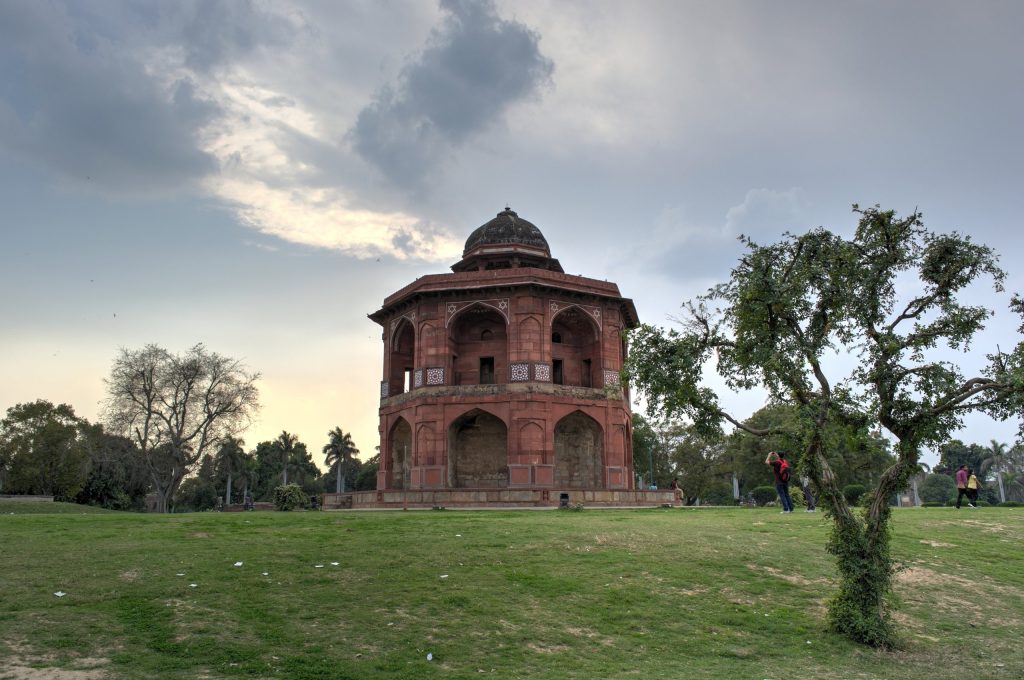
The forum is scheduled for 20 to 22 November 2026 at Purana Qila, the 16th-century fort in the heart of the Indian capital. It is a cultural gathering, not a political summit — but in a relationship as tense as the one between India and Pakistan, even a cultural invitation carries weight.
What happened
Pakistan’s Foreign Office confirmed at its weekly briefing on Friday, 6 November, that India had invited Pakistan to the SCO Civilisational Dialogue Forum. The spokesperson said the invitation had been received and that a decision on participation would be taken by the country’s leadership after consultations with the relevant institutions.
In other words, the invitation is real, but the answer is not yet. No Pakistani delegate has been named, and no travel plans have been announced.
India had already confirmed the invitation from its side more than a week earlier. On 28 October, Randhir Jaiswal, the spokesperson of India’s Ministry of External Affairs, told reporters in New Delhi that invitations had gone out to all ten SCO member states, along with the grouping’s dialogue partners and one observer country. Asked directly whether Pakistan had been invited, he said: “As per established practice, we have invited all SCO members.”
Diplomatic sources have reported that the invitation was addressed to Pakistan’s Minister for National Heritage and Culture, Aurangzeb Khan Khichi. If he attends, it would be the first visit to India by a Pakistani minister since May 2023, when then foreign minister Bilawal Bhutto Zardari travelled to Goa for a meeting of SCO foreign ministers.
What is the SCO Civilisational Dialogue Forum?
The forum is a new event inside the Shanghai Cooperation Organisation, a regional grouping of ten countries that includes China, Russia, India, Pakistan, Iran and five Central Asian states. It is the first time the SCO has held a forum devoted entirely to civilisational dialogue — the shared history, culture, art and ideas of its member countries.
The idea was proposed by Indian Prime Minister Narendra Modi at the SCO leaders’ summit in Tianjin, China, in 2025, and was adopted by the grouping. India is hosting the first edition, organised jointly by its Ministry of Culture and its Ministry of External Affairs.
Prime Minister Modi is expected to inaugurate the three-day event, which is expected to bring together representatives from more than 25 countries. The venue is Purana Qila, or the Old Fort, a 16th-century fort built by the Mughal emperor Humayun — a deliberate choice, meant to underline the forum’s theme of shared civilisational heritage.
The forum will cover themes such as civilisational links, cultural heritage, education and traditional knowledge systems. According to reports, it will feature four thematic sessions: “Monastic Paths”, covering religion and philosophical traditions; art and architecture; language, literature, writing and manuscript traditions; and cultural expressions and living traditions across the member countries.
In the weeks leading up to the forum, India has been stepping up preparations. On 29 October, its Ministry of External Affairs hosted a luncheon in New Delhi for ambassadors and high commissioners of SCO member states and partner countries to discuss the arrangements. Earlier, in September 2026, India’s SCO National Coordinator, Alok Dimri, travelled to Pakistan to discuss organisational work and upcoming conference arrangements.
Why this invitation matters
On the surface, this is a routine invitation. When a country hosts a multilateral event, it invites all the members of the grouping — that is standard practice, and India has stressed exactly that. But the context makes it anything but routine.
Relations between India and Pakistan have been frozen since the spring of 2025. On 22 April 2025, an attack in Pahalgam, in Indian-administered Kashmir, killed 26 people. India blamed Pakistan-based groups, and in May 2025 it launched Operation Sindoor, a military operation that ran from 7 to 10 May. The two countries exchanged strikes for four days before a ceasefire was agreed. Since then, there has been almost no direct contact between the two governments.
That is why a simple invitation to a cultural forum is being watched so closely. It is the first time since the 2025 confrontation that India has formally invited a Pakistani minister to an event on Indian soil. And it is the first time Pakistan has had to decide, in public, whether to send someone.
For India, the forum is also a showcase. Hosting a civilisational dialogue at a historic fort, with leaders and culture ministers from more than 25 countries, is a chance to present itself as a centre of culture and diplomacy in Asia. For the SCO as a whole, it is a test of whether the grouping can still bring all its members into one room, even when two of them barely speak to each other.
Why Pakistan has not decided yet
There are good reasons for Islamabad to hesitate.
First, there is the political cost at home. Any visit to India by a Pakistani minister, less than two years after the May 2025 confrontation, would be closely watched and could draw criticism from those who argue that Pakistan should not engage with New Delhi until outstanding issues are addressed. The government will want to be sure it can defend the decision.
Second, there is the question of what Pakistan would gain. This is a cultural forum, not a negotiation. There will be no talks on Kashmir, trade or water — the issues that matter most between the two countries. Pakistan’s leadership will weigh whether sending a minister to a cultural event is worth the political risk, or whether a lower-level delegation would be a safer choice.
Third, India itself has been careful to lower expectations. Its foreign ministry has said repeatedly that the invitation does not signal any change in its Pakistan policy. “We have a Pakistan policy. That Pakistan policy remains in place. There has been no change,” the Indian spokesperson said. In other words, New Delhi is not offering a thaw — it is following the rules of multilateral diplomacy.
Pakistan’s Foreign Office struck a similar note of caution. By saying the decision will follow consultations, it has bought itself time — and avoided committing to anything before the leadership has weighed the options.
It is worth noting that the same Foreign Office briefing covered other signs of limited, practical contact between the two countries. The spokesperson said there was no ban on issuing a Pakistani visa to Bhagwant Mann, the chief minister of Indian Punjab, and that Pakistan had issued visas to more than 4,000 Sikh pilgrims in the first six months of 2026. These are small, routine steps — but they show that the door between the two countries is not completely shut.
What is the SCO?
For readers who are new to the SCO, here is a simple explanation.
The Shanghai Cooperation Organisation is a regional group of ten countries: Belarus, India, Iran, Kazakhstan, China, Kyrgyzstan, Pakistan, Russia, Tajikistan and Uzbekistan. Together, they cover a huge part of Asia — around 40 per cent of the world’s population lives in SCO member states.
The group was founded in 2001 by China and Russia, mainly to work together on security, trade and regional cooperation. Over the years it has grown, and its members now hold regular summits, military exercises and meetings of ministers on everything from foreign affairs to culture.
Pakistan joined the SCO as a full member in 2017, along with India. Both countries attend the group’s summits and ministerial meetings, which means their officials do sit in the same rooms — even when their bilateral relationship is at a standstill.
Pakistan currently holds the SCO’s rotating presidency for 2026–27 and is due to host the grouping’s leaders’ summit in Islamabad in 2027. That makes its engagement with the organisation especially important right now: as president, Pakistan will be expected to keep the SCO’s work moving, including events hosted by other members.
What happens next
The forum opens on 20 November, which gives Pakistan just under two weeks to decide. Here is what to watch for:
- The decision itself. The most important signal will be whether Pakistan accepts, declines, or sends a lower-level delegation instead of a minister. Any of the three is possible.
- Who would go. If Pakistan accepts, the expectation is that Culture Minister Aurangzeb Khan Khichi would lead the delegation. His attendance would be the highest-level Pakistani visit to India since 2023.
- The wording. Watch the language used by both sides. If Pakistan accepts, it will almost certainly stress that this is a multilateral cultural event, not a bilateral engagement. If it declines, it will likely cite the state of relations since May 2025.
- The reaction in India. New Delhi has already said its policy is unchanged. But the presence — or absence — of a Pakistani minister at a forum inaugurated by Prime Minister Modi will be read closely by diplomats and the media in both countries.
Whatever Pakistan decides, the invitation itself is a reminder of how multilateral forums work. Even when two countries are not talking to each other directly, the shared tables of groups like the SCO keep a narrow channel open. The question now is whether Pakistan chooses to use it.
Frequently asked questions
What is the SCO Civilisational Dialogue Forum?
It is a new cultural forum under the Shanghai Cooperation Organisation, focused on the shared history, heritage, art and ideas of its member countries. The first edition will be held in New Delhi from 20 to 22 November 2026, at the historic Purana Qila fort.
Has Pakistan accepted India’s invitation?
Not yet. Pakistan’s Foreign Office confirmed on 6 November that the invitation had been received, and said a decision would be taken by the country’s leadership after consultations with relevant institutions.
Who has India invited from Pakistan?
Diplomatic sources say the invitation was extended to Pakistan’s Minister for National Heritage and Culture, Aurangzeb Khan Khichi. If he attends, it would be the first visit to India by a Pakistani minister since May 2023.
Does the invitation mean India and Pakistan are improving relations?
No — at least not according to India. Its foreign ministry has said clearly that its Pakistan policy is unchanged and that the invitation is part of standard multilateral practice, not a bilateral breakthrough.
What is the SCO?
The Shanghai Cooperation Organisation is a regional grouping of ten countries — Belarus, India, Iran, Kazakhstan, China, Kyrgyzstan, Pakistan, Russia, Tajikistan and Uzbekistan. Pakistan joined as a full member in 2017 and currently holds the group’s rotating presidency.
When will Pakistan decide?
The forum begins on 20 November 2026, so a decision is expected in the coming days. The Foreign Office has not given a date.
Conclusion
India’s invitation to Pakistan for the SCO Civilisational Dialogue Forum is a small event with a large shadow. It is, on paper, a routine cultural invitation — one of many that go out whenever a multilateral body holds a meeting. But because it comes after the Pahalgam attack and Operation Sindoor, and because it would involve the first Pakistani ministerial visit to India in more than three years, it has become a test of how far — or how little — the two neighbours are willing to engage.
Pakistan’s answer, when it comes, will tell us something important. Accepting would signal that Islamabad is willing to keep multilateral channels open, even while the bilateral relationship stays frozen. Declining would signal that, for now, even a cultural forum is a step too far. Either way, the decision will be watched far beyond New Delhi and Islamabad.
Sources
- Shafaqna Pakistan, report on the Foreign Office confirmation of the invitation (source: Dunya News): https://pakistan.shafaqna.com/EN/341060
- Pakistan Point, report on the Foreign Office briefing (Bhagwant Mann visa and Sikh pilgrims): https://www.pakistanpoint.com/en/story/2285269/no-ban-on-issuing-pakistan-visa-to-indian-punjab-chief.html
- Pak Observer, report on the Foreign Office briefing: https://pakobserver.com.pk/latest/pakistan-has-not-stopped-issuing-visas-to-indian-citizens-foreign-office-spokesperson/
- Particle News, report on Pakistan weighing attendance at the forum: https://particle.news/story/pakistan-weighs-attendance-at-sco-civilisational-forum-in-new-delhi
- IANS, “‘Invited all SCO members, dialogue partners’: MEA on invite to Pak for SCO Civilisational Dialogue”, 28 October 2026: https://ianslive.in/invited-all-sco-members-dialogue-partners-mea-on-invite-to-pak-for-sco-civilisational-dialogue–20261028172903
- TechWordNews, report on Delhi inviting Pakistan’s minister for the inaugural SCO Civilisational Dialogue: https://techwordnews.com/for-the-first-time-since-2023-delhi-invites-pakistans-minister-for-inaugural-sco-civilization-dialogue-in-november/
- CGSPD, “Cautious Contact: India’s Invitation to Pakistan for the SCO Civilisational Dialogue Forum”: https://cgspd.com/cautious-contact-indias-invitation-to-pakistan-for-the-sco-civilisational-dialogue-forum/
- Blitz India Media, report on the SCO Civilisational Dialogue Forum and the Pakistan invitation: https://blitzindiamedia.com/nation/india-sco-civilisational-dialogue-forum-pakistan-invitation/
This article is for general information and education only. It is not legal or financial advice.
