
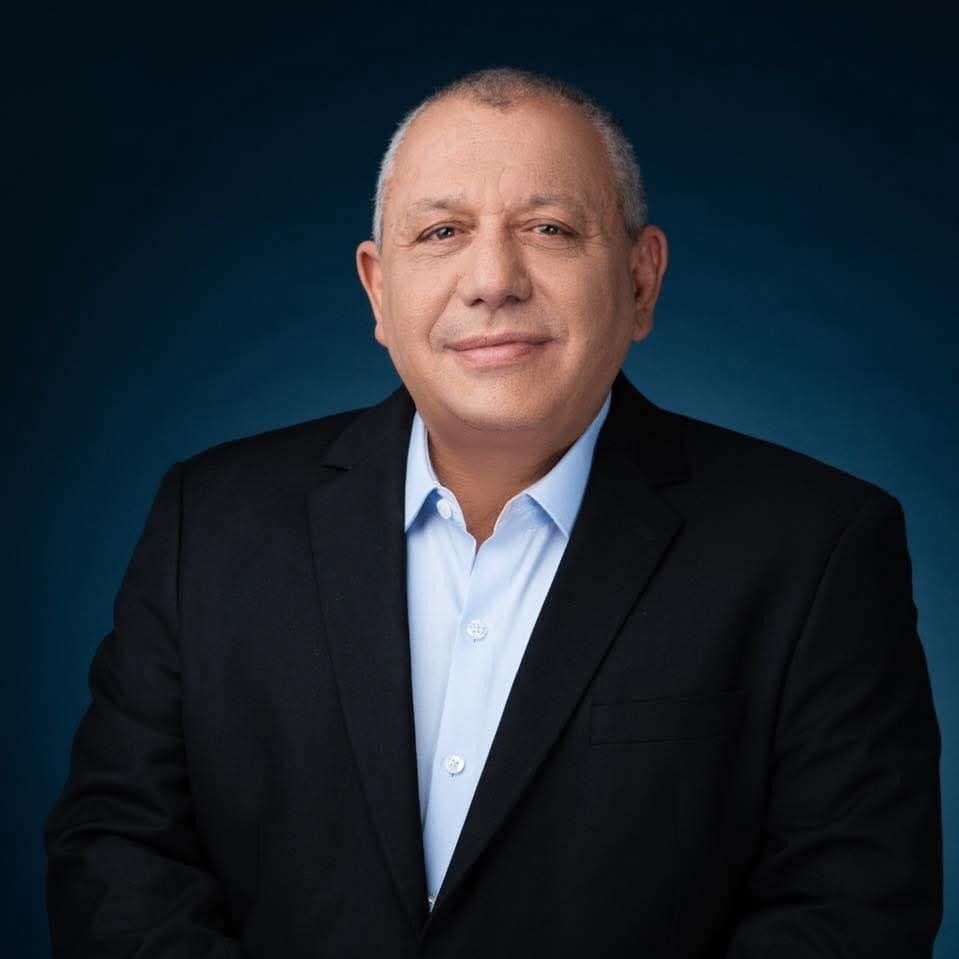
Israel’s President to Name Next Prime Minister on Sunday as Eisenkot Wins Backing of 67 Lawmakers
Israel’s President Isaac Herzog will announce on Sunday, 8 November 2026, which politician he will ask to try to form the country’s next government, after two days of talks with the parties elected to parliament ended with a clear but complicated result.
Gadi Eisenkot, a former military chief and the leader of the centrist Yashar party, won recommendations from parties representing 67 of the 120 members of the Knesset, Israel’s parliament. Prime Minister Benjamin Netanyahu, who has led Israel for most of the past 17 years, won recommendations from parties representing 46 lawmakers. Seven lawmakers, from the ultra-Orthodox party United Torah Judaism, declined to recommend either man.
The numbers look decisive. In practice, they are not. Herzog himself warned that the result “may appear clear” but that “mutual vetoes between the blocs and within the blocs themselves” make it hard to say who can actually build a government that commands a majority. Over the weekend, he will hold personal talks with some party leaders before making his decision on Sunday.
This is the most important moment in Israeli politics since the election on 27 October 2026, which ended without a clear winner. Here is what happened, what the numbers really mean, and what comes next.
What happened in the consultations
After an Israeli election, the president meets every party elected to the Knesset and asks each one who it recommends to form the government. The president is not bound by the recommendations, but by tradition the job usually goes to the person backed by the most lawmakers.
Herzog held marathon talks with the elected factions on Wednesday and Thursday, 4 and 5 November. By the end of Thursday evening, the count was settled: 67 lawmakers for Eisenkot, 46 for Netanyahu, and seven who would not back either candidate.
In televised remarks after the talks, Herzog said he would make his choice on Sunday and would spend the Israeli weekend, which runs from Friday to Saturday, in personal discussions with some party leaders. He said his job under the law is to work out who has the best chance of forming a government, and that the recommendation numbers alone do not answer that question.
The candidate Herzog picks will have 28 days to try to put together a coalition, with a possible 14-day extension. That gives the chosen politician up to 42 days. Netanyahu will stay on as prime minister of a caretaker government until a new coalition is formed. If no candidate succeeds, Israel must hold another election.
The new Knesset is due to be sworn in on Tuesday, 10 November, and is also expected to elect a new speaker.
The election result: nobody won
The 27 October election produced a divided parliament. No party or bloc won the 61 seats needed for a majority in the 120-seat Knesset.
Netanyahu’s Likud was the largest single party, winning 27 seats. But the wider religious-nationalist bloc around him won only 53 seats in total — well below the 68 seats it held at its peak in the previous parliament, and short of a majority.
Eisenkot’s bloc, made up of four Jewish-led parties that campaigned against Netanyahu staying in power, won 48 seats. Eisenkot’s own Yashar party won 21 seats, making it the second-largest party, followed by Naftali Bennett’s B’Yachad party with 12 seats.
The Arab-led parties won 19 seats between them: 11 for the Joint List and eight for Ra’am, the United Arab List. That left both main camps short of a majority and gave the Arab parties, and the ultra-Orthodox parties, unusual power over what happens next.
The result was closer than many polls had suggested. Before the election, surveys had pointed to a tight race. In the end, Netanyahu’s bloc did better than Eisenkot’s in seats, but Eisenkot did far better in the presidential consultations — because of who was willing to recommend whom.
Why Eisenkot’s 67 is not a majority
Eisenkot’s 67 recommendations come from six parties. Four are Jewish-led parties holding 48 seats: his own Yashar, Bennett and Yair Lapid’s B’Yachad, the Democrats, and Avigdor Lieberman’s Yisrael Beitenu. The other 19 come from the two Arab-led parties, the Joint List with 11 seats and Ra’am with eight.
That is where the problem starts. Both Eisenkot and Netanyahu have so far ruled out forming a government with the Arab-led parties. The Joint List said its decision to recommend Eisenkot reflected public demands to prevent Netanyahu returning to power, but it also made clear that the endorsement does not mean it has agreed to join an Eisenkot-led coalition.
Some of the Jewish-led parties that back Eisenkot have also ruled out sitting in a government that includes the Arab parties. Yisrael Beitenu, for example, recommended Eisenkot but said it would not sit in a government with the Joint List. Channel 12 reported that Lieberman, a longstanding opponent of ultra-Orthodox parties joining a government, has softened his position, which could open other combinations.
So Eisenkot has the recommendations of 67 lawmakers but only 48 seats from parties that are actually prepared to sit in his government. He needs 61. Without the Arab parties, he cannot get there unless other parties change their minds.
Netanyahu faces a different problem. His bloc holds 53 seats, including United Torah Judaism’s seven. But UTJ refused to recommend him — or anyone — in the consultations, breaking with its longstanding practice of backing the Likud leader. The party is in a dispute over legislation that would exempt ultra-Orthodox yeshiva students from military service, and it withheld its support.
That leaves Netanyahu with 46 recommendations and, even counting UTJ, only 53 seats. He is further from a majority than Eisenkot in the consultations, but his path to a coalition is in some ways simpler: his bloc is more united, and it needs only eight more seats rather than 13.
Herzog’s warning about “mutual vetoes” is a plain description of this deadlock. Each side has parties that refuse to sit with the parties the other side needs.
Who is Gadi Eisenkot?
Gadi Eisenkot, 66, is a former chief of staff of the Israel Defense Forces, the country’s most senior military officer. He led the military from 2015 to 2019 and later entered politics. He now leads Yashar, a centrist party whose name means “straight” or “upright” in Hebrew.
Eisenkot has presented himself as a unifying figure, promising to restore national unity after years of deep political division and three years of war. His party said after the consultations that his 67 recommendations were the highest received by any candidate seeking to form a government since 2015, and argued that voters had chosen change and lost confidence in Netanyahu’s government.
His supporters point to his military record and his reputation for plain speaking. His critics, including Netanyahu’s allies, question whether a political newcomer can hold together a coalition that spans the centre-left and the right, and whether he can govern without the Arab parties whose recommendations put him ahead.
Eisenkot’s final appearance in the campaign was shaped by the war. He served in the war cabinet formed after the Hamas attacks of October 2023, and his son was killed fighting in Gaza in December 2023. That personal loss is well known in Israel and is part of why many voters see him as a figure who understands the cost of the war.
The vote-tampering row
The days since the election have also been marked by a bitter row over the result itself. Netanyahu, at risk of losing power, has seized on an investigation by election officials into possible vote tampering to cast doubt on the results, accusing Arab-led parties of stealing the vote.
Critics accuse Netanyahu and his partners of trying to undermine the election result, which he denies. Israel’s Central Election Committee said on Wednesday that the integrity of the election had not been compromised. The head of the committee, a Supreme Court justice, called on Israel’s elected officials to protect public trust rather than shake it, warning that the peaceful transfer of power is one of the foundations of democracy.
Netanyahu’s allies on the far right have gone further. National Security Minister Itamar Ben-Gvir has called for the immediate arrest and interrogation of Arab party leaders.
The row matters because it raises the temperature around the government-formation process. High voter turnout, including among Israel’s Arab minority, was described by the election committee as a blessing. If the losing side casts doubt on the result, it becomes harder for the winner to govern — whoever that turns out to be.
What happens next
The timetable is now fixed by law and by Herzog’s announcement:
This weekend (6–7 November): Herzog holds personal talks with party leaders to test who can actually form a government.
Sunday, 8 November: Herzog announces which lawmaker gets the first chance to form a government.
Tuesday, 10 November: The new Knesset is sworn in and elects a speaker. The speaker controls the agenda, the votes and the committees, so this vote will be an early test of where the real power lies.
28 days, plus a possible 14-day extension: The chosen candidate tries to build a coalition of at least 61 seats. If the candidate fails, Herzog can give the mandate to someone else or the Knesset can be dissolved, leading to another election.
Eisenkot’s party has urged Herzog to give him the mandate as soon as possible. Netanyahu’s camp argues that the Likud leader, as head of the largest party and the leader of the largest bloc in seats, is the one who can form a stable government.
There is also a third possibility that is rarely discussed in public: a government that neither man leads. If both fail, Herzog could turn to another figure, or the parties could agree on a compromise candidate. Nothing in the law prevents it, but nothing in the politics of the past week suggests it either.
Why this matters beyond Israel
Israel has held a string of elections in recent years because its politics are so divided. A government that depends on parties that refuse to sit together is weak from the start, and a weak government struggles to take big decisions — on the war in Gaza, on relations with the United States and Iran, on the economy, and on the ultra-Orthodox military service question that helped cause this deadlock.
The United States, Israel’s closest ally, is watching closely. So are Israel’s neighbours and the wider region, where the war in Gaza and the conflict with Iran have redrawn alliances. A long period of caretaker government in Jerusalem would leave big questions unanswered at a moment when the region is still unsettled.
For ordinary Israelis, the most immediate question is simpler: how long will this take, and will it end in a government or another election? The consultations are over. The numbers are counted. Now Herzog must decide, and the person he picks has six weeks at most to turn 67 recommendations into 61 seats.
Frequently asked questions
Who won the Israeli election?
Nobody won outright. Likud, led by Benjamin Netanyahu, was the largest single party with 27 seats, but its bloc won only 53 of the 120 seats in the Knesset. Gadi Eisenkot’s bloc won 48 seats, and the Arab-led parties won 19. No bloc reached the 61 seats needed for a majority.
Why did Eisenkot get more recommendations than Netanyahu?
Because the two Arab-led parties, the Joint List and Ra’am, recommended Eisenkot, giving him 67 recommendations against Netanyahu’s 46. The seven lawmakers of United Torah Judaism recommended nobody.
Does that mean Eisenkot will be prime minister?
Not necessarily. Recommendations are not the same as a coalition. Eisenkot has ruled out governing with the Arab parties, and some of his supporters refuse to sit with them. President Herzog must decide who has the best chance of forming a government, and he has said the answer is not clear from the numbers alone.
How long does the chosen candidate have?
Twenty-eight days, with a possible 14-day extension — up to 42 days in total.
What happens if nobody can form a government?
Israel would hold another election. Netanyahu would remain prime minister of a caretaker government until a new coalition is formed or a new election is held.
When will we know?
President Herzog will announce his choice on Sunday, 8 November 2026.
Conclusion
The 27 October election was supposed to settle Israel’s politics. Instead, it produced a parliament in which nobody can govern alone and everybody needs somebody they have promised not to work with.
Eisenkot’s 67 recommendations are a real achievement and a clear sign that a majority of lawmakers want a change of prime minister. But recommendations are not seats, and seats are not a government. Herzog’s decision on Sunday will start the clock, not end the argument.
The next six weeks will show whether Israel’s politicians can turn a divided election result into a working government — or whether the country is heading back to the polls.
Sources
- Reuters (via TBS News), “Israel’s president pledges to pick candidate on Sunday to form government”, 5 November 2026 — https://www.tbsnews.net/world/israels-president-pledges-pick-candidate-sunday-form-government-1594446
- Reuters (via SRN News), “Netanyahu’s position weakens as rival secures broad backing to try to form government”, 5 November 2026 — https://srnnews.com/netanyahus-position-weakens-as-rival-secures-broad-backing-to-try-to-form-government/
- The Media Line, “Eisenkot Secures Majority of Endorsements as Israeli President Weighs Next Government”, 5 November 2026 — https://themedialine.org/headlines/eisenkot-secures-majority-of-endorsements-as-israeli-president-weighs-next-government/
- AAP News, “Majority of Israeli MPs back Eisenkot to form govt”, 5 November 2026 — https://aapnews.aap.com.au/news/majority-of-israeli-mps-back-eisenkot-to-form-govt
This article is for general information and education only. It is not legal or financial advice.
