
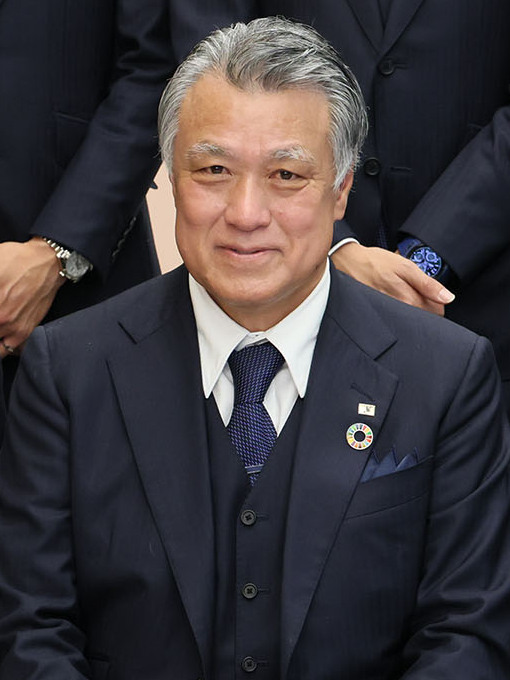
Kozo Tashima Challenges Gianni Infantino for FIFA Presidency, Vowing a ‘Samurai Spirit’ Fight
For the first time in a decade, Gianni Infantino faces a serious challenger for the presidency of FIFA, world football’s governing body. Kozo Tashima, the 68-year-old honorary president of the Japan Football Association (JFA), announced on Thursday, 5 November 2026, that he will stand against Infantino in the election in March next year.
Tashima is not a fringe candidate. He has sat on FIFA’s ruling Council since 2015, ran Japanese football for eight years, and has the unanimous backing of his own national association. In an exclusive interview with BBC Sport, he admitted the odds are against him — then explained why he is running anyway.
“I know [Infantino] has a lot of supporters,” he said. “Now I am alone and my budget is not enough but it is OK. My policy, my philosophy, I have to fight against him with my samurai spirit.”
It is the first genuine contest for the most powerful job in football since Infantino took charge in 2016. Whether Tashima wins or not, his candidacy has already forced a debate about how FIFA is run — and who it is run for.
Who is Kozo Tashima?
Kozo Tashima is one of the most respected administrators in Asian football. He played as a midfielder for Japan, served as president of the Japan Football Association from 2016 to 2024, and has been a member of the FIFA Council — the body that makes FIFA’s biggest decisions — since 2015, when Sepp Blatter was still president.
He is now the honorary president of the JFA, and the association’s board voted unanimously to support his run for the FIFA presidency. JFA president Tsuneyasu Miyamoto, who succeeded Tashima in 2024, described the decision as a chance to show the ideals that Japanese football has valued for years.
The Associated Press describes Tashima as a “respected, diplomatic and low-profile official in the often murky world of football politics.” That reputation matters, because his campaign is built on it. He says he is running to promote what he calls the “values of sincerity, soundness, fair play, and integrity” — the principles he believes Japanese football has built up over decades.
“It’s not win or lose, but we must show the rest of the world the sincere, sound, and noble approach of the Japanese soccer,” he said, according to the Japanese sports newspaper Sponichi.
“I believe it is important that the sincerity, integrity and high ethical standards that Japanese football has long valued and built up are clearly communicated to the global football community,” he added in his formal statement. “I have decided to run for FIFA presidential election in order to convey this philosophy to the world and contribute to a better future for football.”
Why is he running now?
The trigger for Tashima’s challenge was a plan unveiled by Infantino in July 2026 that caused uproar across world football. Under the proposal, known as FIFA Forward Enterprise, FIFA would have sold stakes in the commercial rights to future World Cups — including the tournament itself — to private investors.
The idea was dropped within days after a backlash from football leaders in Europe, Asia and North America, as well as from FIFA’s own staff. But the damage was done. For many in the game, the plan showed how far FIFA had drifted from its role as a guardian of the sport, and towards treating the World Cup as a commercial asset to be sold off.
“The worst thing that can happen is he [Infantino] is re-elected to the post without an election,” Tashima said on Thursday, quoted by the Japanese business newspaper Nikkei.
Infantino has also faced scrutiny over the integrity of disciplinary decisions affecting World Cup games, in cases involving Portugal star Cristiano Ronaldo, United States forward Folarin Balogun and Congo goalkeeper Lionel Mpasi.
Tashima is the second person to declare a challenge to Infantino, after former Tottenham Hotspur defender Ramon Vega announced his candidacy last month. But Vega’s campaign has not gained traction, and Tashima — with a seat on the FIFA Council, a major national association behind him and reported support in Europe — is widely seen as the first serious challenger Infantino has faced.
The road to the vote
Standing for the FIFA presidency is not simply a matter of announcing a candidacy. To appear on the ballot, Tashima must clear two hurdles.
First, he needs formal nominations from at least five of FIFA’s 211 member associations. The deadline to declare is 18 November 2026 — less than two weeks after his announcement. He told BBC Sport that he has already received “more than five” endorsements, although he declined to name the associations backing him.
Second, he must pass an eligibility check by a three-member panel appointed by FIFA. If the panel rules against a candidate, that decision can later be challenged at the Court of Arbitration for Sport.
If he clears both hurdles, the vote itself will take place at the FIFA Congress in Rabat, Morocco, on 18 March 2027. A candidate needs a majority of the votes cast by FIFA’s 211 member associations to win.
The timetable is tight, and the numbers are daunting. Infantino told BBC Sport last month that he believed he had the backing of the “vast, vast majority” of world football. Tashima knows this. His answer is that the contest itself matters, even if he is the underdog.
The term-limit question
One issue that will hang over the election is how long Infantino can legally stay in charge. He is seeking a fourth term, which would keep him in office until 2031 — 15 years in total since he first took the job in 2016.
FIFA’s own rules limit presidents to three full terms and a maximum of 12 years in office. On the face of it, a fourth term until 2031 would break that limit.
FIFA’s legal advice in 2022 was that Infantino’s first term — from 2016 to 2019, when he was completing the unfinished mandate of the disgraced former president Sepp Blatter — should not count against the 12-year limit. That interpretation is expected to face close scrutiny during the campaign, and it is one of the reasons Tashima’s challenge matters: for the first time, Infantino’s right to stand again will be tested in a contested election rather than accepted without a vote.
UEFA, Asia and the politics behind the challenge
Tashima’s candidacy did not come out of nowhere. European football body UEFA has been leading efforts to find a candidate to challenge Infantino ahead of the 18 November deadline, and The Guardian reported that Tashima acted with UEFA’s blessing.
The relationship between Infantino and UEFA has been strained for months. UEFA president Aleksander Ceferin, who once worked with Infantino, likened him in September to the emperor in the fairytale who had no clothes, adding: “Football has no need for emperors.”
Whether UEFA formally endorses Tashima remains unclear — the organisation was approached for comment and did not confirm its position. But the fact that Europe’s most powerful football body has been searching for a challenger tells its own story about how far Infantino’s standing has fallen among some of the game’s traditional powers.
Asia, meanwhile, is divided. The Asian Football Confederation (AFC) criticised Infantino in August, then switched position and gave him its support. After an AFC meeting in Tokyo two weeks ago, Tashima told the AFC’s president, Sheikh Salman bin Ibrahim Al Khalifa, that he could not support Infantino.
The politics have already claimed one casualty inside Japanese football. Last week, the JFA announced that its vice president, Takeshi Okada — who coached Japan at the World Cups in 1998 and 2010 — had quit because of the politics around Infantino shoring up his support.
What Tashima is offering
Tashima is not running on a detailed policy manifesto. He is running on a philosophy — and he knows it.
His campaign centres on the values he says Japanese football has protected: sincerity, soundness, fair play and integrity. It is a deliberately simple message, and it is aimed directly at the controversies of the Infantino years: the plan to sell World Cup rights to private investors, the questions over term limits, and the sense among critics that FIFA has become too close to money and power.
He has also been careful to frame his candidacy as a matter of principle rather than personal ambition. “It’s not about winning or losing,” he said, “but about conveying to the world the honest, sound and upright attitude that Japanese football has built.”
That modesty is part of the pitch. Infantino is a big personality who has made himself the public face of FIFA, appearing at political summits and building close relationships with world leaders. Tashima is offering the opposite: a quiet, low-profile administrator who promises to put the game first.
What happens next
The next two weeks will decide whether Tashima’s challenge becomes a real contest or a footnote.
By 18 November, he must have his five nominations formally lodged with FIFA. He says he already has more than five, but until the names are made public, the claim cannot be tested. Then comes the eligibility check, and then a four-month campaign leading up to the vote in Rabat on 18 March 2027.
Infantino remains the heavy favourite. He has the support of the Asian Football Confederation, the backing of many smaller associations that have benefited from FIFA’s development money, and the advantages of incumbency. The Guardian reported that he is expected to secure the 106 votes needed for re-election.
But contested elections can change the conversation even when the challenger loses. For the first time in a decade, Infantino will have to defend his record in public: the abandoned plan to sell World Cup rights, the term-limit question, and the direction of the organisation he leads.
Why it matters for football fans
Most football fans will never vote in a FIFA election. The 211 member associations vote, not supporters. So why does this contest matter to ordinary fans?
Because FIFA controls the World Cup — the biggest sporting event on the planet — and the money that flows from it shapes the game at every level, from grassroots pitches to the biggest clubs. Decisions made in FIFA’s boardrooms affect ticket prices, tournament formats, the calendar that squeezes players, and how much money reaches smaller nations.
A contested election forces those decisions into the open. It gives critics a platform, it forces the incumbent to answer questions, and it reminds the people who run football that their power is not automatic.
Tashima may not win. He may not even make it onto the ballot. But his decision to stand — and to do so on a platform of integrity and fair play — has already given world football something it has not had for ten years: a choice.
Frequently asked questions
Who is Kozo Tashima?
Kozo Tashima, 68, is the honorary president of the Japan Football Association. He was the association’s president from 2016 to 2024, played as a midfielder for Japan, and has been a member of the FIFA Council since 2015.
Who is he challenging?
Gianni Infantino, who has been FIFA president since 2016 and is seeking a fourth term in office, which would keep him in the job until 2031.
When is the FIFA presidential election?
The vote is scheduled for 18 March 2027 at the FIFA Congress in Rabat, Morocco. Candidates must declare by 18 November 2026 and need nominations from at least five of FIFA’s 211 member associations.
Why is Tashima running?
He says he wants to bring the values of sincerity, soundness, fair play and integrity to FIFA. His challenge follows the controversy over Infantino’s July 2026 plan to sell stakes in future World Cup profits to private investors — a plan that was dropped within days after a backlash.
What are his chances of winning?
He is the underdog. Infantino has the support of the Asian Football Confederation and told the BBC last month that he had the backing of the “vast, vast majority” of world football. But Tashima is the first serious challenger Infantino has faced, and he says he already has more than the five nominations needed to stand.
Has anyone else challenged Infantino?
Yes. Former Tottenham Hotspur defender Ramon Vega declared his candidacy last month, but Tashima is seen as the first serious rival, with a seat on the FIFA Council and the unanimous backing of the Japan Football Association.
Conclusion
Kozo Tashima’s challenge to Gianni Infantino is a long shot, and he knows it. He has little money, few public allies and a mountain to climb to win the votes of FIFA’s 211 member associations.
But his candidacy matters for a simpler reason. For ten years, FIFA’s presidency has been uncontested, and its most controversial decisions — from the plan to sell World Cup rights to private investors to the question of how long a president can stay in office — have gone unchallenged at the ballot box.
Now there is a challenger, and he is running on the simplest platform of all: that football’s governing body should be run with sincerity, soundness, fair play and integrity. Whether the voters of world football agree will be decided in Rabat on 18 March 2027.
Sources
- BBC Sport, “The Fifa hopeful hoping to take Infantino down with ‘samurai spirit'”, 6 November 2026 — https://www.bbc.com/sport/football/articles/cmwyvv7pkqrno
- The Associated Press via BusinessMirror, “Top Japan football official to run against Infantino for Fifa presidency”, 6 November 2026 — https://businessmirror.com.ph/2026/11/06/top-japan-football-official-to-run-against-infantino-for-fifa-presidency/
- The Guardian / Sportbible, “Gianni Infantino facing significant challenge as ‘widely respected’ candidate to run for FIFA presidency”, 5 November 2026 — https://www.sportbible.com/football/football-news/kozo-tashima-fifa-president-announced-gianni-infantino-uefa-419738-20261105
- TBS News, “Japan FA chief Tashima to challenge Infantino for FIFA presidency”, 5 November 2026 — https://www.tbsnews.net/sports/football/japan-fa-chief-tashima-challenge-infantino-fifa-presidency-1593836
This article is for general information and education only. It is not legal or financial advice.
