
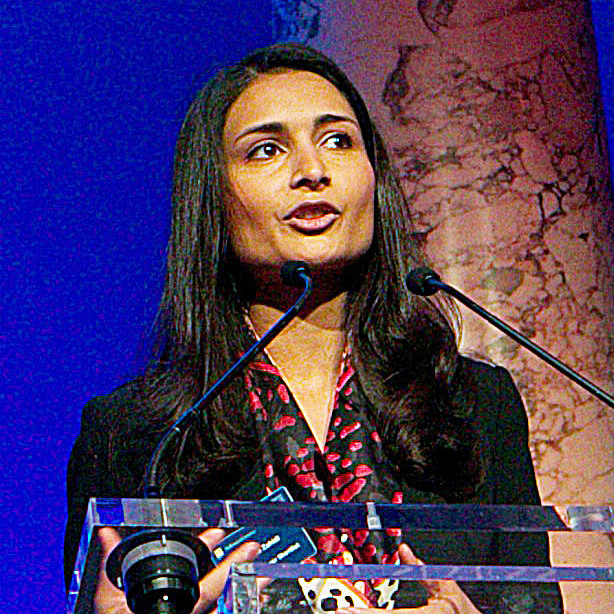
Lahore-born Saadia Zahidi takes charge of world aviation as IATA’s first woman chief
Saadia Zahidi takes office today, Sunday 1 November 2026, as the new director general of the International Air Transport Association (IATA), the global trade body for the world’s airlines. She is the ninth person to hold the job, the first woman to hold it, and the first leader in four decades to be chosen from outside the airline industry.
Zahidi was born in Lahore and holds Pakistani and Swiss nationalities. She joins IATA from the World Economic Forum (WEF), where she spent more than two decades as a managing director and member of the managing board. Her appointment was announced by IATA on 23 July 2026, and she succeeds Willie Walsh, who stepped down on 31 July after leading the association since April 2021.
At a glance
What happened: Saadia Zahidi, a Lahore-born economist and long-serving World Economic Forum managing director, takes office on 1 November 2026 as IATA’s ninth director general and its first woman leader.
Why it matters: IATA speaks for more than 370 airlines carrying about 85 percent of the world’s air traffic, so its chief helps shape the rules on safety, fares, fuel and climate that affect every flyer.
What happens next: Zahidi is expected to set out her priorities in her first weeks, with airline profits, fuel costs, aircraft shortages and cleaner fuel at the top of the list.
A first for world aviation
IATA was founded in Havana in 1945, in the years just after the Second World War, when commercial flying was becoming a normal part of international life. In the eight decades since then, every one of its directors general has been a man. Zahidi breaks that run.
“The Board is very pleased to appoint Saadia Zahidi as Director General of IATA,” said Roberto Alvo, the chair of the IATA board of directors and chief executive of LATAM Airlines Group, when the appointment was announced. “Saadia’s long and outstanding experience at the World Economic Forum will enhance and strengthen IATA as the voice of the world’s airlines.”
The choice also fits a campaign IATA itself has run. In 2019 the association launched its 25by2025 initiative, which challenged airlines and aviation bodies to raise the share of women in senior roles and underrepresented jobs to at least 25 percent by 2025. Appointing a woman to its own top job is the most visible sign yet that IATA is practising what it has preached.
Who is Saadia Zahidi?
Zahidi was born in Lahore and holds Pakistani and Swiss nationalities. She studied economics at Smith College in the United States, then took a master’s degree in international economics at the Graduate Institute in Geneva and a master’s in public administration at Harvard University.
She spent more than two decades at the World Economic Forum, the Geneva-based organisation best known for its annual meeting in Davos. There she founded and led the Centre for the New Economy and Society, which works on economic growth, jobs, skills, technology and global risks. She also previously led the forum’s global communications and programming groups.
Her best-known work is research. She founded and co-authors the forum’s Future of Jobs reports, which track how technology is changing work, and its Global Gender Gap reports, which measure the gap between women and men in economies, education, health and politics. She also co-authors its Future of Growth reports and Chief Economist Outlooks. She has served on the United Nations Secretary-General’s panel for Women’s Economic Empowerment and on the European Space Agency’s High-Level Advisory Group, and she wrote the book Fifty Million Rising, about the rise of working women in the Muslim world.
In her first statement after the appointment was announced, Zahidi described aviation as “critical infrastructure for economic growth, trade, tourism, jobs, investment, and opportunity”. She said IATA’s role in bringing the industry together through trusted standards, essential services and advocacy “has never been more important”, and that her top priority would be working with the IATA team and the industry “to build aviation’s future together”.
What IATA actually does, and why the job matters
IATA is not a regulator and it does not run any airline. Governments and bodies such as the International Civil Aviation Organization make the laws. IATA is the airlines’ own association, and its power comes from the fact that its members act together.
Much of its work is practical and mostly invisible to passengers. Its traffic conferences set the common standards airlines use to sell tickets, handle cargo and coordinate operations across borders. Membership requires airlines to be registered under the IATA Operational Safety Audit, the industry’s main safety audit programme. Its Simplified Invoicing and Settlement platform settles about 83 billion dollars in invoices every year between airlines, travel agents and freight forwarders.
The in-tray: thin profits, fuel and war
Zahidi’s first problem is money. Flying is a business of very thin margins, and 2026 has made them thinner. In its June outlook, IATA cut its forecast for airline net profit in 2026 to 23 billion dollars, with a net margin of 2.0 percent, roughly half of its earlier forecast of 41 billion dollars and a 3.9 percent margin. It expects airlines to earn just 4.50 dollars per passenger, even though total industry revenue is expected to reach 1.165 trillion dollars and planes are expected to fly with a record 84 percent of seats filled.
IATA blamed the fall mainly on disruption in the Middle East and on higher fuel prices. The conflict between the United States, Israel and Iran, which broke out in March, has frustrated shipments through the Strait of Hormuz and pushed fuel costs up. Fuel is one of the largest costs for any airline, so when prices stay high, profits shrink even when planes are full.
Taxes and regulation are a second pressure. In Europe, airlines oppose the European Union’s carbon pricing and sustainable fuel schemes, saying governments are forcing them to carry the cost of the green transition. Zahidi will have to argue the airlines’ case to governments while recognising that governments have their own climate and budget goals. Staff shortages in air traffic control, engineering and maintenance add a third pressure, with airlines competing for skilled workers against other well-paid industries.
Planes that do not arrive, and fuel that does not exist yet
Beyond day-to-day costs, Zahidi inherits two long-term problems that will shape her whole time in the job.
The first is supply. Airlines cannot get enough new planes. In his June state-of-the-industry address, Walsh said the backlog of aircraft on order had passed 18,000, the average age of the world’s airline fleet had reached 15.2 years, and supply-chain failures cost airlines at least 11 billion dollars in 2025. Delayed aircraft and engines hold back growth, push up leasing and maintenance costs, and delay the fuel-efficiency gains that new planes would bring. Airlines have responded by keeping older aircraft flying longer and filling more seats on each flight.
Airports are the parallel constraint. IATA says nearly 400 airports need slot coordination because demand for take-off and landing slots exceeds capacity at least some of the time. Fragmented and ageing air traffic management systems add delays, fuel burn and cost.
The second long-term problem is climate. In 2021 the industry committed to reaching net-zero carbon emissions by 2050. Sustainable aviation fuel, known as SAF, is meant to do much of the heavy lifting: IATA says it could deliver as much as 65 percent of the emissions reduction needed for net zero in 2050. But supply is far behind. Production in 2026 is expected to reach only 2.4 million tonnes, equal to 0.8 percent of the fuel airlines use. Closing that gap needs fuel producers to build capacity, governments to set workable incentives and accounting rules, airports to support distribution, and manufacturers to improve aircraft technology. No airline can deliver those things alone, which is exactly why IATA exists.
Zahidi will also inherit disputes over passenger rights, taxation, airport regulation, climate measures, cybersecurity and data policy. IATA favours rules that are the same around the world, because aviation is a global network, while governments keep the right to make their own rules and travellers expect strong consumer protection.
What it means for Pakistan
For Pakistan, the appointment carries a direct personal connection: the person now leading world aviation was born in Lahore and holds Pakistani nationality. That matters in a country where millions of people depend on air travel to reach jobs, family and education abroad, and where overseas Pakistanis are a lifeline for the economy. A leader who understands Pakistan’s place in the world, and the value of connectivity for developing countries, is a welcome change of perspective at the top of a body that has always been led from Europe or the Americas.
It also matters for the region around Pakistan. IATA announced in April that it was opening a permanent office in Tashkent, Uzbekistan, as aviation in Central Asia grows. The region sits between Russia, Asia and Europe, and its potential as an air travel bridge has only become clearer as disruption in the Middle East has forced airlines to look for other routes. IATA’s presence there will be important for building safe infrastructure and carrying out audits.
None of this guarantees any specific change for Pakistani travellers or airlines. IATA does not set fares, choose routes or license carriers. What it does do is set the standards and the terms on which the world’s airlines work together, and the person leading that work now knows Pakistan from the inside. For a country that has often felt far from the rooms where global rules are written, that is a meaningful shift.
What happens next
Zahidi’s first weeks will be watched closely. Airlines will look for continuity on costs, infrastructure, standards and holding suppliers to account. Airports and aircraft manufacturers will watch how she approaches investment and capacity. Regulators will look for concrete proposals rather than general calls for cooperation. Observers will also watch her senior appointments and her first policy programme, and how she uses IATA’s new committee structure, which replaced the association’s former advisory councils with nine industry committees covering operations, finance, cargo, security, sustainability and digital transformation.
Walsh, meanwhile, has moved on. He left IATA on 31 July and became chief executive of Indian carrier IndiGo, starting on 3 August. Sandrine Le Borgne, IATA’s chief financial officer and senior vice president for corporate services, served as interim director general in the three months between Walsh’s departure and Zahidi’s arrival.
Whether Zahidi changes IATA’s positions on climate policy, passenger regulation or relations with suppliers remains to be seen. Until she sets out her programme, the appointment signals a change in leadership background, not yet a confirmed change in policy. But the signal itself is clear. The world’s airlines have chosen a leader who has never run one, and a woman, and a Lahore-born economist, to guide them through the most difficult period the industry has faced since the pandemic. What she does with that trust will shape how the world flies for years to come.
Frequently asked questions
Who is Saadia Zahidi?
Saadia Zahidi is a Lahore-born economist who takes office on 1 November 2026 as the director general of IATA. She spent more than two decades at the World Economic Forum, where she was a managing director and member of the managing board, and she founded its Centre for the New Economy and Society. She holds Pakistani and Swiss nationalities.
What is IATA?
IATA is the International Air Transport Association, the trade association for the world’s airlines. It was founded in 1945 and represents more than 370 airlines that carry about 85 percent of global air traffic. It sets common industry standards, runs the main safety audit programme for airlines, operates financial settlement services, and speaks for airlines to governments and regulators.
Why is her appointment historic?
Zahidi is the first woman to lead IATA, and its ninth director general. She is also the first leader in four decades chosen from outside the airline industry. Since 1985 every IATA chief had been a former airline boss. Her appointment also follows IATA’s own 25by2025 campaign, launched in 2019, to raise the share of women in senior aviation roles.
Has she ever run an airline?
No. Unlike her predecessor Willie Walsh, who ran Aer Lingus, British Airways and IAG, Zahidi’s career has been in economics, research and international policy. IATA’s board said it chose her because technology and geopolitics are reshaping aviation and her experience would strengthen the association’s voice with governments.
What are the biggest problems she faces?
Thin profits are the most urgent: IATA cut its 2026 profit forecast to 23 billion dollars, with airlines earning about 4.50 dollars per passenger. High fuel prices, disruption from the Middle East conflict, a backlog of more than 18,000 aircraft on order, crowded airports and a shortage of sustainable aviation fuel are all on her list. The industry has also committed to net-zero carbon emissions by 2050, and cleaner fuel still makes up less than one percent of what airlines burn.
What does this mean for Pakistan and for travellers?
For Pakistan, the appointment means the head of world aviation was born in Lahore and holds Pakistani nationality, bringing a perspective from a developing country to the top of the industry. For travellers generally, the effect is indirect: IATA’s work on safety standards, fares, disruption and cleaner fuel shapes the cost and reliability of flying, but it does not set ticket prices or choose routes.
Conclusion
Saadia Zahidi’s first day as IATA director general is a milestone twice over: a first for women in world aviation, and a first for a Lahore-born leader at the top of a global industry. She arrives with a record in economics and policy rather than in running airlines, and with a mandate to guide an industry that is flying full planes for very little profit, paying more for fuel, waiting years for new aircraft, and struggling to find enough cleaner fuel to meet its climate promises.
The appointment alone does not solve any of those problems. What it does is put a different kind of leader in charge of solving them, one whose career has been spent thinking about jobs, inequality, risk and how economies change. For Pakistan, for women in aviation, and for the millions of people who depend on flying to connect with the world, that is a change worth watching.
This article is for general information and education only. It is not legal or financial advice.
Sources
- https://www.iata.org/en/pressroom/2026-releases/07-23-iata-board-appoints-saadia-zahidi-as-director-general/ (IATA, 23 July 2026)
- https://srnnews.com/airline-group-iata-taps-world-economic-forums-zahidi-as-new-chief/ (Reuters via SRN News, 23 July 2026)
- https://www.airwaysmag.com/new-post/iata-saadia-zahidi-director-general (Airways Magazine, 26 July 2026)
- https://aerospaceglobalnews.com/news/iata-director-general-airlines-saadia-zahidi-wef/ (Aerospace Global News, 26 July 2026)
- https://worldaviationfestival.com/blog/airlines/5-key-priorities-for-iatas-new-director-general/ (World Aviation Festival, 4 August 2026)
- https://skift.com/2026/07/23/iata-makes-surprise-pick-for-new-leader-skips-airline-veterans/ (Skift, 23 July 2026)
- https://www.techjuice.pk/saadia-zahidi-first-woman-iata-director-general-pakistan/ (TechJuice, 27 July 2026)
- https://aviationlife.gr/iata-appoints-saadia-zahidi-as-its-first-female-director-general-in-80-year-history/ (Aviation Life, July 2026)
- https://www.256businessnews.com/walking-the-talk-iata-breaks-the-glass-ceiling-as-saadia-zahidi-becomes-first-female-director-general/ (256 Business News, 24 July 2026)
