
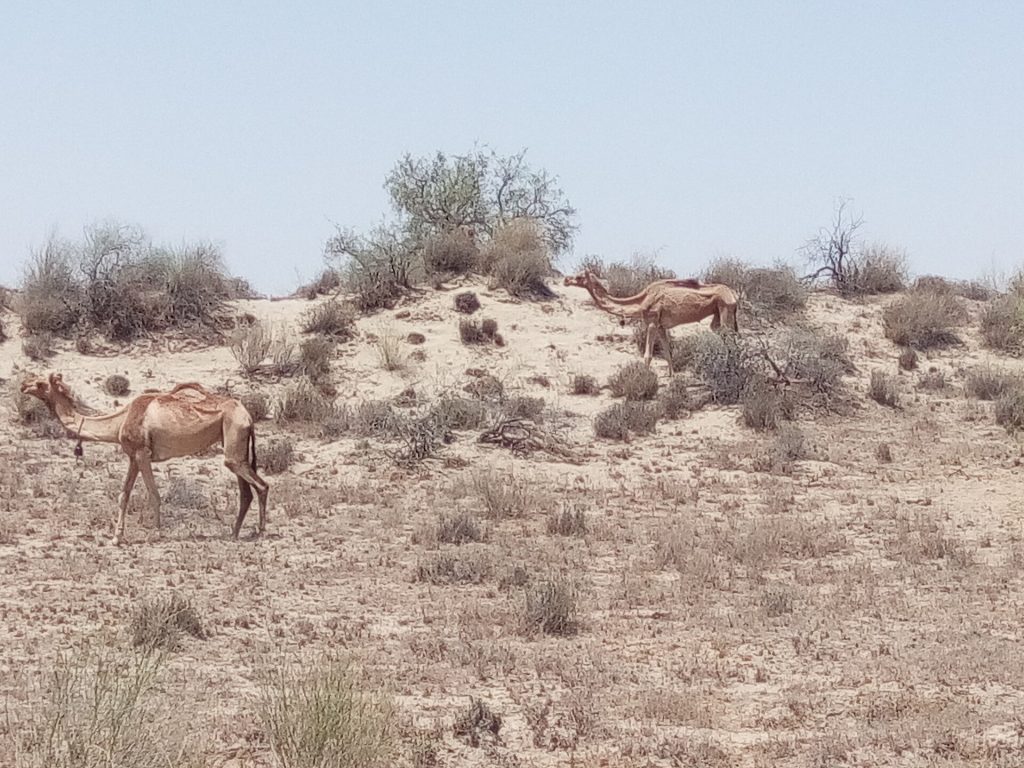
Pakistan Drought Alert: Sindh, Balochistan and South Punjab Face a Dry Winter After Five Months of Failed Rain
Pakistan’s drought alert is back in the headlines. The Pakistan Meteorological Department (PMD) has warned that Sindh, Balochistan and southern Punjab could face worsening drought conditions in the coming winter months, after five straight months of below-normal rainfall.
The warning, issued on Friday, 21 November 2026, says the rain shortfall has built up into a persistent and growing water deficit across southern Pakistan. It threatens farming, livestock and drinking water supplies for millions of people living in the country’s most vulnerable areas.
This is a new warning, but it is not the first. Only four days earlier, the National Disaster Management Authority (NDMA) issued a drought high alert for the worst-hit districts. The Met Office’s new Drought Watch widens the picture: it covers three whole regions, gives the full five-month rainfall record, and warns that the winter ahead may bring little relief.
Here is what the warning says, what the numbers show, and what happens next.
What the Met Office has warned
The Pakistan Meteorological Department issued the warning through its National Drought Monitoring and Early Warning Centre, known as the NDMC. In a Drought Watch issued on Friday, the centre said persistent rainfall shortages and long dry spells could lead to worsening drought conditions in Sindh, Balochistan and southern Punjab during the coming winter months.
The department advised provincial governments and the relevant authorities to take precautionary measures against what it described as emerging mild drought conditions. It also warned that below-normal rainfall between December 2026 and February 2027 could make the situation worse.
The Met Office was clear about one thing: this is a precautionary advisory, not a declaration of a drought emergency. The warning is meant to give the provinces time to prepare before conditions deteriorate further.
The Drought Watch has been sent to the relevant federal ministries, the National Disaster Management Authority, provincial chief secretaries, irrigation and agriculture departments, and the provincial disaster management authorities, so that all of them can take preparedness measures.
The numbers: five months of missing rain
The most striking part of the warning is the rainfall record. Sindh, Balochistan and southern Punjab have received below-normal rainfall continuously from 1 July to 20 November 2026 — five months without a break.
The shortfall during the monsoon season, from July to September, is of particular concern. The monsoon is an important source of seasonal rainfall for these regions, and its failure has left a cumulative rainfall deficit that has only grown worse with each passing month.
Sindh: the worst affected
Sindh is among the worst-affected regions. According to the Met Office’s official figures, the province recorded rainfall 61 per cent below normal in July, 22 per cent below normal in August, and 90 per cent below normal in September.
The situation then deteriorated further. In October, Sindh recorded a 100 per cent rainfall deficit — in simple terms, it received almost no rain at all that month. In the first 20 days of November, the shortfall was 99 per cent below normal.
Balochistan: dry in every month
Balochistan has also received below-normal rainfall throughout the whole five-month period. The province recorded deficits of 41 per cent in July, 12 per cent in August, 68 per cent in September, 80 per cent in October, and 79 per cent during 1 to 20 November.
The Met Office noted that both Sindh and Balochistan experienced continuous rainfall deficits across all five assessment periods. That matters, because it shows the problem is a persistent dry pattern rather than a single bad month that could be written off as a one-off.
Southern Punjab: dry too, but for different reasons
Southern Punjab is also affected, though the pattern there is slightly different. Punjab as a whole recorded above-normal rainfall in July and October. But the southern parts of the province remained vulnerable to long dry spells and falling soil moisture, and they did not share in the rain that fell further north.
In the first 20 days of November, southern Punjab received 74 per cent less rain than normal, according to the Met Office.
Why the monsoon failure matters so much
A drought is not just a few weeks without rain. It is a long period in which far less rain falls than usual, while temperatures stay higher than normal. That is exactly what has happened in southern Pakistan this year.
The monsoon matters because it is the main source of water for the region’s farms. When the monsoon fails, the soil dries out, groundwater is not recharged, and there is no reserve to carry crops and animals through the dry months that follow.
The Met Office also observed that the number of consecutive dry days has increased across southern Pakistan. Several areas are now experiencing extended periods without any meaningful rainfall at all.
The department warned that the combination of prolonged dry spells and accumulated rainfall shortages could progressively reduce soil moisture, increase moisture loss through evaporation and plant activity, and limit the availability of water for agricultural and domestic use.
Rain-fed farming areas and regions already facing water shortages are particularly vulnerable to these conditions, according to the advisory. In these areas, there is no canal water to fall back on. When the rain fails, farmers have no second source of water and no second source of income.
What a dry winter would mean
The warning looks ahead to the winter season, and the outlook is not encouraging. The Met Office’s rainfall outlook for December 2026 to February 2027 indicates a likelihood of normal to below-normal rainfall across Sindh, Balochistan and southern Punjab.
That matters because winter rain plays an important role in replenishing soil moisture, supporting Rabi crops — the winter crops sown in October and November — and improving water availability in these regions.
The department warned that insufficient winter rainfall following an already deficient monsoon could prevent the natural recovery of soil moisture, particularly in the rain-fed agricultural areas of Sindh.
Continued dry conditions could increase agricultural water stress, harm crop growth and development, and place additional pressure on surface water and groundwater resources. For families that depend on farming and livestock, that means less food, less income, and less water for their animals.
The threat is not abstract. The Met Office said the worsening drought conditions could threaten agricultural production, livestock and water availability for millions of people living in vulnerable areas.
This is not the first warning
The Met Office’s Drought Watch is the latest in a series of official warnings about the same unfolding drought.
On Tuesday, 17 November 2026, the National Disaster Management Authority issued a drought high alert for parts of Sindh and Balochistan, warning that a long dry spell was destroying crops, drying up grazing land and pushing vulnerable families towards food insecurity.
That alert covered parts of four districts in southern Sindh — Umerkot, Tharparkar, Mirpurkhas and Sujawal — as well as parts of Chagai and Washuk districts in Balochistan. In Tharparkar, the Sindh government had already declared the whole district calamity-hit on 7 November, after officials estimated that 85 to 90 per cent of its crops had been destroyed or left unproductive.
The NDMA named four drivers of the current drought: below-average rainfall, prolonged dry spells, rising temperatures and changes in monsoon rainfall patterns. Its advisory said water shortages were “severely affecting agricultural activity and crop production in the affected areas”, and that falling crop production was increasing the risk of food insecurity.
The Met Office’s new Drought Watch builds on that alert. It covers a wider area — all of Sindh and Balochistan, plus southern Punjab — and it adds the full five-month rainfall record and the winter outlook. Together, the two warnings show a drought that is spreading and deepening, not easing.
Pakistan has been here before
Sindh and Balochistan have borne the brunt of several major droughts in Pakistan. The 1998–2002 drought was among the country’s worst in recent history, affecting about 2.1 million people in Balochistan alone, according to the World Bank. Pakistan recorded another major drought from 2018 to 2020.
The two provinces were also among the worst hit by Pakistan’s 2022 monsoon floods, which affected 33 million people nationwide, killed more than 1,730 people and caused more than $30 billion in damage and economic losses, according to a government-led assessment.
The same regions that flood when the rains are too heavy now suffer when the rains fail. That swing between too much water and too little is becoming a familiar pattern in Pakistan’s changing climate.
The drought also comes as Pakistan presses richer countries for climate finance at COP31, the United Nations climate summit in Antalya, Turkey. Pakistan has been arguing that countries like itself, which contributed little to global warming but suffer heavily from its effects, need money — not just promises — to deal with floods, heat and failing rains. Negotiators at COP31 published a draft deal calling for faster action to phase out fossil fuels and for annual climate adaptation finance for developing countries to reach at least $120 billion by 2035.
What the authorities have been told to do
The Drought Watch does more than describe the problem. It tells the provincial governments what to do about it.
The advisory called on provincial administrations to closely monitor the evolving drought situation through district coordination committees, and to make sure early warning systems are activated so communities are informed about the risks.
Authorities were also advised to identify vulnerable communities and prepare lists of people who would need assistance, so that targeted support could be provided without delay if conditions deteriorate.
The department recommended water conservation measures at farm and community levels, including efficient irrigation methods, mulching and careful use of available water resources. Mulching — covering the soil with a layer of material to hold in moisture — is a simple, low-cost way to slow down water loss from dry fields.
It also called for district-level drought assessments, updated maps of livestock movement and water sources, and arrangements for veterinary services and animal feed, to protect livestock and the livelihoods of communities that depend on them.
What happens next
The immediate question is whether the winter rains arrive. If rainfall between December 2026 and February 2027 comes in below normal, as the Met Office expects, the dry conditions are likely to continue and could deepen. The Rabi crops now in the ground would face water stress at the very time they need moisture to grow.
The Met Office said its next assessment of the situation would be issued on 5 December through its monthly Drought Bulletin. That bulletin will show whether the dry pattern is holding or easing, and whether the warning needs to be raised further.
In the meantime, the provincial governments have been told to prepare. The warning has been circulated to all the relevant authorities, and the district coordination committees are expected to track the situation on the ground.
For families in the affected areas, the advice from the authorities is straightforward: use water carefully, save it wherever possible, and make use of the relief that is being organised. For the rest of Pakistan, the warning is a reminder that the climate crisis is not only about floods. In the dry south, it arrives quietly — as a failed harvest, a dry well and an empty grazing ground.
Frequently asked questions
Which areas are covered by the drought alert?
Sindh, Balochistan and southern Punjab. The warning covers the whole of Sindh and Balochistan, where rainfall has been below normal for five straight months, and the southern parts of Punjab, which have also suffered long dry spells.
Is a drought emergency being declared?
No. The Pakistan Meteorological Department was clear that the Drought Watch is a precautionary advisory. It does not amount to a declaration of a drought emergency. It is meant to give the provinces time to prepare before conditions get worse.
How bad is the rainfall shortfall?
Very bad in places. Sindh recorded a 100 per cent rainfall deficit in October — almost no rain at all — followed by a 99 per cent shortfall in the first 20 days of November. Balochistan was 79 per cent below normal in the same period, and southern Punjab was 74 per cent below normal.
What caused the drought?
Below-average rainfall, long dry spells and a failed monsoon. The monsoon season from July to September, which is the main source of rain for these regions, was far drier than normal. The NDMA also named rising temperatures and changing monsoon rainfall patterns as drivers of the drought.
How does this warning relate to the NDMA alert of 17 November?
The NDMA alert was a high alert for specific districts — parts of Umerkot, Tharparkar, Mirpurkhas and Sujawal in Sindh, and parts of Chagai and Washuk in Balochistan. The Met Office’s Drought Watch of 21 November covers a wider area and adds the full five-month rainfall record and the winter outlook. It is a new advisory about the same unfolding drought.
What is the outlook for the winter?
The Met Office expects normal to below-normal rainfall between December 2026 and February 2027 across Sindh, Balochistan and southern Punjab. That could aggravate the situation, because winter rain is needed to restore soil moisture and support the Rabi crops.
When is the next update?
The Met Office said its next assessment will be issued on 5 December 2026 through its monthly Drought Bulletin.
Conclusion
Five months of failed rain have left southern Pakistan facing a dry and difficult winter. The Met Office’s Drought Watch, issued on 21 November, puts the scale of the problem in plain numbers: Sindh went through October with almost no rain at all, Balochistan has been dry in every month since July, and southern Punjab is short of rain too.
The warning is precautionary, not an emergency declaration. But it is the second official alert in a week, and the winter outlook offers little comfort. Whether the situation stabilises or worsens will depend on the rains that fall — or fail to fall — between December and February, and on how quickly the provinces act on the advice to conserve water, protect livestock and prepare help for the most vulnerable communities.
The next check comes on 5 December, when the Met Office publishes its monthly Drought Bulletin.
Sources
- The News: “Sindh, Balochistan, Punjab’s south face drought: PMD”
- The News: “PMD warns of worsening drought risk in Sindh, Balochistan, southern Punjab”
- ARY News: “PMD Issues Drought Alert for Sindh, Balochistan, South Punjab”
- Dialogue Pakistan: “Met Office issues drought alert for Sindh, Balochistan and South Punjab”
- Daily Qudrat: “Pakistan Meteorological Department Warns of Possible Drought in Sindh, Balochistan and South Punjab”
- Arab News: “Pakistan announces drought alert for four districts in southern Sindh province”
