
Pakistan’s Solar Revolution: Rooftop Panels Now Supply 28% of the Country’s Electricity — and the National Grid Is Feeling the Strain
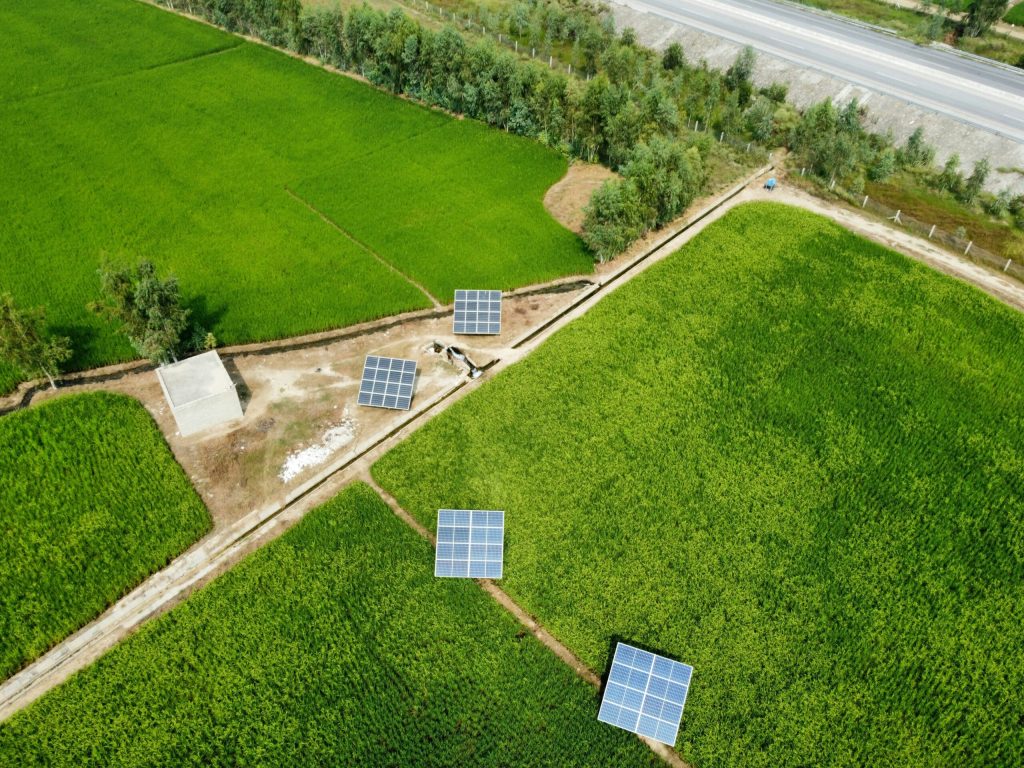
In just seven years, solar power has gone from almost nothing to more than a quarter of Pakistan’s electricity. From 2018 to 2025, the share of electricity generated from solar energy in Pakistan rose from 1% to 28%, according to Pakistan-based energy think tank Renewables First, with around seven million households now owning solar panels. It is one of the fastest energy changes anywhere in the world — and it was not planned by the government. Ordinary families, driven by soaring bills and falling panel prices, built it themselves, one rooftop at a time.
The story is now in the global spotlight. At the COP31 climate summit in Antalya, Turkey, Prime Minister Shehbaz Sharif called it “a quiet revolution by ordinary citizens seeking affordable power and a cleaner, more predictable future”. But the same boom is putting Pakistan’s national electricity grid under serious financial pressure, and the government is now trying to fix a system that its own citizens have partly outgrown.
A quiet revolution on Pakistan’s rooftops
The numbers behind Pakistan’s solar boom are remarkable. According to a joint report by energy think tanks Ember and Renewables First, Pakistan had built up an estimated 38 gigawatts (GW) of distributed solar capacity by June 2025, with 27 GW of it installed in just two years. To put that in perspective, that is roughly equal to the combined capacity of every coal, gas and oil power plant Pakistan has ever built.
Prime Minister Shehbaz Sharif gave a similar picture at COP31, telling world leaders that Pakistan had added nearly 22 gigawatts of rooftop solar capacity in just two years. The two figures measure slightly different things — one counts all small-scale solar, the other rooftop systems alone — but they point in the same direction: a transformation happening at extraordinary speed.
The growth shows up in the electricity figures too. Solar generation more than tripled, from 15 terawatt-hours (TWh) in the 2023 financial year to 51 TWh in 2025. Over the same period, total electricity demand in Pakistan grew by 21%, or 33 TWh — and distributed solar absorbed almost all of that growth while electricity supplied by the national grid actually fell by 3%.
Pakistan became one of the world’s biggest buyers of Chinese solar panels along the way. In 2024 alone, the country imported around 17 GW of solar panels, more than double the amount imported the year before. The panels now glisten from the rooftops of homes and hospitals, from farmers’ fields to industrial complexes, across Punjab, Sindh, Khyber Pakhtunkhwa and Balochistan.
Why millions of Pakistanis switched to solar
The solar boom was not driven by government policy. It was driven by survival.
Electricity tariffs in Pakistan have more than doubled within a few years, according to Muhammad Hassan Dajana, industry liaison at Renewables First. At the same time, the cost of imported Chinese solar panels has fallen by 93%. For many families, the maths became impossible to ignore.
In a country where the average wage is just under 40,000 Pakistani rupees (about £110 or $145) a month, monthly electricity bills have climbed to 15,000–18,000 rupees — close to half a typical salary. Faced with that, households found their own answer.
“People have just found another way to be able to survive,” Energy Minister Awais Ahmad Leghari told the BBC on the sidelines of COP31. “It’s a very healthy thing. We have adapted to the situation. The people have reacted and responded in a very economically viable and efficient manner.”
The change has reached deep into everyday life — even into weddings. Faisal Shahzad, a resident of rural Punjab, received a 340-watt solar panel as a wedding gift from his bride’s family three months ago. “People used to gift motorbikes or other household items at weddings… Now they give a solar panel and an air cooler. It has almost become a must,” he told the BBC.
In the summer, Shahzad ran his air cooler on the panel from eight in the morning until the evening. He still uses the national grid as well, because his extended family lives together and uses many appliances at once. But his ambitions have not slowed: he plans to buy another 10 to 15 panels, install them on the roof, and connect a full system with batteries.
With around 250 to 300 sunny days a year, Pakistan is naturally suited to rooftop solar. For a modest two-bedroom house, a 3-kilowatt system can power fans, lights, a refrigerator, a television and other basic appliances during the day. A basic 3kW system without batteries costs roughly Rs200,000–400,000, according to market estimates, while one with battery backup costs around Rs400,000–600,000.
The problem: a grid losing its customers
But there is a problem, and it is a big one. As millions of households and businesses generate their own electricity, fewer customers are left to pay for the national grid — the poles, wires, power stations and staff that keep the system running. The fixed costs of maintaining the grid do not fall just because fewer people use it.
Energy experts call this the “utility death spiral”. When people buy less energy from the grid, the remaining customers must cover more of its fixed costs. That can push prices up — which encourages even more people to switch to solar. Over time, the grid becomes more expensive for everyone left on it, and a heavier burden on the state.
The government says the costs are already being felt. “In just the past two years, the exodus from the grid has cost the rest of the consumers more than $500 million [£378m] a year,” Leghari told the BBC. “That’s a very big burden.” That is roughly Rs140 billion a year, paid in effect by the households and businesses that still depend on grid electricity.
Analysts warn the trend could create a two-tier electricity system: households that can afford solar panels enjoy cheap power, while those who cannot face ever-rising bills — and public money is used to keep the struggling state power utility afloat.
“You’ll have a white elephant in the form of a state-owned enterprise that requires a lot of public funding to just stay afloat,” Dajana of Renewables First warned.
The government’s answer: new net-metering rules
The government has already changed its net-metering rules — the system that lets solar households sell their surplus electricity back to the grid. Under the revised arrangements, the government buys excess solar power at lower rates while selling electricity back to consumers at higher rates.
The changes have drawn criticism from business leaders. “Initially their policy was very helpful… Now they have started purchasing at a lower rate and selling back at a higher rate,” said Arif Ehsan Malik, president of Faisalabad’s Chamber of Commerce.
Leghari defended the changes, saying they were necessary to protect the consumers who do not have solar panels. “Had we not changed those regulations, the rest of the consumers would have been burdened by at least 150 to 200 billion rupees a year, say, two years from now,” he said.
The minister says the government has renegotiated most contracts with independent power producers — arrangements that had been widely criticised inside Pakistan for locking the country into costly, inflexible deals — and is now focused on making the grid more efficient through better storage and reduced transmission waste. The government does not want to pull people away from solar, he explained, but wants the grid to be more competitive so it can offer better energy prices.
Factories are going solar too
The shift is not limited to homes. Pakistani industry is moving the same way. Kohinoor Textile Mills in Islamabad, for example, runs hundreds of machines on solar power during sunny periods and will start using industrial batteries in the coming weeks to reduce its reliance on heavy fuel engines.
“The state unfortunately doesn’t have the resources so we can’t really say that we blame everything on the state. We do some of the things ourselves,” said Taufique Sayeed Saigol, chief executive of Kohinoor Textile Mills.
For businesses, solar is about more than saving money. It is about keeping machines running when the grid is unreliable, and about cutting dependence on expensive imported fuel. Pakistan’s LNG import bill has already fallen sharply as solar power cuts demand for imported gas, and the government now aims to reduce dependence on imported fuels from 26% to 4%.
What Pakistan wants next
Pakistan is using its moment at COP31 — where delegates from nearly 200 countries have gathered in Antalya — to push for help with the next stage of the transition. The country has set a headline target: generating up to 90% of its electricity from clean sources, including renewable energy and nuclear power, by the end of 2036.
At the summit, Prime Minister Shehbaz Sharif backed the “35 by 35” global electrification pledge, under which countries aim to raise electricity’s share of total energy use to around 35% by 2035. He also pointed to progress beyond solar: a key section of the country’s seventh nuclear power plant, Chashma-5, which will add 1,200 megawatts of clean energy, has recently been inaugurated, and more than one in every 10 motorcycles sold in Pakistan this year was electric.
But the prime minister also warned that “momentum without finance cannot be sustained”. Pakistan alone needs around $138 billion by 2035 for low-carbon power, and $50 billion more to replace coal with solar. At COP31, Pakistan has asked for international support to fund batteries for its household solar revolution — storage that would let families use their solar power at night and take pressure off the grid.
“The momentum is real and it is accelerating,” Shehbaz Sharif said. But, he added, the clean energy goal can only be achieved “if finance flows at the speed of ambition through concessional capital and the transfer of affordable technology”.
Two paths ahead
Pakistan’s solar story is now watched around the world as a test case. It shows how quickly ordinary people can transform a country’s energy system when the economics make sense — without waiting for government programmes or foreign aid. Few countries have seen anything like it.
But it also shows the hard question every country will eventually face: what happens to the shared grid when millions of people start making their own power?
Dajana of Renewables First says Pakistan’s future energy system could develop along two different paths. “There are two paths ahead. One is a future where solar and the grid work in parallel, demonstrating how a gradual energy transition can succeed. The other is where Pakistan becomes a cautionary tale, burdened with a costly, declining grid.”
Which path Pakistan takes will depend on whether the government, the power companies and solar households can build a system where rooftop solar and the national grid support each other — instead of pulling each other apart.
Frequently asked questions
How much of Pakistan’s electricity now comes from solar power?
Solar power’s share of Pakistan’s electricity generation rose from 1% in 2018 to 28% in 2025, according to Renewables First. Around seven million households now own solar panels.
Why did so many Pakistanis install solar panels?
Electricity tariffs more than doubled in a few years while the cost of imported Chinese solar panels fell by 93%. With average monthly wages under Rs40,000 and electricity bills reaching Rs15,000–18,000, solar became a way for families to escape unaffordable bills and an unreliable grid.
What is the “utility death spiral”?
It is what happens when customers leave the national grid for their own solar power: fewer customers remain to cover the grid’s fixed maintenance costs, so prices rise for those left behind, pushing even more people to switch. Energy Minister Awais Leghari says the grid exodus has cost remaining consumers more than $500 million a year over the past two years.
What changed in Pakistan’s net-metering rules?
The government revised the rules so it buys surplus solar electricity from households at lower rates while selling grid electricity back at higher rates. Officials say the change protects consumers without solar panels, who would otherwise have faced an extra burden of Rs150–200 billion a year within two years.
What is Pakistan’s clean energy target?
Pakistan aims to generate up to 90% of its electricity from clean sources, including renewables and nuclear power, by the end of 2036, and to cut dependence on imported fuels from 26% to 4%. The country says it needs around $138 billion by 2035 for low-carbon power.
How big is Pakistan’s rooftop solar capacity?
Prime Minister Shehbaz Sharif told COP31 that Pakistan added nearly 22 gigawatts of rooftop solar capacity in two years. A joint Ember and Renewables First report puts total distributed solar capacity at an estimated 38 GW by June 2025, with 27 GW installed in just two years.
Conclusion
Pakistan’s solar revolution is one of the most remarkable energy stories in the world today. In seven years, solar power has grown from 1% to 28% of the country’s electricity, driven not by government planning but by millions of ordinary people finding a cheaper, more reliable way to power their homes. Solar panels have become wedding gifts, factory power supplies and a lifeline for families squeezed by rising bills.
But the revolution has created a problem its pioneers did not expect: a national grid that is losing customers and money at the same time. The government’s new net-metering rules, its push for batteries and storage, and its call for $138 billion in climate finance are all attempts to answer the same question — how to keep the grid alive while the rooftops take over.
If Pakistan gets that balance right, its citizen-led solar boom could become a model for the developing world. If it gets it wrong, the country risks a two-tier energy system where the poorest pay the most. The world is watching to see which path Pakistan takes.
Sources
- BBC News: “COP31: Pakistan’s solar energy revolution seems unstoppable – but there’s a problem”
- The Business Standard: “Pakistan’s solar boom puts pressure on national power grid”
- Gulf News: “Solar Panels: The Unconventional Wedding Gift Transforming Lives in Pakistan”
- Dawn: “PM touts ‘citizen-led solar revolution’ at COP31”
- Rapid Transition: “Power to the people: how Pakistan’s rooftop solar rush could be one of the fastest energy transitions on Earth”
- PowerPost: “Pakistan Solar Boom’s $500m Grid Cost”
- CNBC-TV18: “Pakistan’s solar boom is exposing the fault lines in its power system”
