
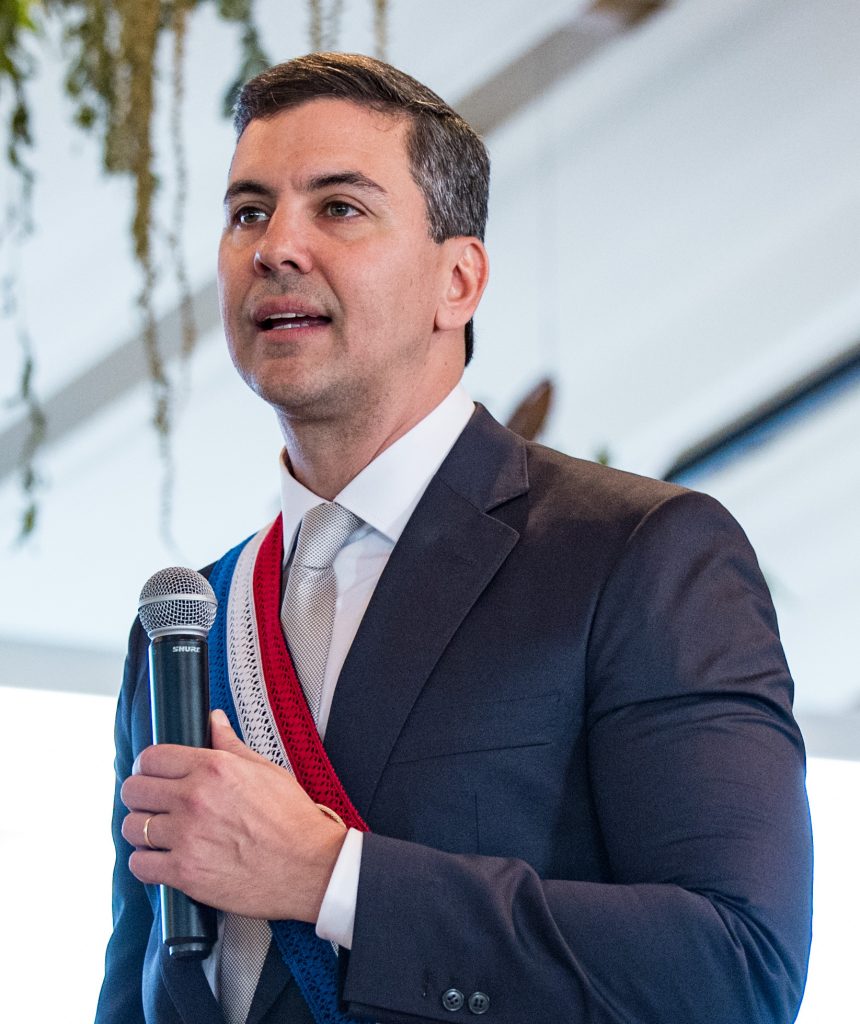
Paraguay Impeachment: President Santiago Peña Faces Removal Vote After Ueno Bank Collapse Freezes Millions of Accounts
Paraguay is facing its biggest political crisis in years. Opposition lawmakers have formally moved to impeach President Santiago Peña, blaming him for the sudden collapse of a digital bank that has left around 3 million people — almost half the country — unable to reach their own money.
Thirty-five lawmakers in the 80-seat lower house of Congress submitted impeachment articles on Wednesday, 4 November 2026, and asked congressional leaders to call an extraordinary session on Thursday to debate the president’s future. The move turns a banking emergency into a fight for Peña’s presidency, and it comes just as savers across Paraguay are asking a simple question: when will they get their money back?
This is what happened, why it matters, and what could come next.
What happened to Ueno Bank?
Ueno is a digital lender that grew fast in Paraguay. It started as a small financial technology company and became a mid-sized bank, serving about 3 million customers in a country of only 6.5 million people. That means roughly half of all Paraguayans — and about 60 percent of the country’s adults — had an account with Ueno.
Ueno also handled public money. According to Reuters, the bank administers close to $850 million in public funds, including money from the state pension and health systems. For many Paraguayans, Ueno was not just a bank app on their phone. It was where their salary arrived, where their pension was paid, and where their savings sat.
Then, in the space of a few days, it fell apart.
Paraguay’s central bank stepped in after finding that Ueno had broken the minimum solvency rules — the basic financial health standards every bank must meet. The bank’s solvency ratio, a measure of whether it has enough of its own capital to cover its risks, had fallen to less than half of the legal minimum. Reports put the ratio at about 5.56 percent, against a required 12 percent.
The central bank’s board voted late on Monday, 2 November, to place Ueno in “resolution” — in simple terms, to take it over. Officials took control on Tuesday, 3 November. Customers found they could not withdraw cash, transfer money, or use their cards. Branches closed. The app stopped working.
For millions of people, their money was suddenly out of reach.
Why is the president being blamed?
The crisis became political because of President Peña’s own past links to the bank.
Peña, a conservative economist who took office in 2023, was a shareholder until March 2025 in Grupo Vazquez, the business group that controls Ueno. Opposition lawmakers say that connection is at the heart of the problem. They accuse him of conflicts of interest, misuse of pension funds, and institutional cover-ups in the way the bank’s collapse was handled.
The impeachment articles also point to the people Peña appointed. Opposition lawmakers say he named former executives of the group behind Ueno to key oversight jobs, including the presidency of the central bank. The central bank is the very institution that is supposed to watch over banks and step in early when one is in trouble.
Peña has not publicly addressed the impeachment push itself, and the presidency did not immediately respond to requests for comment from Reuters. But in a social media post on Wednesday, the president urged political leaders to put depositors first and said those responsible for any irregularities would face justice “without exceptions.”
On Wednesday, Peña also signed into law a measure meant to speed up the return of people’s money. Under the new law, payments to depositors are supposed to happen within five days. Whether that deadline can be met in practice is one of the biggest questions now facing the government.
The fallout: resignations, arrests and protests
The crisis has already claimed senior jobs and led to criminal action:
- The central bank chief resigned. Carlos Carvallo, the president of Paraguay’s central bank, resigned on Tuesday at Peña’s request. He said he would stay on to oversee the takeover of Ueno.
- Eight executives were detained. Prosecutors issued arrest warrants on Tuesday for eight senior Ueno executives, including the bank’s president, Juan Manuel Gustale, and Federico Miguel Vázquez Villasanti, the founder and head of Grupo Vázquez. The executives later turned themselves in, and courts ordered their assets frozen as the investigation widened.
- Protests broke out. Hundreds of people gathered in central Asunción on Tuesday evening, near the National Pantheon of Heroes, the presidential residence and Congress, demanding their savings and the president’s removal. Protests continued into Wednesday, with police using water cannon and tear gas on a second night of demonstrations in the capital, according to reports from the scene.
The crisis has also shaken confidence in the wider banking system. Several banking apps suffered outages on Wednesday as worried customers rushed to move their money. The Association of Banks of Paraguay (Asoban) said lenders were working to absorb the surge of customers shifting their accounts away from Ueno, and insisted the banking system “continues to operate normally.”
Can the impeachment actually succeed?
This is where the numbers matter — and where Peña’s opponents face a steep climb.
Paraguay’s Congress has two chambers, and removing a president takes a large majority in both. In the 80-seat Chamber of Deputies, at least 53 lawmakers must approve the charges for them to move forward. In the Senate, 30 of the 45 senators would then need to vote in favour.
The opposition has 35 signatures so far — well short of the 53 needed in the lower house. Peña’s Colorado Party controls both chambers of Congress, which is why the impeachment faces such long odds. But the opposition has won the backing of several dissident members of the ruling party, and that is what makes this moment dangerous for the president.
Raúl Latorre, the president of the Chamber of Deputies, said after a meeting of the ruling party’s deputies that they were free to vote as they chose. A five-member dissident bloc within the Colorado Party, known as Colorado Añetete, said it would support impeaching Peña, though not the vice president. The impeachment request also names Vice President Pedro Alliana.
Opposition lawmaker Rocío Vallejo captured the anger in Congress when she presented the accusation. “Never before has anyone harmed 3 million people in a single day in the Republic of Paraguay, and you achieved it, Mr. President,” she told a congressional session.
Even if the impeachment vote fails, the political damage may last. As Reuters noted, the crisis has become a serious challenge to Peña’s administration and has damaged Paraguay’s hard-won reputation as a stable place for foreign investment, especially from neighbouring Brazil.
Why this matters beyond Paraguay
Paraguay is a small country, but this story matters for reasons that reach beyond its borders.
First, it is about trust in digital banking. Ueno’s rise was a success story for financial technology in South America. It brought banking to millions of people who had never had an account before, using phones instead of branches. Its collapse is a warning that fast growth and weak oversight can be a dangerous combination — and that when a bank serves half a country, its failure is a national emergency, not a business story.
Second, it is about public money. Ueno was not just holding private savings. It was managing hundreds of millions of dollars of public funds, including pension and health money. If that money is not recovered in full, the cost will fall on ordinary Paraguayans — on pensioners, on patients, and on taxpayers.
Third, it is a test of Paraguay’s democracy. The impeachment process is the constitutional way to hold a president to account. Whether Congress uses it fairly, and whether the courts investigate the bank’s collapse without fear or favour, will say a lot about the health of Paraguay’s institutions.
Finally, it is a warning to investors. Paraguay has worked hard to present itself as a stable, business-friendly country in a region known for political turbulence. A banking crisis tied to the president himself undermines that image at exactly the wrong time.
What happens next?
Several things will unfold in the coming days:
- The extraordinary session. Congress was asked to hold an extraordinary session on Thursday, 5 November, to debate the impeachment articles. The session will show how many lawmakers are truly willing to move against the president.
- The five-day payment deadline. The new law says depositors should be paid within five days. The central bank and the government now have to organise the return of deposits while Ueno’s services remain suspended. Millions of people will be watching whether that promise is kept.
- The criminal investigation. Prosecutors are investigating the bank’s executives, and courts have frozen their assets. The investigation will look at how Ueno’s finances deteriorated and who knew what, and when.
- The political fallout. Even if Peña survives the vote, dissident voices inside his own Colorado Party have now broken ranks in public. The coming weeks will show whether the party closes ranks behind him or whether more members drift away.
- Confidence in the banks. Other Paraguayan banks are already dealing with a flood of new customers. If confidence is not restored quickly, the crisis could spread from one bank to the wider financial system.
For now, the people most affected are the ordinary savers who cannot reach their money. Pensioners, workers and small businesses across Paraguay are waiting to find out when — and whether — their savings will come back. Their wait, more than any vote in Congress, is the real test of how this crisis ends.
Frequently asked questions
What is Ueno Bank?
Ueno is a digital lender in Paraguay that grew from a small fintech company into a mid-sized bank. It served about 3 million customers — roughly half the country’s population — and administered close to $850 million in public funds.
Why did Ueno Bank collapse?
Paraguay’s central bank found that Ueno had breached minimum solvency requirements. Its solvency ratio had fallen to less than half of the legal minimum, so the central bank’s board voted to take the bank over on 2 November 2026.
Why is President Santiago Peña facing impeachment?
Opposition lawmakers blame Peña for the crisis. He was a shareholder until March 2025 in Grupo Vazquez, the group that controls Ueno, and the opposition accuses him of conflicts of interest, misuse of pension funds and institutional cover-ups. He has not publicly addressed the impeachment push.
How many votes are needed to remove the president?
At least 53 of the 80 members of the Chamber of Deputies must approve the charges, and then 30 of the 45 senators must vote in favour. The opposition currently has 35 signatures in the lower house.
When will Ueno customers get their money back?
President Peña signed a law on Wednesday, 4 November, saying payments to depositors should happen within five days. The central bank has suspended Ueno’s services while it organises the return of deposits.
Who has been arrested?
Prosecutors issued arrest warrants for eight Ueno executives, including the bank’s president and the founder of Grupo Vázquez. They turned themselves in and courts ordered their assets frozen. The central bank chief, Carlos Carvallo, also resigned at the president’s request.
Sources
- Reuters, “Paraguay bank crisis spurs lawmakers’ calls to impeach president”, 4 November 2026: https://wixx.com/2026/11/04/paraguay-bank-crisis-spurs-lawmakers-calls-to-impeach-president/
- AFP (via Ekkow), “Paraguay opposition seeks president’s removal over banking crisis”, 4 November 2026: https://app.ekkow.com/1490832619209753008
- Rest of the World Report, “Rest of the World Report | November 4, 2026 — Evening Edition”: https://www.restoftheworldreport.com/p/the-rest-of-the-world-report-november-f07
- International Intrigue, “Daily flyovers for 5 November 2026”: https://internationalintrigue.io/briefings/2026-11-05
This article is for general information and education only. It is not legal or financial advice.

Pingback: Paraguay President Santiago Peña Resigns After Ueno Bank Collapse Freezes Millions of Accounts - Findivoza
Pingback: Paraguay's Ex-President Santiago Peña Under House Arrest After Senate Removes Him Over Ueno Bank Collapse - Findivoza