
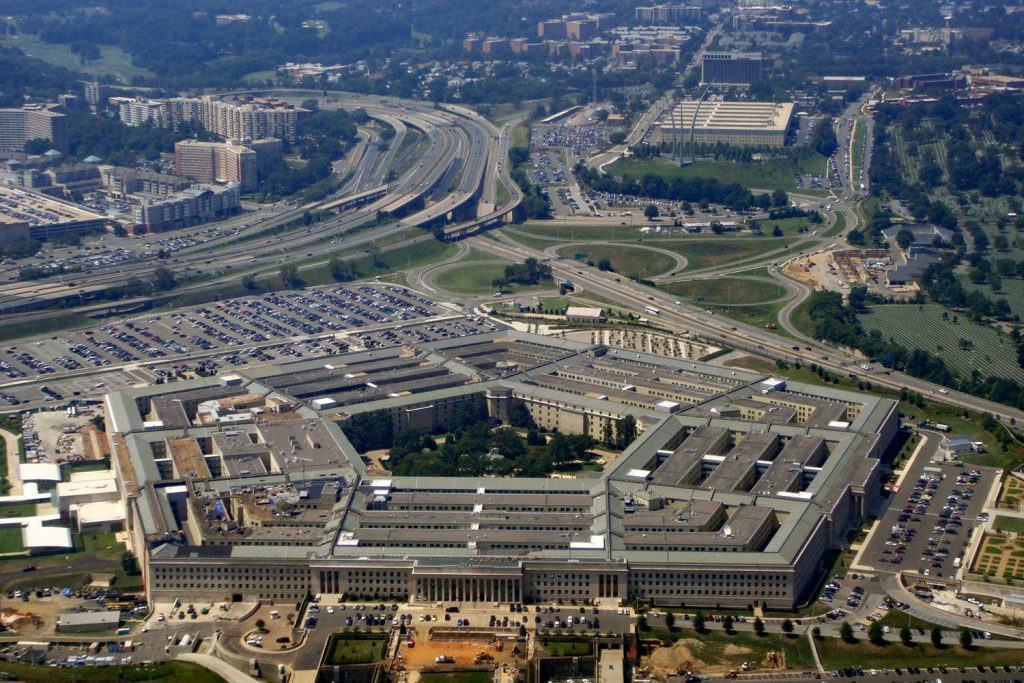
Pentagon Fails Its Financial Audit for the Ninth Year in a Row — $4.8 Trillion Still Unverified
The Pentagon has failed its financial audit for the ninth year in a row. Auditors once again could not confirm that the books of the United States military are accurate — even though the audit covered more than $4.8 trillion in assets and involved about 1,500 auditors.
The result was announced on Monday, 16 November 2026, when the Pentagon’s inspector general released its findings for the financial year that ended on 30 September 2026. The verdict was the same as in every year since the Pentagon was first fully audited in 2018: a “disclaimer of opinion” — the auditors did not have enough reliable evidence to say the accounts were correct.
The failure comes at an awkward moment: the Trump administration is asking Congress for a record $1.5 trillion defence budget for the next financial year — a huge sum of public money from a department that still cannot fully account for the money it already has.
What happened
Every year, the Pentagon must open its books to auditors. The audit for financial year 2026 covered nearly 30 separate parts of the department, from the Army, Navy and Air Force to smaller agencies that buy equipment, run hospitals and manage pensions.
About 1,500 auditors from the inspector general’s office and independent accounting firms worked on the audit. They examined more than $4.8 trillion in assets — everything from aircraft carriers and fighter jets to buildings, fuel and spare parts — and $5.2 trillion in liabilities, which are the amounts the department owes or has promised to pay in the future.
At the end of that work, the auditors issued a “disclaimer of opinion” on the department’s combined financial statements. In plain language, they could not gather enough dependable evidence to sign off on the overall accounts. It does not mean $4.8 trillion is missing. It means the Pentagon’s records are not good enough to confirm what it owns, what it owes, and whether the numbers add up.
The Pentagon is the only one of the 24 major federal agencies covered by the Chief Financial Officers Act of 1990 that has never passed a department-wide audit. Every other large agency has managed it.
What a “disclaimer of opinion” actually means
When auditors check a government department’s accounts, they give one of several verdicts.
A “clean” or “unmodified” opinion means the accounts are fair and reliable. A “qualified” opinion means the accounts are mostly fine, with some problems. A “disclaimer of opinion” is much more serious: it means the auditors could not get enough evidence to give any verdict at all on the combined accounts.
That is what has happened to the Pentagon every year since 2018. The problem is not that auditors found a single huge fraud. It is that the department’s financial systems are so old, so scattered and so poorly connected that auditors often cannot trace how money was spent, or prove that an item on the books actually exists and is worth what the records claim.
The Hill, reporting on the inspector general’s announcement, said the Pentagon failed its ninth audit “as many of the department’s financial management systems are outdated and inadequate”.
The numbers behind the failure
The scale of the Pentagon’s finances is hard to grasp, but the figures in the audit give a sense of it:
- More than $4.8 trillion in assets were covered by the audit, according to the inspector general. Another account of the same audit put the figure at $4.9 trillion. Either way, it is the largest set of assets of any US government department.
- $5.2 trillion in liabilities were also examined — the money the department owes, including future pension and health care promises to military retirees.
- Nearly 30 components of the department were audited, from the military services to defence agencies.
- About 1,500 auditors took part, from the inspector general’s office and independent public accounting firms.
- 25 separate financial statements make up the department’s accounts. The Pentagon now plans to combine them into eight.
Those numbers also explain why the audit is so difficult. The Pentagon is not one organisation with one set of books. It is a collection of services and agencies, each with its own systems, built up over decades. Many were designed before modern accounting software existed, and they do not talk to each other properly.
What actually improved this year
The ninth failure was not the whole story. In several important ways, this year’s audit was better than last year’s.
First, more parts of the department passed their own individual audits. The department’s chief financial officer, Jules Hurst, told Reuters that 14 of the Pentagon’s 25 standalone reporting entities passed their audits in financial year 2026, up from 11 the year before. A “standalone reporting entity” is a part of the department that produces its own financial statements, such as a military service or a large fund.
Second, one fund passed for the first time ever. The Medicare Eligible Retiree Health Care Fund, which pays for health care for retired service members who qualify for Medicare, received its first clean opinion in its history. That is a genuine milestone: the fund covers a large share of the department’s future health care promises.
Third, the Pentagon said clean opinions will soon cover more than 56 percent of its assets and more than 90 percent of its liabilities. Four more organisations are expected to earn clean opinions by February 2027: the Navy Working Capital Fund, the Defense Information Systems Agency General Fund, the Defense Intelligence Agency and the National Geospatial-Intelligence Agency.
Hurst also pointed to a change in who does the auditing. “Rather than relying solely on the Inspector General to conduct the agency-wide audit, the Department has resourced an independent public accountant, as other large federal departments do,” he said. “Those auditors have specialized data-analysis capabilities that support faster testing, without losing validity.”
According to Bloomberg, the department has signed a five-year, $990 million contract with the accounting firm Ernst & Young, which will conduct the Pentagon’s 2027 and 2028 audits and help it use artificial intelligence tools to check its books.
What is still wrong
The watchdog’s own words were much less cheerful than the Pentagon’s. Brett Mansfield, the deputy inspector general for audit, warned that the apparent improvement in the numbers was misleading.
“Although the number of material weaknesses appears lower in FY 2026, that reduction stems from consolidation, not resolution,” Mansfield said in a statement. A “material weakness” is a serious flaw in the controls that are supposed to keep financial records accurate. Mansfield was saying that the flaws have not been fixed — they have simply been grouped together into fewer categories as the department combines its 25 statements into eight.
That distinction matters. If the department merges its accounts, the list of problems gets shorter on paper, but the underlying problems — old systems, missing records, weak controls — are still there. The Government Accountability Office, the watchdog arm of Congress, warned in May 2026 that the new strategy “may document the biggest balances without fixing the underlying control problems” and that any pass in 2028 “may not be sustainable”.
Why the Pentagon keeps failing
The Pentagon’s audit problem is not new. Officials going back to the first Trump administration have said the same thing: the department’s financial systems were built over decades, piece by piece, and fixing them is a long project. There are three main reasons the audit keeps failing.
1. Too many old systems. The department runs its finances on many separate systems, some of them decades old. They were built for different purposes and do not share information easily, so the same kind of spending is recorded in different formats across the services.
2. Too much to count. The Pentagon owns an enormous amount of property — bases, ships, aircraft, vehicles, weapons and warehouses full of parts. Keeping an accurate list of all of it, and proving what each item is worth, is a task no other department faces at this scale. When the records are incomplete, auditors cannot check them.
3. Weak controls. Good financial control means every payment is approved, recorded and checked, and mistakes are caught quickly. The inspector general has found these controls lacking year after year. Without them, errors — and fraud — are harder to spot.
These problems explain why the Pentagon has failed every audit since 2018, while other large departments have passed theirs. Its money is spread across the most complicated organisation in the federal government, running on the oldest and most fragmented systems.
The 2028 deadline
The Pentagon does have a deadline, written into law. Section 1005 of the National Defense Authorization Act for fiscal 2024 requires a clean, department-wide audit opinion no later than 31 December 2028.
Defence Secretary Pete Hegseth has adopted that deadline and formed an Audit Committee to track progress towards a clean audit for fiscal year 2028.
The plan has several steps. In financial year 2027, the department hopes to win clean opinions for the Defense-wide Working Capital Fund, US Transportation Command, the Air Force, Army and Navy Working Capital Funds, and several smaller defence agencies. In financial year 2028, it will focus on the Defense-wide General Fund, a roll-up of the remaining department components. The Navy is also expected to achieve a clean opinion on its General Fund in financial year 2027.
“While we have made progress… the most important development is our change in audit strategy,” Hurst told reporters before the audit was released. “That shift is what will put us on the path to achieving a clean, department-wide opinion in 2028.”
He added: “From there, in FY 2028, we will focus on the Defense-wide General Fund, a roll-up of the remaining Department components, which is a fundamentally different approach from the entire history of the department.”
Why it matters to ordinary people
It is easy to see the Pentagon’s audit as a technical problem that only accountants care about. But it matters for a simple reason: the Pentagon spends public money — taxpayers’ money — and nobody can fully verify how it is spent.
The Trump administration is asking Congress for $1.5 trillion for defence in fiscal year 2027, according to the Government Accountability Office. That would be a 44 percent increase over fiscal year 2026, and the largest defence budget the United States has ever requested. At the same time, the department cannot produce a set of books that auditors can sign off on.
Supporters of higher defence spending say the money is needed for a dangerous world, and that the audit problem is about paperwork, not waste. A failed audit does not mean money has been stolen — it means the records are not good enough to prove otherwise.
Critics say the opposite: a department that cannot account for $4.8 trillion in assets should not be given another $1.5 trillion until it can. They argue that weak financial controls are exactly how waste and fraud happen, even if no single scandal has been found.
For the public, the practical effect is uncertainty. When the government says it spent a certain amount on a weapons programme, auditors cannot fully confirm the figure. That makes it harder for Congress — and for voters — to judge whether defence money is being spent well.
What happens next
The next test comes in financial year 2027, when the Pentagon hopes several more components will pass their individual audits. The four organisations expected to turn clean by February 2027 will be watched closely.
Ernst & Young will take over most of the audit work from the inspector general’s staff for the 2027 and 2028 audits, using data-analysis and artificial intelligence tools to test the department’s records faster. If that approach works, the 2028 deadline may be met. If it does not, the Pentagon will face its tenth straight failure — and a legal deadline it has missed.
The inspector general’s warning will also hang over the process. If the improvement comes from consolidation rather than real fixes, as Mansfield said, a clean opinion in 2028 could be followed by new problems in 2029. The Government Accountability Office has already warned that a pass achieved that way “may not be sustainable”.
Frequently asked questions
Has the Pentagon ever passed an audit?
No. The Pentagon has never received a clean, department-wide audit opinion since full audits began in 2018. It has failed nine years in a row, and it is the only one of the 24 major federal agencies covered by the Chief Financial Officers Act of 1990 that has never passed.
Does a failed audit mean money is missing?
No, not necessarily. A “disclaimer of opinion” means auditors could not gather enough reliable evidence to confirm the accounts are accurate. It does not mean a specific amount has disappeared. But it does mean the Pentagon cannot prove its figures are right — and weak records make waste and fraud harder to detect.
How much money is involved?
The audit covered more than $4.8 trillion in assets and $5.2 trillion in liabilities. The Trump administration is asking Congress for a record $1.5 trillion defence budget for fiscal year 2027, a 44 percent increase over fiscal year 2026.
What has improved?
Fourteen of the Pentagon’s 25 standalone reporting entities passed their individual audits in financial year 2026, up from 11 a year earlier. The Medicare Eligible Retiree Health Care Fund received its first clean opinion in its history. The Pentagon says clean opinions will soon cover more than 56 percent of its assets and more than 90 percent of its liabilities.
When is the Pentagon supposed to pass?
By law, the department must earn a clean, department-wide audit opinion no later than 31 December 2028. Defence Secretary Pete Hegseth has set the same goal and formed an Audit Committee to monitor progress.
Why does the audit keep failing?
The main reasons are outdated and inadequate financial systems, the sheer scale of what the Pentagon owns, and weak internal controls. The department runs many separate systems that do not share information well, and its records are often incomplete or out of date.
Conclusion
Nine years after the Pentagon’s first full audit, the result is the same: the world’s most powerful military still cannot produce books auditors can sign. The 2026 audit shows real progress in parts of the department — more components passing, a first clean opinion for the retiree health care fund, and a new strategy built around outside auditors and fewer, bigger statements.
But the watchdog’s warning is the part to remember. The drop in reported weaknesses came from consolidation, not from fixing the problems. Until the Pentagon’s systems and controls actually improve, the numbers will keep looking better on paper than they are in reality. The department now has two years to meet a legal deadline it has been working towards since 2018.
Sources
- The Hill — “Pentagon fails 9th financial audit in a row”
- Breaking Defense — “Pentagon fails 9th audit, asserts path towards clean books in 2028”
- Zark News — “Pentagon Fails Its Financial Audit for the Ninth Year in a Row”
- Al Mayadeen English — “Pentagon fails 9th audit in a row, turns to AI for 2028 review”
This article is for general information and education only. It is not legal or financial advice.
