
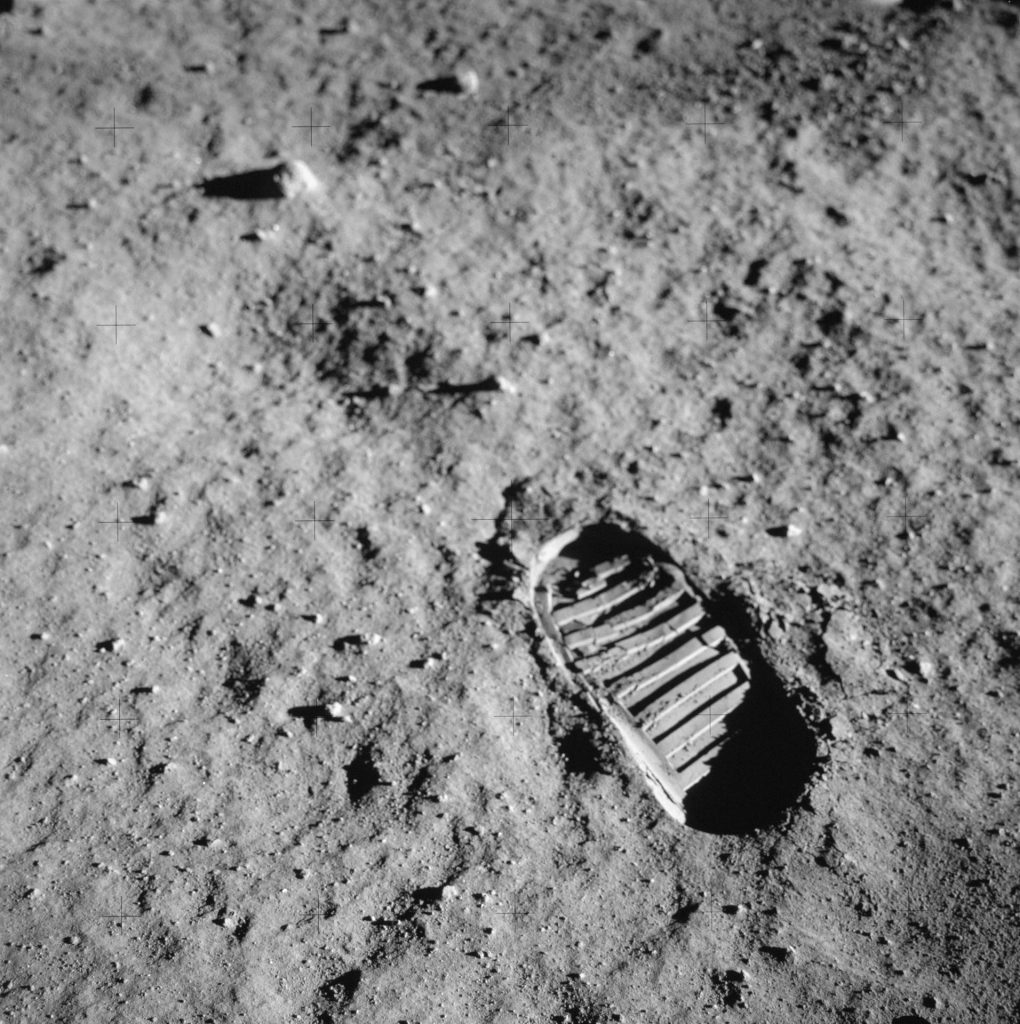
Potatoes Grown in Moon Soil Are as Good as Earth Potatoes, Scientists Find
Scientists have grown potatoes in soil made to copy the surface of the Moon — and the potatoes turned out just as good as the ones grown on Earth.
The experiment, carried out at Oregon State University in the United States and published on Thursday, 19 November 2026, is an important step towards feeding astronauts who may one day live on the Moon for months or even years at a time.
The secret ingredient was surprisingly ordinary: compost made by earthworms. When the researchers mixed enough of this worm compost into the fake moon soil, the potatoes grew, produced tubers, and were safe to eat — matching potatoes grown in normal Earth soil.
“Potatoes provide more calories per land area than many other crops,” said Aymeric Goyer, the Oregon State University plant biologist who led the study. That makes the humble potato a strong candidate for the first crop grown on another world.
What the scientists did
The study, published in the journal npj Microgravity, tested whether potatoes could complete their whole life cycle — from planting, to growing leaves and roots, to producing the tubers we eat — in simulated lunar soil.
The team, led by Goyer and postdoctoral researcher David Handy, used a potato variety called Modoc, an early-maturing potato with red skin and white flesh. They planted it in five different types of fake moon soil. These are known as lunar regolith simulants: powders made on Earth to match the chemistry of the dust collected by the Apollo missions.
Because the Moon’s soil is not the same everywhere, the researchers tested simulants based on both the darker soil of the lunar “seas”, known as mare, and the lighter soil of the lunar highlands. As a control, they also planted potatoes in real soil from Hermiston, Oregon, a region famous for producing some of the highest potato yields in the world.
Then they mixed the fake moon soil with different amounts of vermicompost — a rich, dark compost produced when earthworms break down organic waste — and watched what happened.
The results were clear. In pure fake moon soil, with no compost at all, the potatoes barely grew. They produced almost no roots and almost no tubers. But with a mixture of 70 percent moon soil simulant and 30 percent vermicompost, the plants grew just as well as the ones in Earth soil, and produced the same yield.
“We found that potatoes can complete their entire life cycle in simulated lunar soil when supplemented with organic matter,” Goyer said.
The work was supported by NASA, the American space agency, which is planning a long-term human presence on the Moon.
Why moon soil is so hard to grow things in
The soil on the surface of the Moon is not really soil at all. Scientists call it lunar regolith. It is a layer of loose, crushed rock and dust that covers most of the Moon’s surface. It was formed over billions of years as meteorites smashed into the Moon, grinding the rock into sharp, glass-like particles.
Unlike the soil in a garden on Earth, lunar regolith has almost no organic matter in it. There are no dead leaves, no roots, no worms, and none of the tiny living things that make Earth soil fertile.
“Lunar regolith does not contain any nitrogen, so no crop would grow without supplementing it,” Goyer explained. Nitrogen is one of the main nutrients plants need to grow. Without it, a seed may sprout, but the plant will quickly starve.
The regolith is hostile in another way, too. It contains high levels of heavy metals, including copper, which can poison plants. In the Oregon State experiment, potato plants grown in pure simulant were stunted and had barely any roots. The researchers believe copper was part of the problem, because the leaves and tubers of those plants had built up more copper than normal.
This is why earlier attempts to grow plants in moon-like soil have struggled. The soil is dry, sharp, lifeless, and slightly poisonous — about as far from a farmer’s field as it is possible to get.
The worm compost trick
The breakthrough in this study was the compost. Vermicompost is made by feeding organic waste to earthworms, which digest it and leave behind a dark, crumbly material full of nutrients. Gardeners on Earth have used it for years. On the Moon, it could be made from food scraps and other organic waste produced by astronauts themselves.
The researchers found that the compost does two jobs at once. First, it supplies the nitrogen and other nutrients that the regolith lacks. Second, it appears to lock away some of the harmful heavy metals, protecting the plants’ roots.
“We believe the compost helps balance some of the toxicity we see in lunar regolith by reducing plant exposure to harmful compounds,” said Handy, the study’s first author.
Even a small amount of compost helped. With just 5 percent vermicompost mixed into 95 percent regolith, the potatoes grew some roots and tubers. But the yields were still lower than in Earth soil. It took 30 percent compost to close the gap completely.
Not every type of fake moon soil behaved the same way. One highlands simulant, called NUW-LHT-5M, gave the worst results. In the low-compost test, its plants took about 24 days to emerge from the soil, compared with just 4 to 8 days for the other simulants, and only three out of five plants produced any tubers at all. That tells scientists that the exact recipe will matter — and that soil from different parts of the Moon may need different treatment.
Are the potatoes safe to eat?
Growing a potato is one thing. Eating it is another. A potato grown in soil full of heavy metals could soak up those metals, making it unsafe.
The Oregon State team checked this carefully. They analysed the tubers for their nutritional content and for glycoalkaloids, the natural toxins that potatoes produce and that can cause the green colouring on a potato’s skin when it is exposed to light.
The results were reassuring. The potatoes grown in the compost-mixed moon soil kept their nutritional quality, and there was no statistically meaningful rise in glycoalkaloids compared with the Earth-grown potatoes.
In other words, the lunar potatoes were not just alive — they were normal, healthy food.
There is one catch. The potatoes in this experiment were grown in small pots in a greenhouse, under sunlight and artificial light, at 22 degrees Celsius during the day and 18 degrees at night. Because the pots were small, the potatoes themselves were small too — generally less than a third of an ounce, or about 10 grams, even in the Earth soil. A real lunar farm would need bigger growing beds, more light, and a lot more compost before it could feed a crew.
Why potatoes?
The team chose potatoes for a reason. Potatoes give more calories from a given patch of land than many other crops, which matters a lot when every square metre of a Moon base is precious. They are also filling, easy to store, and simple to cook. Astronauts on the Moon will need food that is energy-dense, because they will be working hard in a harsh environment.
There is also a practical point. Potatoes grow underground, in tubers. That means the part we eat is protected from some of the worst conditions on the surface. And the plants themselves are hardy, able to grow in poor soil as long as they get enough water and nutrients.
The idea of farming on the Moon is not new. For years, scientists have tested growing lettuce, tomatoes, and other crops in space stations and in simulated space soil.
What this means for NASA’s Moon plans
The findings support NASA’s goal of building a lasting human presence on the Moon through its Artemis programme. The plan is for astronauts to live and work on the lunar surface for long periods, rather than just visiting for a few days as the Apollo astronauts did in the 1960s and 1970s.
Feeding those astronauts is one of the biggest problems to solve. Carrying all their food from Earth would be enormously expensive, because every kilogram launched into space costs a fortune. If astronauts can grow even part of their food on the Moon, using the soil beneath their feet and compost made from their own waste, a long stay becomes much more practical.
That is also why NASA has unveiled a $10 billion plan for a Moon base, with cargo deliveries, a nuclear-powered rover, and power towers to keep a lunar outpost running. You can read more about that plan here: NASA Unveils $10 Billion Moon Base Plan: Eight Companies to Deliver Cargo, a Nuclear Rover and Power Towers to the Lunar South Pole
Growing food in space is already being tested closer to home. NASA’s second crew of volunteers recently stepped out of a Mars simulation habitat in Houston after 378 days living in a sealed environment, testing how people cope with long missions far from Earth. You can read about that here: NASA’s Second Mars Simulation Crew Steps Out After 378 Days in a Houston Habitat
The potato study adds a piece to that puzzle: the Moon itself could provide the ground for farming, as long as astronauts bring the right organic matter to mix into it.
What happens next
The Oregon State team is not stopping here. Their next step is to test 10 different potato varieties in simulated lunar soil, to find out which ones are the most nutritious and the most resilient in the harsh conditions.
That matters because not all potatoes are the same. Some varieties cope better with stress, poor soil, or cold nights. Finding the toughest one could make the difference between a small experiment and a working farm.
The researchers also want to understand the science in more depth. Their paper is the first to look at the same time at how the plants grow, which genes switch on and off, and how their chemistry changes in lunar simulants. That gives other scientists a detailed map of what the plants are doing — and where the problems are.
There are still big questions to answer. Real lunar regolith is different from the simulants used in the lab, and no one has yet grown a potato in soil actually brought back from the Moon. A lunar greenhouse would also have to deal with the Moon’s two-week-long nights, extreme temperatures, and radiation from space, none of which were part of this experiment.
But the direction is clear. A crop that feeds billions of people on Earth can also grow in dirt made to copy the Moon — as long as it gets a little help from some earthworms.
Frequently asked questions
Did scientists really grow potatoes on the Moon?
No — not on the Moon itself. The potatoes were grown in a laboratory at Oregon State University, in simulated lunar soil made on Earth to copy the chemistry of the dust collected by the Apollo missions. No potato has ever been grown on the Moon.
Are the moon potatoes safe to eat?
Yes, according to the study. The researchers tested the tubers and found they kept their nutritional quality, with no meaningful rise in glycoalkaloids, the natural toxins found in potatoes. The potatoes were small because they were grown in small pots, but they were normal, healthy food.
Why did the scientists use worm compost?
Lunar regolith has no nitrogen and no organic matter, so nothing can grow in it alone. Vermicompost — compost made by earthworms breaking down organic waste — adds the missing nutrients. It also appears to bind to heavy metals like copper in the regolith, protecting the plants’ roots from poisoning.
How much compost did the potatoes need?
With only 5 percent compost, the potatoes grew but produced less than Earth-grown plants. With 30 percent compost mixed into the fake moon soil, the yield was the same as potatoes grown in good Earth soil from Hermiston, Oregon.
What is NASA’s Artemis programme?
Artemis is NASA’s programme to return astronauts to the Moon and establish a lasting human presence there. Growing food on the Moon is part of that plan, because carrying all food from Earth would be too expensive for long stays.
Which potato variety was used?
The study used a variety called Modoc, an early-maturing potato with red skin and white flesh. The team will next test 10 different varieties to find the most nutritious and resilient ones for lunar farming.
Conclusion
A team at Oregon State University has shown that potatoes can grow, complete their life cycle, and stay safe to eat in soil made to copy the surface of the Moon — as long as the soil is mixed with organic matter from earthworm compost.
With 30 percent vermicompost, the potatoes matched the yield of potatoes grown in some of the best potato soil on Earth. It is a small experiment, carried out in small pots in a greenhouse, but it answers one of the biggest questions about living on the Moon: can we grow our own food there?
The answer, it turns out, is yes — with a little help from worms.
Sources
- Reuters: “Scientists succeed in growing potatoes in simulated moon soil”
- Dawn: “Scientists succeed in growing potatoes in moon soil”
- Phys.org: “Potatoes grown in simulated lunar soil match Earth-grown performance”
- Popular Science: “Potatoes grown in moon dirt are as nutritious as Earth potatoes”
- Sci.News: “Scientists Grow Potatoes in Simulated Lunar Soil”
- Study: David Handy et al., “Growth and molecular responses of potato to lunar regolith simulants”, npj Microgravity (2026), doi: 10.1038/s41526-026-00668-z
