
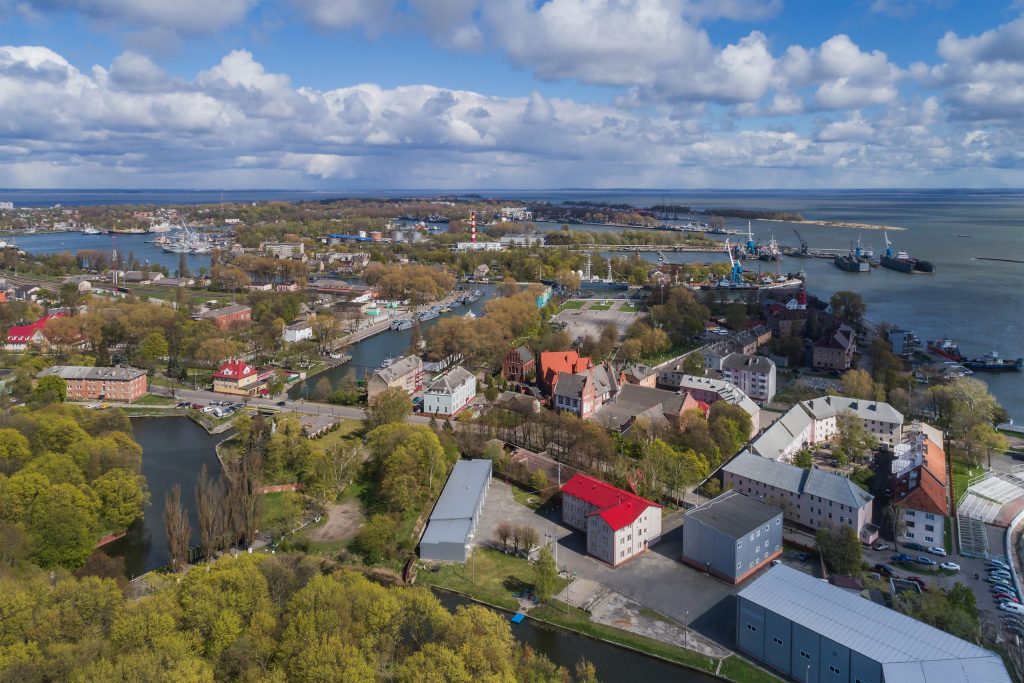
Russia to Spend $576 Million on Two Giant Rail Ferries to Keep Supplies Flowing to Kaliningrad
Russia will spend 47 billion roubles, about $576 million, to build two giant rail ferries to keep supplies flowing to Kaliningrad, its isolated territory on the Baltic Sea. The announcement, made on Monday, 23 November 2026, shows how important the small Russian exclave has become in the growing standoff between Russia and the West — and how much harder it has become to reach it.
Kaliningrad sits on the Baltic coast between Poland and Lithuania, two members of the European Union and NATO. It has no land border with the rest of Russia. Since 2022, when Lithuania stopped many goods from crossing its land on their way to the territory, ships have become Kaliningrad’s lifeline. Now Russia is spending heavily to make that sea link stronger.
This article explains what Russia announced, where Kaliningrad is and why it is so hard to reach, how the sea route became its lifeline, what happened to a Russian cargo ship in the Baltic just days ago, and why the territory matters to NATO as well as to Moscow.
The announcement: two ferries, $576 million, ready by 2030
Russian Prime Minister Mikhail Mishustin announced the plan on Monday, 23 November 2026. Russia will spend 47 billion roubles, worth about $576 million, to build two large rail ferries for the Kaliningrad route.
The two ferries are expected to go into service in 2030. They will sail between the port of Ust-Luga, in Russia’s Leningrad region near St Petersburg, and Baltiysk, the port town in Kaliningrad. Most of the money will come from Russia’s rainy-day fund, its National Wealth Fund, which holds savings from oil and gas earnings for difficult times.
Mishustin explained the reason in plain terms. “Kaliningrad region has a special geography, and due to the unlawful actions of certain countries, disruptions to logistics chains and attempts at a transport blockade are complicating the operations of enterprises located there,” he said.
In other words, Moscow believes other countries are trying to cut Kaliningrad off, and it is spending a large sum of money to make sure that cannot happen.
Where is Kaliningrad, and why is it cut off?
Kaliningrad is one of the most unusual places on the map of Europe. It is a piece of Russia, about the size of a small country, sitting on the Baltic Sea coast — but it does not touch the rest of Russia at all. It is separated from mainland Russia by Lithuania and Belarus. Its neighbours are Poland to the south and Lithuania to the north and east. Both are members of the EU and NATO.
The territory has a long and troubled history. It was once the German city of Königsberg, the capital of East Prussia. At the end of the Second World War, the Soviet Union took control of the area, and in 1946 it was renamed Kaliningrad, after the Soviet leader Mikhail Kalinin. The German population was removed, and the area was settled by Soviet citizens. When the Soviet Union broke up in 1991, Kaliningrad stayed Russian — but it was suddenly cut off from the rest of the country by the newly independent states of Lithuania and Belarus.
Today, about a million people live in the region. Its main city is also called Kaliningrad. Its port town, Baltiysk, is the home of Russia’s Baltic Fleet, the part of the Russian navy that operates in the Baltic Sea. The territory is also a major military base, and Western officials have long watched it closely because of the missiles and troops stationed there.
For many years, getting goods to Kaliningrad was simple enough. Trains and lorries crossed Lithuania on their way from mainland Russia, and ships sailed across the Baltic Sea. That changed in 2022, after Russia launched its full-scale invasion of Ukraine. The EU imposed wide sanctions on Russia, and Lithuania, following those sanctions, banned the transit of many goods through its territory — including construction materials. Suddenly, the land route that Kaliningrad had relied on for decades was partly closed.
How the sea route became the lifeline
With the land route restricted, the sea became the only reliable way to supply Kaliningrad. The change has been dramatic.
Before the war in Ukraine, ships carried only about 8 per cent of the supplies going to Kaliningrad in 2021. Today, sea transport accounts for more than half of everything the territory receives, according to Reuters. About 30 ships, including four rail ferries, now carry goods between Kaliningrad and Russian ports on the Baltic Sea.
A rail ferry is a special kind of ship. Instead of loading goods onto lorries, workers roll whole railway wagons directly onto the ship. At the other end, the wagons roll off and join the railway network. This makes it possible to move large amounts of heavy goods — such as construction materials, fuel, food and factory supplies — without needing lorries or a land border crossing.
The two new ferries will add to the four rail ferries already in service. Together, they will give Russia more capacity to move goods by sea and less reason to depend on the land route through Lithuania.
The cost is significant. At 47 billion roubles, the project is one of the biggest transport investments Russia has announced for the region. Paying for it from the National Wealth Fund, the country’s rainy-day savings, shows that Moscow treats the supply of Kaliningrad as a national priority, not a routine transport project.
The Baltic is getting more dangerous
The announcement came just days after a reminder that the sea route itself is no longer safe. On Saturday, 21 November, a Russian cargo ship called Sparta II caught fire in the Baltic Sea after being hit by drones. The ship has links to the Russian military and was transporting cargo to Kaliningrad. Finland’s military said the attack was likely carried out by Ukraine.
The incident underlined the growing security risks in the Baltic. The sea, once a quiet trade route, has become a place where ships, cables and pipelines are at risk. Ukraine has been striking Russian ships and ports far from the front line, and the Baltic is now part of that wider conflict.
There was a second warning sign the same day. On Saturday, 21 November, the governor of Kaliningrad, Alexei Besprozvannykh, said a drone alert had gone off in a district bordering Lithuania after a “suspicious object” was seen. No further details were given, but the alert added to the sense that the region is on edge.
Against that background, the decision to build two more large ferries makes sense from Moscow’s point of view. More ships mean more capacity — and if one ship is damaged or delayed, others can keep the supplies moving.
The nuclear warning to NATO
Kaliningrad is not only a supply problem for Russia. It is also one of the most sensitive military flashpoints in Europe.
In a document sent to NATO in September, Russia warned that it would be ready to resort to nuclear weapons if the Western alliance attempted to cut off Kaliningrad, Reuters reported. The warning shows how seriously Moscow takes the territory — and how dangerous any attempt to isolate it could become.
NATO, for its part, watches Kaliningrad closely. The territory sits next to the Suwałki Gap, a narrow strip of land between Kaliningrad and Belarus, along the border between Poland and Lithuania. Military planners on both sides see this strip as a weak point: in a crisis, Russian forces could try to push through it and cut the Baltic states of Lithuania, Latvia and Estonia off from the rest of NATO by land. That is why Poland and Lithuania have strengthened their defences in the area, and why NATO holds regular exercises nearby.
The ferries do not change the military balance on their own. But they are part of a wider pattern: Russia is preparing for a long period of tension in the Baltic, and it is building the transport links it needs to keep its most exposed territory supplied.
Why this matters beyond Kaliningrad
For most people, a pair of ferries in the Baltic Sea may seem like a small story. But it is a useful window into the bigger picture of Europe in 2026.
First, it shows that the sanctions imposed on Russia after the invasion of Ukraine are having a real effect. They have forced Moscow to rethink how it supplies a whole region, and to spend hundreds of millions of dollars building new ships to get around them.
Second, it shows that the Baltic Sea has become a front line. Ships are being attacked, undersea cables have been damaged in recent years, and countries around the sea — including Finland and Sweden, which have both joined NATO since 2022 — are spending more on defence.
Third, it shows that neither side expects the tension to end soon. A ferry that enters service in 2030 is a long-term investment. Russia is planning for a future in which Kaliningrad remains cut off by land and dependent on the sea for years to come.
For the people of Kaliningrad, the stakes are more immediate. They depend on the ships for food, fuel, building materials and everyday goods. If the ferries work as planned, their supplies will be more secure. If the Baltic grows more dangerous, even the sea route could come under strain.
What happens next
The two ferries are not expected to enter service until 2030, so the next four years will be a waiting game. In the meantime, the existing fleet of about 30 ships, including the four rail ferries already running, will have to carry the load.
Several things are worth watching:
- Construction. Building two giant rail ferries is a major job for Russian shipyards, which are already busy and are themselves affected by sanctions on parts and technology. Delays are possible.
- The Baltic. If attacks on ships in the Baltic continue, Russia may need to spend more on protecting the route, and insurance and shipping costs will rise.
- Lithuania and the EU. Any change in the transit rules for goods crossing Lithuania would change the picture for Kaliningrad at once. For now, there is no sign of the restrictions being lifted.
- NATO. The alliance will keep watching Kaliningrad and the Suwałki Gap. Any military build-up in the region will draw a response from Poland and Lithuania.
The ferry announcement is a small piece of a much larger story — the story of a Europe divided by war, sanctions and mistrust, where even the supply of a small territory on the Baltic coast has become a matter of national security.
Frequently asked questions
How much is Russia spending on the new Kaliningrad ferries?
Russia will spend 47 billion roubles, about $576 million, to build two giant rail ferries. Most of the money will come from Russia’s National Wealth Fund, its rainy-day savings.
When will the ferries be ready?
The two ferries are expected to go into operation in 2030. They will sail between Ust-Luga in Russia’s Leningrad region and Baltiysk in Kaliningrad.
Where is Kaliningrad?
Kaliningrad is a Russian territory on the Baltic Sea coast, between Poland and Lithuania. It has no land border with the rest of Russia. Its main port is Baltiysk, home to Russia’s Baltic Fleet.
Why does Kaliningrad need ferries?
Since 2022, Lithuania has banned the transit of many goods, including construction materials, through its territory under EU sanctions on Russia. Ships have become the main way to supply Kaliningrad, carrying more than half of its supplies, up from only about 8 per cent in 2021.
What is a rail ferry?
A rail ferry is a ship that carries whole railway wagons. The wagons roll onto the ship at one port and roll off at the other, so heavy goods can be moved by sea without lorries or a land border crossing.
What happened to the Sparta II?
On Saturday, 21 November 2026, the Russian cargo ship Sparta II, which has links to the military and was carrying cargo to Kaliningrad, caught fire in the Baltic Sea after being hit by drones. Finland’s military said the attack was likely carried out by Ukraine.
Why does Kaliningrad matter to NATO?
Kaliningrad sits next to the Suwałki Gap, a narrow strip of land between Kaliningrad and Belarus along the Poland-Lithuania border. NATO sees the area as a weak point, because Russian forces could try to push through it and cut the Baltic states off from the rest of the alliance by land. Russia has also warned it would be ready to use nuclear weapons if NATO tried to cut off Kaliningrad.
Conclusion
Russia’s decision to spend $576 million on two new rail ferries for Kaliningrad is about much more than ships. It is a sign of how deeply the war in Ukraine and the sanctions that followed have changed the map of Europe. A territory that once relied on trains crossing Lithuania now depends on the sea, and Moscow is spending heavily to make sure that sea link cannot be broken.
The ferries will not sail until 2030. Until then, Kaliningrad will depend on the ships already crossing the Baltic — in waters that have become more dangerous, as the attack on the Sparta II showed. For Russia, for Lithuania and Poland, and for NATO, the small exclave on the Baltic coast will remain a place to watch.
