
Russian Warplanes Enter South Korea’s Air Defence Zone as Island Residents Are Told to Take Shelter
Several Russian military aircraft flew into South Korea’s air defence zone early on Tuesday morning, 24 November 2026, approaching the small eastern island of Ulleung and prompting the South Korean Air Force to scramble fighter jets. For a few tense minutes, residents of the island were told to take shelter underground — before the government lifted the warning and admitted that its first alert had been wrong.
South Korea’s military later clarified that the Russian aircraft had entered the country’s air defence identification zone, known as KADIZ, but had not crossed into South Korean airspace itself. The incident ended without any clash, but it has raised fresh questions about how the government handles emergency alerts — and about a pattern of Russian flights near South Korea that has now repeated two weeks in a row.
What happened on Tuesday morning
According to South Korea’s Joint Chiefs of Staff, several Russian warplanes briefly entered the air defence identification zone over the East Sea early on Tuesday, flying towards Ulleung Island before turning away and leaving the zone.
The South Korean military said it had been tracking the Russian aircraft before they entered the zone, and the Air Force scrambled fighter jets in response in case of contingencies.
The fighter jets carried out what the military described as “tactical manoeuvres” to prevent any incident. The military said the aircraft came very close to South Korean airspace, then turned away and left the zone.
The military did not immediately say what types of aircraft they were.
The shelter alert — and the confusion that followed
While the jets were in the air, the government issued an emergency alert to the people of Ulleung Island. At 7:52 a.m. local time, the Ministry of the Interior and Safety sent a warning telling residents to move to underground facilities or take shelter inside buildings.
The alert was lifted about three minutes later, at around 7:55 a.m., once the aircraft had left the area. But the confusion did not end there.
The first alert said a Russian aircraft had violated South Korean airspace. Then a second message from the North Gyeongsang provincial government said something different: it described the aircraft as a suspected North Korean plane. That second message turned out to be wrong — the phrase about a North Korean aircraft had come from a training template and was sent in error.
The Joint Chiefs of Staff then corrected the record. The Russian aircraft had entered the air defence identification zone, the military said, but there had been no intrusion of South Korean airspace at all.
A spokesperson for the Joint Chiefs of Staff, Jang Do-young, explained why the shelter warning had been issued at all. “Airspace intrusion was anticipated, therefore in order to protect the safety of our people, we issued a warning preemptively,” he told a briefing.
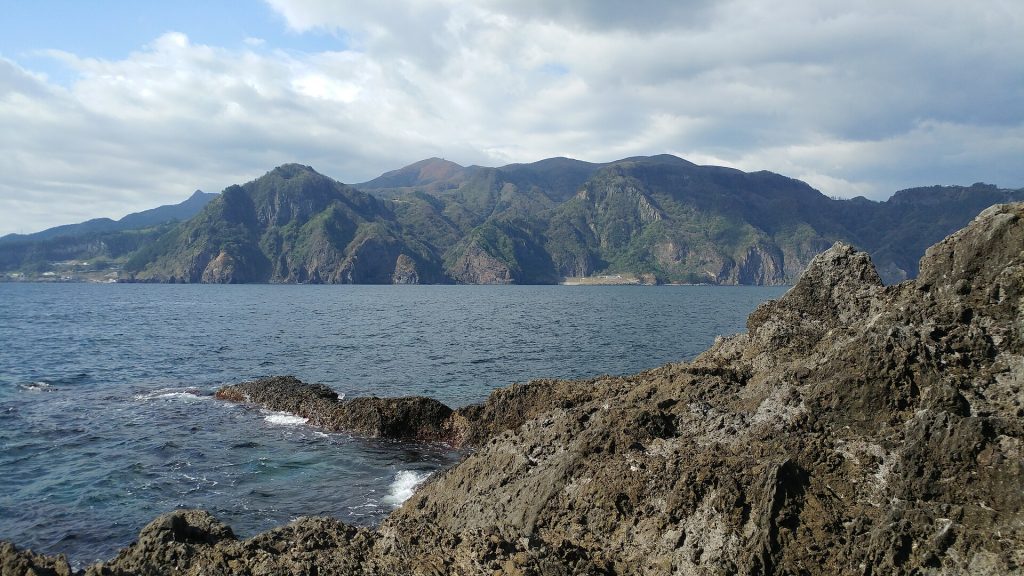
There were no immediate reports of accidents or major disruptions on Ulleung Island, which has a population of around 9,000 people. The island sits in the East Sea, also known as the Sea of Japan, off the east coast of the Korean Peninsula.
The mix-up over the alerts has already drawn criticism at home. Opposition politicians have called on the government to explain the full sequence of events — why the first message said the airspace had been violated, and why a second message wrongly named North Korea — and to give the public a clear and responsible account of what happened.
What is an air defence identification zone?
Much of the confusion comes down to one important difference: an air defence identification zone is not the same thing as a country’s airspace.
A country’s airspace is the sky directly above its land and its territorial waters. Flying into it without permission is a violation of that country’s sovereignty, and it is a serious matter.
An air defence identification zone, or ADIZ, is different. It is a much larger area that a country declares around itself so that it can identify and respond to aircraft approaching its airspace. Aircraft entering an ADIZ are expected to identify themselves, but the zone itself is not sovereign territory — and entering it is not the same as entering a country’s airspace.
South Korea’s zone is called KADIZ, short for Korea Air Defense Identification Zone. It covers a wide area over the seas around the Korean Peninsula, including the East Sea where Ulleung Island sits.
Russia does not recognise South Korea’s ADIZ, and Russian military aircraft have entered it several times in recent months. That is why Tuesday’s flight, while serious enough to scramble fighter jets and issue a shelter warning, was not the same as a violation of South Korean airspace.
The distinction matters because it decides how a country responds. An airspace violation can be treated as an attack on sovereignty. An ADIZ entry is usually met with fighter jets sent to watch, identify and escort the aircraft away — which is what happened on Tuesday.
A pattern, not a one-off
Tuesday’s incident was not the first of its kind — and that is part of why it matters.
Just a week earlier, South Korea scrambled fighter jets to repel several Russian military aircraft that it said had temporarily entered the country’s air defence zone over the waters between the Korean Peninsula and Japan. Japan also scrambled fighter jets after suspected Russian aircraft entered its airspace around the same time. Findivoza reported on that incident at the time.
Russian aircraft have entered South Korea’s air defence zone several times in recent months, according to reports. Each time, South Korea has sent up fighter jets to monitor them, and each time the aircraft have left without crossing into South Korean airspace.
But the shelter warning issued on Tuesday was rare. Even though Russian flights into the zone have become more common, a civil defence warning telling residents to urgently take shelter is not something that happens often. That is one reason the incident has drawn so much attention — and why the errors in the alerts have caused so much anger.
The timing also matters. Tensions in the region remain high. North Korea has been carrying out a series of weapons tests, and relations between Russia and South Korea have been strained since Russia’s full-scale invasion of Ukraine. South Korea has supported Ukraine and joined Western sanctions against Russia, while Russia has grown closer to North Korea — a country that is technically still at war with the South.
What happens next
South Korea’s defence ministry did summon the Russian military attaché later on Tuesday. Kim Hak-jo, director general of the international policy bureau at the ministry, delivered a stern protest to Col. Nikolai Marchenko, urging Moscow to take steps to prevent a recurrence. The foreign ministry also expressed regret to Moscow through diplomatic channels. The Russian Embassy in Seoul said, through the state news agency Tass, that its warplanes had committed no violations of international law and that Seoul had unilaterally established the air defence zone.
Beyond that, the government faces questions at home about its emergency alert system. The sequence on Tuesday morning — a warning that the airspace had been violated, lifted within three minutes, followed by a message wrongly naming North Korea — has damaged public trust in a system that people rely on in a real emergency.
The military will also be watching for what comes next in the skies. If Russian aircraft return to the zone in the coming days or weeks, South Korea will again have to decide how to respond — and whether to issue another public warning.
For now, the immediate crisis is over. The Russian aircraft have left, the alert has been lifted, and life on Ulleung Island is back to normal. But the questions raised by those three minutes on Tuesday morning are likely to last much longer.
Why this matters
This story matters for three reasons.
First, it shows how quickly a routine military encounter can become a public scare. The Russian aircraft never entered South Korean airspace, and no shots were fired. Yet within minutes, thousands of people on a small island were told to take shelter underground. In a region where tensions are high, that is how a misunderstanding can grow into something far more serious.
Second, it shows that the pattern of Russian flights near South Korea is continuing. Two incidents in two weeks, plus several more in recent months, suggest this is now a regular feature of the region’s security picture — not a rare event.
Third, it is a reminder that emergency alert systems only work if people trust them. When the government sends out a warning that turns out to be wrong, and then a second message that is wrong in a different way, people may be slower to act the next time a real emergency comes. Getting the alerts right matters as much as getting the fighter jets up.
Frequently asked questions
Did Russian aircraft enter South Korean airspace?
No. South Korea’s Joint Chiefs of Staff confirmed that the Russian aircraft entered the country’s air defence identification zone (KADIZ) but did not cross into South Korean airspace. The first government alert, which said the airspace had been violated, was incorrect.
What is the difference between an ADIZ and airspace?
Airspace is the sky above a country’s land and territorial waters — entering it without permission violates that country’s sovereignty. An air defence identification zone is a larger declared area where a country asks approaching aircraft to identify themselves. Entering an ADIZ is not the same as entering airspace.
Why were Ulleung Island residents told to take shelter?
The Ministry of the Interior and Safety issued a pre-emptive shelter warning at 7:52 a.m. because an airspace intrusion was thought to be possible. The warning was lifted about three minutes later, once the aircraft had left the area.
Why did a message say the aircraft was North Korean?
A second message from the North Gyeongsang provincial government wrongly described the aircraft as a suspected North Korean plane. The phrase came from a training template and was sent in error. The military later confirmed the aircraft were Russian.
How many Russian aircraft were involved?
About five Russian warplanes entered the zone, according to the Joint Chiefs of Staff, but the military did not immediately say what types of aircraft they were.
Has this happened before?
Yes. A week earlier, South Korea scrambled fighter jets after Russian military aircraft entered its air defence zone, and Japan also scrambled jets after suspected Russian aircraft entered its airspace. Russian aircraft have entered South Korea’s air defence zone several times in recent months.
What will South Korea do about it?
The defence ministry summoned the Russian military attaché in Seoul on Tuesday and delivered a stern protest, and the foreign ministry expressed regret to Moscow through diplomatic channels.
Conclusion
On Tuesday morning, several Russian warplanes flew into South Korea’s air defence zone near Ulleung Island, South Korean fighter jets went up to meet them, and thousands of island residents were briefly told to take shelter. Within minutes it was over — the Russian aircraft left, the alert was lifted, and no airspace had been violated.
But the incident has left behind two problems that will not be solved so quickly. The first is the pattern itself: Russian military flights into South Korea’s air defence zone are happening again and again, and each one carries the risk of a miscalculation. The second is the confusion in the government’s own alerts, which wrongly told the public that the airspace had been violated and then wrongly blamed North Korea.
South Korea’s protest to Moscow was delivered the same day, and the Russian Embassy replied that its aircraft had broken no international law. The harder task will be fixing the alert system — so that the next time the jets go up, the people on the ground get the right message the first time.
Sources
– Yonhap News Agency: “Russian warplanes enter air defense zone: S. Korean military”
– Reuters: “South Korea briefly issues evacuation warning after Russia aircraft enters airspace”
– Associated Press (via NDTV): “South Korea Says Suspected North Korean Aircraft Breached Island’s Airspace”
– The Korea Times: “S. Korea briefly issues alert on eastern island after Russian warplanes near airspace”
– Channel News Asia: “South Korea issues ‘take shelter’ warning after Russia aircraft fly near airspace”
– The Straits Times: “South Korea issues take shelter warning after Russian aircraft fly near airspace”
– Korea JoongAng Daily: “Seoul issues emergency alert after suspected Russian aircraft over Ulleung Island”
