
Saudi Arabia Extends $3 Billion Financing for Pakistan as Hopes for US Support Fade
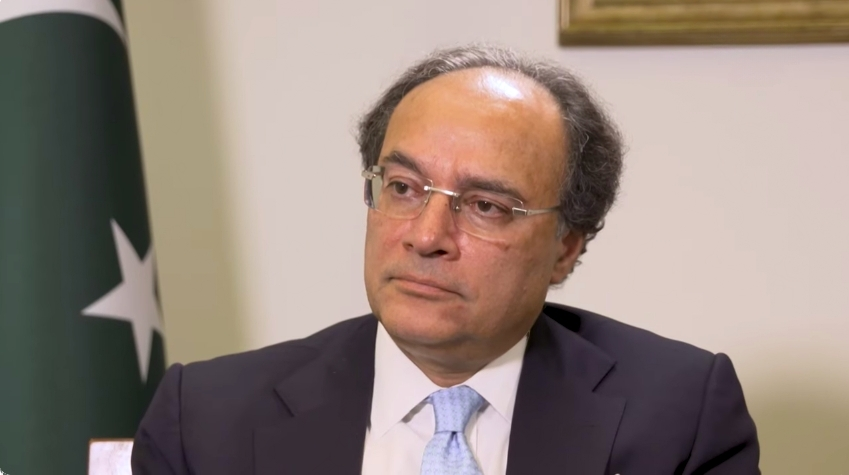
Saudi Arabia has extended a $3 billion financing facility for Pakistan, giving the country breathing room on its foreign payments just as hopes of a $10 billion support package from the United States appear to be fading. Finance Minister Muhammad Aurangzeb confirmed the extension on Wednesday, telling reporters at Parliament House in Islamabad that Riyadh had agreed to roll over the facility for a “reasonable period”.
The announcement removes an immediate worry for Pakistan’s economy. The $3 billion facility had matured on 31 October, and without an extension, Pakistan would have had to repay it or find the money from somewhere else. Instead, the money stays in place, and Pakistan’s foreign exchange reserves — the dollars and other foreign currency the country holds to pay for imports and repay loans — remain intact.
“It has been extended, and for a reasonable period,” Aurangzeb said, according to Dawn. “You don’t need to worry as to for how long, given the kind of strategic relationship we have.”
He did not say exactly how long the extension runs for. But the message was clear: Saudi Arabia, Pakistan’s long-standing financial partner, is continuing to stand behind it.
What the $3 billion facility is
To understand why this matters, it helps to know where the $3 billion came from in the first place.
Saudi Arabia provided the facility in April this year, shortly after Pakistan repaid $3.5 billion to the United Arab Emirates. At the time, the money was given for an initial term of three months. In simple terms, it was a short-term loan to help Pakistan bridge a gap: money had gone out to the UAE, and the Saudi facility helped fill the hole it left behind.
The facility matured on 31 October. A maturity date is the date a loan falls due. When a friendly country “rolls over” a facility, it agrees to extend that date instead of demanding repayment. The money stays with the borrower for longer.
This is not a gift or a grant. It is financing that Pakistan will eventually have to repay. But a rollover takes the pressure off today, and it avoids forcing Pakistan to spend its reserves or borrow at expensive rates from the market to meet the repayment.
A second, bigger Saudi facility is already in place
The $3 billion facility is not the only Saudi money supporting Pakistan. Aurangzeb also confirmed that a separate $5 billion Saudi financing facility has already been extended until 2028.
Taken together, the two facilities — $3 billion now rolled over for a reasonable period and $5 billion in place until 2028 — show how important Saudi Arabia is to Pakistan’s external finances. When Pakistan has faced payment pressures in the past, Riyadh has repeatedly stepped in with deposits and financing to shore up the country’s reserves.
Aurangzeb also made a point of saying that Pakistan had not asked Saudi Arabia for any additional support beyond the extension. He said this was not needed because the country’s foreign exchange reserves were strong enough to cover more than three months of imports. Three months is generally seen as a comfortable level, and Aurangzeb said the government expected to build this to four months of import cover by the end of the year through capital-market financing.
What about the $10 billion from the United States?
The Saudi extension comes at a moment when another piece of Pakistan’s financing plans — a proposed $10 billion facility from the United States — looks less certain than it did a few months ago.
Pakistan had sought the $10 billion Exchange Stabilisation Support Facility, known as the ESSF, from Washington in July this year. The idea was that it would act as a liquidity backstop for the government — a safety net of ready money that Pakistan could draw on if it ran into payment difficulties.
But on Wednesday, Aurangzeb moved to lower expectations that he himself had raised over the past several months. His argument was that Pakistan had already achieved the main thing it wanted from the United States: access to international capital markets.
“What we asked for back in July and were looking at was the market access. We have got the market access,” he said, referring to the $3 billion bond Pakistan issued in September. That bond attracted orders worth $6 billion — twice the amount Pakistan was offering — which showed that international investors were willing to lend to the country again after a long absence from global bond markets.
Aurangzeb did not close the door on the American facility entirely. “If that (ESSF) materialises, fantastic, it will be a liquidity support facility,” he said. “Otherwise, we have plans for further Eurobond issuance, Panda bond issuance and rupee-linked dollar-settled bond.”
In other words, Pakistan has a Plan B — and a Plan C. If the US facility does not come through, the government will raise money by issuing more bonds: Eurobonds in international markets, Panda bonds in China, and bonds linked to the rupee but settled in dollars.
“If possible, fine; if not, we are going to move forward, with or without it,” Aurangzeb said.
The finance minister had met US Treasury Secretary Scott Bessent in Washington as part of the discussions over the facility. He also said Pakistan was looking at its engagement with the United States more broadly, pointing to the role of the US Export-Import Bank and the Development Finance Corporation, which could support American investors and exporters operating in Pakistan.
“That is real financing and real credit,” he said, drawing a distinction between that kind of support — money tied to actual trade and investment — and the ESSF, which he described as a liquidity-support facility for the government.
Pakistan’s plan: borrow longer, borrow cheaper
Behind the headlines about Saudi Arabia and the United States sits a bigger strategy. Aurangzeb told the Senate Standing Committee on Finance on Wednesday that the government is trying to change the shape of Pakistan’s debt: replacing expensive short-term borrowing with longer-term financing through bonds and private placements, in order to reduce refinancing risk.
Refinancing risk is the danger that comes from borrowing money for a short period and then having to borrow again — possibly at a worse rate — when the loan falls due. Borrowing for five or ten years instead gives a government more certainty and more time.
Aurangzeb said he had held meetings with 70 to 80 institutional investors during his visit to Bangkok for the World Bank-IMF meetings, and that there was clear interest in five-year and 10-year maturities. That matters because it suggests investors are willing to lend to Pakistan for longer periods — something they would only do if they believed the country’s economy was on a steadier path.
“Our objective is not to increase external debt,” Aurangzeb told the committee. “All the transactions like Eurobond, Panda bond or private placements have been replacement bonds to replace expensive with cheaper facilities.”
The government is also targeting a reduction in external debt itself: $4 billion in the current fiscal year and a further $3.5 billion next year. That would be more than the $4.5 billion reduction recorded in the last fiscal year.
The debt numbers, explained simply
The scale of Pakistan’s debt is large, and the finance minister set out the figures in some detail to the Senate committee.
Pakistan’s external debt — the money the government and state owe to foreign lenders — rose from $45 billion in 2014-15 to around $100 billion. For most of that period it was growing by $5 billion to $6 billion every year. But Aurangzeb said the annual increase had slowed to only about $1 billion over the past two years.
Finance Secretary Imdadullah Bosal told the committee that public debt had fallen to 68.6 per cent of GDP at the end of June 2026, down from 75.1 per cent in the 2022-23 fiscal year. GDP is the total value of everything a country produces in a year, so the debt-to-GDP ratio shows how big the debt is compared with the size of the economy. A falling ratio means the debt is growing more slowly than the economy — or shrinking relative to it.
Bosal added that year-on-year growth in public debt had slowed to 7.7 per cent in the last fiscal year, the lowest in 20 years. Domestic debt stood at Rs58.8 trillion at the end of August, down from Rs68.4 trillion at the end of June, while foreign debt remained stable at $98.2 billion.
There are still large payments to make. Gross external financing repayments stand at $21.5 billion, including $17 billion in principal and $4 billion in interest. Net financing requirements stood at $11 billion after rollovers, of which $5 billion had already been repaid in the first four months of the current fiscal year. The remaining $6 billion is payable over the next seven months.
On the brighter side, Aurangzeb said foreign exchange reserves had crossed $21.5 billion, which he described as “the best-ever level of reserves in our history”. He credited fiscal discipline — the government spending within its means — with containing both the fiscal deficit and the current account deficit. Despite higher oil and wheat import bills, the current account deficit was expected to remain within 1 per cent this year.
“This is hard-earned stability that helped create buffers to meet our requirements despite floods and war in the region,” Aurangzeb said.
What happens next
There are several dates and developments to watch in the coming weeks.
The first is the International Monetary Fund. Aurangzeb said the IMF Executive Board was expected to meet in December to approve a disbursement of $1.2 billion to Pakistan. IMF board approval is an important milestone because it unlocks the next tranche of the Fund’s lending programme — and because other lenders and investors often take their cue from the IMF’s judgement.
The second is the bond market. Pakistan has already shown it can raise $3 billion through a Eurobond issue in September, and the government is planning further Eurobond, Panda bond and dollar-settled bond issuances. Whether investors keep buying — and at what price — will be a test of how much confidence the market really has in Pakistan’s economy.
The third is the reserves target. Aurangzeb said the government aimed to build foreign exchange reserves to four months of import cover by the end of the year. Reaching that target would give Pakistan a bigger cushion against shocks, whether from oil prices, floods or regional tensions.
And the fourth is the US facility itself. The ESSF has not been formally rejected, and Aurangzeb left the door open. But his language on Wednesday — “with or without it” — suggests Pakistan is no longer counting on it. The focus has shifted to what Pakistan can raise on its own: bonds, longer maturities and cheaper refinancing.
The Saudi rollover does not solve Pakistan’s economic problems. The country still owes about $100 billion to foreign lenders, still has to repay $6 billion over the next seven months, and still depends on the IMF programme and on bond markets staying open. But it does buy time — and time is what Pakistan needs to turn a fragile stability into something more durable.
Why this matters for ordinary Pakistanis
It is easy to see all of this as distant, technical news — billions of dollars, bond maturities, import cover. But it affects everyday life in Pakistan in very direct ways.
When a country runs low on foreign exchange reserves, it struggles to pay for imports. That can mean shortages of fuel, medicine and food, and pressure on the rupee. A weaker rupee makes everything imported — including petrol and cooking oil — more expensive, and pushes up inflation, which hits household budgets hardest.
When a country has comfortable reserves and access to international markets, the opposite happens. The government can pay its bills on time, the currency is steadier, and there is less need for sudden, painful measures such as sharp interest rate rises or emergency taxes.
The real test will be whether the government can use that time to keep reducing debt, keep building reserves and keep the economy growing, rather than simply borrowing more. On Wednesday, Aurangzeb’s message was that the plan is to do exactly that — with or without the $10 billion from Washington.
Frequently asked questions
What is the $3 billion Saudi facility?
It is a financing facility Saudi Arabia provided to Pakistan in April 2026, shortly after Pakistan repaid $3.5 billion to the United Arab Emirates. It was initially given for three months and matured on 31 October 2026. Saudi Arabia has now agreed to extend it for a “reasonable period”, the exact length undisclosed.
Is the Saudi money a gift?
No. It is a financing facility — effectively a loan — that Pakistan will eventually have to repay. A rollover extends the repayment date rather than cancelling the debt.
What is the $10 billion US facility Pakistan asked for?
Pakistan requested a $10 billion Exchange Stabilisation Support Facility (ESSF) from the United States in July 2026. It was meant to act as a liquidity backstop for the government. Finance Minister Muhammad Aurangzeb has now lowered expectations that it will materialise, saying Pakistan has already achieved its main goal of regaining access to international capital markets.
How will Pakistan raise money instead?
Through bond issues: further Eurobonds in international markets, Panda bonds in China, and rupee-linked dollar-settled bonds. Pakistan raised $3 billion through a Eurobond in September 2026, which attracted $6 billion in orders from investors.
What is Pakistan’s debt situation now?
External debt is around $100 billion, up from $45 billion in 2014-15, but the annual increase has slowed to about $1 billion over the past two years. Public debt has fallen to 68.6 per cent of GDP, down from 75.1 per cent in 2022-23. Foreign exchange reserves have crossed $21.5 billion, which the finance minister described as the best level in Pakistan’s history.
When is the next IMF decision?
The IMF Executive Board is expected to meet in December 2026 to approve a $1.2 billion disbursement to Pakistan.
Conclusion
Saudi Arabia’s decision to extend the $3 billion financing facility is good news for Pakistan, but it is best understood as breathing room rather than a solution. It takes an immediate repayment off the table, protects the country’s reserves and signals that Riyadh’s support continues.
The bigger story is the shift in Pakistan’s financing strategy. With the $10 billion US facility looking uncertain, the government is leaning on bond markets, longer maturities and cheaper refinancing — and on the argument that Pakistan has already proved it can raise money on its own. The September bond issue, which drew $6 billion in orders, supports that claim.
The months ahead will show whether the strategy holds: an IMF board meeting in December, further bond issues, and the steady work of reducing a $100 billion external debt pile. For now, Pakistan has bought itself time. What it does with that time is the question that matters most.
Sources
- https://www.theweek.in/wire-updates/international/2026/11/05/saudi-arabia-extends-usd-3-billion-financing-facility-for-pakistan.html
- https://www.news18.com/world/saudi-bails-out-pakistan-with-3-billion-lifeline-as-us-10-billion-liquidity-support-remains-uncertain-ws-l-10413939.html
- https://epaper.brecorder.com/2026/11/05/1-page/1125986-news.html
This article is for general information and education only. It is not legal or financial advice.

Pingback: Pakistan Signs Up for Expo 2030 Riyadh: What the Pavilion in the Culture District Means for Trade, Tourism and Ties with Saudi Arabia - Findivoza
Pingback: Türkiye Ratifies Makkah Defence Pact With Pakistan and Saudi Arabia: What the 279–119 Vote Means - Findivoza
Pingback: Pakistan Trade Deficit Widens to $14.63 Billion as Imports Surge and Exports Crawl - Findivoza