
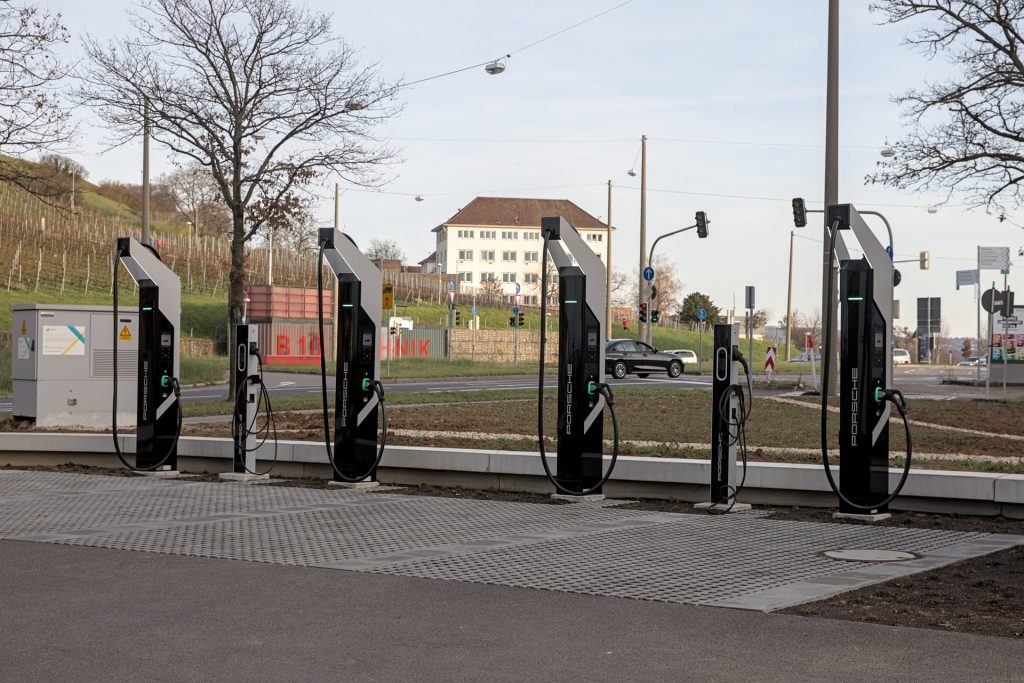
Sindh to Replace Petrol Government Vehicles with Electric Vehicles — What the Shift Means
The Sindh government has decided to gradually replace the petrol and diesel vehicles used by its departments with electric vehicles (EVs), in a move aimed at cutting fuel costs, saving public money and reducing air pollution in Pakistan’s largest province.
The decision was taken at a meeting of the Cabinet Committee on Austerity in Karachi on Friday, 13 November 2026, chaired by Senior Minister Sharjeel Inam Memon. From now on, electric vehicles will get preference whenever a Sindh government department buys a new vehicle, and the province plans to shift its entire official fleet to environment-friendly technology over time.
It is a small step in itself — no department is being told to scrap its existing cars tomorrow — but it is a clear signal of where the province wants its transport to go. And it comes at a moment when Pakistan as a whole is pushing electric vehicles harder than ever before.
This article explains what Sindh decided, why it matters, what happens first, and what the change could mean for ordinary people in the province.
What Sindh decided
The meeting was held to review ways to reduce government spending, save fuel and check what vehicles each department actually needs. It was attended by Local Government Minister Syed Nasir Hussain Shah, provincial secretaries and other senior officials.
Three decisions came out of it.
First, the government approved the purchase of new vehicles for three departments: the Home Department, the Anti-Corruption Establishment, and the Universities and Boards Department. These are departments that need vehicles for their daily work, and their requests had been waiting for approval.
Second, and more importantly, the committee agreed that electric vehicles will be given preference in all future vehicle purchases by government departments. In plain terms, the next time a department needs a new car, it should buy an electric one if a suitable model is available, rather than another petrol or diesel car.
Third, the province committed to a gradual shift of the whole government vehicle system to electric technology. This is not an overnight switch. The existing petrol and diesel vehicles will keep running, and electric vehicles will replace them bit by bit as new purchases are made.
Senior Minister Sharjeel Inam Memon, who also holds the portfolios of information, transport and mass transit, said saving official resources was among the provincial government’s priorities.
“The future belongs to EVs and the Sindh government wants its institutions to adopt environment-friendly technology and reduce dependence on conventional fuels,” he said.
He added that the gradual move to electric vehicles would also help reduce the day-to-day spending of government departments — because an electric vehicle costs far less to run per kilometre than a petrol car, even though it usually costs more to buy.
Local Government Minister Syed Nasir Hussain Shah pointed to a different reason: the air. He said the smoke emitted by conventional vehicles affects the urban environment and air quality, and that the government wants to promote electric vehicles in local government institutions as well.
Why the switch matters: money and air
There are two simple reasons behind the decision, and both are easy to understand.
The first is money. The government runs thousands of vehicles across Sindh — in the police, in district offices, in health and education departments, and in local government. Every one of them burns petrol or diesel every day, and fuel is one of the biggest day-to-day costs of running a government. Pakistan imports most of its fuel, and fuel prices have risen sharply in recent years. An electric vehicle, by contrast, runs on electricity, which costs much less per kilometre. Over the life of a vehicle, the savings add up — and when the vehicles belong to the government, those savings come out of public money.
The second reason is the air. Karachi, Hyderabad and other Sindh cities regularly face poor air quality, and vehicle exhaust is one of the biggest causes. Petrol and diesel vehicles pump out smoke and gases that harm lungs, especially those of children and older people. Electric vehicles produce no exhaust at all. Replacing government vehicles will not clean the air on its own — government cars are only a small share of all the vehicles on the road — but it is a start, and it sets an example for others to follow.
What happens first
The first vehicles to be bought under the new policy will be for the three departments whose purchases were approved at Friday’s meeting: the Home Department, the Anti-Corruption Establishment, and the Universities and Boards Department.
The meeting did not say how many vehicles these departments will buy, what models they will choose, or how much the purchases will cost. Those details will come later, when the departments place their orders. What is clear is that when they do, electric models will be preferred.
The decision also builds on something Sindh has already done. The province has extended tax and registration incentives for non-commercial electric vehicles until May 2028, making it cheaper for private buyers to own an EV as well. The government’s own fleet is now following the same direction as its tax policy.
The bigger picture: Pakistan’s electric vehicle push
Sindh’s decision does not stand alone. It is part of a much bigger push towards electric vehicles across Pakistan, driven by the federal government.
In June 2025, Pakistan launched its New Energy Vehicle (NEV) Policy 2025–30. The policy sets a clear target: electric vehicles should make up 30% of all new vehicle sales by 2030. That is a target for new sales, not for every vehicle already on the road — the millions of petrol cars and motorbikes already in use will not disappear. But it means that three out of every ten new vehicles sold in 2030 should be electric.
The policy also aims for 3,000 charging stations across the country by 2030, so that drivers can recharge their vehicles away from home. And it backs the shift with money: the Pakistan Accelerated Vehicle Electrification (PAVE) programme, with Rs9 billion set aside in the 2025–26 financial year, offers subsidies for electric two- and three-wheelers — the motorbikes and rickshaws that make up most of Pakistan’s vehicles.
The federal government has also proposed a Green Government Fleet Project, which would first count every official vehicle by age, mileage and fuel use, and then replace them with electric and other low-emission vehicles in stages, adding charging points at government offices. The proposal was reported in early November 2026, but no cost estimate, timetable or sponsoring ministry had been named.
Meanwhile, a proposed new Auto Policy 2026–31, announced on 7 November 2026, would raise the financing limit for electric vehicles to Rs1 crore and offer further tax relief to EV buyers. But that policy is not final yet — its key measures still need agreement with the International Monetary Fund and approval from the federal cabinet.
All of this helps explain why Sindh moved when it did. The province is not inventing a new idea; it is putting a national direction into practice in its own departments.
Globally, the shift is moving fast as well. Global electric vehicle sales bounced back in October 2026, with 2.09 million EVs sold in a single month as Europe surged 36%.
The challenges ahead
A decision is the easy part. Making it work will be harder, and there are several challenges Sindh will have to deal with.
Charging infrastructure comes first. An electric vehicle is only useful if it can be charged. Government offices in Karachi, Hyderabad and other cities will need charging points, and drivers who take official vehicles on longer trips will need places to recharge along the way. The national target of 3,000 charging stations by 2030 shows how far there is to go — the network is still small today.
Electricity supply matters. Pakistan’s power system already struggles at times, and adding thousands of electric vehicles will add to demand. The government has cut the tariff for EV charging stations — from Rs71 per unit to Rs39.70 per unit — which makes running a charging station cheaper. But the grid will still need to cope with the extra load, and charging will need to be planned so it does not add to peak-time pressure.
The upfront cost is higher. Electric cars generally cost more to buy than similar petrol cars, even though they are cheaper to run. For a government trying to save money, that means spending more now to save later. The decision will only pay off if departments keep the vehicles long enough for the fuel savings to cover the extra purchase price — and if the vehicles are properly maintained.
The choice of vehicles is limited. Pakistan’s electric car market is still small. Most electric vehicles on the road are two- and three-wheelers — motorbikes and rickshaws. There are far fewer electric cars and vans available, and even fewer built for the rough, everyday use of a government department.
Procurement rules will need to change. Government departments buy vehicles through formal tenders, and those tenders are usually written around petrol and diesel models. The rules will need to be rewritten so that electric vehicles can compete fairly — including rules on batteries, charging, servicing and warranties.
None of these problems is a reason not to start. But they are the reason the shift is described as gradual, and they will decide whether the policy succeeds or quietly fades away.
What this means for ordinary people
For most people in Sindh, the change will not be visible at first. Government vehicles make up only a small part of the traffic on the roads, and the first electric ones will look much like the cars they replace. But there are a few ways the decision could matter to everyday life.
First, if government departments start buying electric vehicles in larger numbers, it will encourage car sellers and charging companies to invest in Sindh. More charging stations and more electric models on sale would make it easier for ordinary buyers to switch as well.
Second, the decision sends a message to businesses. Companies that supply vehicles, parts and charging equipment to the government will see that electric is the direction of travel, and they will adjust their plans. That can bring down prices and improve choice for everyone over time.
Third, there is the air. Every petrol vehicle replaced by an electric one means less smoke in the streets. The effect of government vehicles alone will be small, but if the example spreads — to private companies, to taxi and rickshaw fleets, and to ordinary drivers — the improvement in air quality could become real.
There is also a message in the timing. The decision was announced in the same week that Pakistan’s leaders were at the COP31 climate summit in Antalya, Turkiye, where Prime Minister Shehbaz Sharif called for grant-based climate finance and warned against weaponising water. Pakistan is one of the countries most exposed to climate change, and transport is one of the biggest sources of the emissions that drive it.
What happens next
The next step is for the three departments whose purchases were approved — Home, Anti-Corruption Establishment, and Universities and Boards — to place their orders, with electric vehicles given preference. How many they buy, and which models, will be the first real test of the policy.
After that, other departments will follow the same rule when they next need vehicles. The pace of the change will depend on how quickly charging points appear at government offices, how the market for electric cars in Pakistan develops, and whether the savings the government expects actually show up in its fuel bills.
The province has not set a date by which all government vehicles must be electric, and it has not said how many vehicles it expects to replace each year. Those targets, if they come, will tell the public how serious the commitment is.
For now, the direction is clear. Sindh’s government has decided that the future of its fleet is electric — and the next new car a department buys is more likely than ever to plug in rather than fill up.
Frequently asked questions
What exactly did the Sindh government decide?
It decided to gradually replace petrol and diesel vehicles used by government departments with electric vehicles. From now on, electric vehicles will be given preference in all future vehicle purchases by provincial departments.
When was the decision made?
At a meeting of the Cabinet Committee on Austerity in Karachi on Friday, 13 November 2026, chaired by Senior Minister Sharjeel Inam Memon.
Will all government vehicles be replaced at once?
No. The change is gradual. Existing petrol and diesel vehicles will keep running, and electric vehicles will replace them as new purchases are made. No deadline for a full switch has been announced.
Which departments are buying vehicles first?
The meeting approved vehicle purchases for the Home Department, the Anti-Corruption Establishment, and the Universities and Boards Department. Electric vehicles will be given preference in those purchases.
Why is Sindh switching to electric vehicles?
To cut government spending on fuel, to reduce the day-to-day running costs of departments, and to reduce air pollution from vehicle exhaust. The ministers also said the future belongs to electric vehicles and the government wants its institutions to lead the change.
Does this fit with Pakistan’s national electric vehicle policy?
Yes. The federal New Energy Vehicle Policy 2025–30 aims for electric vehicles to make up 30% of new vehicle sales by 2030, with 3,000 charging stations across the country. Sindh’s decision puts that national direction into practice in its own departments.
Are there incentives for ordinary people to buy electric vehicles in Sindh?
Yes. Sindh has extended tax and registration incentives for non-commercial electric vehicles until May 2028.
Conclusion
Sindh’s decision to shift its government fleet to electric vehicles is a modest but meaningful step. It will not transform the province’s roads overnight, and it will face real challenges — from charging points to vehicle choice to upfront costs. But it puts public money behind a direction Pakistan has already chosen at the national level, and it does so in a province where cleaner air and lower fuel bills would make a real difference to everyday life.
The test now is in the doing. The first orders from the Home Department, the Anti-Corruption Establishment and the Universities and Boards Department will show whether the preference for electric vehicles is real — and whether the charging points, the servicing and the savings follow. If they do, Sindh’s quiet decision on a Friday in Karachi could be the start of a much bigger change.
Sources
This article is for general information and education only. It is not legal or financial advice.
