
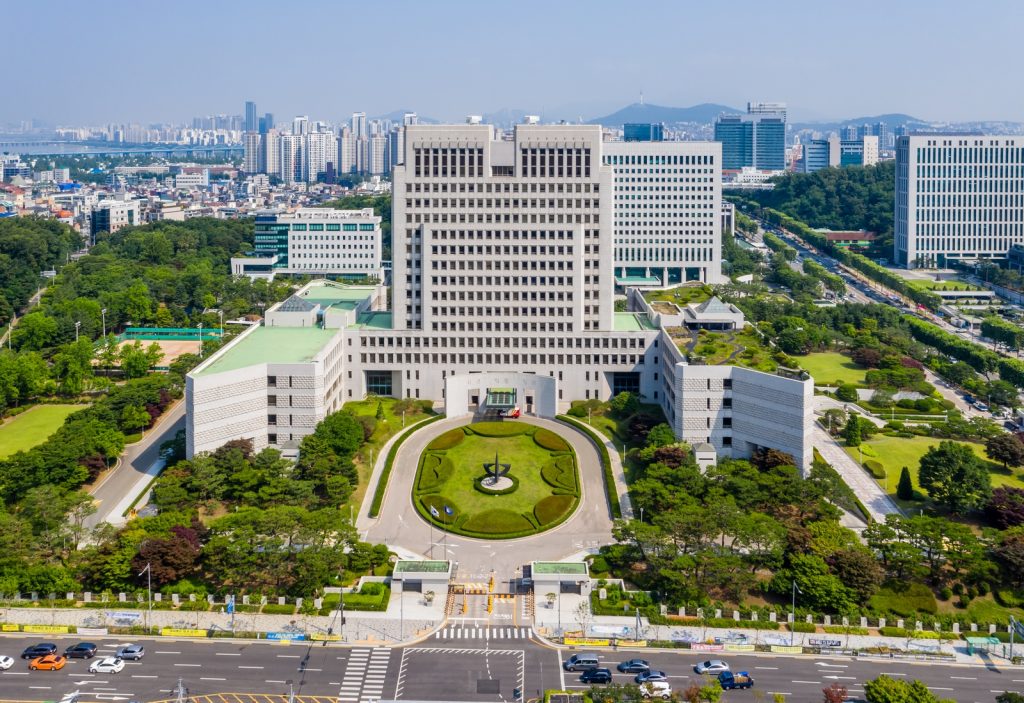
South Korea’s Top Court Overturns Ex-PM Han Duck-soo’s 15-Year Sentence in Martial Law Case
South Korea’s Supreme Court has overturned the 15-year prison sentence of former Prime Minister Han Duck-soo over his role in the country’s brief martial law crisis, sending the case back to a lower court for a retrial.
The ruling, delivered on Thursday, 19 November 2026, is the latest twist in the legal reckoning from one of the most dramatic nights in South Korea’s modern history — the night in December 2024 when a president declared martial law, sent troops towards parliament, and was stopped within hours by lawmakers who refused to accept it.
Han, 77, had been sentenced to 23 years in prison in January for playing a key role in the insurrection. An appeals court cut that to 15 years in May. Now the country’s highest court has said part of the case against him was wrongly decided, and the Seoul High Court must try him again.
Han will stay in custody while the retrial goes ahead.
What the Supreme Court decided
The Supreme Court ruled that there was not enough evidence to sustain one of Han’s insurrection convictions: the charge that he helped give legitimacy to the martial law declaration before it was announced.
The charge centred on a cabinet meeting. Prosecutors said Han had proposed convening the cabinet before President Yoon Suk Yeol declared martial law on 3 December 2024, in order to create the appearance that the declaration had gone through proper cabinet discussion. The lower courts treated that as part of the insurrection.
A majority of the Supreme Court justices disagreed. They found that it was difficult to prove Han had intended to subvert the constitutional order when he suggested the meeting, given the urgent situation at the time. The court said the lower court had misapplied the legal principles on what counts as intent to overthrow the constitution, and had not examined the question carefully enough.
At the same time, the court left much of the case against Han intact. It upheld his convictions for what he did after martial law was declared, including seeking cabinet ministers’ signatures on martial law-related documents, and discussing plans to blockade parliament and cut power and water supplies to certain media outlets. The court also upheld his conviction for preparing false official documents.
The case now goes back to the Seoul High Court, which must retry it using the Supreme Court’s interpretation of the law. The hearing was broadcast live on television, in a sign of how closely the country is following the case.
Importantly, the Supreme Court did not question the nature of the martial law itself. Chief Justice Cho Hee-dae said the emergency martial law was unconstitutional and illegal, and that there was no doubt about that. “The emergency martial law itself in this case is not aligned with the constitutional order and violates the basic rights of the people,” he said.
The night martial law shook South Korea
To understand why this case matters so much, it helps to go back to the night of 3 December 2024.
President Yoon Suk Yeol, who had been struggling with a hostile parliament and falling approval ratings, went on television late in the evening and declared emergency martial law. He said it was needed to root out “anti-state forces” and to overcome political deadlock.
It was the first time martial law had been declared in South Korea since 1980, when the country was still under military rule. Soldiers were sent towards the National Assembly in Seoul, and helicopters landed on the parliament grounds.
But the decree lasted only about six hours. Opposition lawmakers rushed to the National Assembly, some climbing over fences to get inside, and voted to overturn the declaration. Under South Korea’s constitution, the president must lift martial law once parliament demands it. Yoon did so in the early hours of the morning.
The political damage, however, was done. Within weeks, parliament voted to impeach Yoon, and he was removed from office. The country was left deeply divided, and prosecutors began building cases against the officials who had helped carry out the plan.
Han’s long road through the courts
Han Duck-soo was at the centre of those cases. A career public servant with more than 50 years in government, he had served as prime minister under Yoon and briefly became acting president after Yoon was removed from office.
A special counsel team led by Cho Eun-suk indicted him in August 2025, charging him with playing a key role in the insurrection.
His trial moved quickly by the standards of such cases, but each stage produced a different result:
January 2026: A district court in Seoul sentenced Han to 23 years in prison, finding him guilty of engaging in the insurrection. He has been held at the Seoul Detention Center in Uiwang, just south of the capital, since that day.
May 2026: The Seoul High Court reduced the sentence to 15 years, acquitting him of some charges, including failing in his duty to stop Yoon’s martial law bid. The appeals court pointed to his long record of public service — more than 50 years as a public official before the martial law declaration — as a reason for the lighter sentence.
November 2026: Both Han and the prosecutors appealed to the Supreme Court. The court has now overturned the 15-year sentence in part and ordered a retrial.
Han has denied wrongdoing in relation to almost all the charges against him, with the exception of one charge of perjury. The special prosecution team said in a statement that it respects the court’s ruling.
What the court kept — and what it threw out
The Supreme Court’s decision draws a line between what Han did before martial law was declared and what he did afterwards.
Before the declaration, the court said, the evidence did not show that Han intended to overthrow the constitutional order. Suggesting a cabinet meeting, in the middle of a fast-moving crisis, was not by itself proof of insurrection.
After the declaration, the court took a different view. It agreed with the lower courts that Han’s actions once martial law was in force — gathering ministers’ signatures for the decree, and reviewing plans to blockade parliament and cut off power and water to media outlets — did show an intent to subvert the constitutional order.
That distinction matters for the retrial. The Seoul High Court must now decide Han’s sentence on the basis of the charges that remain, without the conviction for the cabinet meeting proposal. The result could be a shorter sentence, but Han is not cleared. The convictions the Supreme Court upheld are serious, and the court has ordered that he remain in custody.
The political fallout
The ruling set off an immediate political storm. South Korea’s ruling Democratic Party, which holds power in parliament, reacted with fury, and within hours it was moving to impeach the Chief Justice himself.
The party’s leader, Kim Min-seok, called the ruling “a historic act of betrayal” and said the court had given the whole country “a code of conduct telling people to act like Han Duck-soo when an insurrection occurs.” He said the Supreme Court had written “a textbook telling future public officials and citizens” how to behave during an insurrection.
The party held an emergency meeting of its lawmakers at the National Assembly immediately after the ruling, and decided to pursue the impeachment of Chief Justice Cho Hee-dae. It planned to discuss the details at an emergency meeting of its leadership the same evening, and to adopt the impeachment as the party’s formal position the next day.
The opposition People Power Party took the opposite view. It said it respected the court’s judgment, and described the Democratic Party’s impeachment demand as an attack on the independence of the judiciary.
The clash underlines how deeply the martial law crisis still divides South Korea. Nearly two years after that December night, the country is still arguing over who was responsible, how they should be punished, and whether the courts themselves can be trusted to decide.
Yoon’s fate — and his wife’s case
Han is not the only senior figure facing the courts over the martial law declaration. The man who ordered it, former President Yoon Suk Yeol, was convicted of insurrection in February and sentenced to life in prison. He has denied wrongdoing, saying he was exercising his powers as president, and has appealed. An appellate court is scheduled to rule on his case on 26 January.
In a separate case decided on the same day as Han’s, the Supreme Court upheld a four-year jail term for Kim Keon Hee, Yoon’s wife. She had been convicted in a separate corruption case.
Together, the three rulings show how wide the legal net has been cast since the martial law crisis. A president sentenced to life, a prime minister facing retrial after his sentence was overturned, and a former first lady jailed for four years — all from a decree that lasted six hours.
What happens next
The immediate next step is the retrial. The Seoul High Court will hear Han’s case again, applying the Supreme Court’s ruling on which of his actions can count as insurrection. The court has not set a date yet.
Han will remain in detention in the meantime. The Supreme Court said it would continue to keep him in custody, because some of his convictions were left standing.
The political battle will also continue. The Democratic Party’s move to impeach the Chief Justice is a dramatic step — impeaching the head of the Supreme Court is almost unheard of — and it will test the relationship between parliament and the courts. If the party follows through, it could set off a constitutional fight of its own.
And the wider question remains. South Korea has now spent nearly two years dealing with the aftermath of a six-hour crisis. The courts are still deciding who did what, and for what reason. The politicians are still fighting over the meaning of those decisions. And the public, which watched the crisis unfold live on television, is still waiting for a final answer about what happened that night — and whether the people responsible have truly been held to account.
Frequently asked questions
Who is Han Duck-soo?
Han Duck-soo, 77, is a former prime minister of South Korea and a career public servant with more than 50 years in government. He served as prime minister under President Yoon Suk Yeol and briefly became acting president after Yoon was removed from office.
What was the December 2024 martial law crisis?
On 3 December 2024, President Yoon Suk Yeol declared emergency martial law, saying it was needed to root out “anti-state forces”. Soldiers were sent towards the National Assembly, but opposition lawmakers voted within hours to overturn the declaration, and Yoon lifted it after about six hours.
Why did the Supreme Court overturn Han’s sentence?
The court found there was insufficient evidence that Han’s suggestion to convene a cabinet meeting before the martial law declaration showed an intent to subvert the constitutional order. It ordered the Seoul High Court to retry the case, but it upheld his convictions for actions taken after martial law was declared.
Is Han Duck-soo free now?
No. The Supreme Court said Han will remain in custody while the retrial goes ahead, because some of his convictions were upheld. He has been held at the Seoul Detention Center in Uiwang since January 2026.
What happened to Yoon Suk Yeol?
Yoon was convicted of insurrection in February and sentenced to life in prison. He has appealed, and an appellate court is scheduled to rule on his case on 26 January.
Why is the Democratic Party trying to impeach the Chief Justice?
The ruling party strongly criticised the Supreme Court’s decision, with its leader Kim Min-seok calling it a “historic act of betrayal”. The party decided to pursue the impeachment of Chief Justice Cho Hee-dae after the ruling.
Conclusion
The Supreme Court’s ruling on 19 November 2026 does not settle the question of Han Duck-soo’s guilt. It sends his case back for another trial, with a narrower set of charges. What it does settle is the legal meaning of one part of the martial law crisis: that proposing a cabinet meeting, on its own, is not proof of an intention to overthrow the constitution.
But the ruling has opened a new front in South Korea’s political divide. The party in power wants to impeach the Chief Justice. The opposition says the court must be respected. And the man at the centre of it all — a 77-year-old former prime minister who has spent most of his life in public service — waits in detention for a court to decide, for the third time, how many years of his life the crisis will cost him.
Nearly two years after six hours of martial law shook the country, South Korea is still counting the cost.
Sources
- Yonhap: “(2nd LD) Top court overturns 15-yr prison term for ex-PM Han over martial law role”
- Free Malaysia Today: “South Korean court orders retrial of ex-PM Han in martial law case”
- Reuters (via WDSM710): “South Korea’s Supreme Court orders retrial for ex-PM Han over his role in martial law attempt”
- Seoul Economic Daily: “Top Court Overturns Ex-Premier Han’s Insurrection Conviction in Part”
- Chosun Biz: “South Korea’s Democratic Party moves to impeach Chief Justice Jo Hee-de”
- Yonhap: “DP moves to impeach chief justice over martial law ruling on ex-PM Han”
