
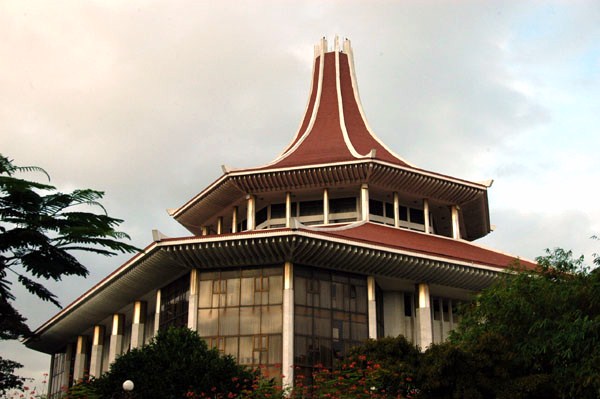
Sri Lanka’s Supreme Court orders three police officers to pay the jeweller they assaulted and forced to hand over gold
Sri Lanka’s Supreme Court has ordered three police officers to pay compensation out of their own pockets to a jewellery shop owner they assaulted, detained unlawfully and forced to hand over gold. The ruling, delivered on Friday, 30 October 2026, is the latest in a series of judgments holding individual officers personally responsible for abusing their power.
The case was brought by Sahul Hameed Sashek, also known as Shaul Hameed Mohamed Sufaik, a jeweller from Kuliyapitiya Town. A three-judge bench found that three officers from the Negombo Divisional Criminal Investigation Department had violated his fundamental rights under Sri Lanka’s Constitution. Each officer must pay him Rs 100,000, a total of Rs 300,000, within six months. The judgment was delivered by Justice Menaka Wijesundera, with Justices A. L. Shiran Gooneratne and Mahinda Samayawardhena agreeing. The officers named are Inspector D. R. A. Gihan Manohara and Police Constables M. A. Amal Sanjeewa and V. G. Bandara.
The officers denied the allegations and said the jeweller had been lawfully arrested during an investigation. The court rejected that account, finding the petitioner’s story and documents convincing.
At a glance
What happened: Sri Lanka’s Supreme Court ruled on 30 October 2026 that three Negombo police officers violated the fundamental rights of jeweller Sahul Hameed Sashek, and ordered each of them to pay him Rs 100,000 in compensation from their personal funds within six months.
Why it matters: The court found the officers assaulted the jeweller, detained him unlawfully and forced him to hand over gold and money, then rejected their claim that the arrest had been lawful. The cost of the abuse falls on the officers themselves, not the state.
What happens next: The three officers must pay within six months. The reports do not say whether any criminal or disciplinary proceedings will follow.
What the jeweller said happened in June 2022
According to the petitioner’s account, his ordeal began on 13 June 2022. He had bought gold from a man who later turned out to be a suspect in a case before the Magistrates Court, case number 50008-M. The jeweller said he had not known the gold came from a suspect.
That evening, a group of plainclothes officers, including the three respondents, came to his home. Reports of the judgment say the officers arrived while he was away and threatened to arrest his wife and children unless he came home at once. When he returned, he said he was handcuffed, made to kneel and beaten in front of his wife and children.
He said the officers forced him to hand over his motor vehicle, then beat him again inside the vehicle while demanding gold. He was then taken to his jewellery shop, where CCTV cameras recorded him handing gold items to the officers. He alleged further harassment, blackmail and the extortion of gold and money under the cover of the investigation. He also said the officers forced him to drink alcohol, and that Inspector Manohara compelled him to tell the Judicial Medical Officer, when examined on 17 June 2022, that he had not been assaulted, under threat of serious consequences.
The officers denied all of this. They maintained that the businessman had been lawfully arrested as part of an investigation, and that gold items and foreign currency had been recovered from him. The court did not accept their version of events.
The evidence that persuaded the judges
Justice Wijesundera found the petitioner’s detailed account and supporting documents sufficiently convincing and credible, despite the officers’ strong denials.
First, the petitioner produced documents proving he was a registered jeweller, and a voucher connected to the gold purchase, supporting his account that he was a genuine trader who had bought gold in the course of his business. Second, the Magistrates Court proceedings did not list the petitioner as a suspect who had been produced before a magistrate during the period of his alleged detention, undermining the officers’ claim that everything had been done by the book. Third, the petitioner’s medical records confirmed that he had been admitted to hospital from 18 to 20 June, with notes recording pain and allegations that he had been assaulted by Negombo police officers with metal bars.
Two dates in the court papers were recorded as 2020 rather than 2022, which the report notes appears to be a typing error.
What the Constitution says, in plain language
Sri Lanka’s Constitution gives the Supreme Court the power to hear complaints from anyone who says their fundamental rights have been violated by the state. These are known as fundamental rights petitions. The court first decides whether to grant “leave to proceed” — whether the complaint is serious enough to be heard in full — and then hears both sides.
In this case, the jeweller had asked the court to declare that his rights under Articles 11, 12(1), 12(2), 13 and 14(g) had been violated. Leave to proceed was granted under Articles 11, 12(1) and 13(2).
Article 11 is the right to be free from torture and from cruel, inhuman or degrading treatment or punishment — one of the strongest protections in the Constitution. Article 12(1) guarantees equality before the law, which means police powers cannot be used to pick on someone arbitrarily. Article 13(2) gives a person who is arrested or detained the right to be produced before a judge of the nearest competent court, the safeguard that stops the police from holding someone out of sight of the courts. Together, the three articles cover the heart of the jeweller’s complaint: that he was beaten, treated unfairly, and held without being brought before a magistrate as the law requires.
What the officers must pay, and what the ruling is not
The court ordered each of the three officers to pay Rs 100,000 to the petitioner within six months of the judgment. The money comes from the officers’ own funds, not from the police department or the state, so the cost of the abuse falls on the individuals the court found responsible, rather than on taxpayers.
It is also important to be clear about what this ruling is not. A fundamental rights petition is a constitutional case, not a criminal trial. The court declared that the officers’ conduct violated the petitioner’s constitutional rights. It did not convict them of a crime, and the reports of the judgment do not say whether any criminal charges or departmental disciplinary proceedings will follow. The officers have not been found guilty of a criminal offence in this case.
That distinction does not make the ruling weak. A finding by the Supreme Court that named officers violated the Constitution is a serious matter, and it creates a formal record that can be used in any further proceedings. But criminal punishment does not follow automatically from it.
A second ruling on the same day
The Negombo case was not the only police accountability ruling the Supreme Court delivered on 30 October. A different bench gave judgment the same day in another fundamental rights petition, filed seven years earlier.
The petitioner was Jayasinghage Nirmala Kanthi, a resident of Yattowita, Tittapattara. She said officers from the Dompe Police Station had harassed her for years, including arresting her on false charges of possessing illicit liquor. She openly admitted past convictions for brewing illicit liquor, which she said were driven by poverty, but said she had since reformed, taking up dairy farming and agriculture, and produced milk purchase receipts and a poultry registration certificate to support that.
The incident at the centre of her petition took place on 7 October 2019. She had gone to the Dompe Police Station to deliver a lunch packet to her husband, who had been arrested by the Special Task Force on suspicion of brewing illicit liquor. She alleged that during that visit she was subjected to severe physical and verbal assault by Police Constable Lakmal, badge number 84253. The court found in her favour, holding that the assault clearly infringed her right under Article 11. PC Lakmal was ordered to pay her Rs 100,000 from his personal funds within six months.
The evidence in her case included a medico-legal examination receipt and diagnosis ticket recording her injuries, photographs matching the medical records, and an affidavit from Chanaka Malli, the three-wheeler driver who took her to hospital. She had also lodged complaints with the police, the National Police Commission and the Human Rights Commission of Sri Lanka. The judgment noted that PC Lakmal had failed to file any objections before the argument stage, so his counsel could only file written submissions on questions of law.
In explaining its reasoning, the court referred to earlier landmark cases, including Velmurugu v Attorney General on the entrenched position of Article 11, Mrs W. M. K. De Silva v Chairman, Ceylon Fertilizer Corporation, which held that Article 11 covers psychological and mental suffering as well as physical violence, and Channa Pieris and Others v Attorney General, which said courts should not impose an undue burden of proof on people trying to prove torture.
A pattern, not a one-off
These two rulings fit a pattern that has been building in Sri Lanka’s courts. Just a month earlier, on 30 September 2026, the Supreme Court ordered two senior officers from the Homagama Police Station to pay a total of Rs 1 million to a mason, Horalagamage Janaka Pradeep Kumara.
The petitioner said he had been questioned by police while being treated for dengue fever at Homagama Base Hospital between 13 and 16 December 2023, handcuffed to his hospital bed, then illegally detained at the police station until 18 December 2023. He said he was then produced before a magistrate on a fabricated charge of possessing 5.375 grams of heroin, and spent about five months in remand custody before getting bail on 11 June 2024.
The court found the heroin charge was a fabrication concocted to keep him in custody. A Government Analyst’s report showed the pure quantity of heroin was only 0.023 grams, far below the amount the police had claimed. The court held that Sub Inspector Chandrapala had orchestrated the false account of the arrest and that Inspector P. R. Maanawadu, the officer in charge of the station, had knowingly helped him. Each was ordered to pay Rs 500,000 from his personal funds within three months.
The pattern is consistent: the Supreme Court is using compensation paid from officers’ own pockets as its main tool, and it is doing so repeatedly. The amounts are modest, but the principle is the same in each case — officers who abuse their authority can be made to pay personally.
What happens next, and what it means for ordinary people
The three Negombo officers have six months from 30 October 2026 to pay the compensation. The reports do not say whether they will appeal, whether the police department will take disciplinary action, or whether any criminal investigation will follow. The judgment now stands as a public record, and the petitioner, who waited more than four years from the events of June 2022, has a court order in his favour.
For people in Sri Lanka, the rulings are a reminder that the fundamental rights petition is a real remedy, even if it is a slow one. The jeweller’s case took more than four years; Ms Kanthi’s took seven. Both petitioners had to gather medical records, documents and witness statements, and keep going through a long legal process.
The cases also show what kind of evidence the courts look for: medical records, documents, and independent witnesses such as the CCTV footage at the jewellery shop and the three-wheeler driver who took Ms Kanthi to hospital. People who believe the police have violated their rights can complain to the Human Rights Commission of Sri Lanka and the National Police Commission, as Ms Kanthi did, and seek legal advice about a fundamental rights petition — time limits apply, so advice should be sought promptly.
Frequently asked questions
What did the Supreme Court decide on 30 October 2026?
The court ruled that three police officers from the Negombo Divisional Criminal Investigation Department violated the fundamental rights of jeweller Sahul Hameed Sashek, and ordered each officer to pay him Rs 100,000 from his personal funds within six months.
Who were the officers, and what were they found to have done?
Inspector D. R. A. Gihan Manohara and Police Constables M. A. Amal Sanjeewa and V. G. Bandara were found to have assaulted the jeweller, detained him unlawfully and forced him to hand over gold and money in June 2022. The court found the petitioner’s account and documents convincing and rejected the officers’ claim that the arrest had been lawful.
Were the officers convicted of a crime?
No. This was a fundamental rights petition, a constitutional case, not a criminal trial. The court declared that the officers violated the petitioner’s rights under Articles 11, 12(1) and 13(2). The reports do not say whether any criminal charges or disciplinary proceedings will follow.
How much compensation was ordered, and who pays it?
Each of the three officers must pay Rs 100,000, making a total of Rs 300,000. The money comes from the officers’ own funds, not from the police department or the state, and must be paid within six months of the judgment.
What happened in the second ruling delivered the same day?
The court also ruled in favour of Jayasinghage Nirmala Kanthi, who said a police constable at Dompe Police Station assaulted her in October 2019 when she visited the station to deliver lunch to her arrested husband. Constable Lakmal was ordered to pay her Rs 100,000 from his personal funds within six months for violating her right under Article 11.
Has the Supreme Court made similar rulings before?
Yes. On 30 September 2026, the court ordered two senior officers from Homagama Police Station to pay Rs 500,000 each to a mason who was illegally detained and charged on a fabricated heroin allegation.
Conclusion
A jeweller in Sri Lanka bought gold without knowing it came from a suspect, and for that he was beaten in front of his family, held without being brought before a magistrate, and forced to hand over his gold. More than four years later, the country’s highest court has said that what happened to him was wrong, and that the three officers responsible must pay for it themselves.
The ruling will not undo what happened in June 2022, and the compensation of Rs 100,000 per officer is modest. But the judgment matters because of what it represents: a court willing to look past official denials, weigh the documents and medical records, and hold named officers personally accountable.
This article is for general information and education only. It is not legal or financial advice.
Sources
- https://dailyfc.com/supreme-court-slams-police-for-brutal-assault-extortion-orders-compensation-for-fundamental-rights-violations/ (Daily FC, 30 October 2026)
- https://news9.lk/news/583/ (News9, via Newswire, 30 October 2026)
- https://www.lankanewspapers.com/2026/10/30/supreme-court-orders-negombo-police-officers-to-pay-compensation-after-businessman-tortured-and-robbed-of-gold (Lanka Newspapers, 30 October 2026)
- https://dailyfc.com/supreme-court-orders-police-officer-to-pay-compensation-for-fundamental-rights-violation-in-harassment-case/ (Daily FC, 30 October 2026)
- https://dailyfc.com/supreme-court-upholds-fundamental-rights-orders-compensation-for-illegal-detention-by-homagama-police/ (Daily FC, 30 September 2026)
