
Ten Northern Nations to Sign Naval Pact in Oslo to Deter Russian Submarines
Ten northern European countries are due to sign a naval partnership agreement in Oslo on Tuesday, 10 November 2026, in a move aimed squarely at deterring Russian submarines in the North Atlantic, the Arctic and the Baltic Sea.
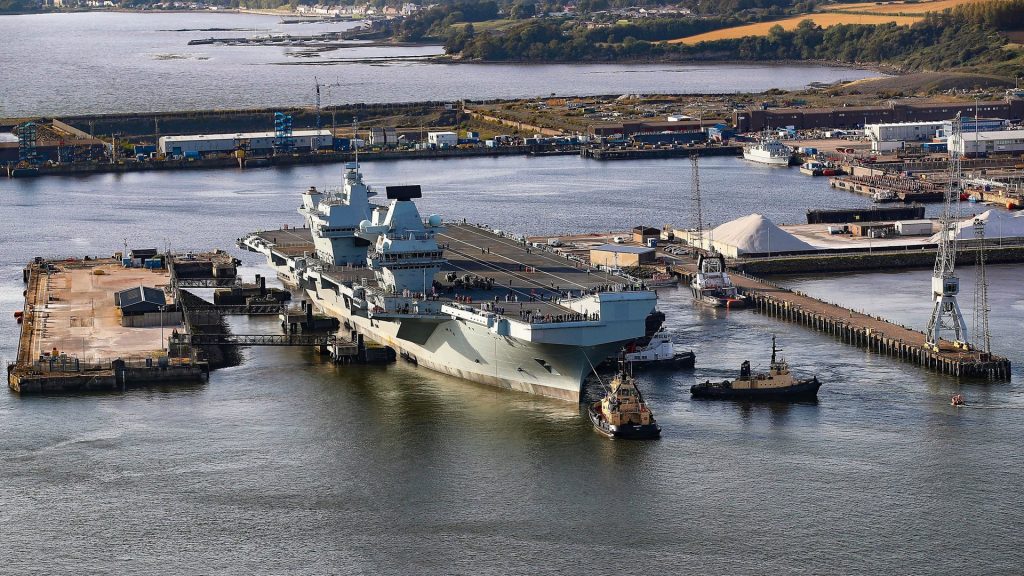
The signing is set to take place aboard the Royal Navy aircraft carrier HMS Prince of Wales, which is docked in the Norwegian capital for a major security conference. The ten countries are the members of the Joint Expeditionary Force (JEF), a UK-led defence grouping: the United Kingdom, Denmark, Estonia, Finland, Iceland, Latvia, Lithuania, the Netherlands, Norway and Sweden.
The agreement is the most concrete step yet in a push that began earlier this year to turn the JEF from a forum for meetings and statements into a force that can act together at sea. Britain’s most senior military officer, Chief of the Defence Staff Air Chief Marshal Sir Richard Knighton, told the Financial Times that the countries would move “beyond memorandums of understanding and exchanges and meetings into really practical measures.”
What is being signed — and why it matters
The pact is a naval partnership agreement between the ten JEF nations. It is not a new military alliance, and it is not a treaty that creates new legal obligations. Instead, it is a practical deal: the ten navies agree to plan, train and operate together more closely in the waters around northern Europe.
One of its main purposes is to deter Russian submarines. Knighton told the Financial Times that one of the most important tasks is “to deter submarines from attacking or threatening shipping in wartime.” That matters, he said, for the security of not only Europe but also the east coast of the United States.
The logic is simple. In a war, submarines can sink merchant ships, cut the undersea cables that carry internet traffic and money between continents, and threaten the supply ships that would carry reinforcements across the Atlantic. A group of countries that can find and track submarines together — sharing sonar data, aircraft, ships and intelligence — is much harder for an enemy submarine to slip past than ten navies working separately.
The agreement covers three areas of sea: the North Atlantic, the Arctic and the Baltic Sea. All three have become more important since Russia’s full-scale invasion of Ukraine in 2022. The Baltic Sea is almost entirely surrounded by NATO and European Union countries now that Finland and Sweden have joined NATO. The Arctic is opening up as sea ice melts, and Russia has been rebuilding its military bases there. And the North Atlantic is the route reinforcements from North America would have to cross in any major conflict in Europe.
What is the Joint Expeditionary Force?
The Joint Expeditionary Force, usually called the JEF, is a defence grouping of ten northern European countries, led by the United Kingdom. It was set up in 2014 as a rapid-reaction force that could act quickly in a crisis, alongside NATO rather than as part of it.
All ten JEF members are also members of NATO, but the JEF is a separate, smaller club. Its advantage is speed and flexibility: ten countries with shared interests in the same region can agree to act without waiting for all 32 NATO allies to reach a decision. Its focus is the High North, the North Atlantic and the Baltic — the waters and coastlines its members share.
The JEF has been growing more active. Its forces have been exercising together across the region, including in Exercise Lion Protector 26, a wide-ranging operation that ran from August to October 2026 across the North Atlantic and the Baltic. Royal Marines returned to the Faroe Islands for the first time since the Second World War as part of that exercise. JEF defence ministers met in Iceland in early October, and JEF leaders met in Helsinki in March 2026, where they endorsed a “rapid, flexible response” model for the force.
In September 2026, Canada applied to join the JEF. No decision on that application has been announced yet.
The naval pact due to be signed in Oslo builds on two earlier steps. In April 2026, the UK, the Netherlands, the Nordic countries and the Baltic states signed a declaration of intent to set up a new multinational maritime force outside NATO to counter Russia. Then in July 2026, all ten JEF nations agreed a “Maritime Proposition” — a plan to move from periodic cooperation to what the Royal Navy described as a “truly integrated approach where our forces can combine at pace and fight immediately together when required.”
Tuesday’s signing is the next step in that process: turning those declarations into a working agreement between the ten navies.
Why submarines are the focus
Submarines are the hardest part of naval warfare to see. A modern submarine can sit quietly under the water for weeks, listening, watching and waiting. Finding one requires ships, helicopters, maritime patrol aircraft and underwater sensors working together — and no single northern European navy has enough of all of them on its own.
Russia has one of the world’s largest submarine fleets, including nuclear-powered boats that can stay submerged for months. Western navies have reported a sharp rise in Russian submarine activity around Europe since the war in Ukraine began, and Russian ships have been watched near undersea cables and pipelines in the North Sea and the Baltic.
The concern is not only about wartime. In peacetime, submarines and other vessels can map the seabed, sit near cables, and gather intelligence. In September 2022, explosions damaged the Nord Stream gas pipelines in the Baltic Sea. Nobody has been held responsible, but the incident showed how vulnerable undersea infrastructure is — and how hard it can be to prove who did it.
Knighton was blunt about the wider threat. He told the Financial Times that Russia is using “various forms of aggression” against European states, including targeted killings, sabotage and cyberattacks, and that these are not hypothetical threats but “actual actions by the Russian state, evidence of which has been documented in Europe and, to some extent, in the United Kingdom.”
He also said London needs to “catch up with its European allies,” particularly the countries geographically closer to Russia that feel the threat more directly. That is a striking admission from Britain’s top military officer: the countries on Russia’s doorstep — Finland, Estonia, Latvia, Lithuania, Norway — have been taking the threat more seriously, for longer, than London has.
The carrier in Oslo
The setting for the signing is part of the message. HMS Prince of Wales is the Royal Navy’s flagship and one of the largest warships ever built for Britain. At 65,000 tonnes, it is longer than three football pitches and carries F-35B jets and Merlin helicopters.
The carrier arrived in Oslo on Saturday, 7 November — a day late, after fog in the Oslofjord forced the group to turn back — escorted by the destroyer HMS Dauntless, the Norwegian frigate KNM Fridtjof Nansen and the Norwegian coast guard vessel KV Nornen. It is berthed at the head of Oslofjord, in the shadow of the city’s historic Akershus Fortress, and parts of the downtown waterfront have been closed for the visit.
Aboard the ship, Britain is hosting two events this week: the Atlantic Future Forum, an annual gathering of around 500 political leaders, military chiefs, academics and business figures, and the First Sea Lord’s International Seapower Conference. Both run from 10 to 12 November. The JEF signing is scheduled for Tuesday, on the eve of the forum.
The carrier has spent the autumn on Operation Firecrest, the Royal Navy’s deployment to the Arctic and North Atlantic, including exercises with Norwegian forces and a rare joint operation in which its F-35B jets flew alongside Norwegian F-35A jets escorting an American B-52 bomber. It also took part in Neptune Strike 26-4, a NATO exercise involving 17 nations, 20 warships and 40 aircraft.
The choice of venue — a British aircraft carrier in a Norwegian port, hosting a conference about the future of sea power — is deliberate. It is a visible reminder that Britain can put a major warship into northern waters, and that Norway, as the host, sits at the centre of NATO’s northern flank.
Why now
Several pressures have come together to push the ten countries towards a closer naval partnership.
First, the war in Ukraine continues, and with it the fear that Russia could test NATO elsewhere. Peace talks between Ukraine, Russia and the United States opened in Abu Dhabi on Tuesday, but there is no ceasefire yet, and Russia has continued to strike Ukrainian cities and power stations. Read our coverage of the talks here.
Second, the United States has been pressing its European allies to take more responsibility for their own defence. President Donald Trump has repeatedly called on allies to spend more and do more. A European naval partnership that can look after its own waters is exactly the kind of burden-sharing Washington has been asking for.
Third, the security picture in northern Europe has changed fast. Finland and Sweden joined NATO in 2023 and 2024, turning the Baltic into what some call a “NATO lake.” Norway and the UK signed the Lunna House Agreement in December 2025, under which the two countries will build at least thirteen identical Type-26 anti-submarine frigates — ships designed specifically to hunt submarines. And the JEF itself has been given new life as a framework for countries that want to move faster than the full NATO alliance can.
What happens next
If the agreement is signed as planned on Tuesday, the work begins. The ten navies will need to agree on how they share information, how their ships and aircraft operate together, and how they divide up the work of patrolling three large areas of sea.
Watch for three things in the coming days and weeks:
The details of the deal. The announcement so far has been short on specifics. What exactly have the ten countries committed to? Joint patrols? Shared headquarters? Common procurement of ships and sensors? The answers will show whether this is a real change or another declaration.
Russia’s response. Moscow has condemned Western military cooperation in northern Europe before, calling it a threat. Expect a sharp reaction from the Kremlin, and possibly more Russian naval activity in the same waters the pact is meant to cover.
Canada’s application. Canada asked to join the JEF in September. If the ten members are now deepening their naval cooperation, a decision on Canada — a country with its own Arctic coastline and Atlantic interests — will be watched closely.
For now, the signal from Oslo is clear. Ten countries that share the same cold waters have decided that meeting and talking is no longer enough. They want to sail, train and patrol together — and they want Moscow to know it.
Frequently asked questions
What is the Joint Expeditionary Force?
The Joint Expeditionary Force (JEF) is a UK-led defence grouping of ten northern European countries: the UK, Denmark, Estonia, Finland, Iceland, Latvia, Lithuania, the Netherlands, Norway and Sweden. It was set up in 2014 as a rapid-reaction force that can act quickly in a crisis, alongside NATO. All ten members are also NATO members.
What are the ten countries signing in Oslo?
A naval partnership agreement that commits their navies to closer cooperation in the North Atlantic, the Arctic and the Baltic Sea. The main aim is to deter Russian submarines and protect shipping and undersea infrastructure. It is due to be signed on Tuesday, 10 November 2026, aboard the aircraft carrier HMS Prince of Wales in Oslo.
Why is the focus on Russian submarines?
Submarines can threaten merchant shipping, undersea cables and supply routes in wartime, and they are hard to find without ships, aircraft and sensors working together. Russia has one of the world’s largest submarine fleets, and Western navies say Russian submarine activity around Europe has risen sharply since the war in Ukraine began.
Is this a new alliance against Russia?
No. The JEF is not a new alliance and the naval pact is not a treaty. It is a partnership agreement between countries that are already allies through NATO. Its purpose is practical: to make ten navies work together more effectively in the seas they share.
What is HMS Prince of Wales doing in Oslo?
The Royal Navy’s flagship arrived in Oslo on 7 November for a high-profile visit. It is hosting the Atlantic Future Forum and the International Seapower Conference from 10 to 12 November, bringing together around 500 defence leaders, politicians and industry figures.
Conclusion
The signing in Oslo will not end the threat from Russian submarines, and it will not change the course of the war in Ukraine. But it is a sign of how Europe’s security map is being redrawn. Countries that once relied on American power to keep their seas safe are now building the habit of doing it together — sharing ships, aircraft, intelligence and plans.
If the ten navies follow through, the waters of the North Atlantic, the Arctic and the Baltic will be watched more closely than they have been in decades. That is the point of the pact: to make sure that any submarine entering those waters knows it is being watched — and that the countries watching are acting as one.
Sources
- Financial Times, as reported by Militarnyi (9 November 2026): https://militarnyi.com/en/news/northern-europe-naval-alliance-deter-russia/
- RBC-Ukraine (9 November 2026): https://newsukraine.rbc.ua/news/uk-builds-new-alliance-to-deter-russia-amid-1794148422.html
- USM Media (9 November 2026): https://en.usm.media/ten-northern-european-countries-to-agree-on-deterring-russian-submarines/
- Naval Today, “Ten Joint Expeditionary Force nations agree new maritime partnership” (10 July 2026): https://www.navaltoday.com/2026/07/10/ten-joint-expeditionary-force-nations-agree-new-maritime-partnership
- Navy Lookout, “HMS Prince of Wales sails for second phase of NATO northern flank mission” (17 October 2026): https://www.navylookout.com/hms-prince-of-wales-sails-tomorrow-for-second-phase-of-nato-northern-flank-mission/
- The Silk Paradox, daily brief (10 November 2026): https://www.patreon.com/The_Silk_Paradox/posts/silk-paradox-174904314
This article is for general information and education only. It is not legal or financial advice.

Pingback: UK Spends £90 Million on Drones, Sensors and AI to Hunt Russian Submarines and Protect Undersea Cables - Findivoza