
Three killed as two helicopters collide in midair near Oregon airport
Three people are dead after two helicopters collided in midair over farmland near a small airport in Oregon, in the United States. The crash happened on Thursday afternoon, 29 October 2026, close to McMinnville Municipal Airport, about 40 miles south-west of Portland. Both aircraft fell into a private farm field, and all three people on board were killed.
The victims were a 22-year-old flight instructor and her 31-year-old student pilot, on a training flight together, and a 38-year-old pilot who was alone in the second helicopter on a maintenance flight. The student pilot, from the United Kingdom, was named publicly on Friday, 30 October, after his family had been told.
No cause has been found yet. The United States National Transportation Safety Board, known as the NTSB, is leading the investigation, with help from the Federal Aviation Administration, known as the FAA. Investigators arrived at the scene on Friday morning, documented the wreckage, and began speaking to witnesses and the companies that operated the two helicopters. A first factual report is expected within 30 days, but a final report giving the probable cause could take 12 to 24 months.
Midair collisions are rare, and they are among the hardest accidents to explain. Investigators have to rebuild what two aircraft were doing in the same piece of sky at the same moment, using wreckage, flight data, radio calls, weather records, and witness accounts.
At a glance
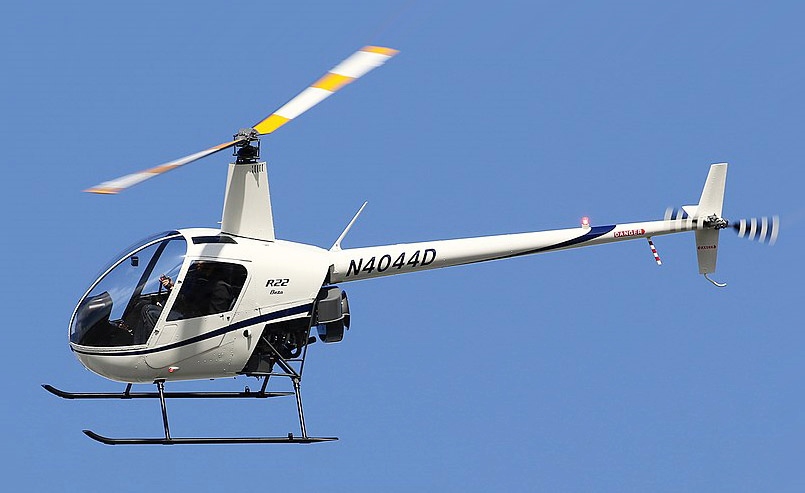
What happened: Two helicopters, a Robinson R22 and an Airbus AS350, collided in midair near McMinnville Municipal Airport in Oregon on Thursday afternoon, 29 October 2026, at about 2:10 p.m. local time. Both aircraft crashed into a farm field. Three people were killed.
Why it matters: The crash killed a young flight instructor, a student pilot from the United Kingdom, and an experienced pilot who also worked as an FAA examiner. Investigators will have to answer how a training flight and a maintenance flight came to be in the same airspace near a busy small airport.
What happens next: The NTSB is leading the investigation. A preliminary report with the facts collected so far is expected within 30 days. A final report, with the probable cause, is expected within 12 to 24 months. No cause has been determined.
What happened near McMinnville
The collision took place at about 2:10 p.m. local time on Thursday, 29 October 2026, according to the NTSB and the Yamhill County Sheriff’s Office. Some early reports put the time a few minutes later, at about 2:15 p.m., but the time given by the NTSB in its Friday briefing was about 2:10 p.m.
The two helicopters were flying near McMinnville Municipal Airport, in Yamhill County, Oregon. The NTSB said the collision happened about a mile east of the airport. The wreckage came down in a private farm field off Oregon Route 233, roughly a mile west of Dayton, a small town east of McMinnville. A one-mile stretch of Highway 233 was closed after the crash, and it was still closed on Friday, with no reopening time given.
McMinnville is about 40 miles south-west of Portland, in the Willamette Valley wine country. The crash happened on a cloudy day, according to reports from the scene.
A witness working in a nearby vineyard called the emergency services after seeing the collision. Leo Rodriguez told local television station KPTV: “All of a sudden I hear this big boom and this metal breaking, and I look up and just see these two helicopters just collided in mid-air. They twisted and fell to the ground.”
Another witness account, reported by AVweb, described the larger helicopter being struck at the tail, turning, and falling, while the smaller helicopter dropped straight down. Witnesses also reported that the helicopters were about 500 feet above the ground when they collided, although that figure has not been confirmed as a measured altitude by investigators.
Emergency crews reached the field quickly, but all three people on board were pronounced dead at the scene. There were no survivors, and no one on the ground was reported injured. Photographs showed one helicopter, described as red, left crumpled in pieces, and the other, described as green, lying upside down.
The airport itself was not closed. John Paskell, the manager of McMinnville Airport, told reporters that the collision took place off airport property and did not affect airport operations. He said he understood that both helicopters were based at the airport, but he could not explain how the collision happened.
Who was on board
In the Robinson R22 were Maddie Aasbo, 22, of Texas, and Christopher James Joughin, 31, of the United Kingdom. Aasbo was the flight instructor. Joughin was her student pilot. They were on an instructional flight, which means Aasbo was teaching Joughin to fly a helicopter.
In the Airbus AS350 was Tyler Delane Sturdevant, 38, of Newberg, Oregon. He was alone in the helicopter. He was on a maintenance flight, which is a flight carried out after work has been done on an aircraft, to check that it is working properly before it returns to normal use.
The sheriff, Sam Elliott, named Sturdevant and Aasbo at a news conference on Thursday. Joughin’s name was not released at first. Officials said they were waiting until his next of kin had been told. His identity was confirmed publicly on Friday, 30 October.
Aasbo worked for Jerry Trimble Helicopters, a flight training school and rental service based at McMinnville Airport. The company said in a statement that it was deeply saddened to confirm that one of its aircraft was involved in the incident. “Our hearts and thoughts are with the individuals involved, their families, and everyone affected by this event,” the company said. It added that it was cooperating with the authorities.
Sturdevant flew for Precision, a helicopter charter and maintenance company based in the area. Precision described him in a social media post as its “beloved” senior pilot, and said he had mentored many other pilots. He also worked as a designated pilot examiner for the FAA, which means he was authorised to carry out official flight tests for other pilots on behalf of the regulator.
Aasbo was a young instructor at the start of her career. Joughin was a student pilot who had travelled from the United Kingdom to learn to fly in the United States. Sturdevant was an experienced pilot who had spent years flying, teaching, and examining other pilots.
Two very different flights
One of the first things investigators established was that the two helicopters were doing very different jobs, and both of them were routine.
The Robinson R22 was on an instructional flight: a lesson in the air, in which the instructor sits beside the student, demonstrates manoeuvres, and takes control if needed. Training flights often stay close to the home airport, flying at relatively low heights and making repeated patterns, turns, and landings so the student can practise.
The Airbus AS350 was on a maintenance flight: a check flight after servicing or repair work, to make sure the aircraft is safe to use again. Maintenance flights also often stay close to the airport, because the pilot needs to be able to land quickly if something is not right.
Neither type of flight, on its own, is unusual or dangerous. The question investigators will have to answer is how two routine flights, both operating near the same airport, ended up in the same place at the same time.
The two aircraft were also very different in size. The Robinson R22 is a small, light, two-seat helicopter, widely used around the world for training. The Airbus AS350, also known as the H125, is a larger, more powerful single-engine helicopter, used for charter work, emergency services, filming, and other commercial jobs. Both companies have said they are cooperating fully with the investigation and are supporting the families of the people who died.
What is not known is just as important. Investigators have not said which direction either helicopter was flying, how fast they were going, or whether either pilot saw the other aircraft before the collision. They have not said whether either helicopter was in radio contact with the airport or with the other aircraft.
The investigation: what happens now
The NTSB is leading the investigation, with help from the FAA and the helicopter manufacturers. The NTSB is an independent federal agency. Its job is not to blame anyone, but to find out what happened and why, and to recommend changes that could stop a similar accident happening again.
Two NTSB investigators arrived on Friday morning, 30 October, and began documenting the scene. NTSB investigator Grant Mills told reporters that the team expected to finish the on-scene work and the recovery of the wreckage later that evening. Interviews with witnesses and with the operators of the aircraft were due to begin the following day.
Investigators were working on Friday to retrieve equipment containing flight instrument data from the Airbus AS350. They were still determining whether the Robinson R22 had similar equipment. Small training helicopters do not always carry the same kind of flight data recorder as larger aircraft, so investigators may have to rely more heavily on wreckage, witness accounts, and tracking data.
The investigation will look at the pilots, the aircraft, and the operating conditions, including flight-tracking data, air traffic control communications, maintenance records, weather, and the pilots’ flight experience. Investigators will also examine witness accounts, electronic devices, and any available surveillance footage. The NTSB has asked anyone with relevant information to contact its investigators by email at witness@ntsb.gov.
Once documented, the wreckage will be taken to a secure facility for further examination. Engineers will check the rotors, engines, controls, and structure of both helicopters for clues about what was working and what was not.
A preliminary report, with the facts collected so far, is expected within 30 days, which would place it in late November 2026. It will describe what happened, as far as it is known, but it will not give a final cause. A final report, giving the probable cause and any contributing factors, is expected within 12 to 24 months. Until then, any explanation of why the two helicopters collided would be a guess. The NTSB has said the cause remains undetermined.
Why midair collisions are so difficult to prevent
Midair collisions are rare, but they are not unknown, and they are a particular concern around small airports where many different kinds of flying happen at once.
At a large commercial airport, air traffic controllers keep aircraft apart. At a smaller airport such as McMinnville, many flights operate under visual flight rules, which means pilots are expected to look out of the window, see other aircraft, and keep clear of them. That principle is called “see and avoid”, and it works well most of the time. But a small helicopter can be hard to spot against the ground or the sky, especially on a cloudy day, and two aircraft flying towards each other can close the distance very quickly.
Training flights add another layer of complexity. A student pilot is still learning to divide their attention between flying, listening to the instructor, watching the instruments, and looking outside for other traffic. That is why an instructor is on board, to take over if needed and to watch for hazards the student may miss. But even an experienced instructor cannot see in every direction at once. A maintenance pilot, meanwhile, is focused on checking the aircraft’s performance, which can compete with the need to watch for other traffic.
None of this means that anyone in McMinnville did anything wrong. It simply explains why investigators will look so carefully at where each helicopter was, what it was doing, and what its pilot could and could not have seen.
The crash also comes less than a year after another fatal midair collision between two helicopters near Hammonton, New Jersey, in December 2025, which killed both pilots. That earlier accident was reported by AVweb in its coverage of the McMinnville crash.
Frequently asked questions
What happened in the Oregon helicopter crash?
Two helicopters collided in midair near McMinnville Municipal Airport in Oregon on Thursday afternoon, 29 October 2026, at about 2:10 p.m. local time. Both crashed into a farm field off Oregon Route 233. Three people were killed.
Who were the three people killed?
The victims were flight instructor Maddie Aasbo, 22, of Texas, and student pilot Christopher James Joughin, 31, of the United Kingdom, together in a Robinson R22 on a training flight. The third was Tyler Delane Sturdevant, 38, of Newberg, Oregon, alone in an Airbus AS350 on a maintenance flight.
What were the two helicopters doing?
The Robinson R22 was on an instructional flight, with an instructor teaching a student pilot. The Airbus AS350 was on a maintenance flight, which is a check flight carried out after servicing or repair work, to make sure the aircraft is working properly. Both types of flight are routine, and both often operate close to the home airport.
Has the cause of the crash been found?
No. The cause remains undetermined. The NTSB is leading the investigation, with help from the FAA and the aircraft manufacturers. A preliminary report with the facts collected so far is expected within 30 days, and a final report with the probable cause is expected within 12 to 24 months.
Was the airport closed after the crash?
No. McMinnville Municipal Airport remained open. The airport manager said the collision took place off airport property and did not affect airport operations. A one-mile stretch of nearby Highway 233 was closed while emergency workers and investigators worked at the scene.
Conclusion
Three people died in Oregon on 29 October 2026 because two helicopters, on two routine flights, collided near a small airport. A young instructor, a student pilot who had travelled from the United Kingdom to learn to fly, and an experienced pilot and FAA examiner were all killed in a matter of seconds.
Emergency crews reached the field, the sheriff’s office identified the victims, the airport stayed open, and the NTSB began the slow, careful work of finding out why. A preliminary report is expected within 30 days, and a final report within 12 to 24 months. Until then, the cause remains unknown, and it would be wrong to guess at it.
The value of the investigation is not only in explaining this one crash. It is in what it may teach about training flights, maintenance flights, and the way different kinds of flying share the airspace around a small airport. If the findings lead to even a small change in how pilots are trained or how flights are planned, then the loss of Maddie Aasbo, Christopher Joughin, and Tyler Sturdevant may help to prevent another family from receiving the same news.
This article is for general information and education only. It is not legal or financial advice.
Sources
- https://kioncentralcoast.com/news/national-world/cnn-national/2026/10/29/2-helicopters-carrying-3-people-collide-midair-near-oregon-airport-faa-says/ (CNN, 30 October 2026)
- https://avweb.com/aviation-news/three-killed-oregon-helicopter-collision/ (AVweb, 30 October 2026)
- https://internewscast.com/news/us/three-killed-in-helicopter-collision-near-oregon-airport/ (Fox News via Internewscast, 31 October 2026)
- https://www.timesnowworld.com/us-news/three-dead-after-midair-helicopter-collision-in-oregon-article-156438252 (Times Now World, 31 October 2026)
