
Turkic states sign 163-point Ankara Declaration — but the big promises are still only proposals
Leaders of the Turkic-speaking world gathered in Ankara on 30 October 2026 and signed one of the longest joint statements their organisation has ever produced: a 163-point declaration covering defence, trade, energy, transport, technology and foreign policy. The message from the stage was unity. The small print told a more careful story.
The 13th summit of the Organization of Turkic States, known as the OTS, brought together the presidents of Türkiye, Kazakhstan, Uzbekistan and Kyrgyzstan. Azerbaijan, the outgoing chair, was represented by its foreign minister rather than its president. At the end of two days of meetings, Türkiye took over the rotating chairmanship, Uzbekistan’s Mirvokhid Azimov was named the organisation’s next secretary-general, and the next regular summit was set for Uzbekistan in 2027.
The summit was held under the theme “Turkic Century: Unity in Language, Thought and Deed”. President Recep Tayyip Erdoğan, who chaired the meeting, declared that the coming period would be called the Turkic Century and said there was no place for division or discord in the Turkic family. What the leaders did not do, however, was turn most of their biggest ideas into signed agreements, funded projects or new institutions. Many headline proposals were left at the stage of being explored, encouraged or accelerated — words that describe intentions rather than decisions.
At a glance
What happened: Leaders of the Organization of Turkic States adopted a 163-point Ankara Declaration on 30 October 2026, handed the rotating chairmanship to Türkiye, and named Uzbekistan’s Mirvokhid Azimov as the next secretary-general.
Why it matters: The declaration commits five member states to closer cooperation on defence industry, cybersecurity, the Middle Corridor trade route, energy and digital technology, while also exposing clear limits — including a Kazakh warning that the group must never become a military alliance.
What happens next: Türkiye chairs the organisation until the next regular summit in Uzbekistan in 2027; ministries must now turn the declaration’s proposals into signed agreements and financed projects.
What the leaders actually agreed
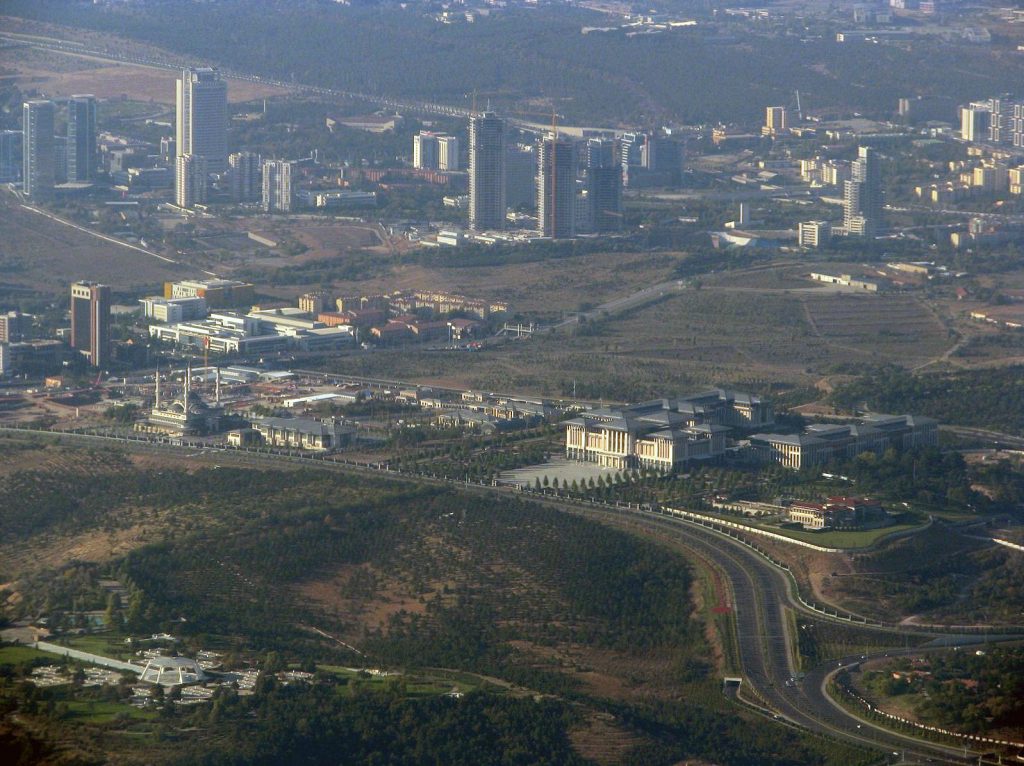
The summit ran over 29 and 30 October, with foreign ministers meeting on the first day under Türkiye’s Hakan Fidan and leaders meeting on the second day at the Presidential Complex in Beştepe, Ankara. The declaration was signed in five languages: Turkish, Azerbaijani, Kazakh, Kyrgyz and Uzbek. At its core, it reaffirmed respect for sovereignty, independence, territorial integrity, the inviolability of international borders and non-interference in internal affairs.
The five full members of the OTS are Türkiye, Azerbaijan, Kazakhstan, Uzbekistan and Kyrgyzstan. The organisation was established in 2009 as the Turkic Council and adopted its current name at its eighth summit in Istanbul in 2021. It has grown from a cultural forum into a body that now discusses defence, cybersecurity, trade corridors and energy.
Five documents were signed in total on 30 October: the Ankara Declaration itself, three decisions appointing senior officials to the OTS and the Turkic Academy, and an award decision for Kyrgyz President Sadyr Japarov. That matters, because the declaration was the only substantive policy document signed. The leaders also welcomed progress on a draft Treaty on Strategic Partnership, Eternal Friendship and Brotherhood, and encouraged work on the organisation’s strategy for 2027 to 2031, the next phase of its long-term Turkic World Vision 2040.
Defence and security: a college to explore, not to open
Defence was one of the most prominent themes in Ankara, and also one of the most carefully worded. The declaration encouraged national authorities and the OTS Secretariat to explore the possibility of establishing an OTS Defence Industry College programme, hosted by Türkiye, to train personnel and share expertise. It did not establish the college, appoint its staff, or set a budget or opening date. The proposal follows a defence industry cooperation roadmap adopted by OTS defence industry bodies in Baku on 1 October 2026, covering possible joint research, production, subcontracting, localisation and technology projects. The public announcement of that roadmap identified no financed projects, and the Ankara summit did not add any.
Cybersecurity followed a similar pattern. Leaders encouraged faster consultations on establishing an OTS Cyber Security Council and called on member states to speed up signing a memorandum of understanding on cybersecurity cooperation. Neither the council nor the memorandum was signed in Ankara. The declaration instead continued to encourage signature of that founding agreement, and it did not appear among the five documents signed on 30 October.
The leaders did reaffirm their determination to strengthen coordination against terrorism, extremism, separatism and transnational organised crime, including drug trafficking, illicit firearms trafficking and cybercrime. The clearest limit on the security agenda came from Kazakhstan. President Kassym-Jomart Tokayev repeated a position he had stated in Turkistan in May 2026: the OTS must never become a military alliance. His objection was to giving the organisation a military-alliance role, not to technical security cooperation or defence industry projects, and he supported work on the proposed cybersecurity council. He further suggested inviting Russia to cooperate through an OTS+ format or as an observer, citing Moscow’s historical and cultural connections with Turkic peoples. No invitation was announced, no collective decision was recorded, and Russia has made no public announcement of interest in joining in that way.
The Middle Corridor: the trade route at the centre
If one subject dominated the economic discussions, it was transport — in particular the Middle Corridor, the Trans-Caspian International East-West route that carries goods from Central Asia across the Caspian Sea, through Azerbaijan and Georgia, and into Türkiye and Europe. The declaration placed particular emphasis on strengthening that corridor, improving the integration and use of existing railway infrastructure, including the Baku-Tbilisi-Kars railway, and supporting the Zangezur Corridor and the China-Kyrgyzstan-Uzbekistan railway.
The declaration also encouraged an OTS transport corridors strategy and a comprehensive assessment of freight transit times, examining delays at border crossings, seaports and ferry crossings. It also called for fewer border bureaucracies and an examination of dedicated passenger lanes for OTS citizens at airports.
For landlocked Central Asian states, a reliable route to European and world markets that does not depend on a single neighbour is strategically valuable. Tokayev said freight on the Middle Corridor rose 30 percent in the first nine months of 2026, with transit shipments up 90 percent, according to reports of his summit remarks. He also said Kazakhstan’s trade with other OTS members was approaching 10 billion dollars, up 40 percent on the previous year. Those figures are his government’s own account. Kyrgyzstan’s President Sadyr Japarov wanted closer integration of the China-Kyrgyzstan-Uzbekistan railway with the Middle Corridor and faster processing at borders. Turkmenistan’s President Serdar Berdimuhamedov urged more capacity on the Trans-Caspian corridor and offered the infrastructure of the port of Türkmenbaşy. Erdoğan again expressed hope that Turkmenistan would become a full member; Berdimuhamedov made no corresponding commitment, and no change of status was announced.
Energy, investment and digital plans
Energy cooperation featured heavily. Member states endorsed closer cooperation through the expansion and modernisation of cross-border pipelines, electricity transmission lines, storage facilities and interconnections. The declaration highlighted the Baku-Tbilisi-Ceyhan oil pipeline, the Southern Gas Corridor, the Central Asia-Azerbaijan Green Energy Corridor and Caspian-Black Sea-Europe energy lines, and added critical minerals, energy efficiency and the peaceful use of nuclear energy to the agenda.
On trade and investment, leaders backed greater investment through the Turkic Investment Fund, simpler customs procedures and the expansion of digital trade. Uzbekistan’s President Shavkat Mirziyoyev proposed “Turkic World – 100”: 100 joint industrial and investment projects focused on processing strategic minerals, making green-energy equipment and producing higher-value goods, with the Turkic Investment Fund and international financial institutions as potential sources of capital. Ankara did not approve a funded portfolio of 100 projects; the programme remains a proposal, and its financing, project list and timetable are still to be agreed. Mirziyoyev also backed declaring 2027 the Year of Nature Protection.
In technology, leaders welcomed the completion of the production phase of the jointly developed 12U OTS-SAT CubeSat and called for accelerating preparations for its launch. A completed satellite is not yet a satellite in orbit. Erdoğan also floated a common digital trade platform and a shared Turkic large language model covering the Oghuz, Kipchak and Karluk language groups, and called for an artificial intelligence action plan. The declaration encouraged cooperation in artificial intelligence, digital infrastructure and the Digital Silk Road initiative.
Cyprus, Gaza, Syria and Afghanistan
The declaration’s foreign-policy passages show the group trying to speak with one voice on issues where its members’ positions are already broadly aligned. On Cyprus, it reaffirmed support for the inherent equal rights of Turkish Cypriots, describing them as an integral part of the Turkic world, and called for a negotiated, mutually acceptable and sustainable settlement based on the island’s existing realities. The declaration announced no recognition decision, no change in observer status and no new United Nations negotiating format.
On Gaza, the leaders urged full implementation of United Nations Security Council Resolution 2803 and the Comprehensive Plan to End the Gaza Conflict, while reiterating support for a two-state solution. Erdoğan also reaffirmed support for a Palestinian state on the 1967 borders with East Jerusalem as its capital, and said he hoped renewed tension with Iran would be channelled into diplomacy. On Syria, the declaration reaffirmed support for the country’s sovereignty, territorial integrity and reconstruction. On Afghanistan, it emphasised coordinated efforts to promote peace, stability and sustainable development, and noted close attention to the humanitarian situation there.
The absence that was noticed
One detail attracted attention beyond the declaration itself: Azerbaijan’s President Ilham Aliyev did not attend. Azerbaijan, the outgoing chair, was represented by Foreign Minister Jeyhun Bayramov, who emphasised regional security, the Middle Corridor, the Zangezur route and green-energy connections between Central Asia and Europe. Erdoğan had invited Aliyev on 21 October, and Azerbaijani reporting cited a prior commitment at a youth football event in Baku. No official record establishes that these tensions caused Aliyev to stay away. Erdoğan subsequently received Bayramov, and Azerbaijan took part in the summit decisions — but a chairmanship handover without the outgoing president present is unusual enough to be noticed.
Why it matters beyond the Turkic world
The Ankara summit is worth attention for three reasons. First, the Middle Corridor is becoming a genuine alternative trade route between Asia and Europe, and its development affects shipping times, freight costs and the bargaining power of countries along the way. Declarations do not lay track or dredge ports, but the political backing of five governments shapes where investment goes.
Third, the summit’s careful language on defence shows that even like-minded states draw lines. Kazakhstan’s insistence that the OTS must never become a military alliance, and the decision to leave the defence college, the cybersecurity council and the crime-fighting council as proposals rather than institutions, suggest the members want the benefits of cooperation — training, technology, shared standards — without the obligations of an alliance.
For Pakistan, which is not an OTS member, the summit is relevant rather than directly involving: Türkiye is one of its closest partners, and the Trans-Afghan railway noted in the declaration would, if ever built, connect Central Asia to Pakistan’s ports.
What happens next
Türkiye now holds the term presidency until the next regular summit in Uzbekistan in 2027, with an informal summit offered by Kyrgyzstan the same year. Mirvokhid Azimov of Uzbekistan becomes secretary-general, succeeding Kubanychbek Omuraliev of Kyrgyzstan — the first time Uzbekistan has headed the Secretariat.
The test of Türkiye’s chairmanship will be practical. The defence college needs an establishment decision and a budget. The cybersecurity council and memorandum need signatures. The crime-fighting council needs its founding agreement. The “Turkic World – 100” programme needs a project list and financing. The transport corridors strategy needs to be prepared, and the assessment of freight transit times needs to produce changes operators can actually use. Whether the Turkic Century becomes working institutions and faster freight, or remains a well-written declaration, will be decided in the year ahead.
Frequently asked questions
What is the Organization of Turkic States?
The Organization of Turkic States, or OTS, is an international organisation of Turkic-speaking countries. It was established in 2009 as the Turkic Council and adopted its current name at its eighth summit in Istanbul in 2021. Its five full members are Türkiye, Azerbaijan, Kazakhstan, Uzbekistan and Kyrgyzstan.
What did the Ankara Declaration actually decide?
The declaration, adopted on 30 October 2026, is a 163-point statement covering defence, cybersecurity, trade, energy, transport, technology, culture and foreign policy. Its firm decisions were mainly institutional: Türkiye took over the rotating chairmanship, Mirvokhid Azimov of Uzbekistan was named the next secretary-general, and the next regular summit was set for Uzbekistan in 2027.
Was a Turkic defence college created at the summit?
No. The declaration encouraged officials to explore the possibility of establishing an OTS Defence Industry College programme hosted by Türkiye, to train personnel and share expertise. It did not establish the college, set a budget or give an opening date. The proposal follows a defence industry cooperation roadmap adopted in Baku on 1 October 2026.
What is the Middle Corridor, and why did it feature so prominently?
The Middle Corridor, formally the Trans-Caspian International East-West Middle Corridor, is a trade route carrying goods from Central Asia across the Caspian Sea, through Azerbaijan and Georgia, and into Türkiye and Europe. The declaration backed strengthening the corridor, better use of the Baku-Tbilisi-Kars railway, and support for the Zangezur Corridor and the China-Kyrgyzstan-Uzbekistan railway.
Did the summit turn the OTS into a military alliance?
No, and Kazakhstan’s president said explicitly that it must never become one. President Kassym-Jomart Tokayev repeated that position in Ankara, while supporting technical security cooperation and defence industry projects. The declaration focused on coordination against terrorism, extremism, separatism and organised crime, rather than on any mutual defence commitment.
When and where is the next OTS summit?
The next regular summit is scheduled for Uzbekistan in 2027. Kyrgyzstan has offered to host an informal summit the same year. Türkiye will hold the rotating chairmanship until the next regular summit.
Conclusion
The Ankara summit gave the Organization of Turkic States its longest declaration, its clearest statement of ambition, and its most visible test. The leaders agreed on a great deal: the importance of the Middle Corridor, the value of energy and digital cooperation, the need for better cybersecurity, and common positions on Cyprus, Gaza, Syria and Afghanistan. The Turkic Century will not be judged by the number of points in a declaration, but by whether a defence college opens, a cybersecurity agreement is signed, a hundred investment projects find financing, and a container crosses from Central Asia to Europe faster than it did before. The next summit, in Uzbekistan in 2027, will be the moment to measure how much of it survived contact with budgets, borders and politics.
Sources
- https://www.europesays.com/turkiye/66992/ (Daily Sabah via EuropeSays, 30 October 2026)
- https://www.europesays.com/turkiye/67160/ (Anadolu Agency via EuropeSays, 30 October 2026)
- https://www.bosphorusnews.com/article/turkey-turkic-states-ankara-summit-seven-agendas (Bosphorus News, 31 October 2026)
- https://thediplomaticinsight.com/turkic-states-defense-college-trade-corridors/ (The Diplomatic Insight, 31 October 2026)
- https://www.newscentralasia.net/2026/10/31/report-13th-ots-summit-and-ankara-declaration/ (News Central Asia, 31 October 2026)
This article is for general information and education only. It is not legal or financial advice.
