
UK police tell mother of Lucy Harrison they have ‘no authority’ over her daughter’s death in Texas
The mother of Lucy Harrison, a 23-year-old British woman shot dead by her father at his home in Texas, has been told by police in England that they have no authority to act over a death that happened in the United States. It is the latest dead end in a campaign for answers that has lasted almost two years, and it exposes a gap many families only discover too late: two countries can look at the same death and reach opposite conclusions, and neither side can overrule the other.
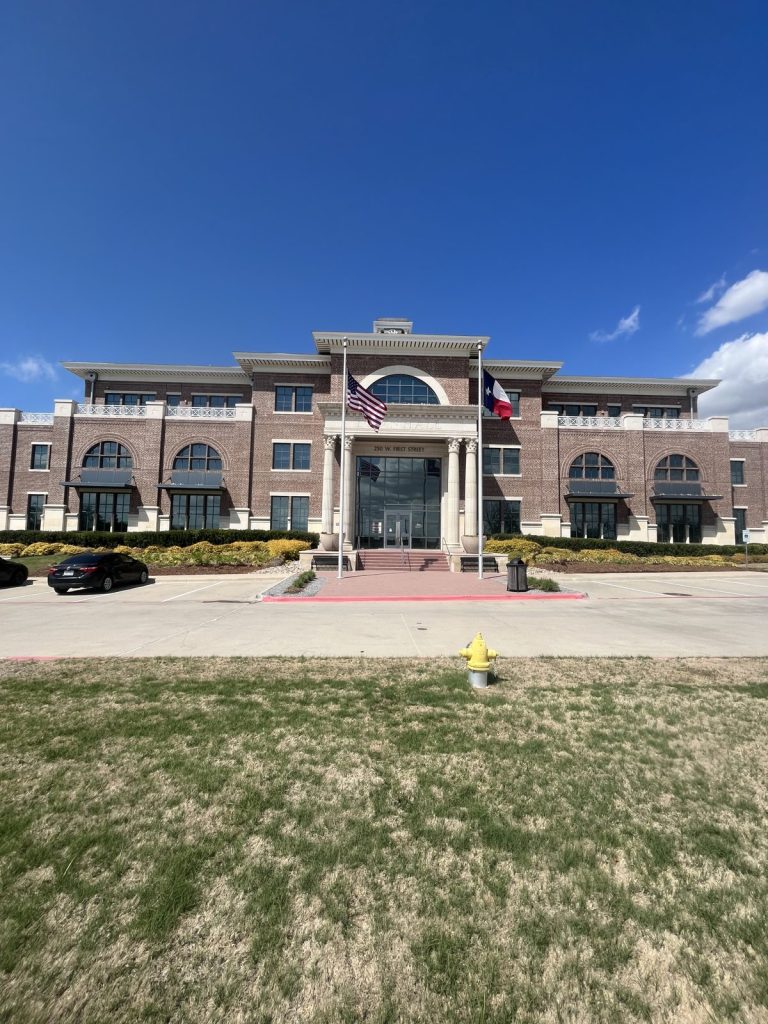
Lucy Harrison, a fashion buyer from Warrington in Cheshire, was shot once in the chest at her father Kris Harrison’s home in Prosper, Texas, on 10 January 2025. She had been visiting him with her boyfriend, Sam Littler, and they had been due to fly home the next day. Her father said the Glock went off accidentally while he was showing it to her. A Texas grand jury decided there was not enough evidence to charge him, but in February 2026 a coroner in England ruled that Lucy had been unlawfully killed, finding that her father’s actions amounted to gross negligence manslaughter under UK law.
That contradiction has defined everything since. In September 2026 Jane Coates travelled to Texas to press prosecutors to reopen the case, and was refused a meeting. She then turned to Cheshire Police, asking it to help obtain new evidence. The force’s answer, reported by the BBC on 31 October 2026, was that its hands are tied by law, jurisdiction and practical reality.
At a glance
What happened: Cheshire Police told Jane Coates, the mother of Lucy Harrison, that the force has no authority over her daughter’s death in Texas, after the family asked it to help obtain new evidence.
Why it matters: A British coroner ruled Lucy was unlawfully killed, but a Texas grand jury declined to charge her father, leaving her family caught between two justice systems that cannot overrule each other.
What happens next: The family is continuing its campaign for a fresh investigation in Texas, while pressing British authorities for support.
What Cheshire Police told the family
The family asked Cheshire Police to help obtain new evidence about Lucy’s death, according to the BBC report published on 31 October 2026. The force’s reply was blunt about the limits on what any English police force can do.
Cheshire Police said the force was “ultimately constrained by legal, jurisdictional and practical realities that significantly limit what any police force in England and Wales can do in relation to a death that occurred in the United States”. An English force has no power to compel witnesses, seize evidence or order tests on the other side of the Atlantic.
The force said it had done what it could: a Senior Investigating Officer was tasked with the case, a Family Liaison Officer was appointed, and information was sought from the relevant US agencies.
For the family, that is not enough. They have argued that because Kris Harrison is a British citizen, a mechanism exists for British nationals who commit murder or manslaughter abroad to be prosecuted before British courts. That argument is legally real, but it needs a suspect who can be brought before an English court, evidence that can be used there, and a prosecutor willing to take the case. None of those pieces is in place here.
The night Lucy died
Lucy Harrison was 23 and worked as a fashion buyer. She lived in Warrington, Cheshire, and had often visited her father in Prosper, a town in Collin County north of Dallas. On this trip she was with her boyfriend, Sam Littler. They had been due to fly home on 11 January 2025, the day after she was killed.
According to evidence heard at the inquest, Lucy and her father had a “quite a big argument” on the day she died, about Donald Trump, who was due to be inaugurated as US president later that month. Littler told the inquest that the dispute became heated, and that Kris Harrison then led his daughter into a bedroom to show her his Glock 9mm handgun. Within seconds, Littler heard a shot and ran in, finding Lucy lying on the floor near the bathroom entrance, with her father screaming.
Kris Harrison, who was 52 at the time, told police the pistol went off as he pulled it from its container. He said he could not remember whether his finger had been on the trigger, and that he had briefly gone back to drinking that day and was emotional because his daughter was about to leave. Bodycam footage captured him denying to officers that he had been drinking, but officers reported smelling alcohol on his breath, and no alcohol test was carried out.
An autopsy found Lucy had been shot through the heart, with a downward trajectory. Her mother said a diagram in the inquest papers showed her daughter had not been standing next to her father as he had claimed. “For me, it was like they had not chosen to follow the physical evidence,” Jane Coates said.
Two systems, two answers
The first official decision came in the United States. Prosper police investigated the death as a possible manslaughter, and the case was referred to the Collin County District Attorney’s Office. A grand jury then considered whether there was enough evidence to bring criminal charges. It decided there was not, declining to indict Kris Harrison on manslaughter or criminally negligent homicide, and treating the death as an accident. The US medical examiner, by contrast, recorded the death as a homicide.
The second decision came in England, more than a year later. Because Lucy’s body had been returned to Britain, a coroner in Cheshire held an inquest in Warrington in February 2026. Senior Coroner Jacqueline Devonish heard evidence over two days, including from Littler, and reached a very different conclusion.
Devonish ruled that Lucy had been unlawfully killed, on the grounds of gross negligence manslaughter. She said Kris Harrison’s conduct had been reckless: “To shoot her through the chest whilst she was standing would have required him to have been pointing the gun at his daughter, without checking for bullets, and pulling the trigger.”
The coroner described Kris Harrison as a “functioning alcoholic” who had been drinking wine before he removed a loaded Glock pistol from his bedside cabinet, and said she thought he had been teasing his daughter with the gun. She accepted his claim that he did not know the gun was loaded, but she did not accept that Lucy would have asked to see it, because she disliked firearms. She also noted that he had no experience of guns, had undertaken no training and had never fired a gun.
An inquest is not a criminal trial, it cannot convict anyone, and its conclusion has no legal force in Texas. But for Jane Coates, it was the first time an official body had said her daughter’s death was not an accident. “I am so grateful for our UK coroner for looking at all of the evidence,” she said.
The law the family points to
The family’s argument rests on a law that is more than 160 years old. Section 9 of the Offences Against the Person Act 1861 says that where murder or manslaughter is committed on land outside the United Kingdom by a British subject, the offence “may be dealt with, inquired of, tried, determined, and punished” in England, in the same way as if it had been committed there. In plain terms, English courts have jurisdiction over the killing of anyone, anywhere in the world, by a British citizen.
In practice, it is a narrow door. The 1861 Act says the person must be tried where they are “apprehended or be in custody” in England, which means the suspect has to be in England first. Kris Harrison lives in Texas, British police cannot arrest him there, and there is no suggestion he has returned to Britain. A prosecution would also need the Texas evidence to be admissible in an English court, and a Crown Prosecution Service decision that there was a realistic prospect of conviction. That is the legal wall Jane Coates has run into: the mechanism exists, but it is designed for cases where the suspect is within reach of the English courts.
A mother’s campaign
Jane Coates has not accepted that as the end of the matter. Her campaign, run under the name “For Luce”, has kept Lucy’s case in public view since the inquest. In August 2026 she said she felt “incredibly alone” and “deserted by the British authorities”, and urged the government to back her family. She stressed she was not asking the Foreign Office to interfere in the American justice system, only “to be a voice for Lucy and for our family, to know that we are supported by the British Government.”
In September 2026 she flew to Texas to make her case in person, with the help of Radd Seiger, a lawyer and campaigner who previously advised the family of Harry Dunn, the teenager killed by a US citizen in a road crash in Northamptonshire. The plan was to meet the Collin County District Attorney and Prosper Police, and ask them to sit down with the findings of the British inquest and the family’s independent experts, and reopen the investigation.
That trip ended in disappointment. The family announced on 27 September 2026 that they had arrived in Dallas, but that Prosper Police and the District Attorney had refused to meet them. A statement issued on their behalf said Jane still did not have the answers she deserved, 20 months after Lucy was killed, and that their door remained open to the authorities if they changed their minds.
Her lawyer, Radd Seiger, has argued that the accidental-discharge explanation was never properly tested, pointing to missing steps such as a scene reconstruction, toxicology testing and ballistics work. Retired Texas homicide detective Craig Miller, who reviewed the case, agreed, saying: “Guns just don’t go off. The only person who could have fired the gun is the dad.”
Jane Coates has kept the focus on her daughter rather than the legal argument. “I simply want the truth about what happened,” she has said. “I want people to see her as a person, not just as a case. She was funny, kind, loving and full of life. She had dreams. She had people who loved her deeply. She deserved a future.”
What the other side says
Prosper Police have said they will not reopen their investigation. A department spokesperson said the matter was referred to the Collin County District Attorney’s Office and presented to an independent grand jury, which ultimately declined to move forward with criminal charges.
Kris Harrison has not given interviews about the case. Through an attorney, he has said he fully accepted the consequences and would carry the weight of his daughter’s death for the rest of his life. He did not attend the inquest, but provided a written statement saying Lucy had asked to see the gun and that it had discharged accidentally as he lifted it. The coroner rejected the first part of that account, while accepting that he had not known the gun was loaded.
The Foreign Office said it had supported the family and was in contact with the local authorities.
Why this case matters beyond one family
Lucy Harrison’s death is, at its core, a private tragedy. But the fight that followed raises questions for any family whose loved one dies abroad: their system at home can hold an inquest and record a conclusion, but cannot investigate the death where it happened, cannot compel foreign police to act, and cannot prosecute unless the suspect comes within reach of the British courts.
The case also shows how much turns on the first hours of an investigation. The questions the family is still asking, almost two years on, are about basic steps: whether alcohol was tested for, whether the gun was examined properly, whether the scene was reconstructed. Once those hours have passed, the evidence is gone.
Frequently asked questions
Why did the Texas grand jury not charge Kris Harrison?
A grand jury in Collin County decided there was insufficient evidence to bring criminal charges, and declined to indict him on manslaughter or criminally negligent homicide. A grand jury decides whether there is probable cause to charge someone, based on the evidence prosecutors put before it, and its proceedings are secret. The decision treated the death as an accident.
What did the British coroner decide, and does it change anything in the US?
Senior Coroner Jacqueline Devonish ruled in February 2026 that Lucy Harrison was unlawfully killed, finding that her father’s actions amounted to gross negligence manslaughter under UK law. An inquest is not a criminal trial, it cannot convict anyone, and its conclusion has no legal force in Texas. It does create an official public record the family has used to press Texas to look again.
Can a British citizen be tried in the UK for a killing abroad?
Yes, in principle. Section 9 of the Offences Against the Person Act 1861 gives English courts jurisdiction over murder or manslaughter committed anywhere in the world by a British subject. But the suspect has to be apprehended or in custody in England, the evidence has to be usable in an English court, and prosecutors have to decide to take the case.
Why can’t Cheshire Police investigate a death in Texas?
Because police powers stop at the border. An English force has no authority to investigate a crime in the United States, compel witnesses there, or order forensic tests there. It can appoint a family liaison officer and ask US agencies for information, but it cannot run its own investigation on American soil.
What is the family asking for now?
Jane Coates wants the Texas authorities to reopen the investigation and meet her family to discuss the findings of the British inquest and the independent experts. She also wants Cheshire Police to help obtain new evidence, and the British government to publicly support her family.
Conclusion
Almost two years after Lucy Harrison was shot dead in her father’s home in Texas, her family has now been told, in turn, by the Texas police, by a Texas grand jury, by the district attorney’s office and by the police in her home county in England, that there is nothing more they can do. The one official body that agreed with the family, the coroner in Cheshire, has no power to charge anyone.
That is not a story about a single mistake. It is a story about how justice systems are built for crimes that happen at home, and how they struggle when a death happens thousands of miles away. Jane Coates has said she will keep asking. The answers, if they ever come, must come from Texas.
This article is for general information and education only. It is not legal or financial advice.
Sources
- https://britishbulletin.com/lucy-harrison-death-mum-told-uk-police-have-no-authority-in-us-uk-news/ (BBC report, via British Bulletin mirror, 31 October 2026)
- https://www.ladbible.com/news/uk-news/lucy-harrison-mum-case-update-us-crime-shooting-006901-20260928 (LADbible, 28 September 2026)
- https://www.ladbible.com/news/uk-news/lucy-harrison-mum-hits-out-police-371908-20260508 (LADbible, 8 May 2026)
- https://washingtondigest.com/british-mother-demands-texas-reopen-probe-into-daughters-shooting-death-after-trump-argument/ (Washington Digest, 28 September 2026)
- https://www.ukpolicelawblog.com/murder-abroad/ (UK Police Law Blog, accessed 1 November 2026)
