
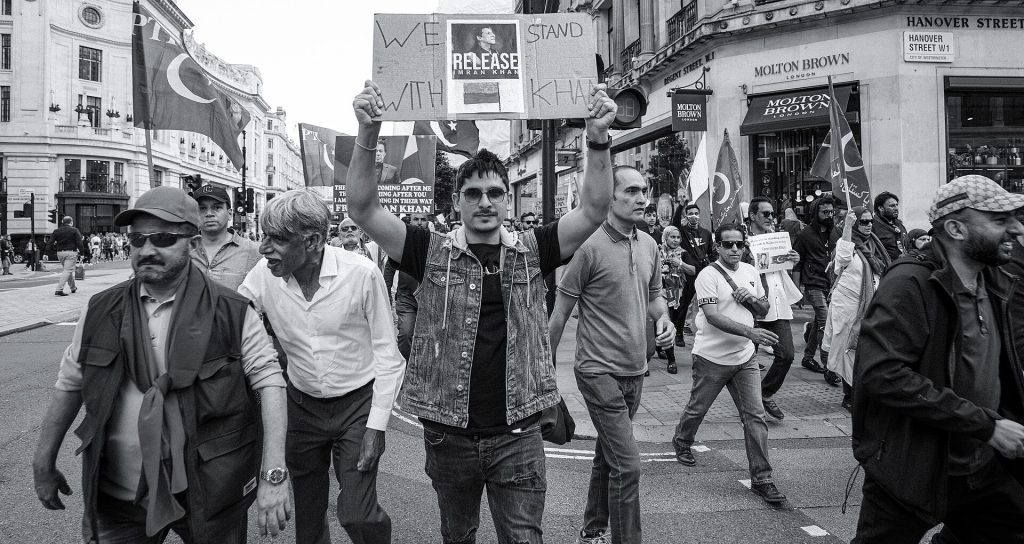
UN Human Rights Chief Urges Pakistan to Release Imran Khan and Ease Political Tensions
The United Nations’ top human rights official has called on Pakistan to release former prime minister Imran Khan, saying his freedom could help calm the country’s deep political tensions.
Volker Türk, the UN High Commissioner for Human Rights, made the call in an interview with CNN on Thursday, 19 November. It is the most direct intervention yet by the UN’s human rights chief in the case of Pakistan’s jailed former leader, and it comes at a moment of growing concern about Khan’s health in prison.
“I call for [Imran Khan’s] release. I call for his proper treatment, and I actually call for de-escalation,” Türk said. “We need to diffuse the political tensions that are around this case, which means that a confidence-building measure between the opposition and the government could be his immediate release.”
What the UN chief said
Türk’s message had three parts: release Khan, treat him properly, and lower the political temperature.
He suggested that freeing the founder of the Pakistan Tehreek-e-Insaf (PTI) could serve as a confidence-building measure between the government and the opposition. He also stressed that Pakistan must follow international legal standards on how detainees are treated.
He called for greater access to legal representatives, family members and medical assistance for prisoners, describing such measures as essential to restoring confidence and encouraging political engagement.
Türk also made clear that his concern goes beyond one man. He pointed to concerns about the detention of journalists, human rights defenders and opposition figures in Pakistan, and urged continued engagement between the United Nations and Pakistani authorities to protect fundamental rights and ensure people are not detained arbitrarily.
Why now: fears over Khan’s health
Türk’s intervention follows renewed concern about Khan’s health and the conditions in which he is being held at Adiala Jail in Rawalpindi.
Earlier this week, Khan approached the country’s senior judges seeking implementation of Supreme Court directions concerning his medical treatment and detention conditions, warning that delays could have serious consequences for his health. In an open letter released by his lawyer, he wrote that he “may not return alive” if proper medical care was not provided.
Five jailed PTI leaders have also approached the top judges over the health and prison conditions of Khan and his wife, Bushra Bibi.
Amnesty International has separately demanded adequate healthcare for Khan and Bushra Bibi, along with regular access to their families and lawyers. The rights organisation alleged that restrictions imposed during their detention violated Pakistan’s obligations under international human rights law.
According to Amnesty, the 74-year-old former prime minister has been denied regular family visits since December 2025, apart from two meetings with his sister in August 2026. It also claimed he has not been permitted telephone contact with his sons since March. The organisation raised concerns about what it described as prolonged solitary confinement and increasing isolation, warning of possible consequences for his physical and mental well-being.
Amnesty’s South Asia office reported that Khan had been experiencing serious blood pressure problems and that his family had sought access to independent medical specialists. It also expressed concern about Bushra Bibi’s eye condition and alleged that she had not received adequate medical attention. She underwent eye surgery in April after doctors diagnosed problems including posterior vitreous detachment, a condition affecting the inside of the eye.
The dispute over his medical treatment
The row over Khan’s medical care intensified after the Supreme Court ordered his transfer to Shifa International Hospital on 18 August for specialised care. Instead, he was taken to the Pakistan Institute of Medical Sciences (PIMS) for an examination before being returned to Adiala Jail, prompting PTI to file a contempt petition alleging that the court’s directions had not been followed.
Earlier medical examinations had identified a condition affecting blood circulation in Khan’s right eye, for which he received treatment at PIMS. He was taken to hospital again during the night of 10–11 November for treatment of the same eye problem, and was discharged in the early hours of the morning and returned to jail.
A subsequent medical board reported an improvement in his eyesight and did not recommend hospitalisation, although PTI continued to demand access to independent doctors of the family’s choosing.
The disagreement over who examines Khan — government doctors or independent specialists chosen by his family — has become one of the central disputes in the case, and it is one of the issues Türk was addressing when he called for proper medical care and access to family members.
The cases keeping him in jail
Khan has been imprisoned since August 2023. He is serving a sentence in the £190 million corruption case, and faces additional proceedings related to the protests of 9 May 2023, when violent demonstrations broke out across Pakistan after his arrest.
He and his wife, Bushra Bibi, were also sentenced to 17 years in prison in December 2025 in the Toshakhana-II case, involving allegations that they unlawfully retained a jewellery set received during an official visit to Saudi Arabia.
Khan’s party, the PTI, says the cases against him are politically motivated and designed to keep him out of politics. The government rejects that, saying the cases are a matter for the courts.
His family and party under pressure
The pressure has extended beyond Khan himself. Amnesty called for an end to what it described as politically motivated action against Khan’s relatives, particularly his sisters.
Three of his sisters were detained in September under the Maintenance of Public Order Ordinance in connection with a planned PTI march towards Islamabad. Two of them, Uzma Khan and Noreen Niazi, were released from Lahore’s Kot Lakhpat Jail on 12 November after the Punjab government withdrew the orders extending their detention. The third, Aleema Khan, remained imprisoned.
Interior Minister Mohsin Naqvi has dismissed speculation about a secret deal to secure Khan’s release. Speaking to reporters last week, he said any relief for Khan would have to come through the courts and not through a political arrangement, and that the government was not negotiating a behind-the-scenes understanding.
What the UN has said before
Türk’s call is not the first time the United Nations has raised Khan’s detention. In July 2024, the UN Working Group on Arbitrary Detention said Khan’s detention was arbitrary and in violation of international law, and that the appropriate remedy would be to release him immediately and give him an enforceable right to compensation and other reparations.
The working group concluded that his detention had no legal basis and appeared intended to disqualify him from running for political office. It said his detention resulted from his exercise of fundamental rights and freedoms, including freedom of opinion and expression, political participation and freedom of association.
The government and its allies rejected the working group’s findings at the time, calling them a conspiracy against the country’s institutions. The UN Secretary-General’s spokesperson later said the Secretary-General wanted Khan’s situation to “evolve in a much more positive way”.
Türk himself has raised concerns about Pakistan before. In 2023, he warned that the rule of law in Pakistan was under serious threat, and in 2024 he criticised constitutional amendments that he said were adopted hastily and could undermine the independence of the judiciary.
What happens next
Türk’s intervention adds international pressure, but it does not change the legal position on its own. The UN human rights chief can call for a release, but he cannot order one. The decision rests with Pakistan’s courts and, ultimately, its government — and the government has so far shown no sign of agreeing.
For now, the case will continue on two tracks. In the courts, Khan’s lawyers are pursuing his appeals and pressing for the Supreme Court’s orders on his medical treatment to be carried out. In politics, his party is demanding his release and an end to what it calls the targeting of his family, while the government insists that everything must go through the legal process.
What Türk’s words do change is the tone of the international conversation. When the UN’s human rights chief says publicly that a former prime minister’s release could be a confidence-building measure, it puts the question of Khan’s detention back on the agenda — not just as a court case, but as a test of whether Pakistan’s politics can move from confrontation towards dialogue.
Whether anyone in Islamabad is listening remains to be seen.
Frequently asked questions
Who is Volker Türk?
Volker Türk is the United Nations High Commissioner for Human Rights, the UN’s top human rights official. He leads the Office of the High Commissioner for Human Rights (OHCHR) in Geneva.
What did he say about Imran Khan?
Speaking to CNN on 19 November 2026, Türk said: “I call for [Imran Khan’s] release. I call for his proper treatment, and I actually call for de-escalation.” He said Khan’s immediate release could be a confidence-building measure between the opposition and the government.
How long has Imran Khan been in jail?
Khan has been imprisoned since August 2023. He is serving a sentence in the £190 million corruption case and faces further proceedings linked to the 9 May 2023 protests. He and his wife Bushra Bibi were also sentenced to 17 years in prison in December 2025 in the Toshakhana-II case.
What are the concerns about his health?
Khan, 74, has reported serious blood pressure problems and a condition affecting blood circulation in his right eye. He has warned senior judges that delays in his medical treatment could have serious consequences. Amnesty International says he has been denied regular family visits since December 2025 and has had no telephone contact with his sons since March.
Has the UN called for his release before?
Yes. In July 2024, the UN Working Group on Arbitrary Detention said Khan’s detention was arbitrary and violated international law, and called for his immediate release and compensation. The Pakistani government rejected those findings.
Will he be released now?
Not necessarily. The UN human rights chief’s call carries moral and political weight, but it is not legally binding on Pakistan. The government has said any relief must come through the courts, and Khan faces multiple cases.
Sources
- Pakistan Today: “UN human rights chief urges Pakistan to release Imran Khan, ease political tensions”
- CNN / Amanpour via Mehdi Hasan: Türk’s interview quote, 19 November 2026
- Independent News Pakistan: “UN body demands immediate release of PTI founder”
- International Center for Transitional Justice: “UN Group Demands Release of Ex-Pakistan PM Imran Khan; Says His Detention Violates International Law”
- India TV News: “Two of Imran Khan’s sisters released from jail; is he inching towards a deal with Asim Munir?”
