
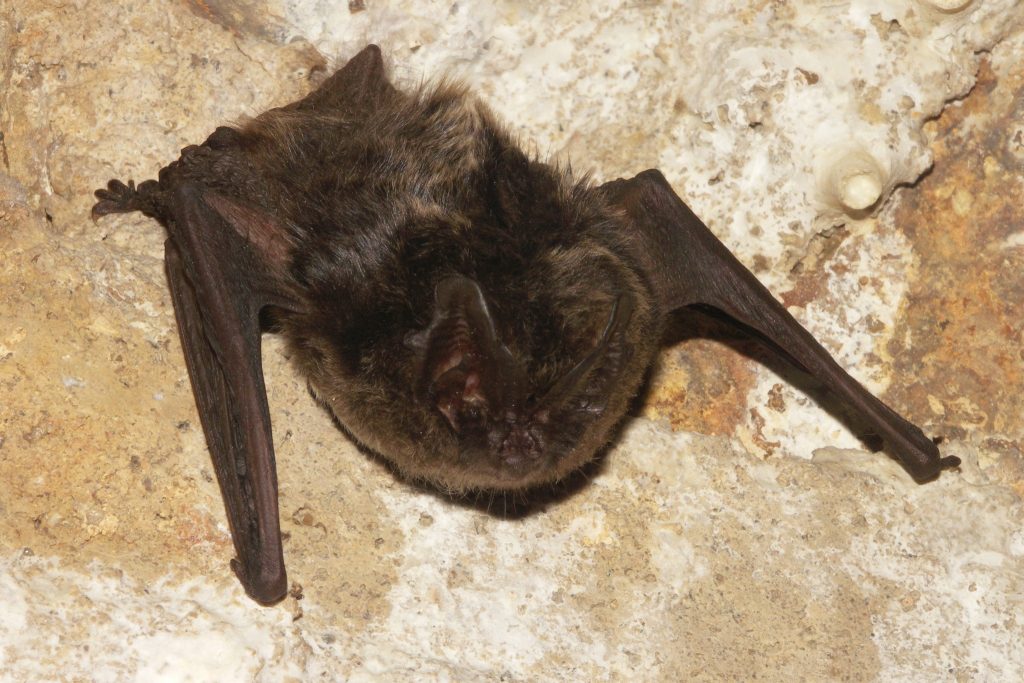
AI helps complete Britain’s largest woodland bat survey, analysing more than 98 million calls
Artificial intelligence has helped researchers complete Britain’s largest woodland bat survey, analysing more than 98 million bat calls recorded across 310 English woodlands. The results of the National Woodland Bat Survey were announced on 30 October.
The survey was led by the Bat Conservation Trust and Forest Research, and funded by the UK Government through Defra’s Natural Capital and Ecosystem Assessment programme. Recorders left on poles collected 9,734 nights of recordings between 2021 and 2024, producing 217 terabytes of audio — around 90,000 hours in total.
Open-source AI tools developed with researchers at University College London and the University of Edinburgh identified the bats’ echolocation calls in the recordings. A subset of the AI identifications was then checked by a network of 19 bat-call experts. The team said sorting the recordings by hand would have taken more than three decades.
The survey detected every bat species or species group found in Britain except the serotine, which researchers said is particularly difficult to identify from sound recordings alone. Common pipistrelles were recorded at all 310 sites and soprano pipistrelles at 99 per cent.
It also recorded some of Britain’s rarest bats, including the grey long-eared bat and the barbastelle, both on the UK Red List. Hotspots of barbastelle activity were concentrated across southern England, excluding much of the South East, and the survey recorded barbastelles in parts of Cornwall, Devon and Dorset where only a few sparse records previously existed.
Why it matters
Bats are nocturnal, highly mobile and hard to observe directly, so listening for their echolocation calls gives a much fuller picture of where they live and how they use woodland. The survey found activity was highest on average in broadleaved woodland, underlining how important woodland is for foraging, roosting and moving through the landscape.
The results also provide a baseline for tracking long-term changes in bat presence, distribution and numbers in English woodlands. For seven species, including the barbastelle, the survey is currently the only national-scale survey in England away from known roost sites.
What happens next
Researchers now plan to model how factors such as climate, woodland cover, hedgerow extent and habitat connectivity influence where different species are found. The data are available to download and explore through the National Woodland Bat Survey Data Explorer.
Sources
- https://www.forestresearch.gov.uk/news/ai-helps-reveal-britains-bats-in-largest-ever-national-woodland-bat-survey/ (Forest Research, 30 October 2026)
- https://www.forestryjournal.co.uk/news/26686033.ai-powered-survey-detects-98-million-bat-calls-woodlands/ (Forestry Journal, 30 October 2026)
- https://www.envirolink.org/2026/10/30/ai-helps-researchers-complete-britains-largest-woodland-bat-survey/ (EnviroLink, 30 October 2026)
This article is for general information and education only. It is not legal or financial advice.
