
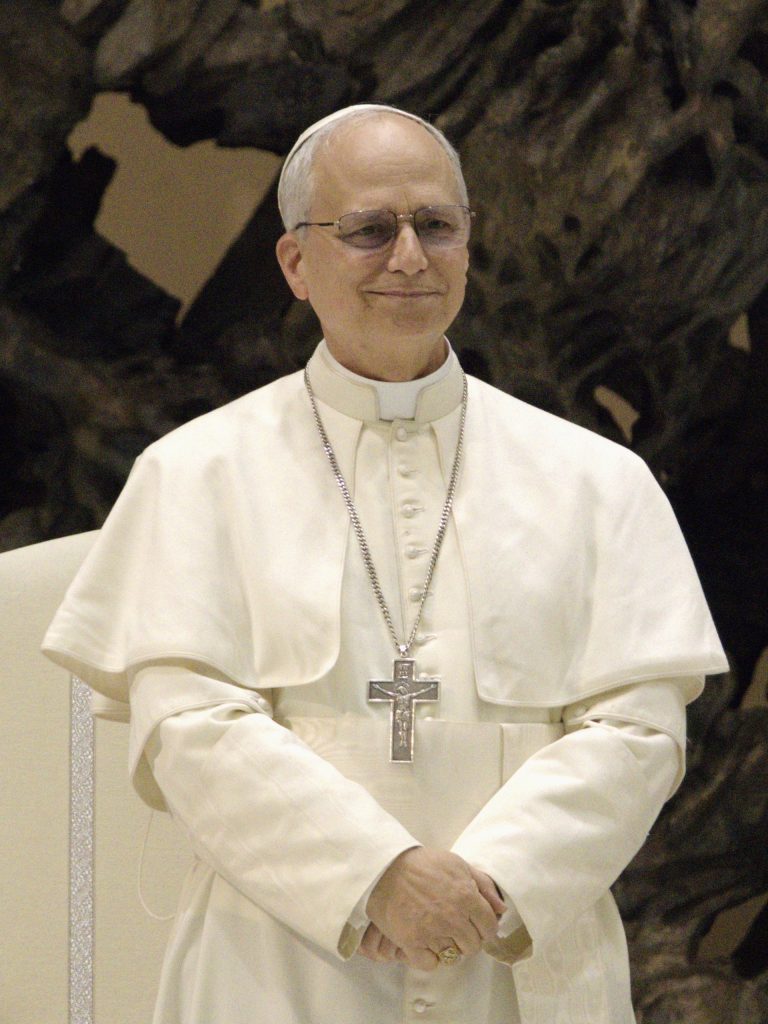
Pope Leo’s Peru Homecoming Faces a Truth Commission Call Over Catholic Church Abuse
On the eve of Pope Leo XIV’s return to Peru, the country where he spent two decades as a missionary and bishop, a United States-based watchdog has called for a truth commission to investigate sexual abuse in Peru’s Catholic Church. The group says Peru’s Church leaders have hidden the scale of the problem for too long — and it wants the Pope to use his homecoming to demand accountability, not just compassion.
The call came on Thursday, 5 November, at a press conference in Lima, just one day before Pope Leo was due to begin a 12-day tour of South America that ends in Peru. The timing was deliberate. The watchdog, BishopAccountability.org, also published a new database naming Peruvian clergy and religious figures it says have been accused of sexually abusing children or vulnerable people. Reports in Peruvian and Spanish media put the number of names in the database at 77.
For Peru’s survivors of church abuse, the moment matters. Pope Leo is not a distant visitor to Peru. He arrived there as a young missionary in the 1980s, later became a Peruvian citizen, and served as bishop of Chiclayo from 2015 to 2023. The Vatican has said he will meet survivors of physical and sexual abuse during his visit to the region. The question now is what he will say — and do — when he is standing on Peruvian soil again.
What happened in Lima
Anne Barrett Doyle, co-director of BishopAccountability.org, which tracks Catholic clergy abuse allegations around the world, told reporters in Lima that Peru’s Church hierarchy had failed to confront the abuse crisis honestly.
“The stubborn secrecy of Peruvian Church leaders puts children at risk, deprives victims of validation, and prevents civil authorities from identifying and prosecuting the complicit,” Barrett Doyle said at the press conference.
The group is asking the Peruvian government to set up a truth commission — an independent body that would investigate abuse in the Church, gather testimony from survivors, and publish the names of accused clergy. Representatives of the Archdiocese of Lima and the Peruvian Episcopal Conference, which represents the country’s Catholic bishops, did not immediately respond to requests for comment.
The database published on Thursday is the centrepiece of the campaign. Reuters reported that it identifies dozens of Peruvian clergy and religious figures accused of sexually abusing children or vulnerable people. El País, the Spanish newspaper, reported that the list contains 77 names. The group says the database is based on public records, court documents and news reports, and that it wants the full list made public so that civil authorities can act on it.
BishopAccountability.org also called on Pope Leo to condemn what it described as the judicial persecution of journalists who have investigated abuse cases in Peru — reporters who, the group says, have faced lawsuits and legal pressure for their work.
Why survivors say secrecy is the problem
The watchdog’s argument is simple: abuse in the Church cannot be stopped while the names of accused priests stay hidden. When the Church handles allegations internally and quietly, the group says, three things go wrong.
First, children stay at risk. A priest accused of abuse in one parish can be moved to another without anyone in the new community knowing. Second, survivors are denied validation — the public acknowledgement that what happened to them was real and wrong. Third, the police and prosecutors cannot do their job, because they cannot investigate people they do not know about.
This is the pattern that has played out in country after country. In France, a 2021 independent inquiry estimated that around 216,000 children had been abused by Catholic clergy in France since 1950. In Ireland and Australia, state inquiries found that Church leaders had moved accused priests between parishes instead of reporting them. In each case, the turning point came when the information became public — when names, dates and places were put on the record.
Peru’s survivors say their country has never had that moment. The scandals have come out one by one, in news reports and court cases, but there has been no national reckoning — no single investigation that put the whole picture together. That is what a truth commission would be for.
The word “truth commission” also carries a special weight in Peru. The country set up a Truth and Reconciliation Commission in 2001 to investigate the killings and abuses of its 20-year internal conflict, and its final report in 2003 became a landmark in Peruvian public life. Calling for a truth commission on church abuse borrows that language deliberately: it asks for the same kind of public, official accounting, this time for abuse inside the Church.
Sodalitium: the scandal that shaped the debate
The most prominent abuse scandal in Peru’s Church involves Sodalitium Christianae Vitae, an ultraconservative Catholic group founded in Peru that later expanded to other countries. For years, journalists and former members accused the group’s founder and other leaders of sexual and psychological abuse.
The allegations against Sodalitium became one of the biggest stories in Peruvian Catholicism. Pope Francis ordered the organisation dissolved in 2025, after a Vatican investigation into allegations including sexual and psychological abuse. The decision was a major step — the Vatican rarely dissolves an entire religious organisation — but survivors and their supporters say it did not go far enough, because it dealt with one group rather than the wider pattern of abuse and cover-up across the Peruvian Church.
That is the gap the truth commission campaign is trying to fill. Sodalitium is the best-known case, but the new database suggests the problem is broader, involving clergy across different dioceses and religious orders. The group’s message is that dissolving one organisation does not answer the question of how many other cases were never investigated, and how many accused priests are still in ministry.
A pope who knows Peru — and the expectations on him
Pope Leo XIV’s relationship with Peru is unlike that of any pope before him. He is the first US-born pope, but he is also a naturalised citizen of Peru, where he spent almost half of his 43 years as a priest before becoming pope. He arrived as a missionary in the 1980s, learned Quechua, the Indigenous language spoken across the Andes, and served as bishop of Chiclayo, a city in northern Peru, from 2015 to 2023.
His South America tour, which runs from 6 to 17 November, takes him to Uruguay, Argentina and Peru, with Peru as the final leg. He will spend six of his 12 days on the continent in Peru, including two days in his former diocese of Chiclayo. The Peru leg runs from 11 to 16 November and includes Lima, Chiclayo, Cusco — which sits 3,500 metres above sea level — and Pucallpa, where he will meet missionaries and Indigenous communities. On 14 November he will visit the shrine of St Turibius of Mogrovejo in Zaña, a saint he has said shaped his own idea of what a missionary bishop should be.
The Vatican has said the Pope will meet survivors of physical and sexual abuse during the visit. That meeting is now one of the most closely watched moments of the whole trip.
Barrett Doyle welcomed the Pope’s record of speaking kindly about victims — but said kindness is not enough. “Pope Leo has spoken compassionately about the need to accompany victims and to listen to them, but he has said almost nothing about holding bishops in his Church accountable. We hope we hear that message from him during this visit,” she said.
That distinction — between listening to victims and holding bishops accountable — is at the heart of the campaign. Survivors’ groups around the world have heard popes express sorrow before. What they say they have rarely seen is a pope who publicly names bishops who covered up abuse, removes them from office, and hands their cases to the police. The test in Peru, they say, will be whether Pope Leo does that — or whether the visit passes with warm words and no consequences.
What a truth commission would actually do
A truth commission is not a court. It cannot send anyone to prison. What it can do is investigate, document and publish — and in abuse cases, campaigners say, that is often the most important step.
A commission on church abuse in Peru would typically do four things. First, it would invite survivors to give testimony, in private if they prefer, and record their accounts. Second, it would demand access to Church records — personnel files, transfer histories and internal correspondence — to establish what bishops knew and when. Third, it would publish a list of clergy credibly accused of abuse, so that schools, parishes and parents know who they are. And fourth, it would make recommendations: changes to church rules, to the law, and to the way abuse is reported and investigated.
Whether the Peruvian government will agree is an open question. The group is asking the government to create the commission, not the Church — precisely because it does not trust the Church to investigate itself. But a government-appointed commission would need political support, funding and legal powers to demand documents. None of that has been promised yet.
There is also the question of what the Vatican would do. Pope Leo could support the idea publicly, which would put pressure on Peru’s bishops to cooperate. He could stay silent, which would leave the campaign to fight on its own. Or he could argue that the Church’s own processes are enough — a position survivors’ groups say has failed in the past.
Why this matters beyond Peru
Peru is one of the most Catholic countries in Latin America. According to Vatican statistics, more than 91 per cent of Peruvians are baptised Catholics — about 31 million people out of a population of around 34 million. The Church runs schools, hospitals and charities across the country, and its priests are trusted figures in many communities. When abuse happens inside such an institution, and when it is covered up, the damage spreads far beyond the victims themselves: it breaks trust in one of the country’s most important institutions.
The Peru case also matters because it is a test of Pope Leo’s papacy. He was elected in May 2025, and his handling of the abuse crisis will define how he is judged — in Peru, where people know him personally, and around the world, where survivors’ groups are watching for signs of change. His supporters say his years in Peru give him a deep understanding of the problem. His critics say that understanding must now produce action.
The timing adds to the pressure. The Pope arrives in Peru next week, and the database of accused clergy is now public. The names are out there. The question of what happens to them — whether they are investigated, removed from ministry, or left in place — cannot easily be ignored while the Pope is in the country.
What happens next
Several things will decide what happens in the coming days.
First, the Pope’s visit itself. The Peru leg of the tour runs from 11 to 16 November, and his meeting with abuse survivors is expected during that time. What he says in that meeting — and whether he says anything publicly about the truth commission call — will set the tone for everything that follows.
Second, the response from Peru’s bishops. The Archdiocese of Lima and the Peruvian Episcopal Conference have not yet responded to the watchdog’s call. If they refuse to cooperate with any investigation, the campaign will depend entirely on the government. If they engage, it could open the door to a fuller accounting.
Third, the Peruvian government. The group has asked the government to create the truth commission. That decision rests with politicians who may be reluctant to take on the Church, one of the country’s most powerful institutions. Public pressure — and the attention the Pope’s visit brings — could change that calculation.
Fourth, the journalists. The watchdog has asked the Pope to speak out against the legal cases brought against reporters who investigated abuse. How those cases develop will show whether Peru’s press is free to keep reporting on the Church.
And finally, the database itself. The 77 names now published will be checked, challenged and investigated — by the press, by the police, and by the Church. Some of the accused may already be dead or out of ministry. Others may still be working with children. What happens to each of them will be the real measure of whether this week’s call for a truth commission changes anything, or becomes one more statement that fades when the Pope’s plane leaves Lima.
Frequently asked questions
What is BishopAccountability.org asking for?
The US-based watchdog is asking the Peruvian government to create a truth commission to investigate sexual abuse in the Catholic Church in Peru. It also published a database naming clergy and religious figures it says have been accused of abusing children or vulnerable people.
How many names are in the database?
Reuters reported that the database identifies dozens of Peruvian clergy and religious figures. Peruvian and Spanish media, including El País, reported that the list contains 77 names.
Why is the timing significant?
The call was made on 5 November, the day before Pope Leo XIV began a 12-day tour of South America that ends in Peru. Pope Leo spent about 20 years in Peru as a missionary and bishop, and is a naturalised Peruvian citizen. The Vatican has said he will meet abuse survivors during the visit.
What is Sodalitium Christianae Vitae?
Sodalitium Christianae Vitae is an ultraconservative Catholic group founded in Peru that expanded internationally. Pope Francis ordered it dissolved in 2025 after a Vatican investigation into allegations including sexual and psychological abuse. It is the most prominent abuse scandal in Peru’s Church, but the new database suggests the problem is wider.
What is a truth commission?
A truth commission is an independent body set up to investigate past abuses, take testimony from survivors, and publish its findings. It cannot send anyone to prison, but it can name those accused, document what happened, and recommend changes. Peru set up a Truth and Reconciliation Commission in 2001 to investigate its internal conflict.
Sources
- Reuters (via 98.5 The River), “US watchdog calls for truth commission to investigate Church abuses cases in Peru”, by Marco Aquino, 5 November 2026 — https://985theriver.com/2026/11/05/us-watchdog-calls-for-truth-commission-to-investigate-church-abuses-cases-in-peru/
- Reuters World News Summary (via Devdiscourse), 6 November 2026 — https://www.devdiscourse.com/article/international/4002388-reuters-world-news-summary?amp
- Silere Non Possum, “Press review 5 November 2026 – Vatican and Catholic Church”, 5 November 2026 (reporting the 77-name database and coverage in El País, La Jornada and Infobae) — https://silerenonpossum.com/en/rassegna-live/2026-11-05/
- EWTN Vatican, “The mission: Pope Leo XIV in South America”, 2026 (tour dates, Peru leg, Chiclayo, naturalised Peruvian citizen) — https://ewtnvatican.com/articles/the-mission-pope-leo-xiv-in-south-america
- The Catholic Sun, “At Peruvian shrine, Pope Leo will return to the missionary model that shaped him”, 4 November 2026 (Peru itinerary 11–16 November, Zaña shrine 14 November) — https://www.catholicsun.org/2026/11/04/at-peruvian-shrine-pope-leo-will-return-to-the-missionary-model-that-shaped-him/
This article is for general information and education only. It is not legal or financial advice.
