
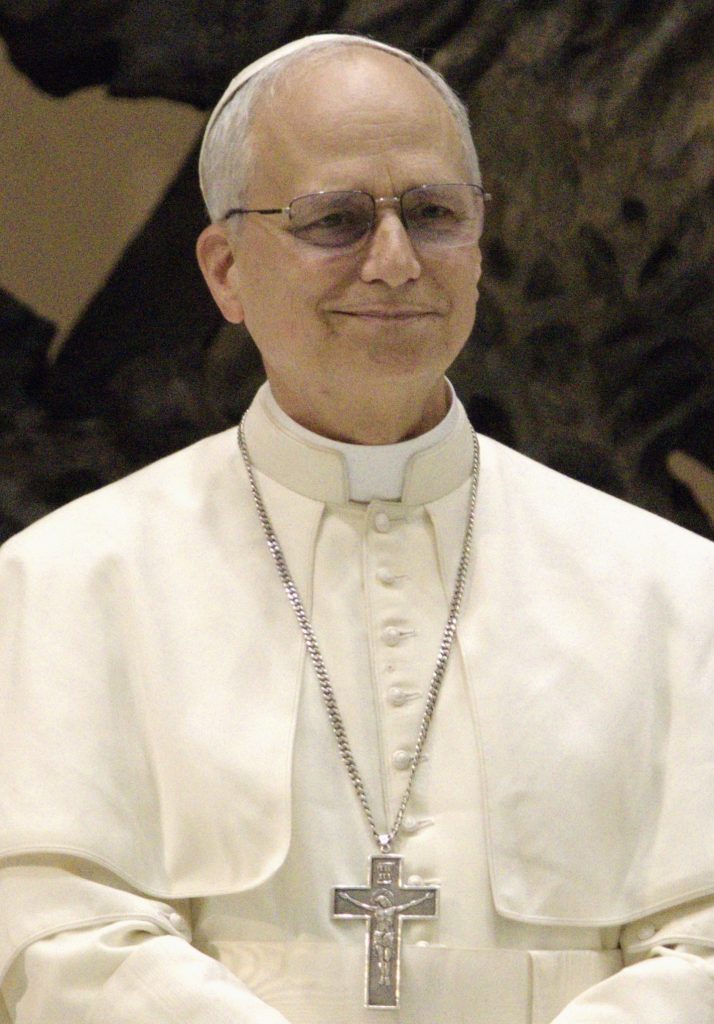
Pope Leo XIV heads back to South America — and abuse survivors want more than meetings
Pope Leo XIV is due to return to South America on 6 November for a 12-day visit to Uruguay, Argentina and Peru, the most testing journey of his young papacy. It is a homecoming for a pope who spent decades as a missionary and bishop in Peru, but also a journey through countries where the Catholic Church’s record on clerical sexual abuse is still an open wound. Survivors in all three countries have spent the weeks before the visit making the same point in different ways: meetings with the pope are welcome, but they are not, on their own, enough.
The Vatican confirmed on 27 October that Leo would hold “several meetings” with victims of abuse by clergy during the visit, which ends with six days in Peru. The announcement came only after survivors in Peru publicly worried that no such meetings were on the schedule at all. Survivors who credit Leo with helping to bring down one of Peru’s most notorious Catholic groups now want to know whether the approach he used there can become Church policy everywhere — and whether the Church will finally offer justice, accountability and reparations, not just sympathy.
At a glance
What happened: The Vatican confirmed on 27 October that Pope Leo XIV will meet victims of clergy sexual abuse during his 6–17 November visit to Uruguay, Argentina and Peru, after Peruvian survivors said the meetings were missing from his schedule.
Why it matters: Survivors credit Leo with helping to dissolve the Sodalitium movement in Peru, but say the Church still lacks consistent global rules on removing abusive priests, publishing disciplinary decisions and paying reparations.
What happens next: The pope is due to travel on 6 November, ending with six days in Peru, where survivors will be watching whether the private meetings lead to any public commitments.
A homecoming with a difficult agenda
Leo is the first pope born in the United States, but his Church life was made in Peru. He arrived there as a missionary in the 1980s, later became a Peruvian citizen and served as bishop of Chiclayo before being called to Rome as a cardinal. He was elected pope on 8 May 2025. For Peruvians, this is not a distant figure arriving for a state visit — he is a man many of them know.
That familiarity cuts both ways. Survivors in Peru say Leo listened to them when few other bishops would, attending meetings, gathering information and keeping in touch by WhatsApp and email. At the same time, his record there will be examined in detail, including a disputed case from his time in Chiclayo that his critics raised within days of his election.
The visit is also physically demanding, involving around a dozen flights and two helicopter rides to high altitudes, according to reporting on the trip. That matters because Leo, who is 71, has just recovered from major surgery: on 13 October, surgeons at Rome’s Gemelli Hospital removed the lower lobe of his right lung after tests confirmed a nodule was adenocarcinoma, the most common type of lung cancer. He left hospital on 17 October, and on 22 October the Vatican said tests showed the cancer had not spread and no further treatment was needed.
Why Peru matters most
Peru is where Leo’s reputation on abuse was built, and it is where expectations are highest. The case at the centre of it is Sodalitium Christianae Vitae, a Peru-founded Catholic community whose members were accused of sexual, physical and psychological abuse.
The abuse was first denounced more than two decades ago by José Enrique Escardó, who said he was abused by Germán Doig, the movement’s co-founder. The case became widely known after the 2015 book “Mitad Monjes, Mitad Soldados” (“Half Monks, Half Soldiers”), by Peruvian journalists Paola Ugaz and Pedro Salinas, detailed the alleged abuse inside Sodalitium. Salinas, 63, is himself a former member of the movement and a survivor.
For a decade, Salinas watched the Church investigate Sodalitium. Then, in the final days of Pope Francis’s papacy last year, the Vatican dissolved the group and its branches — a rare step — and Salinas credits Leo, then known as Robert Prevost, with making it happen. “Without him, the needle didn’t move,” Salinas told Reuters. “What was achieved, nobody, absolutely nobody, could even have imagined. It was inconceivable. But it happened,” he said.
Ugaz has described the same quiet support, saying that as bishop of Chiclayo, Prevost had backed her and Salinas since 2018. “He never did it for recognition. He just helped. He was always there,” she said.
The meetings that almost did not happen
Given that history, it surprised survivors in Peru when the pope’s schedule for the visit appeared to contain no meetings with victims at all. On 26 October, Red de Sobrevivientes Peru (Survivors Network Peru), an advocacy association founded by Escardó, released an open letter from victims and survivors of abuse by members of Sodalitium, saying it was concerned that no meetings with victims were planned.
The Vatican responded the next day, saying in a statement on 27 October that “several meetings” were planned with “victims of abuse by members of the clergy and the Church” during the 6–17 November visit, reflecting the pope’s desire to express closeness to those who suffered and to build “healing paths” with them.
The survivors’ network welcomed the announcement, posting on X on 27 October that it was pleased Leo would meet victims. But it added a warning that has been repeated by survivors in other countries: “What we would not welcome is seeing them vetted, as was done in Spain. Victims want changes in the Catholic Church, not photo ops.”
The reference was to Leo’s visit to Spain in June, when several survivors accused the Spanish bishops’ conference of selecting which survivors would meet the pope — an allegation the visit’s coordinator, Yago de la Cierva, denied, calling it “a blatant lie”. The Vatican has not said when, or in which of the three countries, the meetings on the South America trip will take place. Its practice is for the pope to meet survivors as individuals rather than as groups.
What survivors are actually asking for
Escardó, 56, who now leads the Peruvian survivors’ network, takes a different view. While he acknowledges that some survivors credit Leo with helping to dissolve Sodalitium, he says the Church’s actions since then have not delivered enough justice, accountability or reparations. “Survivors have grown tired of being told things, of being promised things, but nothing being done,” Escardó told Reuters. “We feel more abandoned. We feel deceived.” He wants survivors involved in shaping Church policy, and reparations to include psychological care and education — not just financial payments.
That demand for a say in policy, rather than a private audience, is shared by survivors elsewhere. Anne Barrett Doyle, co-director of the watchdog group BishopAccountability.org, wants Leo to make permanent removal from ministry the universal rule for any priest found under canon law to have sexually abused a child — extending worldwide a policy adopted by bishops in the United States in 2002. “To say that no child molesters should be out to practice as priests is just such a no-brainer,” she said. “It’s a step that Leo could take now.” Vatican officials have previously cited the difficulty of creating a single abuse reporting law across all countries, and argued that removing priests from ministry can put them beyond Church supervision.
A record under scrutiny
Leo’s supporters point to his work on Sodalitium as proof of his commitment. His critics point to a case from Chiclayo, and both sides were heard within days of his election in May 2025.
The Survivors Network of those Abused by Priests, known as SNAP, accused the new pope of failing to act in a 2022 case in Chiclayo, when he was bishop of the diocese — saying he allegedly failed to open an investigation and sent inadequate information to Rome in the case of three women who accused a priest of abuse, and that the priest was allowed to continue in ministry.
The Diocese of Chiclayo denied the accusations. It said that then-Bishop Prevost met the victims in April 2022, removed the accused priest, suspended him from ministry and forwarded the results of the investigation to the Vatican.
Father Hans Zollner, a leading expert on safeguarding at the Pontifical Gregorian University in Rome, said in May 2025 that he had not seen convincing proof in support of the allegations, and suggested they were part of a campaign by Sodalitium members to discredit the former bishop. The competing accounts have not been resolved in public, and the case is likely to be raised again during the visit to Peru.
Argentina and Uruguay: their own reckonings
The trip’s other two stops carry their own abuse histories, and in Argentina some survivors have already said they will not meet the pope at all.
In August, a prominent Argentine victims’ group, the Red de Sobrevivientes de Abusos Eclesiásticos de Argentina, rejected Leo’s visit and said it would refuse any form of dialogue with him. “If the network meets with church authorities, it will be in a court of law, where those responsible are tried and convicted for their crimes,” the group said. Like survivors in Peru, it referred to the Spain visit, alleging that independent survivors’ groups were excluded from meeting the pope there.
Abuse survivor Sebastian Cuattromo said the Argentine Church should have been “at the international forefront” of confronting abuse under Argentine Pope Francis, but fell short. “There is a major outstanding debt,” he said. Argentina’s Episcopal Conference declined to comment.
Argentina has been rocked by several major clergy abuse scandals that led to criminal convictions. Among the most prominent was the Antonio Provolo Institute for Deaf and Hearing Impaired Children in Mendoza, where two priests, Italian Father Nicola Corradi and Argentine Father Horacio Corbacho, were each sentenced to more than 40 years in prison for sexually abusing an estimated 20 children. Father Julio César Grassi, a celebrity priest known for raising money for schools and orphanages, was convicted of child abuse in 2009 and sentenced to 15 years in prison, a decision Argentina’s Supreme Court upheld in 2017.
Uruguay’s reckoning came earlier and more quietly. In the mid-1990s, the Church there was shaken by a scandal involving Salesian Father Adolfo Antelo, a well-known priest who held televised Masses. Young men and women in the lay association he founded, Comunidad Jerusalén, were subjected to physical, sexual and psychological abuse by Antelo. He was placed under house arrest in 1996 and died of lung cancer the following year, before a final sentence was issued. In April 2016, the Uruguayan bishops apologised for decades of abuse that went unpunished because statutes of limitations had expired, and said a hotline had received 44 complaints against 40 priests and religious over 70 years, leading to the removal of four priests.
What Francis left behind
Survivors’ hopes for Leo are shaped by the mixed legacy of his predecessor. Juan Carlos Cruz, the survivor whose case became central to Francis’s 2018 reckoning with abuse in Chile, credits Francis with revisions to canon law, the removal of the pontifical secret surrounding abuse cases, and Vos Estis Lux Mundi, the framework for bishops accused of abuse or cover-up. “We’re still at the tip of the iceberg,” Cruz said, adding that the Pontifical Commission for the Protection of Minors, which Francis appointed him to in 2021, had been working for years on universal safeguarding guidelines that needed to be applied around the world.
Leo has already met survivors on other recent trips, including seven at Lourdes in France on 27 September, who spoke afterwards of a pope who listened closely and acknowledged the institutional failures that allowed the crisis to grow. The question survivors are asking ahead of South America is whether those moments will add up to something structural. Salinas put it as a question of leadership beyond Peru. “What is lacking are bishops everywhere in the world committed to this issue,” he said.
What to watch when the trip begins
The visit is due to begin on 6 November, and Peru is preparing for a surge of visitors around the pope’s six days there. But the most closely watched moments may be the ones the public never sees: the private meetings with survivors, whose timing and locations the Vatican has not announced.
Three things will tell survivors whether the trip marked a change: whether the meetings produce any public statement from the pope about accountability, rather than only private expressions of closeness; whether Leo announces any concrete step on removing abusive priests from ministry worldwide, publishing disciplinary decisions, or reparations that include care and education; and whether the bishops in the three countries show any sign of adopting the approach Leo used in the Sodalitium case. None of those outcomes was promised in the Vatican’s 27 October statement. What was promised was closeness, healing and a safe Church. For survivors who have waited decades, the difference between those words and the changes they are asking for is the whole story of this trip.
Frequently asked questions
When is Pope Leo XIV visiting South America?
The visit is scheduled for 6–17 November 2026, covering Uruguay, Argentina and Peru, and ending with six days in Peru. The trip had not yet begun at the time of writing.
Will the pope meet abuse survivors during the trip?
Yes, according to the Vatican. Its press office said on 27 October that “several meetings” were planned with victims of abuse by clergy and the Church. The Vatican has not said when or in which countries they will take place, and its practice is for the pope to meet survivors as individuals rather than as groups.
What are survivors asking the pope to do?
They want more than private meetings: a universal rule permanently removing from ministry any priest found to have sexually abused a child, greater transparency about disciplinary decisions against bishops, reparations that include psychological care and education, and a role for survivors in shaping Church safeguarding policy.
Conclusion
Pope Leo XIV’s return to South America was always going to be emotional — a pope going back to the continent where he lived and worked for decades, to a country where he is remembered as a bishop who listened. But the survivors waiting for him have made clear that emotion is not the measure of this trip. They remember what he did in Peru, when few others acted, and they are asking him to do the same thing at a much larger scale: to turn a personal record of listening into rules that apply everywhere, and to give survivors not only meetings, but justice and a voice in the decisions that follow. Whether the visit delivers any of that will only become clear once the meetings are over and the pope has gone home.
This article is for general information and education only. It is not legal or financial advice.
Sources
- https://srnnews.com/abuse-survivors-to-press-church-on-accountability-during-popes-trip-to-south-america/ (Reuters via SRN News, 31 October 2026)
- https://catholiccourier.com/articles/pope-leo-to-meet-with-abuse-victims-during-latin-america-visit/ (OSV News via Catholic Courier, 29 October 2026)
- https://mymixfm.com/2026/10/27/pope-leo-to-meet-survivors-of-abuse-by-clergy-in-latin-america-vatican-says/ (Reuters, 27 October 2026)
- https://www.ncronline.org/print/pdf/node/342086 (National Catholic Reporter, 17 October 2026)
- https://www.apexnews.com/en/news/vatican-says-tests-show-pope-leo-xiv-won-t-need-further-treatment-for-lung-cancer-302e0261261022en_zz (Associated Press via Apex News, 22 October 2026)

Pingback: Pope Leo's Peru Homecoming Faces a Truth Commission Call Over Catholic Church Abuse - Findivoza