
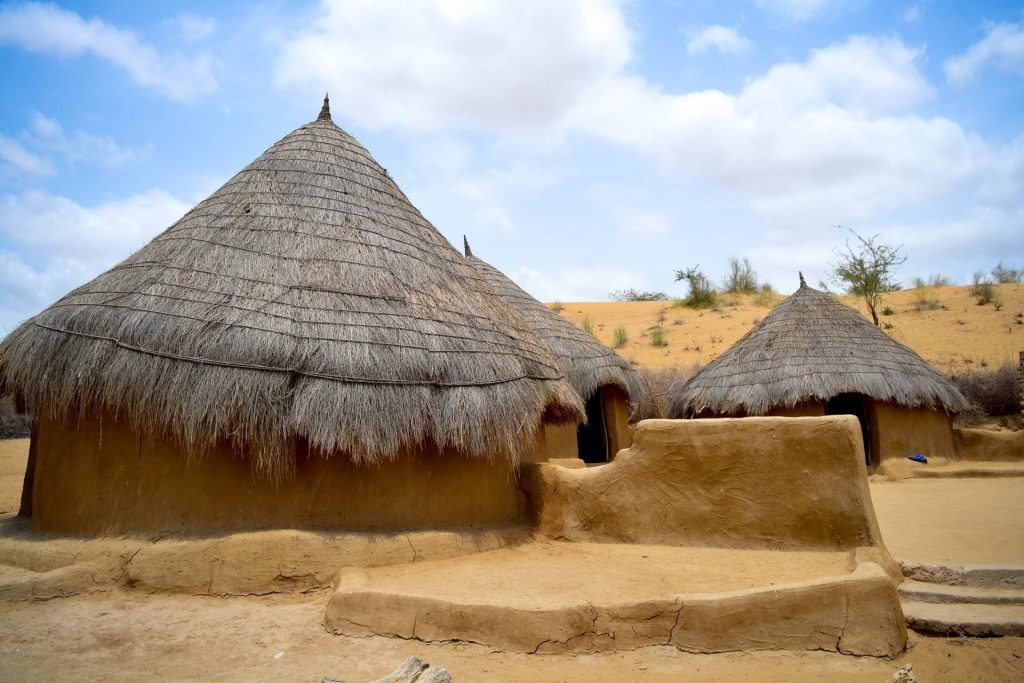
Sindh Declares Tharparkar a Calamity-Hit District as Drought Destroys 90% of Crops
The Sindh government has decided to declare Tharparkar a calamity-hit district after a severe drought destroyed most of the district’s crops. Chief Minister Murad Ali Shah ordered urgent steps on drinking water, livestock and relief for the desert district’s people on Saturday, 7 November 2026.
Tharparkar, the large desert district in south-eastern Sindh, has lost almost its entire harvest this year. Officials told the chief minister that 85 to 90 percent of crops across the district were destroyed or made unproductive by the lack of rain. For the farming families of the Thar Desert, that is not just a bad season. It is a threat to their food, their income and the animals they depend on.
“We will not leave the affected people of Tharparkar alone; the Sindh government will provide them all possible help,” Murad Ali Shah said, according to reports of the meeting.
What happened in Tharparkar
The decision came after a briefing on the drought situation in Tharparkar, held in Karachi on Saturday. Officials told the chief minister that all seven talukas — the district’s administrative areas — are facing drought-like conditions.
The seven talukas are Mithi, Islamkot, Diplo, Kaloi, Chachro, Dahli and Nagarparkar. Mithi is the district headquarters, the main town where the district administration sits. The drought has not spared any corner of the district.
The briefing gave a simple reason for the disaster: there was almost no rain. Only 1 to 36 millimetres of rain was recorded across the seven talukas in September 2026. Because the rain was so little, and so unevenly spread, crops and natural grass dried out before they could mature.
The province’s agriculture extension department put the crop loss at about 90 percent. That figure covers the rain-fed crops that most Tharparkar families grow to feed themselves and to sell.
What the government has ordered
The chief minister directed the departments concerned to take urgent measures. His orders focused on three things: drinking water, livestock and relief for affected families.
First, drinking water. Murad Ali Shah directed that the drinking water supply to the residents of Tharparkar be ensured. He ordered that reverse osmosis (RO) plants that are not working be repaired and made functional again, and that all existing water supply sources be restored immediately. RO plants filter salty groundwater and turn it into drinking water, and they are a lifeline in a desert where clean water is scarce.
Second, the chief minister asked the chief secretary to examine the feasibility of a water pipeline from Naukot to Mithi. Naukot is a town in the district — some reports spell it Nokot. A pipeline would bring water from outside the driest areas to the district headquarters, but the government has only asked for a feasibility study so far, not approved construction.
Third, he directed long-term planning for the area’s water supply, so that the district is better prepared the next time the rains fail.
On livestock, the chief minister asked for recommendations on measures to protect animals affected by the drought. He also directed continuous monitoring of the relief measures in the drought-hit areas, so that help actually reaches the people it is meant for.
Why the rain matters so much here
To understand why a dry September is a disaster in Tharparkar, it helps to understand how people live there.
Tharparkar is the largest district in Sindh by area, covering about 19,637 square kilometres of the Thar Desert. It is home to about 1.78 million people, according to the 2023 census. Most of them live in villages, not towns. Only about 8 percent of the population lives in urban areas.
Farming is the main way people earn a living, but it is very different from farming in the irrigated plains of Punjab or upper Sindh. In Tharparkar, most farming depends entirely on rain. There are no big canals bringing river water to the fields. Farmers sow their crops when the monsoon rains arrive, usually between July and September, and they harvest what the rain allows them to grow.
When the rain is good, the sandy fields turn green. Temporary ponds appear, grass grows for the animals, and families have food for the year. When the rain fails, as it has this year, there is nothing to fall back on. The crops dry up in the fields, the grass disappears, and the animals that families keep for milk, meat and income begin to suffer.
Livestock is the second pillar of life in Tharparkar. Almost every household keeps some animals — goats, sheep, camels or cattle. The animals are a source of food and a kind of savings account: a family can sell an animal in a hard year to buy grain. But when the grass dries up, the animals weaken, and their value falls just when families need money most.
This is why a drought in Tharparkar is not only an agricultural problem. It is a problem of food, water, income and health, all at once.
A district that has seen this before
Tharparkar has faced drought many times. The district has officially been declared drought-affected in 1968, 1978, 1985, 1986, 1987, 1995, 1996, 1999, 2001, 2004, 2005, 2007, 2012, 2013, 2014, 2015 and 2018. Researchers count more than 25 droughts in the district between 1968 and 2024 — on average, about every third year is a drought year.
The most widely remembered recent drought was in 2014, when Tharparkar was declared a calamity-affected area in February of that year after two years of poor rain. The suffering in 2014 drew national attention to the district’s problems, and the government set up relief operations, including wheat distribution and medical camps.
Tharparkar also has the lowest Human Development Index rating of all the districts in Sindh. The Human Development Index is a measure of health, education and income, and the ranking shows that the district’s people are among the poorest and least served in the province. That is part of why a drought hits so hard here: families have few savings, few alternative sources of income, and limited access to services.
The district’s climate makes it vulnerable by nature. Tharparkar has a hot, semi-arid climate. Summers are extremely hot, and in some areas the average yearly rainfall is as low as 100 millimetres. Most of the rain that does fall comes during the south-west monsoon, between July and September. If the monsoon is weak, as it was this year, there is no second chance. The rest of the year is mostly dry.
What “calamity-hit” means
Declaring a district calamity-hit is a formal step with practical effects. It tells the government machinery that the area needs emergency help, and it unlocks relief measures that are not available in normal times.
In past droughts, the declaration has been followed by steps such as free or subsidised wheat for affected families, fodder and vaccination for livestock, medical camps, and emergency water supply. The exact relief package for this drought has not been announced yet. The chief minister’s orders on Saturday focused on water supply, RO plants and livestock protection, and he asked for continuous monitoring of the relief work.
For the families of Tharparkar, the most urgent needs are simple. They need drinking water, food for their families, and fodder and water for their animals. The declaration is the first step towards getting that help to them. Whether it arrives quickly enough will be the real test.
Why this matters beyond Tharparkar
Tharparkar is far from Pakistan’s big cities, and its problems rarely make national headlines. But what happens there matters for the whole country in several ways.
First, it is a test of whether the state can protect its most vulnerable citizens. Tharparkar’s people are among the poorest in Pakistan, and they live in one of the hardest environments in the country. When the rains fail, they cannot solve the problem on their own. The relief that follows a calamity declaration is one of the clearest measures of whether the government reaches the people who need it most.
Second, the drought is a reminder of how much of Pakistan depends on the monsoon. The monsoon is not only important for the big farming districts of Punjab and Sindh. It is the difference between a normal year and a disaster for millions of people in rain-fed areas like Tharparkar.
Third, the repeated droughts in Tharparkar raise a longer-term question. If a district faces drought about every third year, then relief after each drought is not enough. The chief minister’s direction on long-term water planning — including the proposed pipeline from Naukot to Mithi — points to that question. So do the RO plants, which are meant to give the district a water source that does not depend on the rain. But RO plants only help if they are kept working, and the chief minister’s order to repair the broken ones is a sign that some of them were not.
What happens next
Several things will show whether the government’s response is working.
The first is the formal notification. The chief minister has decided to declare Tharparkar a calamity-hit district. The formal notification, and the relief package that goes with it, should follow.
The second is water. The repair of RO plants and the restoration of water supply sources are the most immediate orders, and their progress will be visible quickly in the villages.
The third is the pipeline study. The chief secretary has been asked to examine whether a pipeline from Naukot to Mithi is feasible. That is a longer-term project, and it will take time to study, approve and build — if it is approved at all.
The fourth is livestock. The government has asked for recommendations on protecting animals, and the measures that follow will matter to almost every family in the district.
And the fifth is monitoring. The chief minister directed continuous monitoring of the relief measures. In past droughts, people in Tharparkar have complained that relief was slow, uneven or did not reach the villages that needed it most. Monitoring is meant to prevent that, but it will only work if the reports from the field are honest and acted upon.
For now, the people of Tharparkar are waiting. Their crops are gone, their animals are under stress, and the next monsoon is months away. The declaration is a promise of help. The coming weeks will show how much of that promise is kept.
Frequently asked questions
Where is Tharparkar?
Tharparkar is a district in the Thar Desert in south-eastern Sindh, Pakistan. Its headquarters is the town of Mithi. It is the largest district in Sindh by area.
What does it mean that Tharparkar is a calamity-hit district?
It means the Sindh government has formally recognised that the district is facing a disaster — in this case, drought — and that emergency relief measures are needed. The declaration is the first step towards organised government help.
How much of the crop has been lost?
Officials told the chief minister that 85 to 90 percent of crops in the district were destroyed or made unproductive. The agriculture extension department put the crop loss at about 90 percent.
Why did the crops fail?
There was almost no rain. Only 1 to 36 millimetres of rain was recorded across the district’s seven talukas in September 2026. Because the rain was so little and so uneven, crops and natural grass dried out before they matured.
What has the government ordered?
Chief Minister Murad Ali Shah ordered that drinking water supply be ensured, broken RO plants be repaired, and existing water sources be restored. He asked for a feasibility study on a water pipeline from Naukot to Mithi, directed long-term water planning, and asked for recommendations to protect livestock.
Has Tharparkar faced drought before?
Yes, many times. The district has officially been declared drought-affected in 1968, 1978, 1985, 1986, 1987, 1995, 1996, 1999, 2001, 2004, 2005, 2007, 2012, 2013, 2014, 2015 and 2018. Researchers count more than 25 droughts there between 1968 and 2024.
How many people live in Tharparkar?
About 1.78 million people, according to the 2023 census. Most live in villages, and most depend on rain-fed farming and livestock.
Conclusion
The drought in Tharparkar is a slow disaster, but it is a disaster all the same. There are no dramatic pictures of floodwater or collapsed buildings. There are only dry fields, empty ponds, and families watching their food and their animals slip away.
The Sindh government’s decision to declare the district calamity-hit is the right first step. The orders on water, RO plants and livestock show that the government understands what the district needs. But a declaration is not relief. Relief is water in the village tank, fodder for the animals, and food on the table.
Tharparkar has been here before, and it will be here again. The rains will fail again in some future year. The question the government must answer — this time and in the years ahead — is whether the district will be better prepared when that happens. Long-term water planning, working RO plants and a pipeline that actually gets built would be a start.
Sources
- Geo News, “Sindh declares Tharparkar calamity-hit district, orders emergency measures”, 7 November 2026: https://www.geo.tv/latest/690146-sindh-declares-tharparkar-calamity-hit-district-orders-emergency-measures
- Khabr.pk, “Sindh declares Tharparkar calamity-hit as drought destroys 90% of crops”, 7 November 2026: https://khabr.pk/en/news/sindh-declares-tharparkar-calamity-hit-district-drought
- Express News, “Sindh Government Decides to Declare Tharparkar a Disaster-Hit District”, 7 November 2026: https://www.youtube.com/watch?v=XVVgIm6uc0U
- Wikipedia, “Tharparkar District”: https://en.wikipedia.org/wiki/Tharparkar_district
- ThePenPK, “Tharparkar Faces Chronic Droughts”: https://thepenpk.com/tharparkar-faces-chronic-droughts/
This article is for general information and education only. It is not legal or financial advice.
