
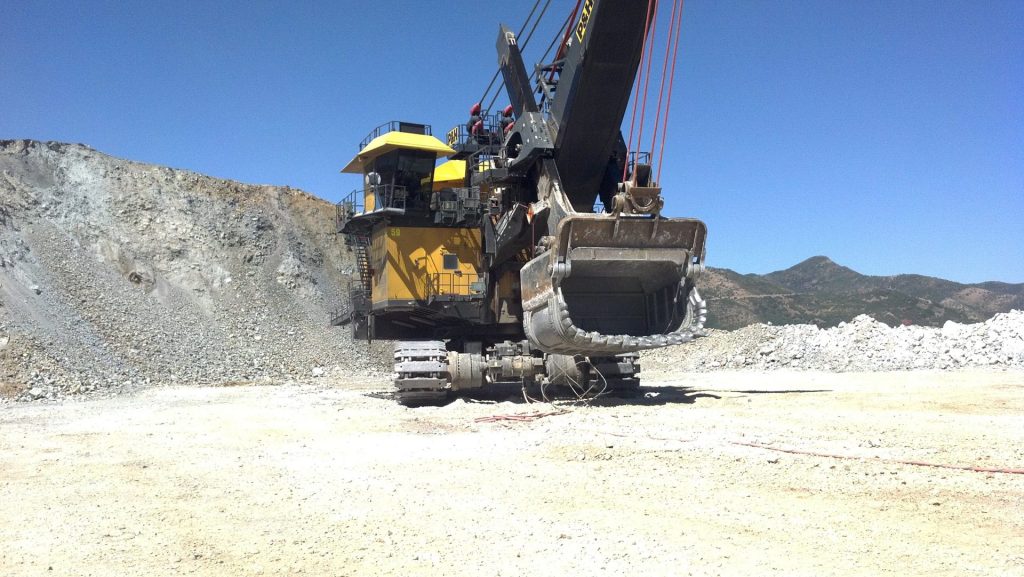
Pakistan Minerals Investment Forum 2026 Opens in Islamabad: What the $6 Trillion Pitch Means for Pakistan
Pakistan is opening its biggest mining showcase today. The Pakistan Minerals Investment Forum 2026 — known as PMIF26 — begins on Thursday, 12 November, at the Jinnah Convention Centre in Islamabad, and runs for two days. The government wants the world to see Pakistan not just as a country with minerals in the ground, but as the next big destination for critical-minerals investment.
The stakes are high. Pakistan says its mineral wealth could be worth between $6 trillion and $8 trillion. The centrepiece of that pitch is Reko Diq, one of the largest undeveloped copper and gold deposits in the world, where production is expected to begin at the end of 2028. More than 5,000 investors, mining executives and officials are expected to attend, and the country’s top political and military leadership will be there to make the case in person.
But a big number on a presentation slide is not the same as money in the bank. The forum’s real test will be whether it produces signed deals, financed projects and jobs — or just another round of promises.
At a glance
- What happened: The Pakistan Minerals Investment Forum 2026 (PMIF26) opens on 12 November 2026 at the Jinnah Convention Centre in Islamabad and runs until 13 November. It is the second edition of the forum, organised by the Government of Pakistan with the Special Investment Facilitation Council (SIFC).
- Why it matters: Pakistan is pitching an estimated $6 trillion to $8 trillion in mineral wealth to global investors at a time when demand for copper, lithium and rare earths is rising fast. The flagship Reko Diq copper-gold project alone is worth $8.83 billion in investment.
- What happens next: Two days of speeches, panel discussions and an exhibition, with the government hoping to announce new partnerships and memoranda of understanding. The real measure of success will be the deals signed — and whether they turn into mines, processing plants and jobs.
What is the Pakistan Minerals Investment Forum?
PMIF26 is a two-day investment conference and exhibition focused entirely on Pakistan’s mining and minerals sector. Its theme this year is “Pakistan: The Next Critical Minerals Destination.”
The forum was originally scheduled for 8–9 April 2026, but was rescheduled to 12–13 November. The state-run Oil and Gas Development Company Limited (OGDCL) is the founding partner of the event.
The programme covers the whole mining value chain, from exploration to processing. Sessions will look at geological exploration, resource assessment, remote sensing and geophysical technology, as well as the policy and legal changes needed to make mining investment work in Pakistan. An exhibition runs alongside the forum, showing off companies, projects, equipment and technology.
Delegate passes cost $100 and exhibition visitor passes cost $20, with registration handled through the LUP event platform.
Last year’s first edition drew about 5,000 delegates from more than 50 countries and produced 16 memoranda of understanding across 18 panel discussions, according to reports of the event. The government will be hoping this year’s edition does at least as well — and that more of the agreements turn into real projects.
Who is coming to Islamabad?
The speaker list is designed to send a message: this is a national priority, backed at the very top.
Prime Minister Shehbaz Sharif is scheduled to deliver the keynote address. Deputy Prime Minister and Foreign Minister Ishaq Dar and Chief of the Army Staff and Chief of Defence Forces Field Marshal Syed Asim Munir are also listed among the key speakers. Federal Minister for Energy (Petroleum Division) Ali Pervaiz Malik will deliver the welcome address on the opening day.
International mining leaders are attending too. Barrick Mining Corporation chairman John L. Thornton and Ivanhoe Mines founder Robert Friedland are among the confirmed international speakers. Barrick is the company behind Reko Diq, so its chairman’s presence is no surprise — but it underlines how central that one project is to the whole forum.
Confirmed exhibitors include the Pakistan Mineral Development Corporation (PMDC), Pakistan Petroleum Limited (PPL), Mari Energies, Government Holdings (Private) Limited (GHPL), the Reko Diq Mining Company, the Frontier Works Organization (FWO), National Resources (Private) Limited (NRL) and Barrick Mining Corporation.
Reko Diq: the project at the centre of everything
No discussion of PMIF26 is complete without Reko Diq. The copper and gold deposit sits in the Chagai district of Balochistan, in the mineral-rich Tethyan Metallogenic Belt, and is considered one of the largest undeveloped copper-gold deposits in the world.
Here are the key facts about the project:
- Ownership: Barrick Mining holds 50%, the government of Balochistan holds 25%, and three Pakistani federal state-owned enterprises hold the remaining 25%.
- Size: The deposit contains about 3 billion tonnes of ore, with an estimated 15 million tonnes of copper and 26 million ounces of gold.
- Investment: The updated feasibility study provides for total capital investment of $8.83 billion.
- Mine life: The mine is expected to operate for 37 years.
- Production: Production is expected to begin at the end of 2028. In its first phase, the mine is expected to process 45 million tonnes of ore a year and produce about 240,000 tonnes of copper and 297,000 ounces of gold each year.
- Jobs: The project is expected to create about 7,500 jobs during construction and 4,000 permanent jobs during operations.
- Exports: Once operational, Reko Diq’s first-year shipments are projected to generate $2.8 billion in exports.
That 2028 start date is not certain, though. A Dawn report on 2 November 2026 said production could be delayed by two years, to 2030, while Barrick reviews the project, and full-scale development may not resume until mid-2027. Barrick has not formally announced a new date.
The project is also the largest foreign direct investment project in Balochistan, and international lenders have assembled a financing package worth more than $2.6 billion for it. The Asian Development Bank approved $410 million for the project in August 2025.
Reko Diq matters because it is the proof that Pakistan can do big mining. If it starts producing on schedule in 2028, it will show investors that large, complex mining projects can work in the country. If it slips, it will confirm the doubts that have held the sector back for years.
The US angle: why Washington is the prize investor
PMIF26 is being framed quite openly around courting American investment. There are two reasons for that.
First, the United States is looking for new, reliable sources of critical minerals — the copper, lithium, nickel and rare earths that go into electric vehicles, semiconductors and renewable energy equipment. Demand for these minerals is projected to triple by 2030, and Washington wants supply chains that do not depend on China.
Second, Pakistan has already started building the relationship. On 8 September 2025, Pakistan’s Frontier Works Organisation and the Missouri-based company US Strategic Metals signed two memoranda of understanding on developing and processing critical minerals, including rare-earth elements. The first phase of the proposed arrangement envisages about $500 million in investment, along with a flexible polymetallic processing plant in Pakistan.
The US Export-Import Bank has also approved $1.25 billion in financing, which the US embassy said could unlock up to $2 billion in American mining equipment and services exports and support roughly 13,500 jobs in both countries.
For Pakistan, American investment would bring more than money. It would bring technology, processing know-how and a signal to other investors that the country is a safe place to put capital. For the United States, it would mean a new source of minerals from a country it is rebuilding ties with. That is the deal Islamabad is trying to sell at PMIF26.
What else is Pakistan pitching?
Reko Diq may be the headline, but the forum is selling a much wider story. Pakistan says its mineral resources have an estimated potential value of $6 trillion to $8 trillion, spread across about 600,000 square kilometres.
That figure needs a note of caution. It is an estimate of the value of minerals in the ground, based on the forum’s background material. It is not an independently verified figure for commercially recoverable reserves — the minerals that can actually be mined profitably. The gap between what is in the ground and what can be dug up and sold is often very large, and it depends on geology, prices, infrastructure and security.
Still, the individual pieces of the pitch are real:
- Khewra salt: Pakistan holds the world’s second-largest salt reserves at Khewra in Punjab.
- Thar coal: The Thar desert holds about 175 billion tonnes of lignite coal.
- Other minerals: Pakistan has significant deposits of chromite, marble and iron ore, among others.
The forum will also highlight critical minerals such as copper, lithium, nickel and rare earths — the materials the world’s energy transition depends on. The message is that Pakistan has the raw materials the future needs, and it wants partners to help dig them up, process them and sell them.
The challenges: security, trust and turning promises into mines
For all the optimism, the forum faces some hard questions.
Security in Balochistan. Reko Diq and many of Pakistan’s richest mineral deposits are in Balochistan, a province where security has long been a concern for investors. The Baloch National Movement (BNM) has opposed the forum, saying Pakistan is inviting foreign investors to exploit Balochistan’s natural resources without the consent of the Baloch people, and warning investors against taking part. The government rejects that view, but the criticism is a reminder that mining in Balochistan is not just a business question — it is a political one too. Local communities will want to see jobs, royalties and development, not just minerals leaving the province.
From MoUs to mines. Last year’s forum produced 16 memoranda of understanding. Memoranda are not contracts, and they do not guarantee investment. The real test of PMIF26 is how many of this year’s announcements become signed, financed projects. Pakistan’s mining sector has a long history of big announcements that went nowhere, and investors know it.
Processing, not just digging. Pakistan’s pitch is not only about mining raw ore. The government wants value addition — processing minerals at home rather than shipping raw rock abroad. The proposed US Strategic Metals processing plant is an example of that. But building processing capacity takes power, water, skilled workers and reliable infrastructure, all of which are challenges in the remote areas where the minerals are found.
Policy and trust. Mining companies invest for decades, so they need stable rules. The forum promises to showcase policy frameworks for transparent, responsible and long-term growth. Investors will judge Pakistan on whether those frameworks survive changes of government and whether disputes are settled fairly and quickly.
What happens next
Over the next two days, watch for three things.
First, the speeches. Prime Minister Shehbaz Sharif’s keynote and Field Marshal Asim Munir’s address will set out what the government is offering — and whether there are any new policy announcements, such as tax breaks, easier licensing or security guarantees for mining projects.
Second, the deals. Any memoranda of understanding or agreements announced during the forum should be checked against last year’s record: how many turn into real investment, and how quickly.
Third, the reaction. The real audience for PMIF26 is not the people in the hall in Islamabad — it is the mining companies, banks and governments watching from abroad. Their response, in the weeks and months after the forum, will show whether Pakistan’s minerals pitch is being taken seriously.
The forum closes on Friday, 13 November. After that, the hard work begins: turning two days of speeches into mines, factories and jobs.
Frequently asked questions
What is PMIF26?
PMIF26 is the Pakistan Minerals Investment Forum 2026, a two-day investment conference and exhibition held in Islamabad on 12–13 November 2026. Its theme is “Pakistan: The Next Critical Minerals Destination.” It is the second edition of the forum.
Where is the forum being held?
At the Jinnah Convention Centre in Islamabad. The same venue hosted last year’s edition.
Who are the main speakers?
Prime Minister Shehbaz Sharif, Deputy Prime Minister Ishaq Dar, Field Marshal Syed Asim Munir, Energy Minister Ali Pervaiz Malik, Barrick chairman John L. Thornton and Ivanhoe Mines founder Robert Friedland are among the headline speakers.
What is Reko Diq?
Reko Diq is a copper and gold deposit in the Chagai district of Balochistan, one of the largest undeveloped copper-gold deposits in the world. It is owned by Barrick Mining (50%), the Balochistan government (25%) and three federal state-owned enterprises (25%). Production is expected to begin at the end of 2028.
How much are Pakistan’s minerals worth?
The government estimates Pakistan’s mineral resources could be worth $6 trillion to $8 trillion. That is an estimate of minerals in the ground, not a verified figure for what can be mined profitably.
Why is the US interested in Pakistan’s minerals?
The US wants reliable sources of critical minerals such as copper, lithium and rare earths for electric vehicles, semiconductors and clean energy. Pakistan has already signed minerals agreements with the US company US Strategic Metals, and the US Export-Import Bank has approved $1.25 billion in related financing.
Conclusion
The Pakistan Minerals Investment Forum 2026 opens with a simple message: Pakistan has the minerals the world needs, and it wants partners to help develop them. With more than 5,000 delegates expected, the country’s top leadership in attendance and the $8.83 billion Reko Diq project as its calling card, the forum is the biggest stage Pakistan has ever given its mining sector.
The opportunity is real. Global demand for critical minerals is set to triple by 2030, and Pakistan holds deposits — copper, gold, salt, coal, chromite and more — that the world wants. The Reko Diq project, if it starts producing in 2028 as planned, could transform Balochistan’s economy and bring in billions of dollars in exports.
But the forum’s success will not be measured in speeches or in the size of the numbers on a slide. It will be measured in signed contracts, financed projects, processing plants built and jobs created. Pakistan has made its pitch. Now investors will decide whether to believe it.
Sources
- Business Recorder — “PMIF26 commences in Islamabad on 12th” (9 November 2026)
- The Express Tribune — “Govt seeks US investment in minerals” (17 October 2026)
- Minute Mirror — “Pakistan to Host Second Minerals Investment Forum as Global Demand for Critical Minerals Surges” (10 November 2026)
- Profit (Pakistan Today) — “Pakistan to host Minerals Investment Forum on November 12-13” (17 October 2026)
- Pakistan Khabarnama — “Pakistan Minerals Investment Forum 2026 Courts US Capital” (October 2026)
- Pixel Pulse Content — “Over 5,000 Investors Expected at Pakistan Minerals Investment Forum 2026” (10 November 2026)
- The Tribune (India)/ANI — “BNM opposes Pakistan Minerals Investment Forum 2026, warns foreign investors” (11 November 2026)
- Dawn — “Reko Diq project may face further delay” (2 November 2026)
This article is for general information and education only. It is not legal or financial advice.

Pingback: Mastung Blast: Explosives-Laden Truck Hits Army Camp in Balochistan — Dozens Feared Dead, Toll Still Unconfirmed - Findivoza