
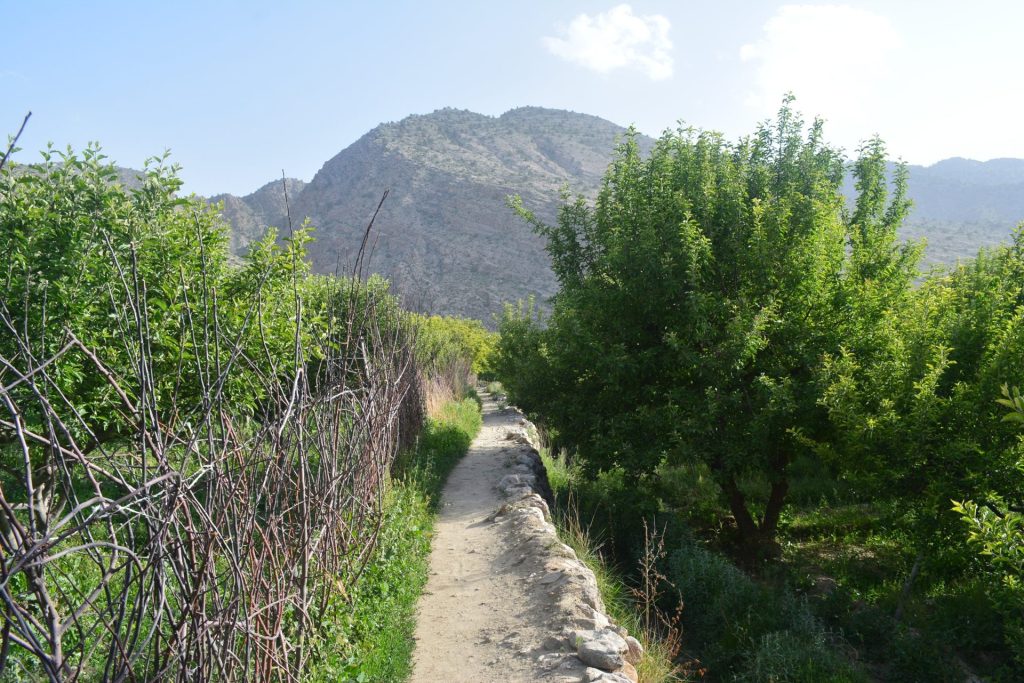
Mastung Blast: Explosives-Laden Truck Hits Army Camp in Balochistan — Dozens Feared Dead, Toll Still Unconfirmed
A powerful explosion tore through a Pakistani Army camp in Balochistan on Thursday, 12 November 2026, after an explosives-laden truck was rammed into the facility. Local media reported that dozens of military personnel were killed, including senior officers — but hours after the blast, the military had still not confirmed how many people died, and the exact death toll remained unverified.
The attack happened in the Kanak area of Mastung district, in the highlands of north-western Balochistan, near the provincial capital Quetta. It is the latest in a violent week for Pakistan’s security forces, and it comes as the government in Islamabad tries to attract billions of dollars of investment into Balochistan’s mines and minerals.
Here is what we know so far, what is still unclear, and why this attack matters.
What happened in Mastung
According to local media reports, a truck loaded with explosives was driven into the main gate of the army camp in Kanak, a town in Mastung district, on Thursday. The vehicle exploded with such force that the blast was heard several kilometres away and shattered the windows of houses nearby. The camp itself suffered extensive damage.
Security forces quickly cordoned off the area around the camp, and no journalists or members of the public were allowed close to the scene. That is one reason why clear, confirmed information about the attack has been slow to come out.
The Balochistan Post, a local news outlet, reported — citing local sources — that dozens of military personnel were killed in the blast and that senior officers were among the dead. That report was picked up by the news agency IANS and carried by newspapers across the region.
But at the time of writing, the Pakistani military had issued no statement about the attack or the casualties. No official death toll had been released, and no official account of how the attack unfolded had been given. That means the figure of “dozens killed” is a report, not a confirmed fact, and it should be treated with care until the authorities speak.
Who claimed responsibility
At first, no group had claimed the attack. Later in the day, the Baloch Liberation Army (BLA) said it was behind it.
The BLA said its suicide-attack unit, the Majeed Brigade, carried out the operation. According to the group’s account, a suicide bomber drove a vehicle packed with explosives into the camp, and armed fighters then entered the premises and attacked military personnel inside.
The BLA claimed that 18 personnel were killed in the attack. That number is lower than the “dozens” reported by local media — and, like the local media figure, it has not been independently confirmed. Armed groups often exaggerate the damage they cause, just as official statements sometimes play it down. Until an independent count is available, neither number should be treated as certain.
Reports also said the attack happened while a meeting of senior army personnel, including officers of colonel rank, was under way at the camp. That detail has also not been officially confirmed.
What we know — and what we don’t
To be clear about the state of the facts on Thursday evening:
What we know:
- An explosives-laden truck hit an army camp in the Kanak area of Mastung district on Thursday, 12 November 2026.
- The explosion was large. It was heard kilometres away, damaged nearby houses, and caused extensive damage to the camp.
- Security forces sealed off the area after the attack.
- Local media, citing local sources, reported dozens of military personnel killed, including senior officers.
- The BLA later claimed responsibility and said its Majeed Brigade carried out a suicide vehicle bombing followed by an armed assault. The group claimed 18 personnel were killed.
What we don’t know:
- The confirmed death toll. The military has not released one.
- The exact number of injured, or their condition.
- The identity of the attacker or attackers.
- Whether the reports of a senior officers’ meeting at the time of the attack are accurate.
- How the truck got through the camp’s security.
This is a fast-moving story. The picture may change quickly once the military issues a statement or more reporting comes out of Mastung. We will update this article as confirmed information becomes available.
A violent week for Pakistan’s security forces
The Mastung blast did not happen in isolation. It came in the middle of a bloody week for Pakistan’s security forces, with attacks in two different provinces by two different militant groups.
On Wednesday, 11 November, gunmen ambushed police officers in the Gumbat area of Kohat district in Khyber Pakhtunkhwa, in north-western Pakistan. The officers were returning from an operation against illegal gold mining when armed men opened fire on them. Ten police officers and 18 fighters were killed in the fighting that followed, according to police and Al Jazeera. The Pakistani Taliban, also known as Tehrik-e-Taliban Pakistan (TTP), claimed that attack.
Earlier in the week, reports from Balochistan described other strikes on security forces and infrastructure in the province, including an attack on construction machinery in Musakhel and damage to a bridge in Mastung. Armed fighters also stopped traffic and seized two commercial vehicles in the Nokchah area of Chagai, on the Quetta-Taftan highway, one of them reportedly carrying precious stones.
The two groups behind this week’s attacks — the TTP in Khyber Pakhtunkhwa and the BLA in Balochistan — are separate organisations with different aims. The TTP wants to impose its own strict interpretation of Islamic law and has fought the Pakistani state for years. The BLA is a separatist group that wants independence for Balochistan. But both have stepped up attacks on Pakistani security forces in recent months, and this week both struck within days of each other.
Why Balochistan matters
To understand why an attack in Mastung matters beyond the immediate loss of life, it helps to understand Balochistan itself.
Balochistan is Pakistan’s largest province by land area, covering nearly half of the country. But it is also its least populated and poorest province. It is rich in natural resources — gas, coal, copper and gold — yet many of its people live without basic services such as clean water, good schools and hospitals.
For decades, Baloch separatist groups have argued that the province’s resources are taken by the central government and by outsiders, while local people see little benefit. The Pakistani state rejects that argument and says the separatists are terrorists backed by foreign enemies, above all India — a charge India denies.
The BLA is the most active of the separatist groups. It has carried out bombings, ambushes and suicide attacks against security forces, government officials and, at times, civilians and foreign workers. Its Majeed Brigade, named after a former BLA commander, specialises in suicide attacks and has carried out some of the group’s deadliest operations, including attacks on Chinese nationals working in Pakistan.
Balochistan is also central to the China-Pakistan Economic Corridor (CPEC), the huge infrastructure programme through which China has invested billions of dollars in Pakistan. The corridor’s flagship port, Gwadar, is in Balochistan, and Chinese workers and projects in the province have repeatedly been targeted by separatist militants.
That is why attacks like the one in Mastung are not only a security problem. They are also an economic one.
The timing: a minerals pitch in Islamabad
The Mastung attack came on the very day that Pakistan was hosting a major minerals investment forum in Islamabad. The Pakistan Minerals Investment Forum 2026, held on 12 and 13 November, is the government’s big pitch to foreign investors: Balochistan sits on mineral wealth that officials have valued in the trillions of dollars, including the vast Reko Diq copper and gold deposit.
The government’s message to investors is that Balochistan is open for business and that security is under control. An attack that reportedly kills dozens of soldiers in the province on the opening day of that forum sends the opposite message — and that may be exactly the point. Militant groups in Balochistan have long targeted the economic projects they see as exploiting the province, and the timing of this attack will not be lost on anyone watching the forum.
For ordinary people in Balochistan, the stakes are more immediate. Every major attack brings more checkpoints, more cordons, more road closures and more fear. Roads in the province have already been disrupted this week, with traffic stopped and vehicles seized on the Quetta-Taftan highway. When roads close, food prices rise, goods stop moving, and daily life gets harder for people who are already among the poorest in Pakistan.
What happens next
Several things will be worth watching in the coming days:
- An official statement. The first question is whether the military confirms the attack and releases a death toll. In past attacks in Balochistan, official statements have sometimes come a day or more after the event, and the figures have sometimes differed sharply from early media reports.
- A security response. Major attacks on military camps are usually followed by search operations in the surrounding area, more checkpoints, and sometimes large-scale operations against militant hideouts. Mastung and the surrounding districts could see a heavy security presence in the days ahead.
- The minerals forum. Investors at the Islamabad forum will be watching how the government responds — and whether it can convince them that Balochistan’s mineral wealth can be developed safely. The attack is a reminder of the security risk that hangs over every big investment in the province.
- The wider pattern. If attacks continue at this pace in both Balochistan and Khyber Pakhtunkhwa, pressure will grow on the government to explain its security strategy. Pakistan’s security forces are fighting on two fronts at once: a separatist insurgency in the west and south-west, and a Taliban-linked insurgency in the north-west. Both have grown deadlier this year.
Frequently asked questions
Where is Mastung?
Mastung is a district in north-western Balochistan, in the highlands near the provincial capital, Quetta. The attack happened in the Kanak area of the district.
How many people were killed in the Mastung blast?
We do not know for certain yet. Local media reported dozens of military personnel killed, including senior officers. The BLA, which claimed the attack, said 18 personnel were killed. The military has not released an official death toll. Until it does, no figure should be treated as confirmed.
Who is the Baloch Liberation Army?
The BLA is a separatist militant group that wants independence for Balochistan. It has fought the Pakistani state for decades and is banned as a terrorist organisation by Pakistan, the United States and the United Kingdom. Its Majeed Brigade carries out suicide attacks.
Is this attack connected to the Kohat attack?
No. The Kohat attack in Khyber Pakhtunkhwa was claimed by the Pakistani Taliban (TTP), a different group with different aims. The two attacks happened a day apart, but they were carried out by different organisations in different provinces.
Was the attack aimed at the minerals forum in Islamabad?
We cannot say for certain. But the attack happened on the opening day of the Pakistan Minerals Investment Forum 2026, at which the government is pitching Balochistan’s mineral wealth to foreign investors. Baloch separatists have repeatedly targeted economic projects in the province.
Conclusion
The blast at the army camp in Mastung is one of the deadliest attacks on Pakistan’s security forces in Balochistan in recent months — but the full scale of it is still unknown. Local media say dozens were killed. The group that claimed the attack says 18 died. The military has said nothing yet.
What is certain is that Pakistan’s security forces have had a terrible week, with major attacks in two provinces in two days, and that Balochistan’s long-running insurgency is once again making headlines at the worst possible moment for a government trying to sell the province’s mineral wealth to the world.
For the families of the soldiers at the Kanak camp, and for the people of Mastung who heard the blast and felt their windows shatter, the questions are simpler and more urgent: who died, who is hurt, and when will someone tell them? Those answers cannot come soon enough.
Sources
- The Daily Pioneer: Explosives-laden truck hits army camp in Balochistan’s Mastung, toll unconfirmed
- IANS via Morung Express: Balochistan: Massive blast in Pakistani Army camp kills dozens of security personnel
- Asian News Hub: Balochistan Blast: Explosives-Laden Truck Hits Pakistani Army Camp, Dozens Reportedly Killed
- Zaobao India: Baloch Liberation Army claims responsibility for a suicide vehicle attack on a Pakistani Army camp in Balochistan, claiming 18 personnel were killed
- Al Jazeera: Ten police officers, 18 fighters killed in northwest Pakistan attack (Kohat, 12 November 2026)
This article is for general information and education only. It is not legal or financial advice.
