
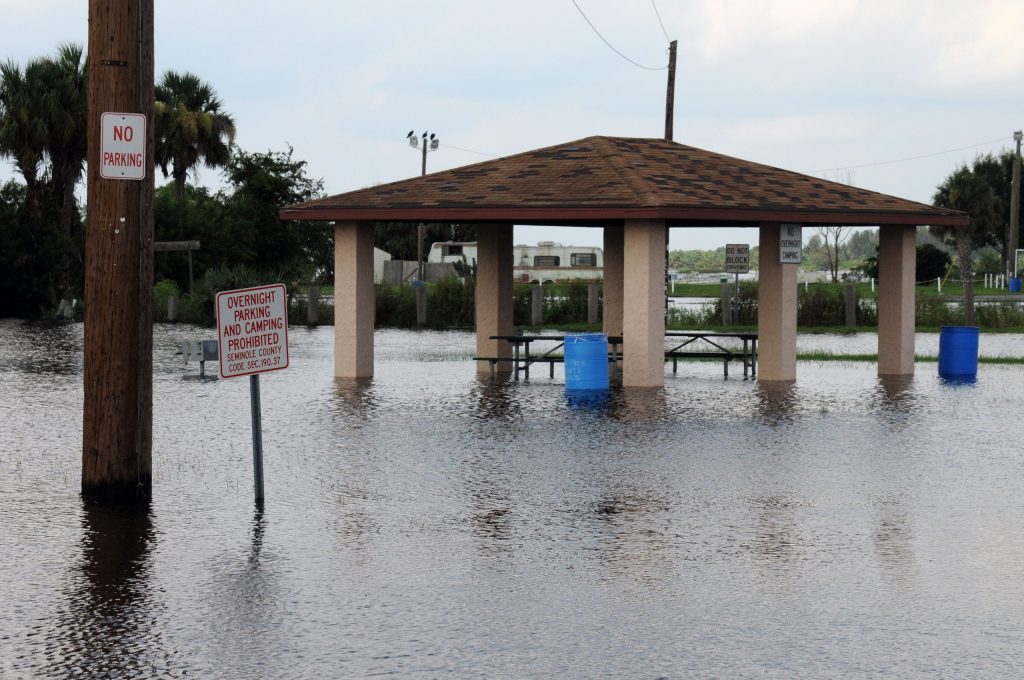
Florida Flooding: Record Rain Breaks a 73-Year River Record as Hundreds Are Rescued
Florida is under water. Days of heavy rain have flooded large parts of the state’s Atlantic coast, broken a river record that stood since 1953, and forced hundreds of people to be rescued from their homes by boat. The rain has eased, but the worst may not be over — the state’s longest river is still rising, and forecasters say the flooding could last into the new year.
The Florida flooding began on Tuesday, 17 November 2026, when a slow-moving storm parked itself over the state. It rained almost without stopping for four days. By Friday, some places had received more than 17 inches (43 centimetres) of rain, and Cocoa Beach on the Space Coast had recorded more than two feet. Several cities — Melbourne, Daytona Beach, West Palm Beach and Fort Lauderdale — have now had their wettest November on record.
The rain has stopped in many places. The flooding has not: the water keeps coming, days after the skies cleared.
A river breaks a record set in 1953
The heart of the crisis is the St. Johns River, the longest river in Florida. It flows north for about 310 miles (500 kilometres) to the Atlantic Ocean at Jacksonville, but it is one of the slowest rivers in the United States: it drops only about one inch per mile, and much of its bed lies below sea level. When a huge amount of rain falls on its basin, the water has nowhere to go quickly — it piles up, spreads out, and moves north at a crawl.
On Thursday, 19 November, the river near Cocoa rose above its all-time record. The old record of 17.6 feet had stood since 1953. On Thursday the river reached 18 feet — higher than forecasters had expected it to get before Saturday. The National Weather Service said the river would stay at least two feet above flood stage through early next week, and Fox Weather reported it was expected to remain in major flood stage through much of the Thanksgiving week.
“We’re so concerned with the Saint Johns River,” said Will Ulrich, a warning coordination meteorologist with the National Weather Service in Melbourne. “This is just an incredible amount of water that will cause the river to continue to rise for the next several days.”
Flood warnings and watches from the National Weather Service cover roughly 200 miles (320 kilometres) of the coast, from just south of Melbourne to the Jacksonville area. More rain — up to six inches in places, and as much as a foot in some spots — was expected through Saturday, adding to the water already on the ground.
The city of Rockledge, on the river’s west bank, advised residents in its flood-prone western neighbourhoods to be ready to leave while it was still safe. A few thousand people in the area could face flooding, weather service meteorologists said. In Palm Bay, further south, officials ordered mandatory evacuations for residents of Palm Bay Estates, an area west of a canal and east of the railroad tracks. Shelters were opened in Cocoa and Melbourne on Thursday for people forced out of their homes.
How much rain fell
The numbers are hard to believe for a state that is supposed to be entering its dry season, which normally runs from October to May. Instead, November 2026 has become one of the wettest months in the state’s history.
- More than 17 inches (43 centimetres) of rain fell in some areas along Florida’s east coast between Tuesday and Friday, according to preliminary totals from the National Weather Service.
- More than two feet of rain fell in Cocoa Beach since Tuesday, Fox Weather reported.
- Nearly 17 inches in 48 hours fell in the Fort Lauderdale area, the Associated Press reported.
- Wettest November on record for Melbourne, Daytona Beach, West Palm Beach and Fort Lauderdale.
The rain hit South Florida first, starting on Tuesday night in Fort Lauderdale, Hollywood and Miami-Dade County, where streets turned into rivers and cars stalled in deep water. Broward County and the cities of Fort Lauderdale and Hollywood declared local states of emergency on Wednesday. The heaviest rain then moved north to the Space Coast — Cocoa, Rockledge, Merritt Island, Melbourne and Palm Bay — on Thursday, and the rivers began to rise.
This is the second time in November that Florida has flooded badly. The state was already reeling from deadly, historic flooding earlier in the month, and the ground was already wet and the rivers already high when this storm arrived — there was nowhere left for the water to go.
Hundreds rescued as towns go under water
More than 1,000 state workers have been sent to the flooded areas, including the National Guard — activated by Governor Ron DeSantis on Thursday — the State Guard, transport and emergency management teams, and the Florida Fish and Wildlife Conservation Commission.
By Friday, the state had carried out nearly 200 rescues, deployed 9,000 feet of flood barriers and 20,000 sandbags, and sent heavy equipment and pumps to clear floodwater from roads including Interstate 95, the governor’s office said.
In Brevard County, on Florida’s Space Coast, officers in airboats and high-water vehicles carried out nearly 100 rescues on Thursday alone, and more than 160 by Friday night. In Edgewater, in Volusia County, police waded through knee-deep floodwater on Friday, pulling a small boat of people to dry ground. In one rescue, first responders were trying to reach an infant who had stopped breathing when their vehicle became stuck in floodwater; an officer from the Fish and Wildlife Conservation Commission carried the baby to emergency workers.
In Broward County, about 235 emergency responders were sent out on Thursday and helped rescue more than 90 people from a flooded apartment complex, while officers evacuated residents and pets from flooded streets in Hollywood.
Roads, schools, hospitals and businesses have all been hit. Parts of Interstate 95 and Florida’s Turnpike became impassable, the Brightline train between West Palm Beach and Orlando was suspended, and schools closed in Broward, Palm Beach, Brevard and Volusia counties — Broward County public schools were shut through the Thanksgiving break. In Hollywood, the roof of Temple Sinai collapsed under the weight of the rain, although no injuries were reported, and Memorial Regional Hospital temporarily suspended visits.
Even animals needed rescuing. On Thursday, people with horse trailers braved knee-deep water to save dozens of horses and other animals at the Blue Lake Equestrian Center, an animal hospice in Cocoa. In Wellington, in Palm Beach County, videos showed horses standing in chest-deep floodwater at Rustic Ranches, an equestrian community.
Thanksgiving plans washed away
For many families, the flooding arrived at the worst possible time — days before Thanksgiving, one of the biggest family holidays in the United States.
Sara Hernandez, who lives in Melbourne, had just decorated her house and bought all her groceries for Thanksgiving. Then the water rose to her front and back doors on Thursday morning. By Friday morning, there were a couple of inches of water inside the house.
“I have never ever seen this much water in the 25 years I’ve been in Florida,” she said. “It’s never flooded here.”
Hernandez, who owns a cleaning business, said it will be difficult to get the water out, and she has no money to replace her appliances. She had wanted her four children’s holiday to be magical; now, staying at her brother-in-law’s house, she does not know what her family will do.
“At least we are safe and dry,” she said.
Millions of Americans travel for Thanksgiving, and the weather is now threatening those plans too. The low-pressure system that soaked Florida was expected to move northeast and affect the coasts of Georgia and the Carolinas over the weekend, and the entire Eastern Seaboard could see rain during the holiday week.
Why it happened — and why the water will not leave soon
The storm was caused by a combination of weather patterns that trapped warm, wet air over Florida for days. A persistent area of high pressure sat over Virginia, while a low-pressure system and a stationary front sat in the Gulf of Mexico. Together, they pushed a steady flow of moist air onshore across the Florida Peninsula, and the rain kept falling in the same places, day after day.
Behind it all is El Niño, the natural warming of the Pacific Ocean near the equator that changes weather patterns around the world. Forecasters say El Niño conditions are expected to last through the spring, which means Florida’s wet and stormy weather is likely to continue through the winter. The same El Niño pattern is causing the opposite problem in other parts of the world — in Fiji, for example, an El Niño drought has become so severe that the country has declared a national state of disaster. The same global weather pattern can bring floods to one place and drought to another.
The slow-moving St. Johns River is what turns this storm from a bad few days into a crisis that could last for weeks or months. Because the river drains so slowly, the floodwater now sitting in its lakes and wetlands will take a very long time to reach the sea.
“We’ve effectively saturated our soils ahead of what’s supposed to be our dry season,” said Ulrich, the National Weather Service meteorologist. “We’re anticipating flood impacts along the river into the new year into 2027, believe it or not.”
More storms on the way
The danger is not over. Forecasters are tracking a second Atlantic system that could become a subtropical or tropical storm, bringing strong winds, dangerous surf and coastal flooding to the south-east and mid-Atlantic coasts into early next week, and a third coastal system could develop midweek, moving from the south-east to New England.
“That one seems to have a chance to be a little bit more of a potent system,” said Scott Kleebauer, a meteorologist with the National Weather Service’s Weather Prediction Center in Maryland. “That one could definitely have some impacts especially on Wednesday and Thanksgiving Day.”
A tornado warning was also issued for Miami-Dade and Broward counties just after noon on Saturday, as another round of storms moved over South Florida.
Officials are urging people in flood-prone areas to pay attention to evacuation orders, never to drive through flooded roads, and to check on neighbours who may need help. Most flood deaths happen when people try to drive through water that looks shallow but is deeper — and faster — than it appears. Just six inches of moving water can knock a person over, and a foot of water can float a car.
A wider week of wild weather
Florida was not the only place hit by extreme weather this week. The same stormy pattern brought flooding to California, from Los Angeles to San Francisco, where streets filled with water, drivers had to abandon stalled cars, and a long stretch of the coastal Highway 1 was closed because of rock and mud slides. Two people were found dead on Friday in Chino, in San Bernardino County, after the heavy rains — a woman who had been swept downstream and a man whose body was found during the search for her, according to the sheriff’s department.
It has been a week of disasters around the world. In Bangladesh, a powerful earthquake killed at least 10 people and injured more than 600 on Friday, 21 November, in the strongest tremor to hit the country in decades. A 6.7-magnitude earthquake also struck central Peru near Lima this week, although no casualties were reported. The same week can bring floods, earthquakes and storms to different corners of the world.
Frequently asked questions
How much rain fell in Florida?
More than 17 inches (43 centimetres) fell in some areas along the east coast between Tuesday and Friday, according to the National Weather Service. Cocoa Beach recorded more than two feet, and the Fort Lauderdale area saw nearly 17 inches in just 48 hours. Melbourne, Daytona Beach, West Palm Beach and Fort Lauderdale have all had their wettest November on record.
Why is the St. Johns River still rising after the rain stopped?
The St. Johns is one of the slowest rivers in the United States: it drops only about one inch per mile, and much of its bed is below sea level. Rain that fell days ago is still draining slowly north through the river’s lakes and wetlands, so water levels keep rising long after the rain ends. The river near Cocoa broke its 1953 record on Thursday and is expected to stay in major flood stage through much of the Thanksgiving week.
How many people were rescued?
Nearly 200 rescues had been carried out across the state by Friday, according to Governor Ron DeSantis. Brevard County alone made more than 160 water rescues by Friday night, and more than 90 people were rescued from a flooded apartment complex in Broward County.
Is it safe to travel to Florida for Thanksgiving?
Travellers should check conditions before they go. Parts of Interstate 95 and Florida’s Turnpike were impassable, the Brightline train between West Palm Beach and Orlando was suspended, and more storms were forecast for the holiday week. Anyone travelling should follow official advice and never drive through flooded roads.
What is El Niño, and why does it matter here?
El Niño is a natural warming of the Pacific Ocean near the equator that changes weather patterns around the world. This week’s storms were an offshoot of El Niño, and forecasters expect the conditions to last through the spring, which could mean more wet and stormy weather in Florida through the winter.
When will the flooding end?
Not soon. The National Weather Service expects the St. Johns River to stay flooded through early next week at least, and a meteorologist warned of flood impacts along the river “into the new year into 2027”. With more storms forecast, people in riverside communities should be ready for a long period of high water.
Conclusion
Florida’s historic flooding is a reminder that a disaster does not end when the rain stops. Four days of rain — more than two feet in some places — was enough to break a river record that had stood for 73 years, force hundreds of people from their homes, close schools and highways, and ruin Thanksgiving for families like Sara Hernandez’s. And because the St. Johns River drains so slowly, the water will be there for weeks, and possibly months.
The state has responded with more than 1,000 workers, the National Guard, airboats, sandbags and flood barriers. But El Niño is expected to keep bringing wet and stormy conditions through the winter, and more storms are already on the way. For the people living along the St. Johns River, the flood is not a single event — it is the start of a long, wet season.
Sources
- Associated Press, via WPTF: “Storms deluging Florida with historic flooding shift further north”
- Fox Weather: “Life-threatening flooding impacts parts of Florida as heavy rain drenches state”
- Associated Press, via The Manila Times: “Soaking Storms Hit Florida’s Space Coast, Prompting Human and Horse Rescues”
- Florida Today: “Flooding in Florida after 2 feet of rain: Photos show damage, aftermath”
- TVN World: “South Florida Submerged: Historic Flooding Paralyzes Communities, Prompts Emergency Response”

Pingback: Alien Throne Collapses: Two of New Mexico's Most Famous Rock Formations Fall Within Weeks - Findivoza