
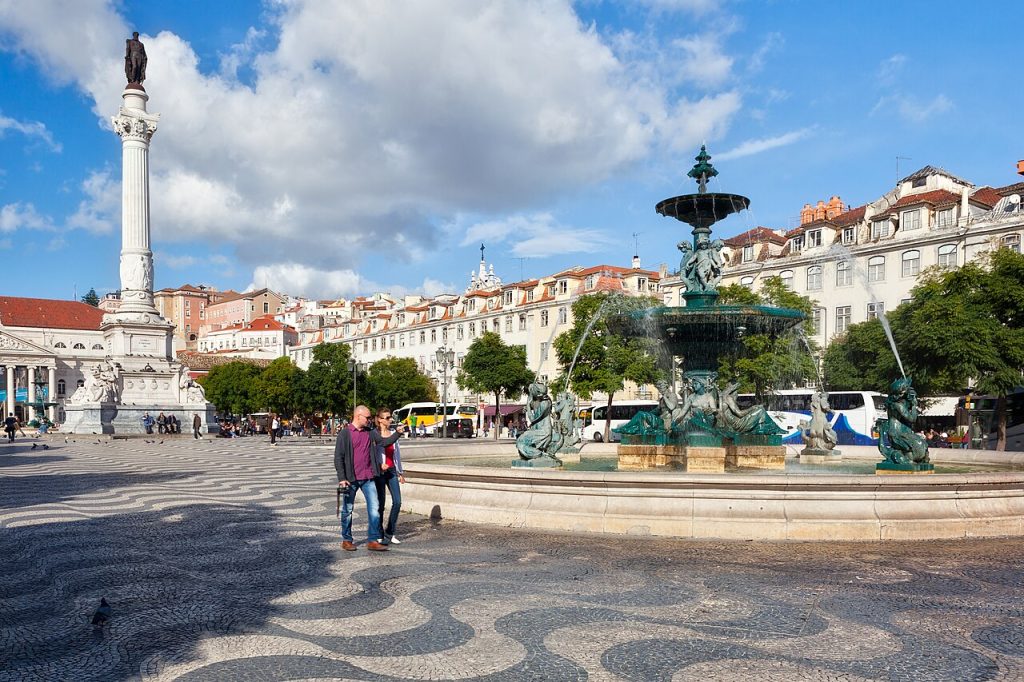
Thousands fill Lisbon’s Rossio Square again as Portugal’s housing protests refuse to fade
For the third Saturday in a row, thousands of people took to the streets of Lisbon to say the same thing: they can no longer afford a home in their own country. On Saturday, 31 October, demonstrators packed Rossio Square in the centre of the Portuguese capital, demanding that the government scrap a rental bill they say would make an already severe housing crisis even worse. It was the latest chapter in a month of marches, tent camps and clashes with police that has turned housing into the defining political issue in Portugal.
The protest came two days after Prime Minister Luís Montenegro ruled out withdrawing the bill, while offering to amend it before a final vote in the coming weeks. That offer has not calmed the movement. “We are not seeing any willingness from the government to listen … the demonstrations will continue,” Rita Silva, a spokesperson for the housing movement Casa para Viver (Homes to Live), told public broadcaster RTP on Saturday.
Portugal is grappling with one of Europe’s worst housing crises. House prices have more than doubled since 2017, and rents for new leases have nearly doubled, while wages have failed to keep up. Young people have been hit hardest, and the squeeze is most acute in Lisbon and Porto.
At a glance
What happened: Thousands of housing protesters filled Rossio Square in central Lisbon on Saturday, 31 October, demanding the government scrap a rental bill that would make evictions easier and end rent caps on new leases. Organisers said several thousand people attended; police gave no crowd estimate.
Why it matters: Portugal faces one of Europe’s worst housing affordability crises. House prices have more than doubled since 2017 and rents for new leases have nearly doubled, while wages have not kept pace. The Bank of Portugal estimates the country is short of 300,000 homes — roughly the entire housing stock of Lisbon.
What happens next: The bill has passed a first reading in parliament and faces a final vote in the coming weeks. Prime Minister Luís Montenegro has ruled out scrapping it but says he is open to amendments. Protesters say the demonstrations will continue until the bill is withdrawn.
What happened on Saturday
Thousands of protesters returned to Rossio Square on Saturday evening, filling one of Lisbon’s best-known public spaces for the second consecutive weekend of large housing rallies. Organisers said several thousand people packed the square. As at the earlier protests, police gave no crowd estimate, so there is no official figure for how many people attended.
The demonstrators carried banners calling for the bill to be scrapped. Police kept watch around the square. There were no reports in the Reuters account of the day of the kind of clashes that marked the police operation in the same square a week earlier, when officers baton-charged demonstrators and arrested dozens while clearing a tent camp.
Speaking to RTP, Casa para Viver spokesperson Rita Silva said people were showing “enormous perseverance, strength and determination” after weeks of protests over the housing crisis, rising living costs and “the enormous difficulty of making a living today”.
The government struck a careful tone. Interior Minister Luís Neves said the government respected the legitimacy of the protests but expected them to be held “with order, civility” and “in compliance with the law”. It was a noticeably softer line than the one taken by another minister two weeks earlier, when Parliamentary Affairs Minister Carlos Abreu Amorim said the “government will not yield to shouts from the street”.
Socialist Party leader José Luís Carneiro urged the government on Saturday to engage in talks with opposition parties and protesters rather than “arrogantly imposing its views, sometimes even with authoritarian overtones”.
The bill at the centre of it all
At the heart of the protests is a single piece of legislation: a government rental bill that would make evictions easier and end rent caps on new leases. Protesters say the changes would hand more power to landlords, push rents higher still, and make it easier to force tenants out. The government argues that the current rules discourage landlords from renting out properties and that loosening them will bring more homes onto the market. Protesters reply that the real problem is a shortage of affordable homes and wages that have not kept up with prices.
The bill has already passed a first parliamentary reading, with the far-right Chega party abstaining. That matters because the government is a minority centre-right administration: it does not command a majority in parliament on its own, and Chega’s decision not to vote against the bill at the first stage helped it through.
On Thursday, 29 October, Prime Minister Luís Montenegro ruled out scrapping the bill but said he was open to amending it before the final vote. “Parties have to move closer,” he said, while making clear that “the main line of action is the government’s programme”. In plain terms: the government will negotiate over details, but it will not abandon the core of its plan. For the protesters, that is not enough. Their demand is not for a softer version of the bill but for its withdrawal, and they have repeated that demand at every rally.
The timing adds pressure. The bill is moving through parliament at the same time as lawmakers debate the government’s draft budget for 2027, which was being discussed when thousands rallied outside the parliament building on Tuesday, 27 October.
A crisis years in the making
The protests did not come out of nowhere. House prices have more than doubled since 2017, and rents for new leases have nearly doubled over the same period, while wages have not kept pace. Many households now spend a far larger share of their income on housing than they did a decade ago.
The shortage of homes is central to the problem. The Bank of Portugal estimates a shortfall of 300,000 homes nationwide — a figure equivalent to the entire housing stock of Lisbon. When demand far outstrips supply, prices rise, and the people who suffer most are those with the least room to pay more: young workers starting out, students, and families on modest incomes.
Inflation has made things worse. Portugal’s inflation rate hit 3.6% in September, driven by rising food and fuel prices, with fuel up 15% year on year following an increase in tensions in the Middle East.
The human cost is visible in the protesters’ own stories. Carolina Cruz, a 26-year-old PhD student and biology researcher, told Reuters at the 17 October march that she earns about €1,300 a month on a scholarship and faces losing her home as her rental contract nears expiry. She and her partner pay €716 a month for an apartment in the Lisbon area, but renewal could push the rent above €1,200 — far beyond what they can afford. “I’m the first person in my family to enter a doctoral programme, and even with all the studying I’ve done, I still can’t make it… Right now, housing in Lisbon is the problem,” she said.
A month of marches, camps and clashes
Saturday’s rally was the latest in a series of protests that have escalated through October, and that sequence helps explain why the mood in Rossio Square is now so charged.
It began on Saturday, 17 October, when tens of thousands of people marched through central Lisbon against soaring living costs and the deepening housing crisis. Portugal’s biggest union, the CGTP, which called the rally, said “many tens of thousands” packed one of the capital’s main avenues. Police, as usual, gave no crowd estimate.
A week later, the confrontation sharpened. In the early hours of Sunday, 25 October, Portuguese police cleared a camp in Rossio Square itself, baton-charging demonstrators shortly after 2 a.m. and making 25 arrests. Protesters had pitched more than 100 tents in the square after a march by thousands the day before. Police said the operation was “proportionate” and that the 25 people arrested for disobedience were later released and are due in court.
A smaller camp of about 50 tents was also dismantled in Porto’s Praça D. João I, where police made six arrests. The two operations left sharply different accounts of what happened. Police later put the number of minor injuries at 11, including three officers, while Casa para Viver said 60 people were hurt. The group accused the government of choosing “the early hours of the morning to unleash dogs and baton-charge peaceful protesters”, calling it “a political decision” that showed the government “would rather repress those denouncing the housing crisis than address it”.
The police operations then became a protest issue in their own right. On Tuesday, 27 October, thousands rallied outside Portugal’s parliament against both the housing crisis and the recent police operations, while lawmakers inside debated the draft budget for 2027.
The authorities have responded with inquiries rather than apologies. Portugal’s internal affairs watchdog, the IGAI, opened an inquiry into the police operations, while prosecutors launched a separate investigation into officers’ conduct. Speaking in parliament on 27 October, Prime Minister Montenegro said police had acted in line with the principles of “necessity, proportionality and adequacy”. Neither inquiry had reported its findings by the time of Saturday’s protest.
The government’s answer, and a wider European wave
The government has two answers to the crisis, and neither has satisfied the protesters. The first is the rental bill itself: ministers argue that loosening eviction rules and removing rent caps on new leases will encourage landlords to rent out properties that are currently kept empty, increasing supply and eventually easing prices. Critics reply that in a market already short of 300,000 homes, giving landlords more power will simply push rents up faster.
The second answer is that concrete measures to address people’s concerns are already being rolled out, as Parliamentary Affairs Minister Carlos Abreu Amorim said on 16 October. The gap between the government’s position and the protesters’ demand — amend the bill versus scrap it entirely — is the central standoff, and neither side has moved.
There is also a political calculation. Montenegro leads a minority government, so every controversial bill is a test of whether he can hold together enough support in parliament. Ruling out scrapping the bill while offering amendments signals firmness to supporters of the reform while leaving room to buy off wavering votes with changes.
Portugal is not alone. The unrest in Lisbon mirrors protests across Spain, France and Germany over soaring housing costs, with the same pattern in each country: house prices and rents rising much faster than wages, a shortage of affordable homes in the big cities, and young people finding it hardest to get a foothold. In France, more than 320,000 people demonstrated across the country against the rising cost of living and poor public services.
What happens next
Three things will decide where this goes. The first is the final vote on the rental bill, expected in the coming weeks. The government has said it is open to amendments, and the negotiations between parties — and whether Chega abstains again or votes against — will determine whether the bill passes in its current form, in a watered-down form, or not at all.
The second is the outcome of the two inquiries into the police operations of 24 and 25 October. If the IGAI or prosecutors find that officers used excessive force, the political pressure on the government will grow, and the protests will gain a fresh grievance. If the inquiries clear the police, the government will feel vindicated — but the protesters, who say 60 people were hurt, are unlikely to accept that finding quietly.
The third is the movement itself. Casa para Viver has said the demonstrations will continue, and the pattern of October — a big march, a camp, a rally outside parliament, and now a return to Rossio Square — suggests the organisers can keep turning people out.
Frequently asked questions
What happened in Lisbon on 31 October?
Thousands of housing protesters filled Rossio Square in central Lisbon on Saturday, 31 October, demanding that the government scrap a rental bill. Organisers said several thousand people attended; police gave no crowd estimate.
What does the rental bill do?
The bill would make evictions easier and end rent caps on new leases. It has passed a first parliamentary reading, with the far-right Chega party abstaining, and faces a final vote in the coming weeks.
Why are house prices and rents so high in Portugal?
House prices have more than doubled since 2017 and rents for new leases have nearly doubled, while wages have not kept pace. The Bank of Portugal estimates the country is short of 300,000 homes — roughly the entire housing stock of Lisbon.
What is Casa para Viver?
Casa para Viver, meaning “Homes to Live”, is the housing movement organising the protests. Its spokesperson, Rita Silva, has said the demonstrations will continue because the government is not listening to protesters’ demands.
What did the prime minister say about the bill?
Prime Minister Luís Montenegro said on Thursday, 29 October, that he would not scrap the bill but was open to amending it before the final vote. He said parties “have to move closer” while insisting that “the main line of action is the government’s programme”.
Why were police criticised during the protests?
In the early hours of Sunday, 25 October, police cleared a tent camp in Rossio Square, baton-charging demonstrators and arresting 25 people, and cleared a smaller camp in Porto, arresting six more. Police said the operations were “proportionate” and later reported 11 minor injuries, including three officers. Casa para Viver said 60 people were hurt. The internal affairs watchdog, the IGAI, and prosecutors have opened inquiries into officers’ conduct.
Is this only happening in Portugal?
No. Protests over housing costs and the cost of living have also taken place in Spain, France and Germany. In France, more than 320,000 people demonstrated across the country against the rising cost of living and poor public services.
Conclusion
Saturday’s protest in Rossio Square was not a one-off. It was the latest step in a month-long movement that has grown from a union march into a sustained challenge to the Portuguese government, driven by a simple grievance: ordinary people can no longer afford a home. House prices have more than doubled since 2017, rents have nearly doubled, and the country is short of 300,000 homes. The rental bill at the centre of the dispute would, in the protesters’ view, make things worse by making evictions easier and removing rent caps on new leases. The government disagrees, and the prime minister has refused to withdraw the bill while offering amendments.
This article is for general information and education only. It is not legal or financial advice.
Sources
- https://wtbx.com/2026/10/31/thousands-return-to-lisbon-square-press-government-to-scrap-rental-bill/ (Reuters, 31 October 2026)
- https://985theriver.com/2026/10/27/thousands-rally-outside-portugals-parliament-over-housing-crisis-police-operations/ (Reuters, 27 October 2026)
- https://985theriver.com/2026/10/24/portuguese-police-clear-lisbon-housing-protest-camp-make-arrests/ (Reuters, 25 October 2026)
- https://979weve.com/2026/10/17/tens-of-thousands-march-in-lisbon-over-housing-and-living-costs/ (Reuters, 17 October 2026)
