
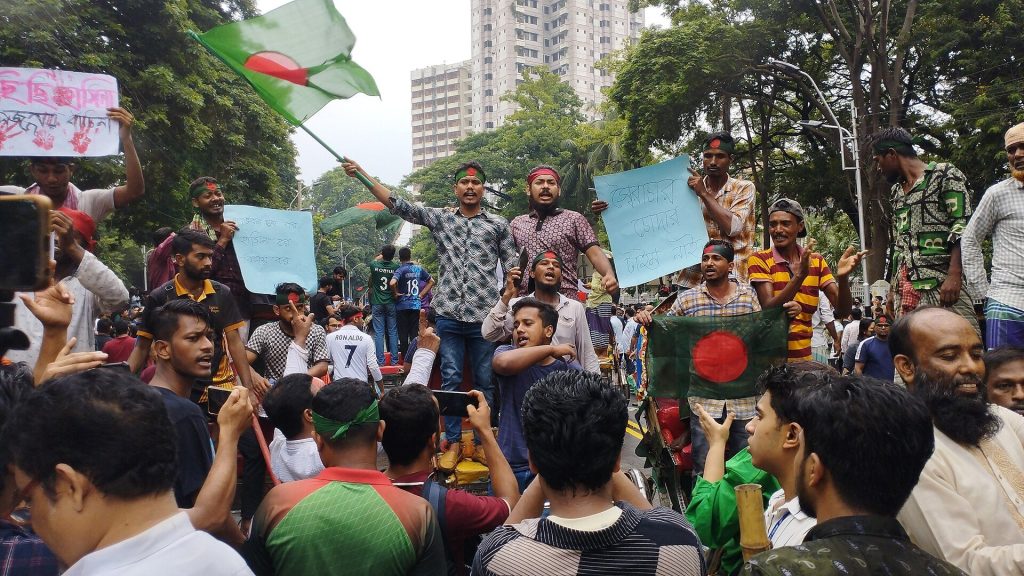
Bangladesh Shuts Down as Awami League Lockdown Turns Violent: Yunus’s Family Home Set Ablaze
Parts of Bangladesh shut down on Thursday, 19 November 2026, as a nationwide lockdown called by the banned Awami League party turned violent. Police said two members of the ruling party were killed, and the ancestral home of former interim government chief Muhammad Yunus was set on fire in the port city of Chattogram.
The lockdown is the climax of a week of protests, bomb blasts and arson attacks across the country, and it comes just weeks before former prime minister Sheikh Hasina plans to return to Bangladesh in December — a return the current government has been trying to block.
What happened on Thursday
The Awami League, the party led by Sheikh Hasina, called a nationwide lockdown for Thursday, 19 November. A lockdown in Bangladesh is a form of protest in which the party calls on people to stay home, close shops and stop transport, bringing daily life to a halt.
In parts of the country, the shutdown took hold. But the day was marked less by empty streets than by violence.
Police said two members of the ruling Bangladesh Nationalist Party (BNP) were killed in the unrest. Other reports put the death toll higher: NDTV and Mathrubhumi reported that four people were killed in separate clashes across the country. The full picture was still unclear as the day went on.
Crude bomb explosions were heard in the capital, Dhaka, before dawn. According to Reuters, police have reported dozens of crude bomb blasts and vehicles set on fire in at least 28 districts over the past 10 days, injuring police officers and members of the public.
In Gopalganj, the hometown of Sheikh Hasina and a stronghold of her supporters, a police station in Tungipara was set on fire, according to local media reports. And newspaper reports said the homes of two Awami League leaders in Dhaka were attacked and set ablaze overnight.
The fire at Yunus’s family home
The most striking incident of the night came in Chattogram, Bangladesh’s main port city, about 300 kilometres (186 miles) south-east of Dhaka.
Late on Wednesday night, a fire broke out at the ancestral home of Muhammad Yunus, the Nobel laureate who led Bangladesh’s interim government after Hasina was ousted in 2024. The house is in the Panchlaish area of Chattogram.
According to police, the fire started at around 11pm on Wednesday in an unused room on the ground floor. Mozammel Haque, the chief of the Panchlaish police station, told Reuters it was likely that flammable substances had been thrown into the room. Police officers on patrol noticed the blaze and put it out.
Yunus’s paternal family members, who live on the upper floors of the house, are safe. The cause of the fire is still under investigation, and police have not said who was responsible.
The attack on Yunus’s family home is symbolic. Yunus is one of Bangladesh’s most famous figures — he won the Nobel Peace Prize for his work with the Grameen Bank, the microfinance bank he founded. Attacking his home, and his bank’s branches, is a direct strike at the man who led the government that banned the Awami League.
A week of rising violence
Thursday’s lockdown did not come out of nowhere. It was the end point of a week-long campaign of protests and rallies by the Awami League, and the violence has been building for days.
At least 37 branches and offices of the Grameen Bank have been targeted in arson attacks or attempted fires since 10 November, the bank said. Fourteen more were attacked since midnight on Tuesday.
The pattern has been the same across the country: small groups setting fire to property and throwing crude bombs — homemade explosives — often at night or before dawn. The targets have included bank branches, vehicles, police stations and the homes of political rivals.
The government has responded with a heavy crackdown. Police in Dhaka arrested 565 people in a 24-hour operation leading up to the lockdown, according to local reports. Among those detained was former education minister Nurul Islam Nahid, who was taken from his house in Dhaka at midnight on Wednesday. He faces charges over killings during the 2024 protests.
To deter further violence, 97 platoons of the Bangladesh Border Guard have been deployed across seven districts, including Gopalganj and Faridpur, which are considered to have many Hasina supporters. The deployment was confirmed by the border guard’s spokesperson, Shariful Islam.
Why the Awami League called the lockdown
The immediate trigger for the lockdown is Sheikh Hasina’s planned return to Bangladesh.
Hasina has been living in exile in India since she fled Dhaka in August 2024, after weeks of violent protests demanding her resignation. She has now asked the Bangladeshi government for a new passport and identity card, which would allow her to travel back. The government has refused.
Earlier this month, we reported on Hasina’s request for a new passport, the clearest sign yet that she plans to return. The Awami League’s week of protests was organised to pressure the government into letting her come home. The lockdown is the most serious step in that campaign.
The date was chosen deliberately. Tuesday marked the first anniversary of the special tribunal verdict that tried Hasina in absentia — in her absence — and sentenced her to death for crimes against humanity over the crackdown on the student-led uprising in 2024. The Awami League timed its protest to coincide with that anniversary.
Home Minister Salahuddin Ahmed accused Awami League leaders living abroad of inciting supporters to destabilise Bangladesh and burn property. He said those involved in the violence would be identified and prosecuted.
Awami League leaders, most of them in hiding, could not be reached for comment, Reuters reported.
The security crackdown
The government’s response to the lockdown has been firm. Alongside the border guard deployment and the mass arrests in Dhaka, security has been tightened across the country, particularly in districts where the Awami League has strong support.
The scale of the crackdown reflects how seriously the government takes the threat. The Awami League, though banned, still has a large network of supporters, and the past 10 days have shown it can still organise violence in many districts at once.
But the crackdown also carries risks. Mass arrests and a heavy security presence can calm a situation — or they can make it worse, by giving protesters more to be angry about. The coming days will show which way it goes.
For more on the violence that led up to this week, see our earlier reports on the arson attacks and bomb blasts ahead of Hasina’s planned return and the violent protests in Hasina’s hometown of Gopalganj.
How Bangladesh got here
To understand Thursday’s events, it helps to know the recent history.
Sheikh Hasina ruled Bangladesh for 15 years, from 2009 to 2024. She was ousted in August 2024 after a student-led uprising that began as a protest against government job quotas and grew into a mass movement demanding her resignation. The crackdown on the protests was deadly, and Hasina fled to neighbouring India as her government collapsed.
Muhammad Yunus, the Nobel laureate and founder of the Grameen Bank, then took over as the head of an interim government. His administration banned the Awami League and jailed thousands of its members on charges ranging from mass murder to lynching, according to NDTV.
A special tribunal later tried Hasina in her absence and sentenced her to death for crimes against humanity over the 2024 crackdown. The verdict was delivered a year ago this week — the anniversary the Awami League chose for its lockdown.
Bangladesh has since moved on to an elected government led by Prime Minister Tarique Rahman of the Bangladesh Nationalist Party. The new government has continued to keep the Awami League banned, and it has renewed demands for Hasina’s extradition from India — a demand New Delhi has not met.
That is the background to the current crisis: a banned party whose leader is in exile, a government that refuses to let her return, and a court verdict sentencing her to death. The lockdown is the Awami League’s attempt to break that deadlock by force of numbers on the street.
What happens next
Several things are worth watching in the coming days.
First, whether the violence continues after the lockdown day itself. The Awami League has shown it can sustain a campaign over a week. If the protests continue, the government will face a difficult choice between further crackdowns and some form of negotiation.
Second, whether Hasina still plans to return in December. The government’s refusal to issue her a passport has not changed, and the violence may make it even less likely to change its mind. But Hasina has shown before that she is willing to test the government’s resolve.
Third, whether the attacks on the Grameen Bank and on Yunus himself mark a new phase. Targeting the country’s most famous citizen and the bank he founded is a deliberate provocation. If it continues, it could draw in people who have so far stayed out of the political fight.
Fourth, what India does. Hasina is living in exile in India, and the Awami League’s leaders abroad are, according to the home minister, directing the campaign from outside the country. India’s role — whether it restrains Hasina or lets her operate freely — will matter a great deal.
For now, Bangladesh is in a tense and uncertain place. A banned party has shown it can still shut down parts of the country and set fire to the home of a Nobel laureate. A government has shown it can arrest hundreds of people and deploy border guards across seven districts. Neither side looks ready to back down.
Frequently asked questions
What is happening in Bangladesh?
The banned Awami League party called a nationwide lockdown for Thursday, 19 November 2026. Parts of the country shut down, and the day was marked by violence, including the torching of former interim chief Muhammad Yunus’s ancestral home in Chattogram and the killing of at least two members of the ruling party.
Who is Sheikh Hasina?
Sheikh Hasina was Bangladesh’s prime minister from 2009 until August 2024, when she was ousted after a student-led uprising and fled to India. She leads the Awami League, which has since been banned. A special tribunal sentenced her to death in absentia for crimes against humanity over the crackdown on the 2024 protests.
Why did the Awami League call a lockdown?
The party wants the government to issue Hasina a new passport and identity card so she can return to Bangladesh in December. The government has refused. The lockdown was timed to coincide with the first anniversary of the tribunal verdict sentencing Hasina to death.
Who is Muhammad Yunus?
Muhammad Yunus is a Nobel Peace Prize winner and the founder of the Grameen Bank. He led Bangladesh’s interim government after Hasina was ousted in 2024. His ancestral home in Chattogram was set on fire late on Wednesday, 18 November. His family members in the house are safe.
What is the Grameen Bank, and why is it being attacked?
The Grameen Bank is the microfinance bank founded by Yunus. It lends small amounts of money to poor people, mostly women, to start small businesses. At least 37 of its branches and offices have been targeted in arson attacks since 10 November. The attacks appear to be aimed at Yunus personally, as the symbol of the government that banned the Awami League.
How many people have been killed or arrested?
Police said two members of the ruling Bangladesh Nationalist Party were killed. Other reports put the number of dead in separate clashes at four. Police in Dhaka arrested 565 people in a 24-hour crackdown before the lockdown, including former education minister Nurul Islam Nahid.
Is the Awami League banned?
Yes. The party’s activities were banned by the interim government led by Yunus, and the ban has been kept in place by the current government. Its leaders are mostly in hiding or abroad.
What happens next?
The key questions are whether the violence continues after the lockdown, whether Hasina still plans to return in December, and how the government responds. The situation remains tense, with border guards deployed across seven districts.
Conclusion
Thursday’s lockdown was meant to be a show of strength by a banned party. In some ways it was: parts of Bangladesh shut down, and the Awami League showed it can still bring violence to the streets of Dhaka, Chattogram and Gopalganj.
But it was also a sign of how far the party has fallen. A movement that once governed Bangladesh for 15 years is now reduced to calling shutdowns from hiding, setting fire to bank branches, and attacking the home of a Nobel laureate. Its leader is in exile, sentenced to death in absentia, and barred from returning home.
For Bangladesh, the danger is that this becomes a pattern — a cycle of protest, arson and crackdown with no way out. The government has the security forces and the courts on its side. The Awami League has the streets, at least for a day. Neither side has a plan for what comes after. Until one of them finds one, days like Thursday are likely to happen again.
Sources
- Reuters: “Parts of Bangladesh shut down in protests by Hasina’s party, Yunus’ home set ablaze”
- NDTV: “Muhammad Yunus’ House, Grameen Bank Branches Set Ablaze In Bangladesh: Reports”
- PTI via The Week: “Yunus’s ancestral home set ablaze as violence grips Bangladesh”
- Mathrubhumi English: “‘Unrest grips Bangladesh’: Four killed, Yunus’s ancestral home targeted ahead of shutdown”
- Deccan Herald: “Muhammad Yunus’ ancestral home set ablaze as violence grips Bangladesh”
