
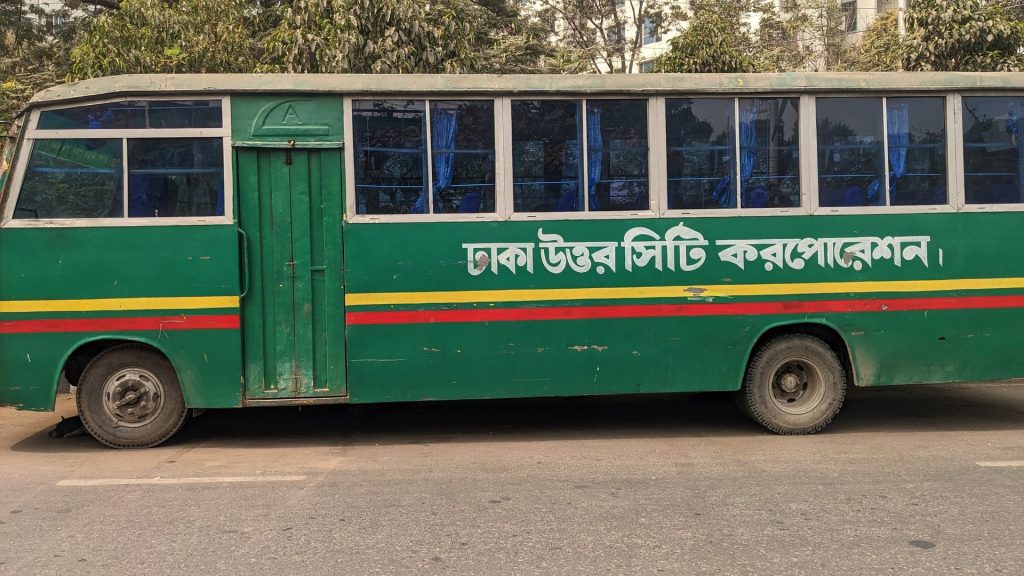
One Killed as Arson Attacks and Bomb Blasts Rock Bangladesh Ahead of Sheikh Hasina’s Planned Return
A bus driver has been burnt to death and more than 50 crude bombs have exploded across Bangladesh’s capital, as a fresh wave of arson attacks and blasts shook the country overnight. Police say the violence is linked to rising political tension over former prime minister Sheikh Hasina’s plan to return to Bangladesh in December, more than two years after she fled the country.
The deadliest attack happened in Faridpur, in the south-west of the country, where a parked bus was set on fire with its driver asleep inside. Buses were also torched in Dhaka, Savar and Gazipur, a train coach was set alight in Netrokona, and crude bombs went off at several places in the capital, including near Dhaka University. Police have set up 160 extra checkpoints in Dhaka and arrested at least 19 people.
A driver killed while he slept
The man who died was Md Kalachan Sheikh, a 60-year-old bus driver. He was sleeping inside a parked bus belonging to Kishore-Tanoy Paribahan near the Goalchamat New Bus Terminal in Faridpur when unidentified attackers set the vehicle on fire at around 1:45am on Tuesday, 10 November.
Firefighters pulled him from the burning bus and took him to Faridpur Medical College Hospital, where doctors declared him dead. Police said he died of smoke inhalation. A murder case has been registered and police have begun searching for the attackers, but no one had been arrested for this attack at the time of writing.
It was the only death reported in the overnight violence, but it was far from the only attack.
Buses torched and bombs exploding across Dhaka
In the capital, Dhaka, the night brought a string of fires and explosions. A Lovely Paribahan bus was set on fire beneath the Farmgate metro station in the evening. Another bus, belonging to Basumati Paribahan, was torched under the metro rail line in Mirpur-11 at around 9:15pm. A second Basumati Paribahan bus was set alight in front of the Mirpur-11 Post Office at around 9:30pm. No one was hurt in these attacks, police said.
At about 9:15pm on Monday, at least two crude bombs exploded in front of Tokyo Square in the Mohammadpur area of Dhaka. Crude bombs — small, homemade explosive devices — were also reported at several other places in the capital, including Banasree, Mohakhali, the Dhaka University campus and outside the Chief Metropolitan Magistrate Court. Police said they had not yet identified who was responsible for the blasts.
According to local media reports, more than 50 crude bomb explosions have rocked different parts of Dhaka over the past few days, and at least eight vehicles have been set on fire.
The attacks were not limited to the capital. In Savar, on the edge of Dhaka, two buses parked along the Dhaka-Aricha highway were torched at around 1am and 4am — one in the Genda area and the other in Baliarpur. One of the buses was used to transport garment workers, while the other belonged to Itihash Paribahan. The fires damaged the buses’ seats and interiors.
In Gazipur’s Kaliakair area, two parked buses were set on fire in the Chandra area along the Dhaka-Tangail highway. In Bogura district, a van carrying jute sacks was set on fire on the Dhaka-Bogura highway in Sherpur in the evening. The vehicle was gutted and traffic was temporarily disrupted before firefighters brought the blaze under control.
In Jhenaidah, in the west of the country, a petrol bomb was thrown at a double-decker bus carrying around 35 students of Islamic University on Monday night. The bus, named Diganta, was travelling towards the university campus when the attack took place in the Dragon Bagan area of Shailkupa. No one was hurt.
A train coach and a police vehicle also set on fire
The violence spread to the railways as well. Railway officials said a coach of the intercity Haor Express train was set on fire at Mohanganj railway station in the northern district of Netrokona early on Tuesday. Four seats in the coach were damaged, but railway staff and firefighters brought the blaze under control and train services were not disrupted.
In Tungipara, in the south-west — the hometown of Sheikh Hasina — a police vehicle was set ablaze during clashes between police and activists of the banned Bangladesh Chhatra League and other Awami League affiliates on Tuesday morning, officials said.
Police also reported that hundreds of Awami League activists staged a demonstration at the southern toll plaza of the Padma Bridge in Shariatpur district early on Tuesday. They exploded crude bombs and damaged several vehicles, temporarily disrupting traffic on the bridge, one of the country’s most important transport links.
Police blame banned Awami League activists
Police have blamed activists of the Awami League — the party of Sheikh Hasina, whose activities have been banned — and its affiliated organisations for several of the incidents.
The Dhaka Metropolitan Police set up 160 additional checkpoints at key locations across the capital on Monday and deployed more officers to prevent further attacks. Deputy Commissioner (Media) Akhter Hossain told The Daily Star that police had arrested at least 19 people in the preceding 24 hours in connection with the recent blasts and attacks, and that many of those arrested were linked to the Awami League.
Police in Savar also said they suspected the involvement of the banned Awami League in the two bus arson incidents there. Investigations are under way to identify those responsible.
It is important to note that these are police claims. No group has publicly claimed responsibility for the attacks, and the full picture of who organised them is not yet clear. What is clear is that the attacks were spread across many districts on the same night, which suggests they were planned rather than random.
Why is this happening now?
The violence comes at a moment of high political tension in Bangladesh, centred on Sheikh Hasina and her plan to return home.
Hasina, 79, has been living in India since fleeing Bangladesh on 5 August 2024, after a student-led uprising toppled her government and ended her party’s 15-year rule. An interim government led by Nobel laureate Muhammad Yunus took charge, and in February this year the Bangladesh Nationalist Party (BNP), led by Tarique Rahman, came to power.
In November 2025, Bangladesh’s International Crimes Tribunal convicted Hasina of crimes against humanity over the crackdown on protesters during the July-August 2024 uprising. The tribunal, which tried her in her absence, sentenced her to death on one charge and life imprisonment on another. Hasina has rejected the charges and the proceedings.
Despite the sentence, Hasina has said she intends to come back. During an audio-only virtual press conference organised in New Delhi on 5 August, she said she intended to return to Bangladesh in December, even though she could face imprisonment or death. The statement drew a sharp reaction from Dhaka, whose foreign ministry said it was “outraged” that she had been allowed to speak to the media from New Delhi. India distanced itself from the event, with its foreign ministry saying it was organised by a private media company and that the government had “no involvement whatsoever”.
The latest wave of violence followed reports that Hasina had applied for a new passport and a national identity card. Bangladesh’s government said it was examining those reports. State Minister for Foreign Affairs Humaiun Kobir ruled out issuing her a passport on Monday, saying Bangladesh did not provide passports to “terrorists”, and insisted that Dhaka wanted her returned from India under an extradition treaty.
Bangladesh has continued to seek Hasina’s extradition from India, and the government says the request is still being examined. India has acknowledged receiving the extradition requests but has not announced any decision on handing her over.
How Bangladesh got here
To understand the tension, it helps to look back at how Hasina’s rule ended.
Hasina led Bangladesh for 15 years, from 2009 to 2024, as head of the Awami League. Her government was credited with strong economic growth, but critics accused it of cracking down on opponents, the media and dissent.
In July 2024, protests led by students against a government jobs quota grew into a mass uprising. The crackdown on protesters left many dead — the exact number is disputed — and on 5 August 2024, Hasina resigned and fled to India by helicopter.
After her fall, the Awami League’s activities were banned, and the interim government, followed by the BNP government, moved to prosecute her and other senior figures over the crackdown. The Awami League, however, still has a large base of supporters, and its student wing, the Chhatra League, was also banned.
The result is a country where one of the two biggest political forces is outlawed, its leader is in exile under a death sentence, and her supporters say they want her back. That is the background to the fires and explosions of the past few days.
What happens next
Police say they are investigating each attack and watching for more. The extra checkpoints in Dhaka are expected to stay in place, and more arrests are likely.
Three things will decide whether the violence grows or fades.
First, whether police can identify and stop the people behind the attacks. So far, the attackers have mostly struck at night, hitting parked buses and setting off small bombs before disappearing. That makes them hard to catch.
Second, what happens with Hasina’s return. She has said she will come back in December. If she does, it would be one of the most dramatic moments in Bangladesh’s recent history — and a major test for the government, which has said it wants her extradited to face the courts.
Third, whether the political temperature can be lowered. The government and the Awami League are on opposite sides of almost every question: the death sentence, the ban on the party, and the extradition request. With no dialogue between them, the risk is that supporters on the ground take matters into their own hands, as the past few nights suggest they already have.
For ordinary people in Bangladesh, the immediate worry is simpler: buses, trains and streets that were safe a week ago are now targets. A driver who went to sleep in his bus did not wake up. Until the attacks stop, that fear will hang over every journey.
Frequently asked questions
Who was killed in the Bangladesh violence?
Md Kalachan Sheikh, a 60-year-old bus driver, was burnt to death in Faridpur after attackers set fire to the parked bus he was sleeping in. Police said he died of smoke inhalation.
How many attacks have there been?
More than 50 crude bomb explosions have been reported across Dhaka in recent days, according to local media, and at least eight vehicles have been set on fire across the country. Buses were torched in Dhaka, Savar, Gazipur, Faridpur and Bogura, and a train coach was set alight in Netrokona.
Who does the police blame?
Police have blamed activists of the Awami League, whose activities are banned, and its affiliated organisations for several of the incidents. At least 19 people have been arrested in the past 24 hours, many of them linked to the Awami League, according to police. No group has publicly claimed responsibility.
Why is there tension over Sheikh Hasina?
Hasina fled to India in August 2024 after a student-led uprising ended her 15-year rule. In November 2025, a tribunal sentenced her to death on one charge and life imprisonment on another over the crackdown on protesters. She has said she plans to return to Bangladesh in December, and Bangladesh is seeking her extradition from India.
Is it safe to travel in Bangladesh right now?
Police have set up 160 extra checkpoints in Dhaka and deployed more officers. But the attacks have hit buses, trains and public places in several districts, so travellers should follow local advice and check the latest updates before travelling.
Conclusion
The overnight violence in Bangladesh is a warning. A bus driver is dead, buses and a train coach have been burnt, and more than 50 crude bombs have gone off in the capital — all in the space of a few days, and all against the background of a former prime minister’s planned return.
The police response has been swift: extra checkpoints, more officers on the streets, and arrests. But the deeper problem is political. Until the question of Sheikh Hasina — her sentence, her party’s ban, and her return — is settled, the tension that produced this week’s attacks is unlikely to disappear.
December, when Hasina says she will come home, is now less than a month away. What happens between now and then will decide whether this week’s violence was a passing flare-up, or the start of something worse.
Sources
This article is for general information and education only. It is not legal or financial advice.
