
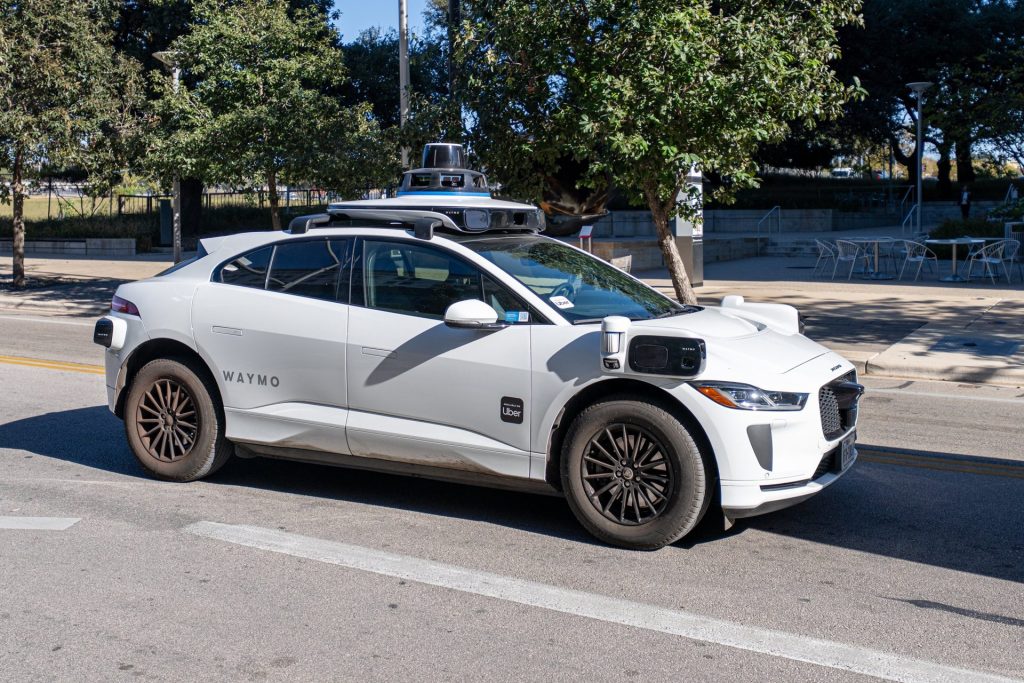
Driverless Taxis in Washington DC Hit a Roadblock: Council One Vote Short as Jobs Debate Takes Over
Driverless taxis are already carrying paying passengers in 15 American cities. In Washington DC, the capital of the United States, they are still not allowed to pick up a single fare — and after a dramatic day of politics on Tuesday, 10 November 2026, they may have to wait even longer.
A bill that would finally let companies like Waymo run driverless taxis in the city is one vote short in the council committee that must approve it first. Three of the five members of the committee have said they will vote against it this week, even after the bill’s author rewrote it with new protections for workers.
The fight is not really about the technology. Almost everyone involved agrees that self-driving cars work. The fight is about jobs — what happens to the thousands of people in Washington who earn their living driving taxis and ride-hailing cars when a car with no driver can do the same work, day and night.
What happened on Tuesday
Council member Charles Allen, who represents Ward 6 and chairs the Committee on Transportation and the Environment, unveiled a rewritten version of his bill, the Autonomous Vehicle Deployment Authorization Amendment Act of 2026, on Tuesday.
It was, in his words, a last attempt to win over the sceptics. The new version adds some of the strongest worker protections ever written into a driverless-car law in the United States. Allen told The Washington Post that the bill has “the most progressive” worker protections of any robotaxi legislation in the country, adding: “I’m not sure what else people are looking for.”
But it was not enough. Three of the five members of his own committee said they would still vote no if the bill came up this week:
- Zachary Parker, who represents Ward 5
- Elissa Silverman, an at-large member
- Janeese Lewis George, who represents Ward 4 and is the city’s mayor-elect
Only one other member, Christina Henderson, also at large, said she would vote yes. That leaves Allen one vote short of the majority he needs to send the bill to the full council.
Allen is pressing ahead anyway. A committee vote is set for Thursday, 12 November, and he hopes to hold a full council vote before the end of the year. If the bill is not passed before the council session ends on 2 January 2027, it dies — and the whole debate starts again next year.
What the bill would actually do
Strip away the politics, and the bill is simple. It would allow companies such as Waymo to carry paying passengers in cars with no one behind the wheel in Washington DC. Today, that is not allowed. Waymo’s cars can drive around the city, but only with a human driver sitting in the driver’s seat, and they cannot charge passengers.
Before any company could start charging for rides, its cars would have to complete at least 90 days and 75,000 miles of driverless testing. That is a long trial period, designed to prove the cars are safe on Washington’s streets before a single fare is collected.
The bill also sets hard limits on how big the driverless fleet can get:
- No company could run more than 200 driverless cars in the city.
- Across all companies combined, the total would be capped at 800 vehicles.
That matters, because the fear is not one or two robotaxis. It is hundreds of them, running around the clock, taking work from human drivers who cannot compete with a machine that never sleeps, never takes a break and never asks for a day off.
The bill would also charge robotaxi companies a tax of 7.5 cents for every mile their cars travel. That rate was halved in the rewrite — the earlier version charged twice as much. Part of the money would go to public transport, and a quarter of the revenue for three years would go to drivers who lose work because of driverless cars.
In another change aimed at winning over the unions, the new version would give ride-hailing drivers and workers at driverless-car maintenance facilities the right to join a union and bargain over pay and conditions. The bill would also require robotaxi companies to start adding wheelchair-accessible vehicles, so that disabled passengers are not left behind.
Greg Rogers, the head of Innovation Majority, a non-profit group that campaigns for new transport technology, said the worker protections make this the strongest robotaxi law he has seen in the United States in a decade. “This bill has a ton of firsts,” he said. “DC could really be a leader in imagining the future of AV regulation.”
Why three council members said no
The three opponents are not all making the same argument, and the differences matter.
Janeese Lewis George, the mayor-elect, came out against robotaxi legislation in October, before she won the election. Her concern is jobs. “Rushing the legalization of autonomous vehicles is irresponsible,” she wrote in a social media post. She wants the decision delayed until the next council session, when she takes office and her own transport and employment officials are in place.
Zachary Parker says he supports driverless cars in principle. His problem is that he does not think the new version of the bill answers the jobs question. “I don’t know if we have a full answer for the potential job loss question raised by Mayor-elect Lewis George,” he told The Washington Post.
Elissa Silverman agrees that the vote should wait. She says she is not against Waymo itself. “I’m not against Waymo. In the end, I just want us to do this right. And I’m concerned about doing it in the interregnum, when there’s a change of administration,” she said. An interregnum is the gap between one government leaving and the next one taking over — and Silverman does not want a decision this big made in that gap.
Allen disagrees. He says the argument for waiting is just a softer way of killing the bill. “I think that it’s just strategic. That it sounds softer to say, ‘Let’s just wait. What’s the harm in waiting?'” he said on Monday. “That’s when I keep asking the question, ‘For what? What is it you’re waiting for? What is it you would like to see in here?’ And I haven’t had anybody come say, ‘Well, this is what’s lacking.'”
Even the ride-hailing giant Uber, which might be expected to support driverless cars, has called for more time.
The jobs question at the heart of the fight
The unions are the most powerful force against the bill, and they have the ears of the key council members.
In a joint statement on Tuesday, the transit workers’ union ATU Local 689, the International Association of Machinists and the property service workers’ union 32BJ SEIU called Allen’s changes “rushed quick fixes that don’t provide sufficient safeguards against job displacement, guarantee labor standards or passenger safety.”
Their fear is easy to understand. Driving is one of the few jobs in a big city that is open to almost anyone — no degree needed, flexible hours, and you can start quickly.
The experience of other cities shows why they are worried. In San Francisco, where Waymo already runs a large driverless service, the company took 27 percent of the city’s ride-hailing market in just 20 months, according to a 2025 report by the venture capital firm Bond. That is more than a quarter of all rides, gone from human drivers in less than two years.
Supporters of the bill say this misses the point. They argue that driverless cars also create jobs — people are needed to clean, charge, maintain and supervise the vehicles — and that safer roads and cheaper rides help everyone, including people who cannot drive themselves. A Waymo spokesperson said driverless cars would create “safer roads and good jobs” in the District, and that the company would “continue working with the Council to get this right.”
But the unions are not convinced, and neither are the three committee members who side with them.
Safety: what the numbers say so far
Waymo has been testing its cars in Washington since 2024, with human drivers behind the wheel. The company says its vehicles have driven more than 300,000 miles around the District.
Since January 2025, Waymo says its cars have been involved in six crashes in DC that resulted in minor property damage. None of them caused a serious injury, according to the company.
That record is part of Waymo’s argument that its cars are safer than human drivers. The company points to its record in the cities where it already operates, where its cars have driven tens of millions of miles. Critics answer that 300,000 miles in Washington is a small sample, and that a city with the capital’s traffic, protests, motorcades and road closures is a harder test than the wide streets of Phoenix, where Waymo started.
Accessibility is another open question: the rewritten bill requires companies to start adding wheelchair-accessible vehicles, but how quickly, and how many, is still being debated.
The money behind the fight
This is not just a debate about transport. It is also one of the most expensive political fights in Washington this year.
A group with unclear funders and origins has spent more than $2.6 million on political adverts opposing Allen’s bill, according to data from the ad-tracking firm AdImpact. That makes the group the District’s biggest political advertiser this year — spending more than campaigns for actual elections.
Another group with unclear funders has also been involved in opposing the bill, The Washington Post reported. Neither group has explained who is paying for the campaign.
How Washington fell behind
There is an irony in this fight. Washington was once a pioneer in driverless-car policy. In 2012, the council passed one of the first laws in the United States setting out rules for driverless cars.
Since then, the capital has fallen behind while other cities moved ahead. Waymo now runs commercial driverless services in 15 American cities, including Phoenix, San Francisco, Los Angeles, Austin and Atlanta.
Part of the reason is that the District’s government moves slowly on new technology, and part of it is that the city’s politics are different. Washington has a powerful labour movement, a large taxi industry and a council that is more sceptical of big tech companies than the governments of Arizona or Texas, where Waymo grew fastest.
What happens next
The immediate test comes on Thursday, 12 November, when Allen’s committee votes on the bill. On the current numbers, it does not have the votes to pass. But Parker and Silverman told The Washington Post on Tuesday morning that they had not yet read the new version of the bill, so their positions could still move.
If the bill passes the committee, it would go to a full council vote before the end of the year. If it fails, or if time runs out, the debate returns next year — under a new mayor, with new council members and a new administration that would review the whole question from scratch.
Either way, the first paid driverless ride in Washington is still a long way off. Even if the bill passes, companies would need to complete at least 90 days and 75,000 miles of driverless testing first. Estimates put the first commercial rides somewhere between the autumn of 2027 and early 2028.
Allen says he is ready to keep fighting. “If it’s not successful — I hope it is — but if it is not, then if there is a possibility to move forward in the new year, so be it,” he said.
For the drivers waiting to find out whether their jobs are safe, and for the residents waiting to find out whether they will ever be able to hail a car with no driver in the capital, the wait goes on.
Frequently asked questions
Can I ride in a driverless taxi in Washington DC today?
No. Waymo has been testing its cars in the city since 2024, but only with a human driver behind the wheel, and it cannot charge passengers. Paying rides in fully driverless cars are not allowed under current law.
What is the bill that could change that?
The Autonomous Vehicle Deployment Authorization Amendment Act of 2026, written by Council member Charles Allen. It would let companies like Waymo carry paying passengers in cars with no driver, after at least 90 days and 75,000 miles of driverless testing, with a limit of 200 cars per company and 800 in total across the city.
Why is the bill stuck?
Three of the five members of the council committee that must approve it first — Zachary Parker, Elissa Silverman and Mayor-elect Janeese Lewis George — say they will vote no this week. They want more protection for drivers’ jobs, and Silverman and Lewis George want the decision delayed until the new administration takes office. The bill needs a majority of the committee to reach a full council vote.
When will we know the result?
The committee vote is expected on Thursday, 12 November 2026. If the bill passes, a full council vote could follow before the end of the year. If it is not passed before the council session ends on 2 January 2027, the bill dies.
Where else does Waymo already run driverless taxis?
Waymo runs commercial driverless services in 15 American cities, including Phoenix, San Francisco, Los Angeles, Austin and Atlanta. In San Francisco, it took 27 percent of the ride-hailing market in 20 months, according to a 2025 report by the venture capital firm Bond.
Are driverless cars safe?
Waymo says its cars have driven more than 300,000 miles in Washington since testing began, with six crashes since January 2025 that caused only minor property damage. Supporters say the cars are safer than human drivers; critics say the sample is still small.
Conclusion
Washington’s driverless taxi debate is not really about whether the technology works. It is about who benefits when it arrives, and who pays the price.
The bill’s supporters say the city is falling behind, that the technology is ready, and that the rewritten bill has the strongest worker protections of any driverless-car law in America. The opponents say the protections are not enough, the timing is wrong, and thousands of drivers’ livelihoods are at stake.
On Thursday, five council members will decide whether the bill lives or dies this year. Whatever they decide, the bigger question — how a city welcomes a technology that could put its drivers out of work — will not go away. It will simply come back next year, with a new mayor and a new council.
Sources
- The Washington Post (via DNYUZ): “Robotaxi bill appears dead on arrival at D.C. Council committee”
- The Washington Sun: “The Washington Sun Metro: Pumping the Brakes”
- Zark News: “Driverless Taxis Are One Vote Short in D.C., and the Fight Is Over Jobs”
- NGlobe News: “D.C. autonomous-vehicle bill stalls as three transportation committee members oppose it”
This article is for general information and education only. It is not legal or financial advice.
