
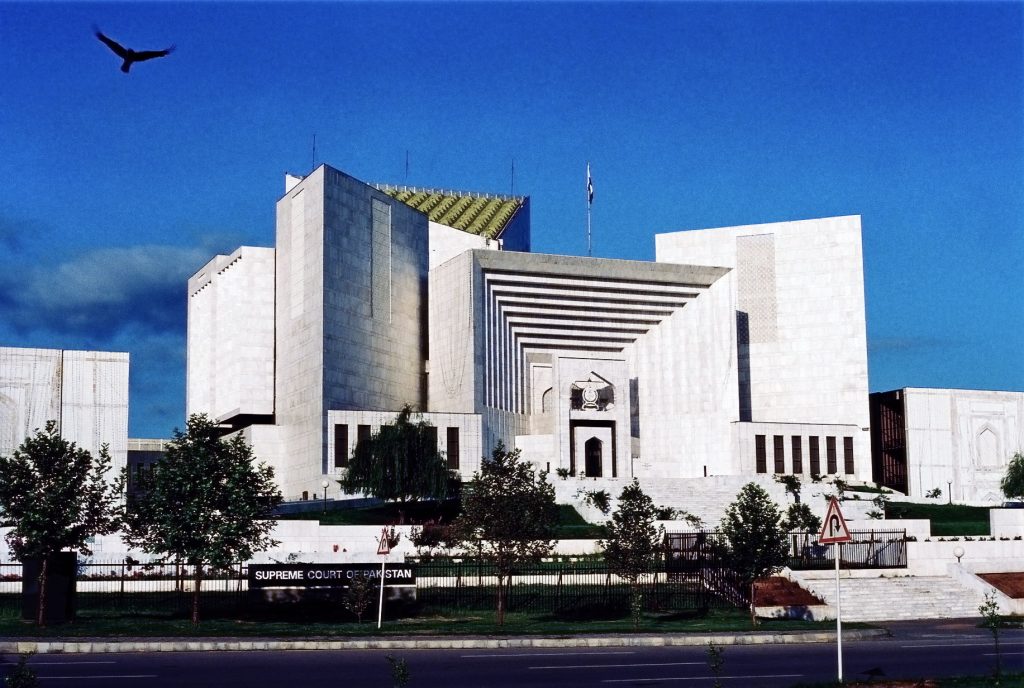
Federal Constitutional Court Bars Peshawar High Court From Hearing PTI Workers’ Detention Cases in Khyber Pakhtunkhwa
Pakistan’s new Federal Constitutional Court has stepped into one of the country’s most sensitive legal fights — and told the Peshawar High Court to stop hearing cases about the detention of Pakistan Tehreek-e-Insaf (PTI) workers in Khyber Pakhtunkhwa.
In an order passed on Thursday, 5 November 2026, the Constitutional Court suspended the high court’s orders that had stopped arrests under Section 3 of the Maintenance of Public Order Ordinance (MPO) and freed 28 detained PTI workers. It also put on hold all cases filed in the Peshawar High Court under Article 199 of the Constitution on or after 12 October 2026 — the date the army was deployed in the province.
The decision is the latest turn in the legal battle over emergency rule in Khyber Pakhtunkhwa, where the federal government took control of the province last month. It also raises big questions about how far the courts can go when the army is deployed in aid of civil power — questions the Constitutional Court itself says need “careful scrutiny and an authoritative determination”.
What the court decided
A two-member bench of the Federal Constitutional Court (FCC), headed by Chief Justice Aminuddin Khan, heard the Khyber Pakhtunkhwa government’s petitions challenging several orders of the Peshawar High Court (PHC).
The court issued a four-page written order. Its main points were:
- The Peshawar High Court’s orders are suspended. The FCC suspended the orders passed by different benches of the high court that had restrained arrests under Section 3 of the MPO and ordered the release of detained workers.
- The high court cannot hear these cases for now. The FCC restrained the Peshawar High Court from hearing further proceedings in cases about detention under the MPO.
- Cases filed on or after 12 October are on hold. All proceedings started in the Peshawar High Court under Article 199 on or after 12 October 2026 “shall remain suspended” under Article 245(4) of the Constitution.
- A report is due within seven days. The Advocate General of Khyber Pakhtunkhwa must report to the court within seven days on which areas of the province no longer need the armed forces to act in aid of civil power. The court said it would consider changing its order after examining that report.
- The Attorney General has been called in. Because the case involves major questions about how the Constitution should be interpreted, the court also issued notice to the Attorney General for Pakistan.
- Further hearings are paused. After issuing these directions, the court adjourned further proceedings indefinitely, and said the case would be fixed for hearing again later.
In simple terms: for now, the Peshawar High Court cannot give relief to people challenging their detention under the MPO in Khyber Pakhtunkhwa, and the high court’s earlier orders protecting them no longer apply.
What is 3-MPO, and why does it matter?
To understand the case, it helps to know what Section 3 of the MPO actually is.
The Maintenance of Public Order Ordinance, 1960, is a law that allows the government to detain a person preventively — that is, before they are charged with or convicted of any crime — if the authorities believe the person may act in a way that harms public order. Section 3 is the part of the law that gives the government this detention power.
Governments in Pakistan have used 3-MPO for decades, usually during protests, political unrest or security operations. Supporters of the law say it is needed to stop trouble before it starts. Critics say it is often used against political workers and protesters, and that it allows people to be locked up without trial.
In this case, the authorities detained a number of people — including PTI workers — under 3-MPO in Khyber Pakhtunkhwa after emergency rule was imposed in the province. The detainees, or their families, went to the Peshawar High Court, which is the normal court people approach when they believe they have been detained unlawfully.
The high court gave them relief. It restrained the authorities from making further arrests under 3-MPO, and it ordered the release of 28 PTI workers who had been detained in different districts of the province.
The provincial government — which is now run by the Governor under federal control — did not accept those orders. It went to the Federal Constitutional Court to challenge them.
How the case reached the Constitutional Court
When the detention orders were challenged in the Peshawar High Court, it relied on its own earlier judgment — “Aftab Alam and another versus Secretary Home and Tribal Affairs, Government of Khyber Pakhtunkhwa” (PLD 2024 Peshawar 112) — and released the detained workers at the very first stage of the case.
The Khyber Pakhtunkhwa government then challenged those orders before the Federal Constitutional Court. Its lawyers raised three objections to the high court’s jurisdiction — in other words, they argued the high court did not have the legal power to hear these cases at all.
The main objection was about Article 245 of the Constitution. The Advocate General of Khyber Pakhtunkhwa argued that the high court could not interfere in areas where the military was conducting operations under Article 245, and that it could not use its powers under Article 199 in such matters.
Lawyers for the detained workers pushed back. Former additional advocate general Shah Faisal Ilyas, who appeared for the parties, asked the court to hear both sides before passing any interim order, and argued that the provincial government’s three objections could not be sustained.
The court has now accepted, at least for the time being, the government’s argument — and suspended the high court’s orders while the bigger constitutional questions are decided.
The Article 245 argument — the heart of the order
The written order turns on Article 245 of the Constitution, which deals with the armed forces acting “in aid of civil power” — when soldiers are called in to help the civilian government keep order.
Two parts of Article 245 matter here:
- Clause (3) says that no High Court can exercise its jurisdiction under Article 199 — the power to hear petitions about fundamental rights and unlawful detention — in any area where the armed forces are acting in aid of civil power.
- Clause (4) says that any proceeding started in a High Court on or after the day the armed forces began acting in such an area shall remain suspended for as long as the armed forces are acting there.
The court’s written order says these questions “require serious consideration” and “careful scrutiny and an authoritative determination”. But it also says that, on the face of it, the restriction on the high court’s jurisdiction stays in place only for as long as the armed forces are acting in aid of civil power — it is temporary, not permanent.
That is why the court asked the Advocate General to report within seven days on the areas of Khyber Pakhtunkhwa where the army is no longer needed. Once that report arrives, the court said it would consider modifying its order.
The order also notes that the high court had given “final relief at an interim stage” — meaning it freed the detainees before the case had been fully heard — which, the Constitutional Court said, “is not permissible in any manner”. It also said the high court’s earlier Aftab Alam judgment, on which the release orders were based, “requires careful examination”.
What the judges said in court
During the hearing, Justice Aamer Farooq raised a practical question about the government’s argument. The Advocate General had said the high court could not exercise its Article 199 jurisdiction in these matters — but, as Justice Farooq observed, the high court receives several cases under Article 199 every day.
“Would the high court not hear cases that come before it on a daily basis?” Justice Farooq asked.
It is a question that goes to the heart of the dispute: if the high court cannot hear detention cases while the army is deployed, what happens to people who believe they have been detained unlawfully? The court’s answer, for now, is that those cases must wait — at least until the Advocate General’s report arrives and the court decides whether to change its order.
The background: emergency rule in Khyber Pakhtunkhwa
The detention cases cannot be understood without the events of October 2026 in Khyber Pakhtunkhwa.
On 11 October 2026, the President issued a proclamation under Articles 232 and 234 of the Constitution, and the federal government assumed control of the province through the Governor. The move effectively suspended the provincial government run by the PTI, the party of jailed former Prime Minister Imran Khan.
On the same day, the federal government issued an order under Article 245 authorising the deployment of the Pakistan Army in the province to act in aid of civil power, to protect life and property and the security of public installations. The Ministry of Interior requisitioned troops through an office memorandum dated 12 October, and the Ministry of Defence issued a memorandum the same day binding the deployed troops to act in aid of civil power throughout the province.
To maintain public order, a number of people were then taken into preventive detention under the MPO — including PTI workers, whose cases are now at the centre of this legal fight.
The emergency is initially in place for six months, with the provincial governor in charge, assisted by an advisory council. The PTI has challenged the move, and the courts have become the main battleground.
A second ruling the same day: the Constitutional Court says its observations bind all courts
The MPO order was not the only significant decision from the Federal Constitutional Court on 5 November.
In a separate 16-page judgment by Justice Aamer Farooq, the court ruled that its legal observations bind all courts in Pakistan — including the Supreme Court — under Article 189 of the Constitution.
The case itself was about appointments at an Islamabad education regulator, but the ruling is far wider than that one dispute.
The judgment follows an earlier ruling, reported on 2 November, in which the same court held that Supreme Court judgments are not binding on it and carry only persuasive value. Taken together, the two rulings draw a clear line: the Supreme Court’s decisions guide the Constitutional Court, but the Constitutional Court’s observations bind the Supreme Court. The Constitutional Court was created by the 27th Constitutional Amendment, and the relationship between the two courts has been a source of tension since it began working. No response from the Supreme Court had been published at the time of writing.
Why this matters
The FCC’s order matters for several reasons.
First, it affects real people. Twenty-eight PTI workers had been ordered released by the high court. That release order is now suspended, and the high court cannot hear further challenges to their detention.
Second, it limits the high court. Article 199 is the main tool ordinary people use to challenge unlawful detention in Pakistan. The order puts that tool on hold in Khyber Pakhtunkhwa for cases filed since 12 October, as long as the army remains deployed.
Third, it tests the new Constitutional Court. The FCC was created by the 27th Amendment, and its authority over the high courts is still being worked out case by case. This order — and the separate ruling that its observations bind even the Supreme Court — shows the new court is willing to assert its authority quickly and firmly.
Fourth, it is temporary, but with no fixed end. The court stressed that the restriction lasts only while the armed forces are acting in aid of civil power. The seven-day report from the Advocate General is the key next step: if it says the army is no longer needed in some areas, the court may lift the suspension there. But if the deployment continues, the suspension continues with it.
What happens next
Several things will now decide how this plays out:
- The Advocate General’s report. Within seven days, the Khyber Pakhtunkhwa government must tell the court where the army is still needed and where it is not. This report will shape whether the court changes its order.
- The Attorney General’s response. The court has issued notice to the Attorney General for Pakistan, who will present the federal government’s position.
- A fresh hearing. The case will be fixed for hearing again after the report arrives, to decide whether the high court’s approach to Article 245 was correct and whether the Aftab Alam judgment was rightly applied.
- The political backdrop. The order comes while emergency rule continues in Khyber Pakhtunkhwa and the PTI’s provincial government remains suspended.
For the detained workers and their families, the immediate effect is a wait. The high court door is closed for now, and the next move belongs to the Constitutional Court.
Frequently asked questions
What is the Maintenance of Public Order Ordinance (MPO)?
The MPO is a 1960 law that lets the government detain people preventively — before any charge or trial — if it believes they may disturb public order. Section 3 is the provision that gives the government this power.
What is Article 199 of the Constitution?
Article 199 gives the high courts the power to hear petitions from people who believe their fundamental rights have been violated — including people who say they have been detained unlawfully.
What is Article 245?
Article 245 allows the armed forces to be called in to act “in aid of civil power” — to help the civilian government when it cannot maintain order on its own. Clauses (3) and (4) say that while the armed forces are acting in this way, a high court cannot exercise its Article 199 powers in the affected area.
What is the Federal Constitutional Court?
The Federal Constitutional Court is a new court created by the 27th Constitutional Amendment. It deals with constitutional matters, and its relationship with the Supreme Court and the high courts is still being defined through cases like this one.
What happens after seven days?
The Advocate General of Khyber Pakhtunkhwa must submit a report on the areas where the armed forces are no longer required to act in aid of civil power. The Constitutional Court will examine the report and consider modifying its order.
Conclusion
The Federal Constitutional Court’s order of 5 November is a significant moment in the legal fight over emergency rule in Khyber Pakhtunkhwa. By suspending the Peshawar High Court’s orders and putting Article 199 cases on hold, the court has — for now — sided with the government’s reading of Article 245.
But the court has also left the door open. It has called the constitutional questions serious, asked for a report within seven days, and said it will reconsider its order once that report arrives. The real test will come at the next hearing, when the court must decide whether a high court can be kept out of detention cases for as long as soldiers remain on the streets.
Sources
- https://www.probespakistan.com/article/fcc-bars-phc-from-hearing-cases-over-3-mpo-arrests-in-kp
- https://islamabadpost.com.pk/fcc-bars-phc-from-hearing-cases-over-3-mpo-arrests-in-kp/
- https://voicepk.net/2026/11/fcc-stays-all-proceedings-under-article-199-filed-in-phc-fromn-oct-12/
- https://thepakistandaily.com/fcc-legal-observations-binding-supreme-court/
This article is for general information and education only. It is not legal or financial advice.
