
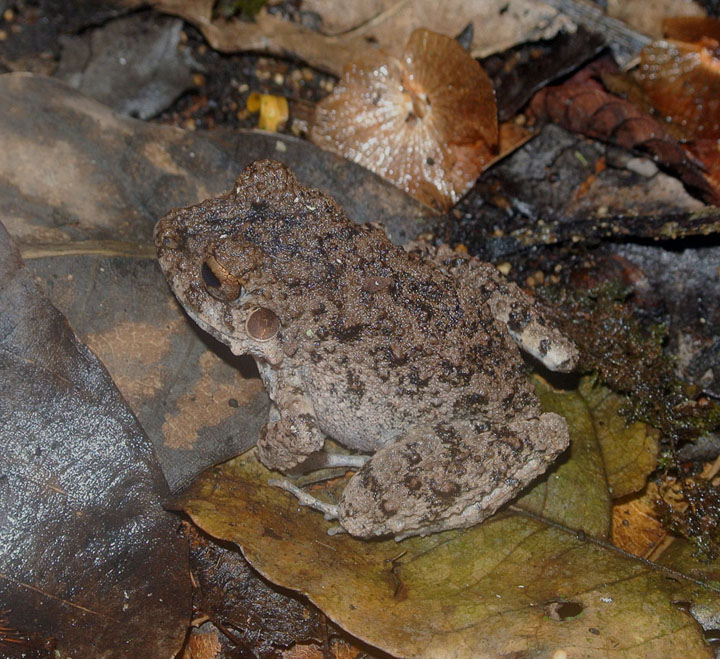
Four new frog species named in Peru, taking known Oreobates total to 31
Scientists have given names to four frog species new to science, found in the forests of Peru near Cordillera Azul National Park. Florida International University reported on 30 October that the frogs belong to the genus Oreobates, a group of small, ground-dwelling frogs. The find raises the known number of Oreobates species from 27 to 31.
The four are Oreobates azulensis, Oreobates chirimoto, Oreobates foliaspectrum and Oreobates nigrumcompletum. They were described by a team led by Pablo J. Venegas, working with FIU biologist Alessandro Catenazzi, and the research was published in the journal Diversity. The frogs were found in the departments of Amazonas, San Martín and Huánuco, in humid mountain and foothill forests in the upper Huallaga River basin, at heights of 1,400 to 2,100 metres. Specimens were collected on expeditions that began in 2018.
Telling the frogs apart took more than a look. The researchers compared body shape, skin texture and colour, recorded the males’ mating calls, and compared pieces of DNA. The calls matter because a female frog is unlikely to be drawn to the call of a different species. Together, the three kinds of evidence showed the four frogs were distinct from their closest relatives. Like other Oreobates frogs, they are direct-developing, which means their eggs hatch as tiny frogs, with no tadpole stage.
Why it matters
Naming a species is the first step to studying it — and to protecting it. Catenazzi, who has helped describe more than 55 frog species in his career, said: “Each species is its own world.” The practical value of these four species is not yet known, but his lab is already studying two other frog species whose skin chemicals have antimicrobial, wound-healing and antifungal properties. Catenazzi believes discoveries like these can help make the case for protecting the forests where the frogs live.
What happens next
The next step is learning more about where each of the four species lives, how many there are, and what threats they face. The collected specimens are held in a scientific collection in Lima, Peru, so other researchers can study them and check the findings. More surveys in the same poorly explored mountain forests could reveal further species that have not yet been named.
This article is for general information and education only. It is not legal or financial advice.
Sources
- https://news.fiu.edu/2026/racing-bulldozers-fiu-biologist-helps-discover-four-new-frog-species (FIU News, 30 October 2026)
- https://phys.org/news/2026-10-frog-species-reveal-peru-biodiversity.html (Phys.org, 30 October 2026)
- https://www.mdpi.com/1424-2818/18/8/458 (Diversity, 30 July 2026)
