
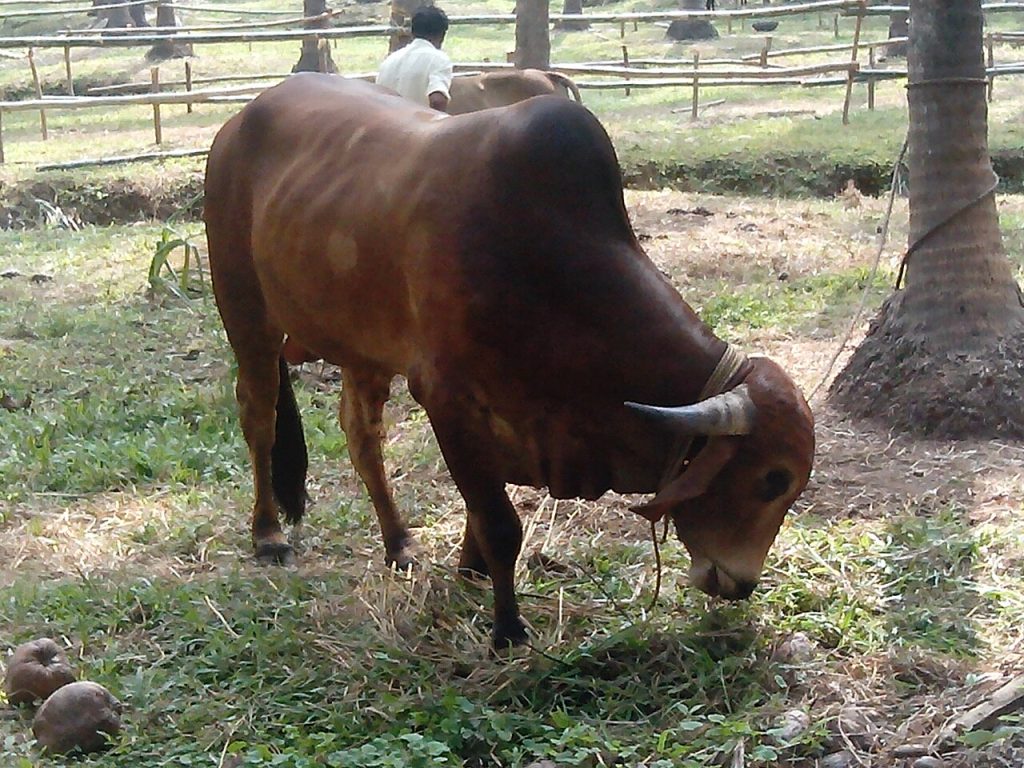
Karnataka raises Nandini milk price by Rs8 a litre from 1 November — farmers to get Rs47 a litre
From Sunday, 1 November, a litre of Nandini milk costs more in Karnataka. The state Cabinet has approved an increase of Rs8 per litre across all categories, and the government has presented it as a rescue package for dairy farmers rather than a routine price change.
The split of the increase is what makes this decision different from an ordinary price rise. Of every extra Rs8 a shopper pays, Rs7 goes directly to the farmer who supplied the milk, and Re1 goes to the milk unions that collect, process and sell it. The price paid to farmers rises from Rs35 to Rs42 per litre. With the government’s existing incentive of Rs5 per litre, a farmer will now receive Rs47 for every litre of milk supplied.
Chief Minister D. K. Shivakumar defended the decision on Saturday, 31 October, saying the state had no other option. Karnataka is facing a severe drought, he said, and milk production has fallen because farmers cannot afford enough fodder for their cattle. Without more money in farmers’ hands, he argued, production would keep falling, and milk would become harder to find, not just dearer.
At a glance
What happened: Karnataka raised Nandini milk prices by Rs8 per litre from 1 November 2026, with Rs7 of the rise going to farmers and Re1 to milk unions.
Why it matters: Farmers will now receive Rs47 per litre in total, while shoppers will pay Rs54 for a litre of Nandini toned milk, up from Rs46.
What happens next: The new prices apply across the state from 1 November, and the test will be whether milk supply steadies and the extra money reaches farmers in full.
What was decided
The Karnataka Cabinet approved the Rs8-per-litre increase on Thursday, 29 October, after discussing the issue on two or three occasions, according to Revenue Minister Krishna Byre Gowda, who announced the decision after the meeting. The decision was unanimous, he said. The revised prices apply to all categories of Nandini milk, the brand sold by the Karnataka Milk Federation, known as KMF.
The Chief Minister’s public defence of the decision came two days later, on Saturday, 31 October, when Shivakumar spoke to reporters. He said the government had given the decision considerable thought and had kept the drought in mind. He also said milk prices had not been revised for several years, which was why the government had decided to act now.
The new rates take effect from 1 November, a Sunday, so the first morning of the new prices is the first day of the month. There is no phased introduction and no grace period mentioned in the announcements: the Rs8 increase applies in full from that date.
What farmers will now earn
The arithmetic of the rise is simple, and the government has repeated it in every announcement. A farmer who supplied milk to a cooperative society used to receive about Rs35 per litre, plus a government incentive of Rs5 per litre, making Rs40 in total. From 1 November, the base price rises to Rs42 per litre. The Rs5 incentive continues. That takes the total a farmer receives to Rs47 per litre.
The Rs7 that goes to farmers is nearly 90 per cent of the total Rs8 increase. The remaining Re1 goes to the milk unions towards their running costs. The unions collect milk from village societies, transport it, pasteurise it, pack it and sell it. Their costs have also risen, with higher spending on transport, fuel and packaging, but the government has given them the smaller share of the rise.
Shivakumar gave a concrete example of what the change means for a small farmer. A farmer supplying 10 litres of milk a day will earn an additional Rs2,100 a month, he said. The sum works out exactly: 10 litres a day at Rs7 extra per litre is Rs70 a day, and over 30 days that is Rs2,100.
The Chief Minister also put a state-wide figure on the decision. The price revision is expected to generate additional annual income of between Rs1,850 crore and Rs2,100 crore for dairy farming families in Karnataka, he said. That is the government’s own estimate, and it depends on how much milk farmers continue to supply.
What shoppers will pay
For consumers, the headline number is the price of Nandini toned milk, the blue-packet milk that most households buy. It rises from Rs46 to Rs54 per litre, an increase of Rs8, or about 17 per cent. A family that buys one litre a day will pay Rs240 more in a month. A family that buys two litres a day will pay Rs480 more.
The government has argued that even after the rise, Nandini milk is still cheap compared with other brands and other states. Toned milk at Rs54 a litre is lower than the prices of several major dairy brands in the country, Shivakumar said. Nandini Shubham milk, which has 4.5 per cent fat content, will cost Rs60 per litre. That is below the average price of Rs62.80 in 10 other states, according to the Chief Minister.
Other varieties rise by the same Rs8 per litre, since the Cabinet approved the increase across all categories. Full-cream milk and cow’s milk also go up by Rs8 a litre.
Curd has also become dearer. The price of Nandini curd has risen by Rs14 per kg. When Shivakumar was asked about the curd increase on 31 October, he said the decision on curd prices rested with the Karnataka Milk Federation. “We have intervened only in the price of milk,” he said, adding that where the fat content is higher, a matching rate is fixed and the price goes up accordingly.
Why the government says it had no choice
The government’s case rests on three linked problems: drought, rising costs and falling supply. Karnataka is reeling under severe drought, Shivakumar said on 31 October, and the drought has cut milk production. When rain fails, fodder becomes scarce and expensive. Farmers who cannot feed their cattle properly get less milk from each animal, and some sell their animals or stop supplying milk altogether.
The costs of keeping a cow have risen on every front. The Chief Minister listed rising fodder and labour costs, higher fuel and packaging expenses, and a fall in daily milk procurement because of the drought as the main reasons for the revision. Gowda made the same point after the Cabinet meeting, saying farmers faced a crisis and costs had risen sharply.
Shivakumar also pointed to a problem that goes beyond Karnataka’s borders. Prices are much higher in neighbouring states, he said, and farmers in Karnataka were moving their milk to those states. Milk availability in Karnataka was declining as well. Raising the price paid to farmers is meant to keep the milk at home.
The Chief Minister framed the decision in moral as well as economic terms. “We have no other option. If we want to protect our cows, we must provide them with good food,” he said, adding: “To provide them with food, we need fodder. For fodder to be available, farmers must be in a good financial position and have money in their hands. Only when farmers have money can they sustain this; otherwise, production will keep declining.”
The demand behind the decision
The price rise did not come out of nowhere. Dairy farmers had been demanding more money for months, and their cooperatives had pressed the case directly with the government. Gowda said representatives of the cooperatives met the Chief Minister, the Animal Husbandry Minister and the Cooperation Minister, and insisted that the price should be increased by at least Rs10 per litre. Farmers themselves had taken to the streets in protest.
The exact size of the demand is reported slightly differently in different accounts. The Chief Minister told reporters that milk producers had sought a hike of Rs12 per litre. Gowda, announcing the Cabinet decision, said the cooperatives had insisted on at least Rs10 per litre. The difference may reflect different meetings, different groups, or the way the demand grew during the talks. What is not in doubt is that the producers wanted more than the Rs8 the government finally agreed to.
The government settled on Rs8 after discussion in the Cabinet. Gowda said the Cabinet had considered the farmers’ demand but felt that so large an increase could not be done at once. The final figure was agreed after discussions under the Chief Minister’s chairmanship. The Rs8 figure is therefore a compromise: more than the government might have wanted to impose on consumers, less than the farmers asked for, and weighted heavily towards the farmers, who receive Rs7 of the Rs8.
How Nandini and the KMF work
To understand why a milk price is a Cabinet decision at all, it helps to understand how Nandini works. Nandini is the brand of the Karnataka Milk Federation, the KMF, a cooperative network that buys milk from farmers, processes it and sells it across the state. The federation is owned in effect by its members: the farmers who supply the milk. Its motto, in the federation’s own words, is “by the farmers, for the farmers and of the farmers.”
Karnataka has 28.84 lakh dairy farmers, according to the Chief Minister, and 67 per cent of KMF members are small and marginal farmers. A lakh is 100,000, so 28.84 lakh means about 2.88 million farmers. Most of them keep only a few animals. For such a household, milk is often the steadiest source of cash: a cow gives milk every day, and the cooperative collects it every day and pays for it regularly.
The KMF also sets the prices of products other than liquid milk, such as curd. That is why Shivakumar said the curd decision rested with the federation, not the government. The Cabinet intervened in the price of milk; the federation decides the prices of curd and other dairy products, taking fat content and processing costs into account.
What it means for a household budget
For a farming family, the gain is easy to count. A farmer supplying 10 litres a day gains Rs2,100 a month, as the Chief Minister said. A farmer supplying 5 litres a day gains Rs1,050 a month. These are not large fortunes, but for a small farmer they can cover the extra cost of fodder, which is the very expense the government says drove the decision.
For a city household, the cost is equally easy to count. One litre of toned milk a day at the new price of Rs54 costs Rs1,620 a month, against Rs1,380 a month at the old price of Rs46. The difference is Rs240 a month. Two litres a day costs Rs3,240 a month, against Rs2,760 before, a difference of Rs480 a month. Households that also buy curd, butter or ghee will pay more still, since those products are made from the same milk.
What to watch next
The first thing to watch is whether the new prices are applied smoothly from 1 November, and whether the KMF publishes a full revised price list for all milk varieties and for curd. Shoppers will check the price on the packet; any gap between the announced price and the shop price will be noticed quickly.
The second is whether the extra Rs7 per litre reaches farmers in full and on time. The money passes through village societies and milk unions before it reaches the farmer. The proof will be in the payments farmers actually receive for the milk they supply in November.
The third is the supply of milk itself. The government raised the price to stop production from falling and to keep milk from flowing to neighbouring states. Milk procurement figures for November and December will show whether that worked. If daily collection rises or steadies, the decision will be counted a success. The political reaction matters too: the opposition is likely to attack the rise as a burden on consumers, while farm groups may say Rs8 is still not enough.
Frequently asked questions
When does the new Nandini milk price take effect?
The new prices take effect from 1 November 2026. The Karnataka Cabinet approved the increase on Thursday, 29 October.
How much has the price of Nandini milk risen?
Milk prices have risen by Rs8 per litre across all categories. Nandini toned milk, the most widely bought variety, rises from Rs46 to Rs54 per litre. Full-cream milk and cow’s milk also rise by Rs8 per litre.
How much of the increase goes to farmers?
Rs7 of the Rs8 increase goes directly to farmers, and Re1 goes to the milk unions for their running costs. The price paid to farmers rises from Rs35 to Rs42 per litre. With the government’s Rs5 incentive, farmers now receive Rs47 per litre in total, up from Rs40.
Why did the Karnataka government raise milk prices?
The government says the rise was needed because of severe drought, rising fodder and labour costs, higher fuel and packaging expenses, and falling milk production. It also says farmers were selling milk in neighbouring states, where prices are higher.
Has Nandini curd also become more expensive?
Yes. Nandini curd has risen by Rs14 per kg. The Chief Minister said the decision on curd prices rested with the Karnataka Milk Federation, and that the government had intervened only in the price of milk.
When was the last Nandini milk price rise?
The last increase before this one was in April 2025, when prices rose by Rs4 per litre and toned milk went from Rs42 to Rs46 per litre. The November 2026 rise of Rs8 per litre is double that increase.
Conclusion
Karnataka’s Rs8-a-litre milk price rise is a straightforward deal with a clear split: shoppers pay more, farmers get most of it. From 1 November, a litre of Nandini toned milk costs Rs54, and a farmer receives Rs47 for every litre supplied. The government says the rise was unavoidable, forced by drought, rising costs and falling supply. Farmers wanted more, shoppers would have preferred less, and the Cabinet settled in the middle.
The decision will be judged on what happens next. If the extra money reaches the state’s 28.84 lakh dairy farmers, most of them small producers, and milk supply steadies through the dry months, the government will say the rise did its job. If prices rise again soon, or if supply keeps falling, the argument will return. For now, the numbers are fixed: Rs8 more at the shop and Rs7 more for the farmer.
This article is for general information and education only. It is not legal or financial advice.
Sources
- https://www.thehindubusinessline.com/economy/agri-business/milk-price-hike-inevitable-to-protect-farmers-amid-drought-karnataka-cm-shivakumar/article71648823.ece (The Hindu BusinessLine, 31 October 2026)
- https://www.thedailyjagran.com/india/news/nandini-milk-prices-hiked-by-rs-8-from-nov-1-across-karnataka-farmers-to-get-90-per-cent-of-increased-amount-10334466 (The Daily Jagran, 29 October 2026)
- https://news89.com/karnataka-cm-dk-shivakumar-blames-drought-rising-costs-for-rs-8-milk-price-hike/ (News89, 31 October 2026)
- https://www.saptashwatv.com/bengaluru/nandini-milk-curd-price-hike-karnataka-new-rates-november-1-2026-32848.html (Saptashwa TV, 31 October 2026)
- https://odishaconnect.com/karnataka-milk-price-hike-nandini-milk-to-cost-rs-54-per-litre-from-november-1/ (Odisha Connect, 29 October 2026)
