
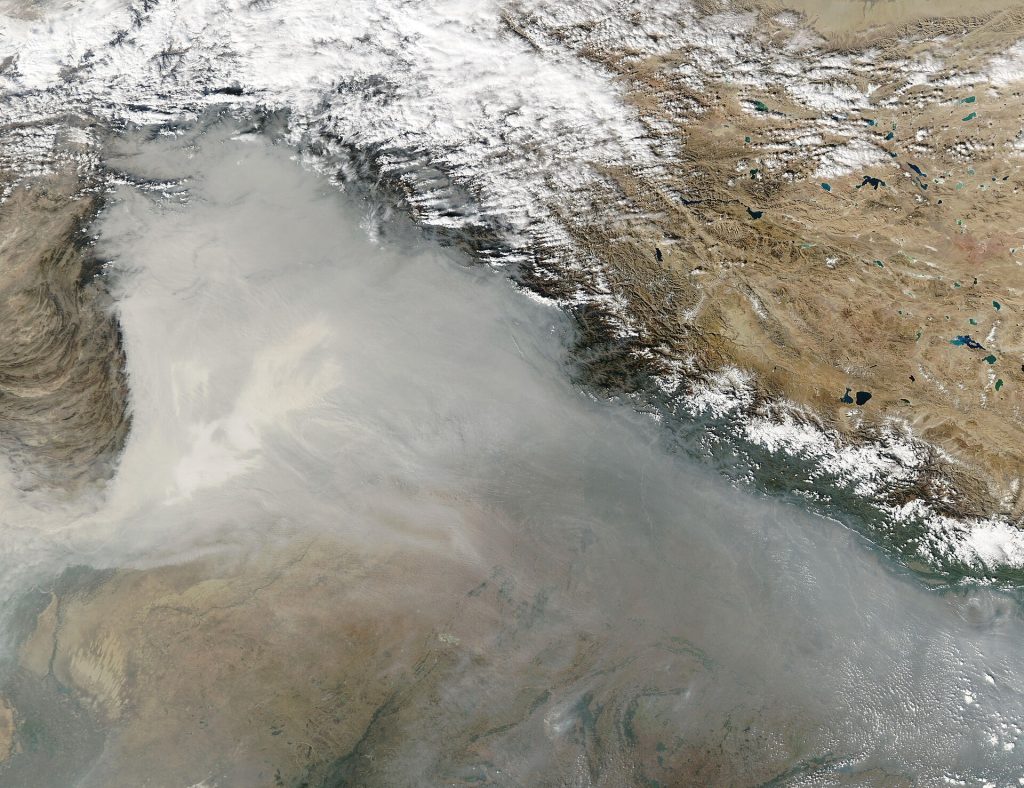
Lahore smog season: how to protect your health
Lahore smog season: how to protect your health
On Thursday morning, 29 October 2026, Lahore was the most polluted major city in the world. Between 10 and 11 in the morning, the city’s Air Quality Index (AQI) hit 419 — anything above 300 is classed as hazardous. The next city on the list, Cairo, was at 274. The air got worse again on Monday 2 November, when Lahore’s AQI reached 535 in the morning and the city again topped the world’s most-polluted list.
It was not a one-day spike. The day before, the citywide AQI stood at 358, with Allama Iqbal Town recording 605. By the evening of Saturday 31 October, the reading had eased to 192 — still unhealthy. And the season has barely begun: smog runs mainly from October to February, and the worst weeks usually come in November and December.
This guide explains, in plain English, what smog is, why Lahore’s air is so bad, what it does to your health, and what you can actually do about it.
What happened this week
Readings change by the hour and by neighbourhood, so these are snapshots, not full-day averages:
| Day | What was recorded |
|---|---|
| Wednesday 28 October | Citywide AQI 358; Allama Iqbal Town recorded 605. |
| Thursday 29 October, 10–11am | AQI 419 — the worst of any major city in the world at that hour (IQAir). The Punjab dashboard put Lahore at 324 that morning, and Kasur at 348. |
| Friday 30 October, morning | Fine-particle pollution (PM2.5) reached 254 micrograms per cubic metre. |
| Saturday 31 October, evening | AQI 192, classed as unhealthy, with PM2.5 the main pollutant. |
| Monday 2 November, morning | AQI 530–535, PM2.5 343 µg/m³ — Lahore again the world’s most polluted major city (IQAir, via Dawn). Gujranwala was higher still, at 606, later 675. |
| Tuesday 3 November, early morning | AQI 447 — Lahore again the world’s most polluted major city (IQAir, via Reuters). PM2.5 was 60 times the WHO annual guideline. |
The smog is not only Lahore’s problem. On Thursday 29 October, the Punjab dashboard showed Faisalabad at 290, Nankana Sahib at 261, Hafizabad at 250, Sahiwal at 210, Sheikhupura at 205, Jhang at 203 and Rajanpur at 201.
Schools in Lahore stopped outdoor activities on Tuesday 27 October, but as of Friday 30 October the Punjab government had not announced any school closures.
What smog actually is
Smog is a mix of smoke and fog — but that simple name hides what is really in it: fine dust, smoke from vehicles and factories, fumes from brick kilns, and gases such as nitrogen oxides and sulphur dioxide.
The most dangerous part is PM2.5 — particles so small (less than 2.5 micrometres across, about 30 times thinner than a human hair) that they pass deep into your lungs and can enter your bloodstream. When millions of them hang in the air, the sky turns grey-brown and the sun looks dim.
Smog is worst in the morning. On cold, still autumn nights, a layer of cool air sits close to the ground and acts like a lid, trapping pollution underneath it — a temperature inversion. The wind is weak (on Wednesday 28 October it was just 5 kilometres per hour), the air is damp, and the pollution has nowhere to go. That is why the worst readings usually come in the early morning, and the air often feels a little better by the afternoon.
Why Lahore’s air is so bad
A major new report puts numbers on the problem. The Pakistan Air Quality Initiative (PAQI) has published the country’s first unified, multi-sector study of air pollution, “Unveiling Pakistan’s Air Pollution: A National Landscape Report on Health Risks, Sources, and Solutions”, bringing together ground readings, satellite data and figures on fuel, vehicles and industry for Lahore, Karachi, Islamabad-Rawalpindi and Peshawar.
Its findings for Lahore are stark: the city’s average PM2.5 level over the year is above 110 micrograms per cubic metre — more than 22 times the World Health Organization’s recommended limit of 5. Vehicles are the biggest single source of Lahore’s PM2.5, at 35 per cent of primary emissions, followed by industry at 28 per cent and brick kilns at 17 per cent. Better controls could cut some pollutants by up to half, the report found.
October also brought a warning about ozone: on 1 October, an analysis by the European Union’s Copernicus Atmosphere Monitoring Service described Lahore’s ozone levels as extremely poor. Ozone irritates the lungs and eyes, and adds to the damage on smoggy days.
And the problem is not new. In November 2024, Lahore’s AQI went above 1,100, and schools and government offices were closed in 18 districts of Punjab. The pattern repeats every winter.
What the air does to your health
The PAQI report’s health findings are the most important part of the story. Air pollution cuts the average Pakistani’s life expectancy by about 3.9 years, contributes to around 128,000 premature deaths every year, and costs the country about 6.5 per cent of its GDP in lost health, lost work and medical costs. In Lahore, a lifetime of breathing this air could cut life expectancy by up to seven years.
Those are long-term, population-level numbers — what happens to a whole city over years, not what one bad day does to one person. But bad days matter too. A global study published in October 2026 in The Lancet Planetary Health, covering nearly 350 million hospital records across six countries, found that short spikes in PM2.5 were linked to more hospital admissions for up to three weeks afterwards — not only for breathing problems, but across a wide range of conditions.
Who is most at risk? Children, whose lungs are still growing and who breathe faster than adults; older people; pregnant women; and anyone who already has asthma, heart disease or another lung condition. If you fall into one of these groups, the steps below matter even more.
How to read the AQI
The Air Quality Index is a single number that sums up how clean or dirty the air is. The scale most commonly used in Pakistan is the US AQI scale:
| AQI | What it means | What to do |
|---|---|---|
| 0–50 | Good | Enjoy the outdoors. |
| 51–100 | Moderate | Fine for most people; unusually sensitive people should watch for symptoms. |
| 101–150 | Unhealthy for sensitive groups | Children, older people and people with asthma or heart disease should cut back on long outdoor activity. |
| 151–200 | Unhealthy | Everyone should reduce long or heavy outdoor activity. |
| 201–300 | Very unhealthy | Avoid outdoor activity; keep windows closed. |
| Above 300 | Hazardous | Stay indoors as much as possible. |
Two things to remember. First, the number changes through the day — mornings are usually worst, and the air often improves by afternoon. Second, different monitors give different numbers because they measure at different places and times: on 29 October, IQAir put Lahore at 419 while the Punjab dashboard said 324. Both meant the same thing — hazardous. If the reading is above 150, take it seriously; above 300, stay inside.
The Punjab Environmental Protection Agency publishes a live AQI dashboard, and international sites such as weather.com and IQAir publish live readings for Lahore. Check every morning before you plan your day, and again before the children go out.
What you can do: a step-by-step plan
You cannot clean Lahore’s air by yourself. But you can cut how much of it you breathe. Here is a practical plan, from the Punjab EPA’s own health advice and general public-health guidance.
1. Check the AQI every morning
Make it a habit, like checking the weather. Above 150, plan an indoor day; above 300, treat it like a storm day and stay inside unless you must go out.
2. Keep the dirty air out of your home
When the AQI is above 150, keep windows and doors closed. If you have an air purifier, run it in the room where you spend the most time, especially the bedroom at night. Avoid burning rubbish, wood or dung inside the house, and avoid incense and mosquito coils on bad days — they add smoke to the air you breathe indoors.
3. Wear a proper mask outdoors
On bad-air days, a cloth mask or surgical mask does very little against PM2.5 — the particles pass straight through. What works is a well-fitting N95 or KN95 respirator, designed to filter fine particles. It must fit tightly around your nose and mouth, with no gaps at the sides. Children need child-sized masks — an adult mask that gaps at the cheeks does not protect a child. Replace a mask when it becomes damp, dirty or hard to breathe through.
4. Move exercise indoors
Do not jog, cycle or play outdoor sports when the AQI is above 150. Breathing hard pulls far more polluted air deep into your lungs than sitting still does. Move your walk or workout indoors, or wait for the afternoon, when the air is usually better. Children should not have outdoor games or practice on days above 200.
5. Take extra care of children and older people
Keep children indoors on hazardous days, and make sure their school knows you expect outdoor activities to be cancelled when the air is bad — Lahore’s schools already stopped them on Tuesday 27 October. Older relatives should avoid morning walks when the AQI is high; a walk inside the house or in a covered area is safer. If anyone in the family uses an inhaler or other breathing medicine, make sure it is in date, full and easy to find.
6. Drive carefully in smog
Smog is not only a health problem — it is a road danger. Visibility can drop to a few metres. Use your headlights, fog lights and indicators, keep your speed down, and leave extra space between vehicles. Police directed on 7 October 2026 that all vehicles, including motorcycles, must have working headlights, rear lights, fog lights and indicators during the smog checks. Avoid unnecessary travel in the early morning, when smog is thickest.
7. Eat and drink normally — and don’t smoke
No food or drink “cleans” smog from your lungs. Eating well and drinking enough water is sensible, but no home remedy replaces keeping the dirty air out. If you smoke, smoggy days are the worst time to do it — smoking and dirty air damage the lungs together.
When to see a doctor
Most smog symptoms — a scratchy throat, itchy eyes, a mild cough — clear up when the air improves. But some signs mean you should get medical help and not wait for the smog to pass: breathlessness, wheezing or a tight chest; a cough lasting more than two weeks; a cough with fever; chest pain, or lips and fingernails turning blue; a child breathing fast, struggling to breathe, or unusually drowsy. If you have asthma and your inhaler is not helping as usual, or you are using it much more often than normal, see a doctor the same day. These are general warning signs, not a diagnosis — only a doctor who examines you can tell you what is wrong.
What the government is doing
Individual action helps, but the smog will only clear when the sources are controlled. In a month-long campaign from 28 September to 27 October, environment teams inspected 11,580 brick kilns (demolishing 197, sealing 163) and 6,650 industrial sites (sealing 191), with fines of about Rs69 million, according to Dawn. Climate Change Minister Musadik Masood Malik announced a $10 million allocation for a dedicated Clean Air Fund at the Pakistan National Clean Air Conference in Islamabad.
On schools: outdoor activities were stopped on Tuesday 27 October. As of Friday 30 October, no closures had been announced. If one comes, it starts as an order from the Director General of the Environmental Protection Agency, and the School Education Department then issues its own notification. Both are posted on the official websites — check there, not forwarded messages on social media. That was still the position on 30 October; check the Punjab EPA and School Education Department notices for any update before relying on it.
The longer fix is in the PAQI report: better controls on vehicles, industry and kilns could cut some pollutants by up to half. That is the work of years, not days.
Frequently asked questions
Is it safe to go outside when the AQI is 150?
It is unhealthy, especially for children, older people and anyone with asthma or heart disease. Short, necessary trips are fine with a proper N95/KN95 mask, but avoid long outdoor activity and exercise. Check the reading before you go.
Do cloth masks or surgical masks help against smog?
Very little. PM2.5 particles pass through them easily. A well-fitting N95 or KN95 respirator is the type that filters fine particles. Make sure it seals around your nose and mouth.
Can I exercise outdoors in the morning?
Mornings are usually the worst time, because cold, still air traps pollution near the ground. If the AQI is above 150, exercise indoors. If you must go out, wait for the afternoon, when readings are usually lower.
Are schools closed because of the smog?
Not as of Friday 30 October 2026. Schools in Lahore stopped outdoor activities on 27 October, but no closure had been announced. Closures are ordered by the Environmental Protection Agency and notified by the School Education Department — check their official websites rather than rumours on social media.
Will the smog go away soon?
Smog season runs mainly from October to February, and the worst weeks are usually in November and December. Rain and wind clear the air, but there is no fixed end date. In November 2024, readings went above 1,100 and schools and government offices were closed in 18 districts.
Conclusion
Lahore’s smog season has started badly. The city was the most polluted major city in the world on 29 October, with an AQI of 419, and the new PAQI report says the air is quietly cutting years off people’s lives — about 3.9 years on average across Pakistan, up to seven years in Lahore.
You cannot fix the air alone. But you can protect yourself and your family: check the AQI every morning, stay indoors when it is above 150, keep windows closed, wear a proper N95 or KN95 mask when you must go out, move exercise indoors, and take extra care of children, older people and anyone with breathing problems. If breathing becomes difficult, a cough lasts more than two weeks, or a cough comes with fever, see a doctor — do not wait for the sky to clear.
The long-term answer is cleaner vehicles, cleaner industry and cleaner kilns. Until then, the morning check and the closed window are the best protection most of us have.
This article is for general information and education only. It is not medical advice. If you have symptoms or a health condition, please see a doctor.
Sources
- IQAir via Dawn / The Express Tribune, 29 October 2026 — Lahore AQI 419, world’s most polluted major city (10–11am window) — https://www.latestly.com/agency-news/world-news-lahore-worlds-most-polluted-city-as-air-pollution-blamed-for-cutting-life-expectancy-in-pakistan-7661377.html
- Zark News, “Lahore’s Air Turned Hazardous This Week; Schools Await a Closure Call” (30 October 2026) — https://zarknews.com/punjab-smog-lahore-air-quality/
- LHR Times, “Lahore Chokes On 419 AQI As Experts Fault Missed Artificial Rain” — https://www.lhrtimes.com/2026/10/29/lahore-chokes-on-419-aqi-as-experts-fault-missed-artificial-rain/
- Green Post, “Lahore Smog Crisis: Are Schools About to Close?” (30 October 2026) — https://greenpost.com.pk/lahore-smog-crisis-are-schools-about-to-closelahore-smog-school-closures-update/
- Bloom Pakistan, “Lahore AQI Hits 358! Is Punjab Planning to Close Schools?” (30 October 2026) — https://bloompakistan.com/lahore-aqi-358-punjab-school-closures-smog/
- Weather.com, Lahore live conditions, 31 October 2026 (AQI 192, Unhealthy, PM2.5) — https://weather.com/pk/city/lahore/hourbyhour
- IANS, “Lahore world’s most polluted city as air pollution blamed for cutting life expectancy in Pakistan” (29 October 2026) — https://ianslive.in/lahore-worlds-most-polluted-city-as-air-pollution-blamed-for-cutting-life-expectancy-in-pakistan–20261029170540
- Desi Vibe, “Pakistan Air Pollution Health Effects: Smog Cutting Life Expectancy by Nearly 4 Years, New Report Finds” (30 October 2026) — https://desivibe.com/2026/10/30/pakistan-air-pollution-health-effects-smog-cutting-life-expectancy-by-nearly-4-years-new-report-finds/
- Asia Daily, “Pakistan Air Pollution Cuts Lives by 3.9 Years” — https://asiadaily.org/news/16817/
- Punjab EPA health advisory (via Zark News, 30 October 2026) — https://zarknews.com/punjab-smog-lahore-air-quality/
- Rabbit ROI, “Smog in Lahore 2026” (November 2024 episode: AQI above 1,100, closures in 18 districts) — https://www.rabbitroi.com/blog/smog-lahore-online-sellers
- UrduPure, “Lahore Smog 2026: What to Expect This Season” (smog season October–February) — https://www.urdupure.com/2026/10/13/lahore-smog-2026-what-to-expect-this-season-what-went-wrong-last-year-and-what-punjab-is-doing
- Dawn via KhabarWire, “Lahore AQI hits 535 as Punjab smog turns hazardous” (2 Nov 2026) — https://khabarwire.com/blog/lahore-aqi-535-punjab-smog-2026-11-02/
- 247News, “Lahore Air Quality Reaches Hazardous Levels as AQI Surpasses 530” (2 Nov 2026) — https://247news.com.pk/?p=33726
- Weather.com, Lahore live AQI (checked 3 Nov 2026, AQI 222) — https://weather.com/pk/city/lahore/hourbyhour
- Reuters, ‘Lahore, Delhi choke as air pollution spikes in parts of South Asia’ (3 Nov 2026) — https://kwsn.com/2026/11/03/lahore-delhi-choke-as-air-pollution-spikes-in-parts-of-south-asia/

Pingback: Delhi's Toxic Winter Air Is Back as Pollution Soars Ahead of Diwali - Findivoza