
Pakistan Foils Infiltration Bid in Kurram as Afghan Taliban Fire Across the Border
Pakistani security forces have stopped a group of militants trying to cross into Pakistan from Afghanistan in the Kurram district of Khyber Pakhtunkhwa, according to security sources. Afghan Taliban forces then opened fire on Pakistani positions, and Pakistani troops answered with heavy weapons.
The incident happened on Thursday, 5 November 2026, in the Shaluzan sector of Kurram, a mountainous district that sits directly on the Pakistan-Afghanistan border. It is the latest in a series of clashes along the border in recent weeks, and it comes at a time when relations between Pakistan and the Afghan Taliban government are at one of their lowest points in years.
All of the details so far come from unnamed security sources quoted by Pakistani state media and newspapers. They have not been independently verified, and no official statement from the military’s media wing, the ISPR, had been reported at the time of writing. That matters: in a conflict where both sides tell very different stories, the first reports of any clash are almost always one side’s account. This article reports what the sources said, and says clearly where the facts are still unclear.
At a glance
- What happened: Pakistani security forces foiled an infiltration attempt by Fitna al-Khawarij militants in the Shaluzan sector of Kurram district on Thursday, 5 November 2026, security sources said.
- The firing: Afghan Taliban forces then opened fire on Pakistani posts, according to the sources. Pakistani forces responded immediately with heavy weapons.
- The damage: Afghan Taliban posts were reported to have suffered heavy damage in the retaliation, the sources said.
- What is not confirmed: The details come from security sources and have not been independently confirmed. No casualty figures for this incident have been reported.
What happened in Shaluzan
According to security sources cited by Radio Pakistan and reported by The Express Tribune, troops deployed along the border detected the movement of a group of militants and moved to stop them from crossing into Pakistani territory. The Daily Times described the group as heavily armed and said border guards spotted its movement early.
The sources said the militants belong to Fitna al-Khawarij, the name Pakistani authorities use for the outlawed Tehreek-e-Taliban Pakistan (TTP) and affiliated groups.
As Pakistani forces blocked the group, Afghan Taliban positions across the border opened fire on Pakistani posts. The sources described the firing as unprovoked and said it was meant to give cover to the militants and help them cross. Pakistani forces responded immediately with heavy weapons, the sources said.
The infiltration attempt failed, and Afghan Taliban posts suffered heavy damage in the retaliation, according to the same sources. No deaths or injuries on either side have been reported for this incident, and neither the Afghan Taliban government nor its defence ministry had publicly commented on the clash at the time of writing.
Who are Fitna al-Khawarij?
The name needs explaining, because it appears in almost every Pakistani official statement about the border fighting.
Fitna al-Khawarij is the term the Pakistani state uses for the Tehreek-e-Taliban Pakistan, usually called the TTP, and the groups allied with it. The TTP is a Pakistani militant group, separate from the Afghan Taliban, which has fought the Pakistani state for years. Pakistan has long accused the Afghan Taliban government of allowing the TTP to operate from Afghan soil. Kabul denies this.
That accusation is the heart of the dispute between the two countries. Islamabad says the Afghan Taliban regime has failed to stop terrorist groups from using Afghan territory to launch attacks inside Pakistan. The Afghan Taliban government says it does not allow its soil to be used against any country, and has in turn accused Pakistan of violating Afghan territory with airstrikes.
When Pakistani officials and state media report a border clash, they almost always describe it in the same pattern: militants try to cross, Afghan Taliban posts fire to help them, Pakistani forces respond. The 5 November incident follows that pattern exactly. That does not mean the account is wrong, but it does mean readers should treat the details with care until more evidence appears.
Where is Kurram, and why does it keep making the news?
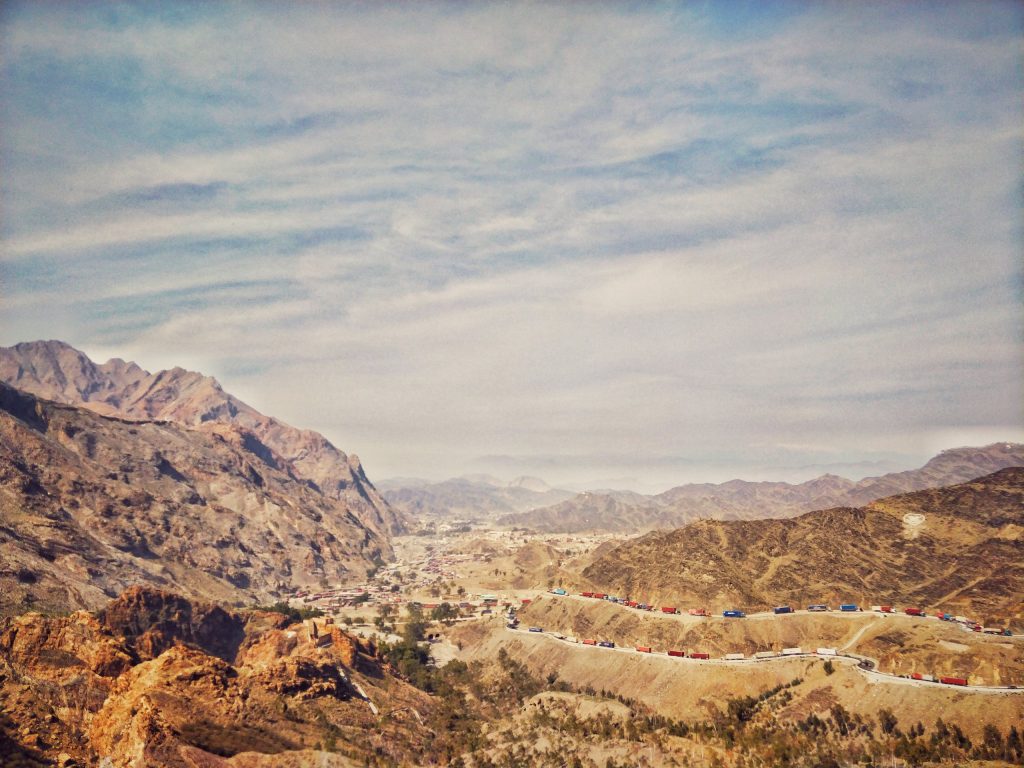
Kurram is a district in Khyber Pakhtunkhwa, in Pakistan’s north-west, and it shares a long stretch of border with Afghanistan. Its main town is Parachinar. The district is mountainous, and the border runs through remote valleys where patrols and crossing points are hard to watch around the clock.
Kurram is also a place with a long history of its own troubles. It has seen sectarian violence between Sunni and Shia communities over many years, as well as tribal disputes over land and roads. That history makes the district more fragile than most border areas: when outside fighting arrives, it lands in communities that are already under strain.
The border itself is part of the problem. Pakistan and Afghanistan share a frontier of about 2,600 kilometres, known as the Durand Line, drawn in the 19th century. Afghanistan has never formally accepted it as an international border. That disagreement has never been settled, and it sits underneath every clash: the two sides do not even fully agree on where one country ends and the other begins.
For the people who live along the line, the fighting has a very practical cost. Homes, fields and shops sit within range of mortars and artillery. When the guns start, families move, schools close, and traders stop crossing. The border is also a lifeline: legal trade and the movement of people across it support whole towns on both sides.
A pattern, not a one-off
The Shaluzan incident did not come out of nowhere. It is the latest in a run of clashes in the same border region over the past month:
- 10 October: The military said it detected a group of militants approaching the border from Afghanistan in Kurram. In a statement issued on 11 October, the ISPR said 12 militants and Afghan Taliban personnel were killed and one Pakistani soldier, Naib Subedar Hidayat Aman, 40, from Ghizer district, was martyred in the exchange of fire. The ISPR said the incident showed the Afghan Taliban regime was failing to stop terrorist groups from using Afghan soil, and accused it of facilitating cross-border terrorism.
- 17 October: Pakistani forces and Afghan Taliban fighters exchanged fire for hours in Kurram district, the Associated Press reported, citing three Pakistani security officials. Pakistani state media said troops destroyed Taliban posts and killed an unspecified number of TTP militants who were trying to cross.
- 27 October: Afghan Taliban fire hit border posts and civilian areas in Angoor Adda, in Lower South Waziristan. A mortar round struck a residential compound on the Pakistani side, killing one civilian and injuring five members of the same family, according to local officials. Pakistan destroyed Afghan Taliban checkpoints in response.
- 30 October: The army destroyed several Afghan Taliban posts in areas next to South Waziristan and Parachinar, The Express Tribune reported.
- 1 November: Security forces responded to firing from Afghan border posts near Angoor Adda in South Waziristan, and Afghan Taliban personnel abandoned their positions, according to the same report.
That is five reported incidents in less than four weeks, all in Kurram and South Waziristan, and all following the same pattern: an infiltration attempt or firing from Afghan posts, followed by a Pakistani response. The repetition is the story. The border is not experiencing one clash; it is experiencing a cycle.
The violence is not limited to the border itself. Pakistan recorded its highest monthly number of militant attacks in 12 years during September 2026, according to data compiled by the Pakistan Institute for Conflict and Security Studies, an Islamabad-based think tank that tracks anti-state violence. And the United Nations mission in Afghanistan said in September that it had documented more than 1,100 civilian casualties from cross-border violence in Afghanistan this year.
The wider conflict behind the clash
To understand why the border keeps flaring up, it helps to know how the two countries got here.
Fighting between Pakistan and Afghanistan broke out in a serious way in October 2025, when both sides reported dozens of personnel killed in overnight clashes. A ceasefire was then brokered in Doha, with Qatar and Türkiye acting as mediators. Follow-up talks in Istanbul in November 2025 collapsed after four days without resolving the core dispute: Pakistan’s demand that the Taliban government act against TTP sanctuaries on Afghan soil.
Tensions rose sharply again in February 2026. A suicide bombing at a Shia mosque in Islamabad killed 31 people and was claimed by ISIS-Khorasan, a rival militant group. Soon after, Pakistan declared what its defence minister called “open war” on the Afghan Taliban and launched an operation named Ghazab lil-Haq, carrying out airstrikes on militant hideouts inside Afghanistan.
Since then, mediation efforts have produced only short pauses. A week-long ceasefire was agreed on the eve of Eidul Fitr on 18 March 2026, after requests from Türkiye, Saudi Arabia and Qatar. In April, China hosted talks in Ürümqi, where Pakistan demanded that Kabul formally declare the TTP a terrorist organisation, dismantle its infrastructure and provide verifiable proof. The two sides gave conflicting accounts of whether any agreement was reached. Uzbekistan hosted informal talks in Termez in June. The ceasefires around the two Eids each held only briefly before fighting resumed.
In October 2026, as border clashes flared again, President Asif Ali Zardari declared a state of emergency in Khyber Pakhtunkhwa and suspended the provincial government, which is led by former prime minister Imran Khan’s PTI party. The emergency underlined how seriously Islamabad now treats the border conflict: it is no longer just a security problem in remote districts, but a crisis affecting the governance of an entire province.
The eighth round of the Moscow Format consultations on Afghanistan, held on 5 October 2026, closed without a joint statement after Kabul’s Taliban delegation objected to draft language linking Afghanistan to terrorism, according to Russia’s presidential envoy Zamir Kabulov. Within days, the fighting had flared again.
What it means for people living on the border
For most Pakistanis, the border clashes are news from far away. For the people of Kurram and South Waziristan, they are part of daily life.
When firing starts, the first to suffer are civilians. The 27 October incident at Angoor Adda is a reminder: a mortar round hit a family home, killing one person and wounding five members of the same family. Cross-border shelling does not distinguish between a border post and a house.
There is also an economic cost. Border crossings are how goods and people move between the two countries, and every closure or round of fighting disrupts trade. Traders lose income, prices rise in border towns, and families that depend on cross-border work are left waiting. The UN’s figure of more than 1,100 civilian casualties from cross-border violence in Afghanistan this year shows that the human cost falls heavily on ordinary people on both sides.
There is a political cost too. Each clash hardens positions. Pakistan’s government points to the attacks as proof that Kabul is not keeping its promises. Kabul points to Pakistani airstrikes inside Afghanistan as proof that Islamabad does not respect its sovereignty. With each round of firing, the space for a negotiated settlement gets smaller.
What happens next
Several things are worth watching in the coming days:
- An official statement: The ISPR has not yet issued a statement on the 5 November incident. If it does, it will usually confirm or add to the details from security sources, including any casualties.
- The Afghan response: The Afghan Taliban government has not commented on this clash. Whether it denies the account, confirms the firing, or stays silent will shape what happens next.
- Whether the firing continues: The pattern of the last month suggests more incidents are likely in Kurram and South Waziristan. If the firing spreads to other crossing points, such as Torkham or Chaman, that would signal a wider escalation.
- Diplomacy: Qatar and Türkiye, which mediated the October 2025 ceasefire, are the most likely countries to be approached again if the two governments want to calm things down. Neither has publicly intervened in the latest clashes. A higher-level meeting between the two sides had been expected in Istanbul, but no new date has been confirmed.
- The state of emergency: Khyber Pakhtunkhwa remains under a state of emergency declared on 11 October. How the provincial government functions under that emergency, and for how long, will affect everything from policing to public services in the border districts.
For now, the border is quiet again after the Shaluzan clash, as far as public reports go. But the pattern of the past month gives little reason to think it will stay quiet for long.
Frequently asked questions
What happened in Kurram on 5 November 2026?
Pakistani security forces stopped a group of Fitna al-Khawarij militants trying to cross into Pakistan from Afghanistan in the Shaluzan sector of Kurram district, according to security sources. Afghan Taliban forces then opened fire on Pakistani posts, and Pakistani forces responded with heavy weapons. Afghan Taliban posts were reported to have suffered heavy damage. The details come from security sources and have not been independently verified.
Who are Fitna al-Khawarij?
It is the name Pakistani authorities use for the outlawed Tehreek-e-Taliban Pakistan (TTP) and affiliated groups. The TTP is a Pakistani militant group that Pakistan accuses of operating from Afghan soil. Kabul denies this.
Where is Kurram district?
Kurram is a district in Khyber Pakhtunkhwa, in north-west Pakistan, along the border with Afghanistan. Its main town is Parachinar. The district has seen repeated border clashes in recent weeks, as well as a long history of sectarian and tribal violence.
How long has the Pakistan-Afghanistan border conflict been going on?
Serious fighting broke out in October 2025, followed by a ceasefire brokered in Doha by Qatar and Türkiye. Talks in Istanbul later collapsed, and tensions rose again in February 2026, when Pakistan declared “open war” and launched Operation Ghazab lil-Haq. Short ceasefires around the Eid holidays held only briefly. Clashes have continued through October and November 2026.
What is the Durand Line?
The Durand Line is the roughly 2,600-kilometre border between Pakistan and Afghanistan, drawn in the 19th century. Afghanistan has never formally accepted it as an international border, and the disagreement remains unresolved.
Has there been an official statement about the 5 November clash?
No ISPR statement had been reported at the time of writing. The details so far come from unnamed security sources quoted by Radio Pakistan and reported by several Pakistani newspapers. Those details have not been independently verified.
This article is for general information and education only. It is not legal or financial advice.
Sources
- TGI Pakistan, “Security Forces Foil Infiltration Attempt in Kurram, Respond to Afghan Taliban Firing” (6 November 2026) — https://tgipk.com/2026/11/06/security-forces-foil-infiltration-attempt-in-kurram-respond-to-afghan-taliban-firing/
- Khabr.pk, “Kurram infiltration attempt foiled, Afghan border” — https://khabr.pk/en/news/kurram-infiltration-attempt-foiled-afghan-border
- Pakistani News, “Pakistani forces foil infiltration bid at Shalozan sector along Pak-Afghan border, say security sources” — https://pakistaninews.net/pakistani-forces-foil-infiltration-bid-at-shalozan-sector-along-pak-afghan-border-say-security-sources/
- The News, “Security forces kill 12 terrorists, Afghan Taliban personnel in foiled Kurram infiltration bid” (10 October incident) — https://www.thenews.pk/story/1442395-security-forces-kill-12-terrorists-afghan-taliban-personnel-in-foiled-kurram-infiltration-bid
- The News, “Unprovoked Afghan Taliban firing in Kurram met with strong response” (17 October incident — NOT a source for the 5 November incident) — https://www.thenews.pk/story/1443473-unprovoked-afghan-taliban-firing-in-kurram-met-with-strong-response
- Defense and Tech, “Pakistan-Afghanistan war latest October 2026” (background timeline) — https://defenseandtech.com/pakistan-afghanistan-war-latest-october-2026/
- Defense and Tech, “Pakistan-Afghanistan Angoor Adda border clash October 2026” (background) — https://defenseandtech.com/pakistan-afghanistan-angoor-adda-border-clash-october-2026/
