
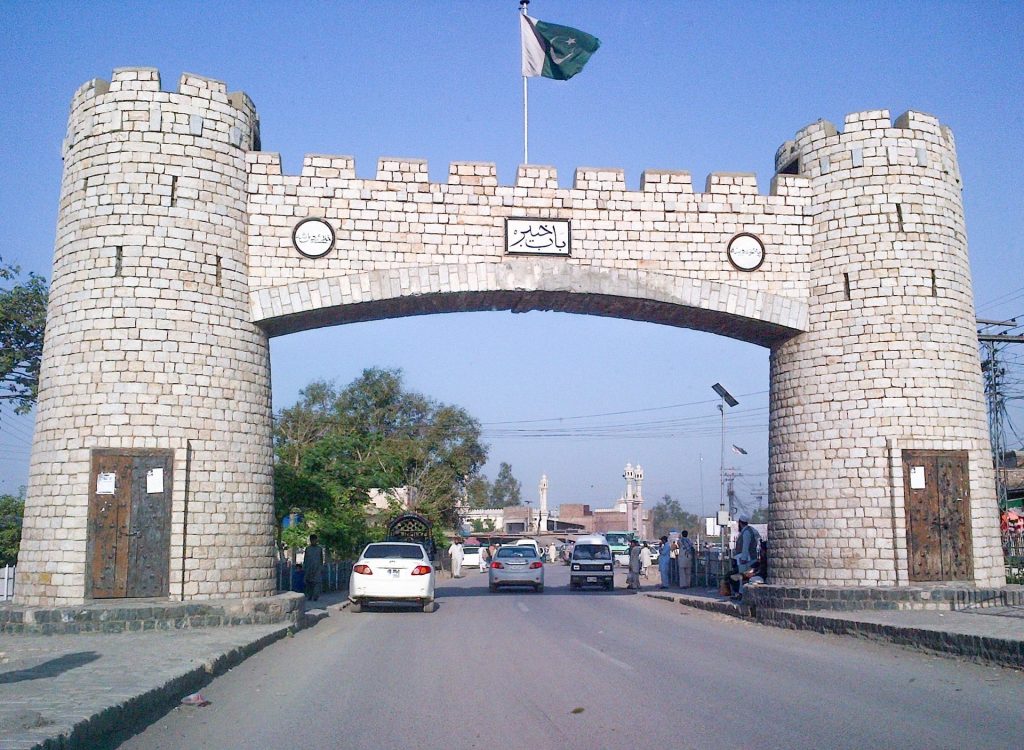
Peshawar High Court Drops Challenges to Khyber Pakhtunkhwa Emergency and Governor’s Rule: What Happened and What It Means
The Peshawar High Court has removed the legal challenges to the state of emergency and governor’s rule in Khyber Pakhtunkhwa from its hearing lists, closing off — for now — the main court route used to question the extraordinary measures imposed in the province last month.
On Saturday, 7 November 2026, the court struck around 105 petitions from its cause lists for 10 November. The petitions challenged the emergency and governor’s rule imposed on 11 October, and also sought the release of the province’s removed chief minister, the provincial assembly speaker, and scores of detained political workers.
The move follows an order from the Federal Constitutional Court, which has taken these cases out of the Peshawar High Court’s hands. For the people of Khyber Pakhtunkhwa, it means the emergency and governor’s rule will now stand without a hearing in their own province’s high court — and any challenge will have to go to a different forum.
Here is what happened, why the court acted, and what it means next.
What happened on Saturday
The Peshawar High Court (PHC) removed about 105 petitions from its cause lists for Tuesday, 10 November, according to Dawn. The deleted petitions fell into three groups:
- Challenges to the emergency and governor’s rule — petitions arguing that the proclamations issued on 11 October under Articles 232 and 234 of the Constitution were unlawful.
- Petitions about detained leaders — pleas seeking the recovery or release of Chief Minister Sohail Afridi, Provincial Assembly Speaker Babar Saleem Swati, Pakistan Tehreek-e-Insaf (PTI) provincial president Junaid Akbar, and scores of lawmakers, leaders and workers.
- Petitions against detentions under the Maintenance of Public Order (MPO) Ordinance — challenges to arrests made under Section 3 of the ordinance.
The petitions had been filed by some of the most prominent names in the opposition: PTI chairman Barrister Gohar Ali Khan, National Assembly opposition leader Mahmood Khan Achakzai, the Khyber Pakhtunkhwa Bar Council, National Democratic Movement chairman Mohsin Dawar, MNA Shandana Gulzar, and leaders of the Tehreek Tahafuz-i-Aeen Pakistan alliance.
The Express Tribune reported that the petitions were removed from the cause list a day after the Federal Constitutional Court (FCC) stripped the high court of jurisdiction over cases filed after 12 October, including cases about the emergency and governor’s rule.
Why the Peshawar High Court acted
The high court did not decide the petitions on their merits. It removed them because a higher court told it to stop hearing them.
The chain of events began with the high court itself. In the days before the removal, the Peshawar High Court had granted bail to 23 PTI workers arrested under Section 3 of the MPO Ordinance, and it had asked the governor and the provincial assembly speaker to respond to the challenge against governor’s rule.
Then the Federal Constitutional Court stepped in. On 5 November, a two-member FCC bench headed by Chief Justice Aminuddin Khan and comprising Justice Aamer Farooq declared that, since the armed forces had been called to act in aid of civil power across the whole province under the 11 October order, proceedings before the Peshawar High Court under Article 199 of the Constitution, started on or after 12 October, “shall, in terms of Clause 4 of Article 245, remain suspended.”
The FCC also decided it would not entertain fresh petitions itself, and that petitions should be returned to the people who filed them, with directions to approach the “appropriate” forum.
Acting on that restraining order, the Peshawar High Court’s administrative committee issued a formal notification: no writ petitions filed on or after 12 October would be fixed for hearing, and petitions filed under Article 199 would be returned to the petitioners.
In plain terms, the high court has been told it cannot hear these cases at all — and the petitioners have been told to go elsewhere, without being told exactly where.
What is the emergency in Khyber Pakhtunkhwa?
To understand why this matters, it helps to go back to 11 October, when the emergency began.
On that day, President Asif Ali Zardari approved Prime Minister Shehbaz Sharif’s advice to impose a state of emergency in Khyber Pakhtunkhwa under Article 232 of the Constitution, and governor’s rule under Article 234. The federal government said the province’s security situation had deteriorated, terrorist attacks had increased, and the provincial administration had failed to cooperate effectively in counter-terrorism efforts. The cabinet described the provincial government’s stance as a “deliberate disengagement from the fight against terrorism.”
The measures had immediate and far-reaching effects:
- The elected government was removed. Chief Minister Sohail Afridi and his cabinet were removed from office, and executive powers were transferred to Governor Faisal Karim Kundi.
- An advisory council took charge. An 11-member technocratic advisory council was formed to assist the governor in running the province.
- The army was deployed. On the same day, the Interior Ministry issued an order under Article 245 of the Constitution authorising the deployment of Pakistan Army troops and assets in aid of civil power in the province.
- Emergency measures applied in 12 districts. The emergency was confined to twelve districts, largely the former tribal areas and the southern districts of Bannu, Dera Ismail Khan, Tank and Lakki Marwat, while the Hazara and Mardan divisions were exempt. Governor’s rule, by contrast, displaced the elected government across the entire province.
- Parliament gave its approval. On 15 October, a joint sitting of Parliament passed resolutions approving the imposition of the emergency and governor’s rule.
The PTI, which led the provincial government, rejected the federal government’s position and opposed the move. The decision followed weeks of tension between the Centre and the PTI-led provincial administration, and negotiations aimed at agreeing a joint strategy against terrorism.
Emergency and governor’s rule are not the same thing
The two measures are often mentioned together, but they do different things:
- Emergency (Article 232) allows the federal government to take extraordinary security measures in a province when it believes the security of Pakistan, or part of it, is threatened by war, external aggression or internal disturbance.
- Governor’s rule (Article 234) allows the President to direct the governor to take over the functions of the provincial government. It is the mechanism that actually removes the elected provincial government from power.
A proclamation of governor’s rule cannot stay in force for more than six months, and it ends after two months unless a joint sitting of Parliament approves it. In this case, Parliament approved it on 15 October, four days after it was imposed.
The security situation behind the decision
The federal government has consistently pointed to the worsening security situation in Khyber Pakhtunkhwa as the reason for the emergency.
The province has borne the heaviest burden of militancy in Pakistan this year. According to the Center for Research and Security Studies, 475 violence-linked fatalities were recorded in Khyber Pakhtunkhwa in the second quarter of 2026 — more than 61 per cent of the national total, and a rise of roughly 53 per cent on the previous quarter.
The federal government has also repeatedly accused the provincial administration of failing to cooperate adequately with the Centre on counter-terrorism, a charge the PTI rejects. The decision followed weeks of escalating confrontation over counter-terrorism policy, the PTI’s planned long march to Islamabad, and the province’s deteriorating security situation.
Governor’s rule has now been imposed in Khyber Pakhtunkhwa for the fourth time, after 1975, 1994 and 1999. Each earlier episode is remembered less for its security outcomes than for the political realignment that followed.
What has happened since the emergency was imposed
The emergency has already changed daily life and politics in the province in several ways:
- Local elections have been stopped. On 5 November, the Election Commission of Pakistan suspended all preparations for local government elections across Khyber Pakhtunkhwa. The commission acted after the federal government issued Order No. 3 on 4 November, which suspended Article 140-A of the Constitution — the article that provides for elected local governments — in every district of the province.
- Detentions have continued. Scores of PTI workers and leaders have been detained under the MPO Ordinance, and petitions challenging those detentions were among those removed from the high court’s lists on Saturday.
- The courts have been drawn into the dispute. The Federal Constitutional Court had already barred the Peshawar High Court from hearing cases about the detention of PTI workers on 5 November, before Saturday’s wider removal of petitions.
Meanwhile, the political opposition has been organising its response. Pakistan’s opposition parties have announced plans for an all-parties conference, as the dispute over the province continues to dominate national politics. You can read more about that in our earlier report: Pakistan Opposition to Hold All-Parties Conference Within 10 Days as Imran Khan’s Health Raises Alarm.
What it means for the people of Khyber Pakhtunkhwa
Saturday’s development matters for three reasons.
First, the courts in the province can no longer hear these cases. The Peshawar High Court was the natural forum for challenging the emergency, because it is the province’s own high court and the place where the affected people live. With its jurisdiction suspended for cases filed on or after 12 October, petitioners must now seek relief before forums designated by the Federal Constitutional Court — and the court has not yet made clear which forum that is.
Second, the emergency now faces no active legal challenge in the province. The petitions removed on Saturday were the main legal challenge to the proclamations. Until and unless a challenge succeeds somewhere else, the emergency and governor’s rule stand as they are.
Third, the dispute is now as much about the courts as about the emergency itself. The question of which court can hear a case about the emergency has become a separate legal battle, on top of the original question of whether the emergency itself was lawful. That adds another layer of uncertainty for everyone involved — the provincial government that was removed, the workers in detention, and the ordinary residents of the province.
What happens next
Several things are worth watching in the coming days:
- Where the petitioners go next. The petitioners have been told to approach the “appropriate” forum. Whether they file before the Federal Constitutional Court, or another forum, and whether that forum accepts the cases, will decide whether the emergency faces any judicial scrutiny at all.
- The detained leaders. The whereabouts and legal status of Chief Minister Sohail Afridi, Speaker Babar Saleem Swati and Junaid Akbar remain central to the dispute. Petitions seeking their recovery were among those removed from the cause list.
- The 10 November hearings. The petitions were removed from the cause lists for 10 November. What happens on that date — and whether any of the affected cases are listed anywhere — will show whether the legal challenge has moved or simply stopped.
- The local elections. The Election Commission has suspended all local government election preparations until further notice. There is no date yet for when, or whether, those elections will be held.
- The six-month clock. A proclamation of governor’s rule cannot last more than six months. With the emergency imposed on 11 October, that limit falls around 11 April 2027 — unless the measures are lifted sooner, or extended through further constitutional steps.
Frequently asked questions
What is governor’s rule in Khyber Pakhtunkhwa?
Governor’s rule is a constitutional arrangement under Article 234 under which the President directs the provincial governor to take over the functions of the provincial government. In Khyber Pakhtunkhwa, it was imposed on 11 October 2026, removing Chief Minister Sohail Afridi and his cabinet and transferring executive power to Governor Faisal Karim Kundi, assisted by an 11-member advisory council.
Why did the Peshawar High Court remove the petitions?
The court removed them because the Federal Constitutional Court ordered that proceedings before the high court under Article 199, started on or after 12 October, remain suspended while the armed forces are acting in aid of civil power in the province. The high court’s administrative committee then directed that no such petitions be fixed for hearing and that they be returned to the petitioners.
Can the emergency still be challenged in court?
The petitioners have been directed to approach the “appropriate” forum, and the Federal Constitutional Court has said the matters will fall under its jurisdiction. But the FCC has also said it will not entertain fresh petitions itself, so it is not yet clear where, or how, a challenge would be heard.
How long can the emergency and governor’s rule last?
A proclamation of governor’s rule cannot stay in force for more than six months. Parliament approved the proclamations on 15 October, so the measures can continue until around 11 April 2027 at the latest, unless they are lifted earlier.
Which districts are under emergency?
Emergency measures were imposed in 12 districts, largely the former tribal areas and the southern districts of Bannu, Dera Ismail Khan, Tank and Lakki Marwat. The Hazara and Mardan divisions are exempt from the emergency measures, although governor’s rule applies across the whole province.
Conclusion
The removal of around 105 petitions from the Peshawar High Court’s cause lists is the latest turn in a crisis that has now lasted almost a month. The emergency and governor’s rule imposed on 11 October remain in force, the elected provincial government remains out of office, and the province’s own high court can no longer hear challenges to any of it.
The question now is not only whether the emergency was lawful, but whether anyone will be allowed to ask that question in a court at all. The answer to that will shape what happens next in Khyber Pakhtunkhwa — and it will come, if it comes, from a forum the petitioners have not yet reached.
Sources
- https://www.dawn.com/news/2042896
- https://tribune.com.pk/story/2639153/phc-strikes-off-petitions-against-emergency-governors-rule
- https://arynews.tv/phc-removes-petitions-against-kp-emergency-from-cause-list
- https://www.nation.com.pk/05-Nov-2026/ecp-suspends-preparations-local-government-elections-across-khyber-pakhtunkhwa
- https://en.wikipedia.org/wiki/2026_Khyber_Pakhtunkhwa_state_of_emergency
- https://londondialogue.org/blurred-lines-federalism-and-provincial-autonomy-in-pakistan/
This article is for general information and education only. It is not legal or financial advice.

Pingback: Shehbaz Sharif Meets Nawaz Sharif at Jati Umra to Discuss KP Security, Politics and Economic Reforms - Findivoza