
Türkiye and Qatar Sign Mutual Defence Pact: What the Deal Means for the Gulf
Türkiye and Qatar have signed a mutual defence agreement, promising to stand together if either country faces an armed attack from outside. The deal, signed on Friday, 13 November 2026, in Istanbul, is the latest in a fast-growing web of defence pacts reshaping security in the Gulf — and it comes at a moment when tensions in the region are running high.
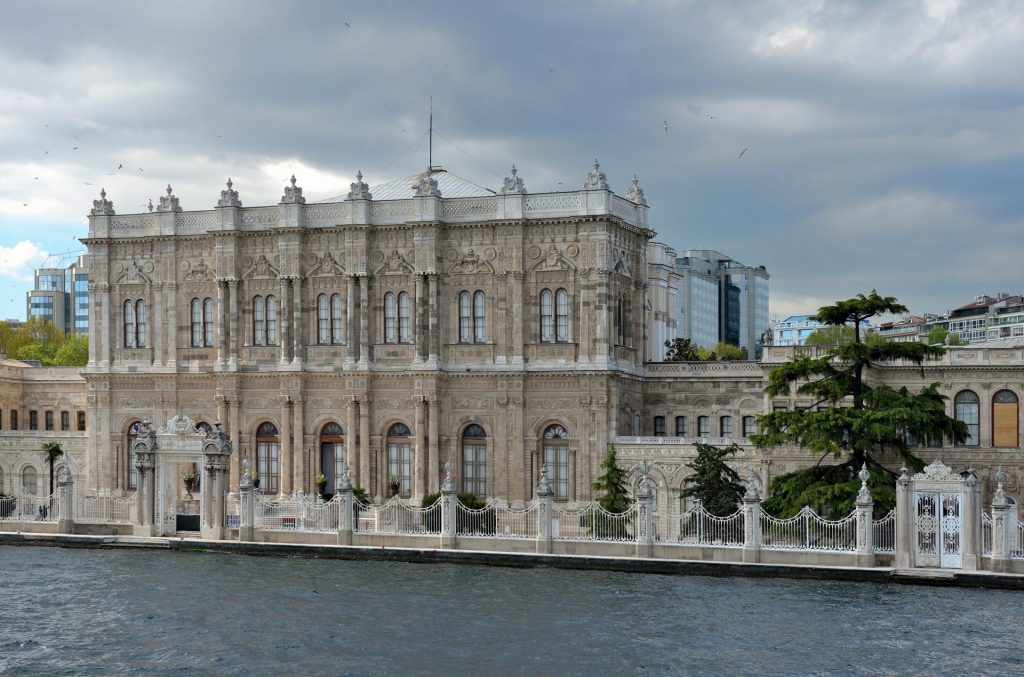
Turkish President Recep Tayyip Erdoğan and Qatar’s Emir, Sheikh Tamim bin Hamad Al Thani, signed the agreement after talks at the Presidential Dolmabahçe Office in Istanbul. The meeting was the 12th session of the Türkiye–Qatar Supreme Strategic Committee, the top-level forum where the two countries coordinate their policies.
The Turkish presidency said the agreement would “add a new dimension” to relations between the two countries. The Qatari Emir described the deal as a “strategic partnership”. Neither side has published the full text of the agreement, so some important details — such as exactly how the two countries would respond to an attack — remain unclear.
What was agreed
According to the joint statement issued after the talks, Türkiye and Qatar agreed to:
- Strengthen collective defence and take a unified stance against any external armed attack targeting either country.
- Consult each other on threats to their security and on regional and international defence issues.
- Coordinate their positions on regional and global security questions and defence policies.
- Expand joint military exercises and exchanges of military personnel and training.
- Deepen cooperation between their defence industries.
The two governments also signed several other agreements during the visit. According to Türkiye’s Anadolu news agency, five agreements were signed in total, covering trade, education, diplomacy and defence. Qatar’s Amiri Diwan said one of them was a memorandum of understanding on cooperation in peace, reconciliation and conflict resolution.
President Erdoğan said the two countries would “continue working together to prevent the resurgence of war in the Gulf region and establish a basis for dialogue and achieve peace”. He also said Türkiye and Qatar were working to develop and diversify their energy partnership, and that cooperation in the defence industry would continue to grow.
The two leaders also discussed trade. A Trade and Economic Partnership Agreement between the two countries entered into force last year, and Erdoğan said it had brought the two countries closer to their bilateral trade volume target.
Why now: a Gulf on edge
The agreement lands at a tense moment for the Gulf. In recent days, tensions in the region have risen sharply. Iranian media reported explosions on four oil tankers in the Strait of Hormuz, the narrow waterway through which a large share of the world’s oil passes. Iran’s Revolutionary Guards navy said a tanker carrying liquefied natural gas struck a naval mine and suffered an explosion while using what it called an “unauthorised and dangerous route”.
Against that backdrop, Gulf states have been moving quickly to lock in security guarantees. Defence pacts that would once have taken years to negotiate are now being signed in a matter of months. For Qatar — a small, gas-rich country that hosts the largest United States military base in the Middle East, Al Udeid — a formal mutual defence commitment from Türkiye, a NATO member with one of the region’s largest armies, is a significant extra layer of protection.
The timing also matters for Türkiye. Ankara has been building a network of defence partnerships across the region, and the Qatar deal is the second major pact it has concluded in recent months.
A partnership with deep roots
The new agreement is not the start of a relationship — it is the latest step in one that goes back nearly two decades.
Türkiye and Qatar signed an agreement on military training and technical cooperation in 2007. In December 2014, they signed a broader deal covering military training, defence industry cooperation and the deployment of Turkish troops in Qatar. The first Turkish soldiers arrived in 2015 at the Tariq bin Ziyad military base south of Doha — Türkiye’s first military installation in the Middle East. The base can accommodate up to 5,000 troops.
The partnership was tested in 2017, when Saudi Arabia, the United Arab Emirates, Bahrain and Egypt cut diplomatic ties with Qatar and imposed a blockade. Türkiye stood firmly by Doha, sending food and supplies and deploying additional troops under the existing agreements. The blockading countries demanded the closure of the Turkish base as one of their conditions for ending the dispute. Türkiye refused, calling the demand unrealistic, and Qatar rejected it too. The crisis ended in early 2021.
Since then, the two countries have held regular joint military exercises and training programmes. Türkiye has also become a major supplier of military equipment to Qatar, and Turkish defence contractor HAVELSAN built a helicopter simulation centre in Qatar to train Qatari pilots.
The bigger picture: a web of Gulf defence pacts
The Türkiye–Qatar deal is part of a wider pattern. In August 2026, Türkiye, Saudi Arabia and Pakistan signed a joint defence agreement in Mecca, under which the three countries would come to each other’s aid if one of them was attacked. Türkiye’s parliament ratified that pact last week, and the law approving it took effect on Saturday, 14 November, when it was published in Türkiye’s official gazette.
Taken together, the two agreements link Türkiye to three Gulf and South Asian partners — Qatar, Saudi Arabia and Pakistan — in formal defence commitments. For decades, Gulf security rested mainly on the United States. Now, regional states are building their own safety nets as well, hedging against uncertainty about how far outside powers will go to protect them.
Qatar has particular reason to want that insurance. As one of the world’s biggest exporters of liquefied natural gas, its economy depends on tankers moving safely through the Strait of Hormuz. Any disruption in the Gulf hits Qatar first.
What it means for Pakistan
Pakistan has a direct stake in this story. Islamabad is already a party to the Mecca defence pact alongside Türkiye and Saudi Arabia, so the Türkiye–Qatar agreement extends the same web of partnerships to another Gulf state with close ties to Pakistan.
Pakistan has also been active diplomatically on Gulf tensions. On Friday, Pakistan’s Permanent Representative to the United Nations, Ambassador Syed Haider Shah, told a UN Security Council meeting on the situation in the Gulf that threats to shipping and rising tensions were a matter of serious concern. He called for an end to military provocations and attacks in the region, the protection of civilians and commercial shipping, and a turn to diplomatic solutions. He noted that the region’s critical waterways sustain international commerce and carry essential supplies of energy.
For Pakistan, which imports much of its energy through Gulf shipping lanes and has millions of citizens working in the region, stability in the Gulf is not a distant concern — it affects fuel prices, remittances and jobs at home.
What happens next
Several questions remain unanswered. The full text of the agreement has not been made public, so it is not yet clear what form mutual assistance would take in practice — whether it would mean troops, equipment, intelligence sharing, or political backing. The joint statement also gave no details on timelines for the promised expansion of joint exercises or defence industry projects.
What is clear is the direction of travel. Both countries say the pact strengthens their collective defence, and both have framed it as a contribution to regional stability rather than a threat to any other state. Watch for the next steps: the first joint military exercise held under the new agreement, any new defence industry deals, and whether other Gulf states seek similar arrangements with Ankara.
Frequently asked questions
What is a mutual defence agreement?
It is a formal promise between two countries to support each other if one of them is attacked. The exact help depends on the wording of the agreement — it can range from military assistance to diplomatic and logistical support.
Why did Türkiye and Qatar sign this deal now?
Tensions in the Gulf have risen sharply, with reported explosions on tankers in the Strait of Hormuz and a wider US–Iran standoff. Both countries say the agreement strengthens their collective defence and supports regional stability.
Does Türkiye already have troops in Qatar?
Yes. Turkish troops have been stationed at the Tariq bin Ziyad base south of Doha since 2015, under a 2014 agreement. The base can hold up to 5,000 troops.
How is this different from the Mecca defence pact?
The Mecca pact, signed in August 2026, links Türkiye, Saudi Arabia and Pakistan. The new agreement is a separate, bilateral deal between Türkiye and Qatar. Together, they connect Türkiye to three countries in formal defence arrangements.
Will the full agreement be published?
Neither government has said so. The joint statement after the signing gave the broad outlines, but the detailed text has not been released.
Conclusion
The Türkiye–Qatar mutual defence agreement is a modest document with a large message. Two close allies have put their partnership in writing at a moment when the Gulf feels less safe than it has in years. For Türkiye, it deepens a military relationship built over a decade. For Qatar, it adds a formal security guarantee from a major regional military power. And for the wider region, it is another sign that Gulf states are building their own defence networks — not waiting for others to protect them.
Whether the pact deters attacks or simply raises the stakes will depend on what happens next in the Gulf. But the direction is clear: the region’s security map is being redrawn, and Türkiye and Qatar now stand formally together on it.
Sources
- Al Jazeera — Turkiye and Qatar sign mutual defence agreement
- TBS News — Turkey, Qatar sign mutual defence agreement, pledge unified stance against attack
- Geo News — Turkiye, Qatar sign defence agreement
- The National — Turkey’s approval of Makkah pact takes effect as it signs separate defence agreement with Qatar
- Tribune — Turkey, Qatar sign mutual defence agreement, Turkish presidency says
- Al Jazeera — Turkey sends more troops to Qatar (2017)
This article is for general information and education only. It is not legal or financial advice.

Pingback: Shehbaz Sharif and Asim Munir Share Top Spot in World's 500 Most Influential Muslims List - Findivoza