
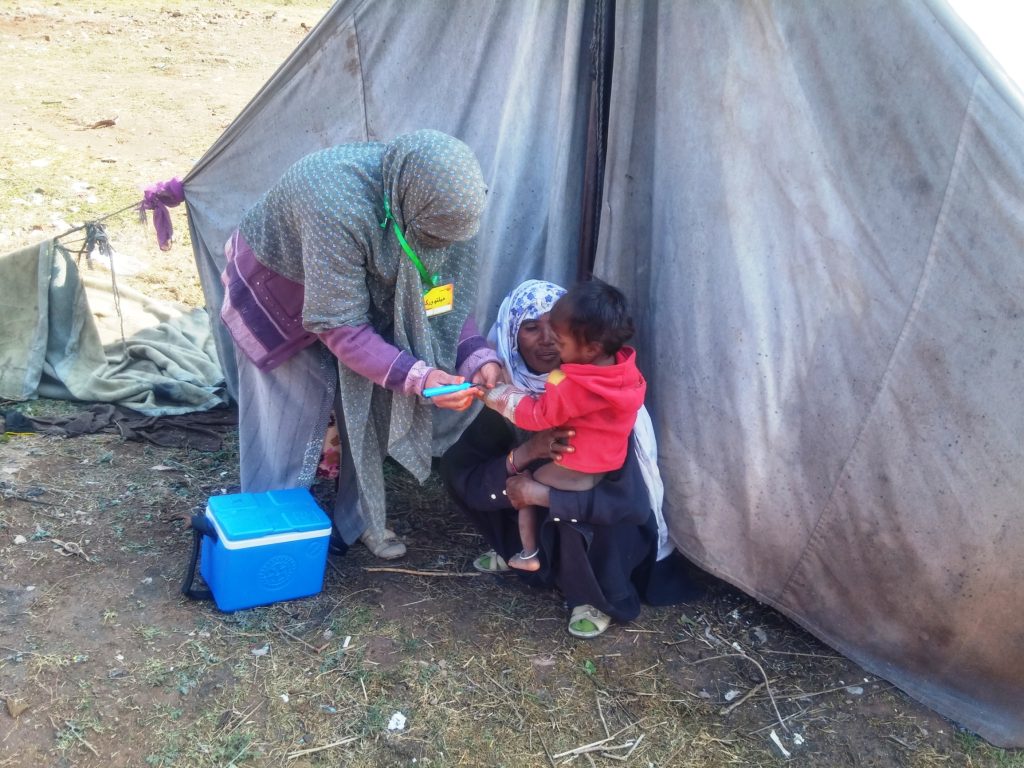
Two Police Officers Killed Guarding Polio Workers in Pakistan as Vaccination Drive Comes Under Attack
Two police officers who were on their way to protect polio vaccination teams have been shot dead in northwestern Pakistan, in the latest attack on the country’s long and dangerous fight to wipe out polio.
The shooting happened on Tuesday, 3 November 2026, in Mohmand district, in the province of Khyber Pakhtunkhwa. Gunmen riding a motorcycle opened fire on a police vehicle as the officers travelled to guard health workers going door to door to vaccinate children. A third officer was wounded in the attack.
It came just one day after four polio workers were abducted in another part of the same province, and on the second day of a nationwide vaccination drive aimed at reaching nearly 24 million children.
For the families of the officers, and for the health workers who still have to go out and knock on doors, the message is grimly familiar: in Pakistan, giving a child a polio vaccine can be a life-threatening job.
What happened in Mohmand
The attack took place in the Pindiali area of Mohmand district, a mountainous region that borders Afghanistan. According to police, the officers were travelling from their post towards Yakh Dand village to provide security to vaccination teams when armed men ambushed them.
District Police Officer Raza Khan told reporters that two police personnel were killed on the spot and a third was injured. Other reports place the shooting near the Hashim Kor police checkpost, in the Dag Tamanzai area of Pindiali.
The two officers who were killed have been named as Constables Zahoor and Arabi Khan. The wounded officer has been named as Constable Sabirullah, also reported as Sabir. The dead and injured were taken to the District Headquarters Hospital in Ghalanai, the main town of Mohmand district.
Importantly, no polio vaccination staff were in the police vehicle when it was attacked. The officers were on their way to join the vaccination teams, not travelling with them.
No individual or group has claimed responsibility for the shooting. Police have launched a search operation, and the attackers have not been identified.
The abduction in Tank, a day earlier
The Mohmand shooting was the second attack on the polio campaign in two days.
On Monday, 2 November, four polio workers were abducted by unidentified gunmen in Tank district, also in Khyber Pakhtunkhwa. The workers were on their way to carry out their duties in Jious village, in the Sheikh Utar Union Council, when armed men stopped them and took them to an unknown location.
The abducted workers have been named as Qadeer Khan, a union council monitoring officer; Usman Khan, an area in-charge; and two community vaccinators, Umair and Sameer.
Khyber Pakhtunkhwa Governor Faisal Karim Kundi condemned the abduction and called for effective measures to secure the workers’ safe recovery. Police have launched an investigation, but there has been no public update on the workers’ whereabouts.
The two attacks fell on the first two days of the vaccination drive, a timing that will worry officials running the campaign.
The vaccination drive under way
The attacks came as Pakistan launched a major polio vaccination campaign. The subnational drive began on Monday, 2 November, and is due to run until Sunday, 8 November.
According to the National Emergency Operations Centre for Polio Eradication, the campaign aims to reach nearly 24 million children under the age of five across 97 high-risk districts throughout the country.
Within Khyber Pakhtunkhwa alone, a four-day synchronised drive is targeting about 4.8 million children under five across 27 districts of the province.
The campaign began on the same day that health authorities confirmed Pakistan’s eighth polio case of the year. The National Emergency Operations Centre said a 13-month-old girl from Bara tehsil, in Khyber district, had tested positive for wild poliovirus. It is the second case from Khyber district this year, and the sixth from Khyber Pakhtunkhwa.
That new case is a reminder of why the campaign matters. Every child missed by vaccinators is a child who can catch and spread the virus.
Why polio workers are attacked
Pakistan is one of only two countries in the world where wild poliovirus still spreads naturally. The other is neighbouring Afghanistan. Pakistan reported 31 cases of the disease last year, and eight so far in 2026.
But the virus is not the only danger facing the people trying to stop it. For years, polio workers and the police who protect them have been targeted by militants, including the banned Tehreek-e-Taliban Pakistan (TTP) and its affiliated groups.
The militants falsely claim that polio vaccination campaigns are part of a Western conspiracy to sterilise children. Health experts and religious scholars in Pakistan have repeatedly rejected that claim, pointing out that the vaccine is safe, and that Muslim countries around the world use it to protect their children. But the false rumour has persisted in some areas, and it has been used to justify violence.
The scale of the violence is striking. According to the South Asia Terrorism Portal, at least 47 attacks targeting polio workers have been reported in Khyber Pakhtunkhwa since 2020. Those attacks have killed nine people, injured seven, and led to more than 15 abductions.
The danger is not limited to one province. On 22 September 2026, two police personnel guarding polio workers were killed by armed assailants in Noshki district, in Balochistan.
Each attack has a double effect. It takes lives, and it also makes the next campaign harder to run. Health workers become afraid to go to certain areas. Parents become afraid to open their doors. Children get missed. And the virus gets another chance to spread.
A long fight, close to the finish line
To understand why these attacks matter so much, it helps to know how far Pakistan has come in the fight against polio — and how close it is to finishing the job.
In the early 1990s, Pakistan recorded around 20,000 polio cases a year. Today, the number is in single figures. That is one of the great public health achievements of the past generation, built on decades of work by hundreds of thousands of vaccinators, many of them women, who walk from house to house in every part of the country.
Polio is a disease that mainly affects children under five. It can cause paralysis, and in some cases death. There is no cure, but there is a safe and effective vaccine. Two drops, given by mouth, can protect a child for life.
The challenge is reaching every child, every time. The virus survives in places where vaccination teams cannot go — because of conflict, because of rough terrain, or because families refuse the vaccine after hearing false claims about it.
Pakistan’s government, working with the World Health Organization and UNICEF, runs nationwide campaigns several times a year. Each campaign aims to vaccinate tens of millions of children in a few days. It is one of the largest public health operations in the world.
That is also what makes the attacks so damaging. A campaign depends on trust: parents must believe the vaccine is safe, and vaccinators must believe they will come home safely. When police officers escorting a team are killed on the road, both kinds of trust are shaken.
Reaction: condemnation and a promise to carry on
President Asif Ali Zardari condemned Tuesday’s shooting. In a post on X, he described the attack as “extremely regrettable and condemnable”.
Interior Minister Mohsin Naqvi also condemned the attack, according to the Associated Press.
The condemnation was echoed by provincial leaders. Governor Kundi’s statement on the Tank abduction called for immediate and effective steps to bring the workers home safely.
So far, officials have not said the campaign will be suspended or scaled back. The drive is scheduled to continue until 8 November, and health authorities have a powerful reason to press on: every day of delay leaves more children unprotected.
But the security of vaccination teams will now be under fresh scrutiny. Police escorts are already standard practice in high-risk districts, yet the Mohmand attack shows that even the escorts themselves are targets.
What happens next
There are several things to watch in the coming days.
The first is the fate of the four abducted workers in Tank. Their families are waiting for news, and police have said an investigation is under way. The safe recovery of the workers will be a test of the authorities’ ability to respond.
The second is the search for the Mohmand attackers. No group has claimed responsibility, and police have not named any suspects. Whether the attackers are caught — and whether they are linked to the TTP or another group — will shape how the government responds.
The third is the vaccination campaign itself. Health officials will be watching closely to see whether teams can complete their rounds in the affected districts, and whether the attacks deter parents from having their children vaccinated. The campaign’s target is nearly 24 million children, and reaching them all requires teams to work in some of the most difficult and dangerous parts of the country.
The fourth is the longer picture. Pakistan has eight polio cases so far this year, up from the very low numbers of recent years but far below the thousands of the past. Whether the country can push the number back to zero will depend on campaigns like this one reaching every child — and on the safety of the people who carry them out.
For now, the drive goes on. In Mohmand, in Tank, and in 97 districts across Pakistan, vaccinators are still knocking on doors. The two police officers who died on Tuesday were on their way to make that work possible.
Frequently asked questions
What happened in Mohmand on 3 November?
Gunmen on a motorcycle opened fire on a police vehicle in Pindiali tehsil, Mohmand district, Khyber Pakhtunkhwa. Two police officers, Constables Zahoor and Arabi Khan, were killed and a third, Constable Sabirullah, was injured. The officers were travelling to guard polio vaccination teams. No group has claimed responsibility.
Who was abducted in Tank?
Four polio workers — Qadeer Khan, Usman Khan, Umair and Sameer — were abducted by unidentified gunmen on Monday, 2 November, in Jious village, Tank district, while travelling to carry out vaccination duties.
How big is the vaccination campaign?
The subnational campaign began on 2 November and runs until 8 November, aiming to reach nearly 24 million children under five across 97 high-risk districts. In Khyber Pakhtunkhwa, a four-day drive targets about 4.8 million children in 27 districts.
How many polio cases has Pakistan had in 2026?
Eight. The latest was confirmed on 2 November: a 13-month-old girl from Bara tehsil, Khyber district. Pakistan reported 31 cases last year.
Why are polio workers attacked in Pakistan?
Militant groups, including the Tehreek-e-Taliban Pakistan, have targeted polio workers and their police escorts for years, falsely claiming the vaccine is part of a Western plot. At least 47 attacks on polio workers have been reported in Khyber Pakhtunkhwa since 2020, killing nine people.
Is Pakistan close to wiping out polio?
Pakistan has cut annual cases from around 20,000 in the early 1990s to single figures, but wild poliovirus still spreads naturally in Pakistan and Afghanistan — the only two countries where it remains endemic. Reaching every child with the vaccine is essential to finishing the job.
Sources
- https://www.dtnpf.com/agriculture/web/ag/news/world-policy/article/2026/11/03/suspected-militants-open-fire-kill-2 (Associated Press)
- https://aljazeeranews-3fuh52rgrl.edgeone.app/news/2026/11/3/two-police-officers-protecting-polio-workers-in-pakistan-shot-dead (Al Jazeera)
- https://www.nationpress.com/international/2-police-killed-guarding-pakistan-polio-team (Dawn, via Nation Press)
- https://nagalandpost.com/2-police-officers-guarding-polio-team-killed-in-attack-in-northwest-pakistan/ (Press Trust of India)
- https://leadpakistan.com.pk/news/two-cops-martyred-four-polio-workers-abducted-in-kp/ (Lead Pakistan)
- https://khyberchronicles.pk/two-police-martyred-in-mohmand-as-four-polio-workers-are-abducted-in-tank/ (Khyber Chronicles)
This article is for general information and education only. It is not legal or financial advice.
