
Slovenia’s Triglav Glacier Is Gone After 12,000 Years — a National Symbol Lost to a Scorching Summer
The Triglav glacier is gone. After surviving for around 12,000 years — since the end of the last ice age — the last patch of ice on Slovenia’s highest mountain has melted away, ending a story that began long before the first towns and cities of modern Europe existed.
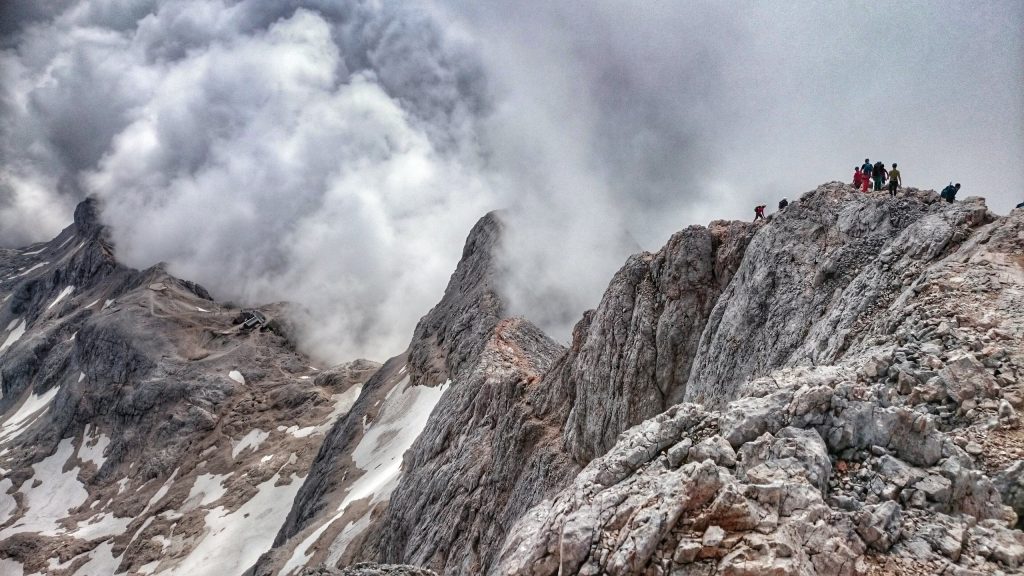
Scientists from the Anton Melik Geographical Institute confirmed the loss in late October 2026. Photographs of the mountainside, taken on either side of a snowfall that month, show bare rock where ice once lay. The glacier that gave its name to the mountain, and that appears on Slovenia’s flag and coat of arms, has disappeared.
It is the latest Alpine glacier to be lost to a warming climate — and for Slovenians, it is a deeply personal loss.
What happened on Mount Triglav
Mount Triglav, at 2,864 metres (9,396 feet), is the highest peak in Slovenia and sits at the south-eastern tip of the Alps. For most of its long life, the Triglav glacier was a large sheet of ice. Historical photographs and records suggest it covered about 40 hectares — roughly 99 acres — in the middle of the 1800s.
By 1946, when scientists carried out the first formal measurements, it had already shrunk to just 14 hectares. Then, between 1983 and 2003, it lost 93% of its remaining surface area, shrinking to less than a hectare of ice on overheated rock.
Most experts expected it to vanish soon after. Instead, it surprised them. The glacier clung on for two more decades, breaking up into a handful of isolated pockets of ice. But the last five years — which included Europe’s three hottest years on record — finished the job. By the end of the summer of 2026, the final remnant of the glacier’s main body measured only a few metres across.
In September, the last major fragment was measured at just five metres long and half a metre thick. Then came the summer’s final heat, and then the October photographs: no ice remained.
A glacier that survived 12,000 years
The Triglav glacier was not just a patch of ice. According to the Slovenian Environment Agency, mineral deposits found beneath the ice suggest the glacial mass may have survived for roughly 12,000 years, since the end of the last ice age.
Think about what that means. When the glacier first formed, humans were still hunter-gatherers. It survived the rise and fall of the Roman Empire, the Middle Ages, and the industrial revolution. It survived two world wars. What it could not survive was the warming of the last few decades.
Matija Zorn, director of the Anton Melik Geographical Institute, which has monitored the glacier since 1946, said Mount Triglav “holds a central place in Slovenian national identity” — and the loss of the glacier means the loss of an important source of data and an indicator of climate change.
Zorn first took measurements at the glacier in 2001. He said the speed of the change surprised him, even in the decades when the glacier was defying predictions of its death.
“Every year I knew that the ice was going to be less and less,” he said. “But I was shocked every year [by] how much less ice was up there.”
He described how the spot where he had to put on crampons to stop himself slipping jumped further back up the mountain year after year as the glacier retreated.
“The melting is incredible,” he said. “In 2002 … we took a core of ice out for geochemical analysis and it was like 5 metres [deep]. The next year, I was standing on the same spot … not on ice, but on rock.”
Why it disappeared now
The glacier’s end was not caused by one hot summer alone. It was the result of a slow decline that suddenly sped up.
Two factors came together in 2026, according to geographer Miha Pavšek, a glaciologist and mountain guide who has studied the glacier for years: very little snow over the winter, followed by a very warm summer.
Snow protects a glacier. A deep winter snowpack covers the ice and reflects sunlight, shielding it through the spring. When snowfall is low, the ice is left exposed early in the year, and the summer sun eats into it directly.
The summer of 2026 was exceptionally hot across Europe. Western Europe suffered through its hottest summer on record this year, with fierce heatwaves made hotter by carbon pollution. The Guardian reported at least 50,000 estimated heat deaths across the region, along with failed harvests and power plants forced to shut down.
At the Kredarica weather station, near the glacier at 2,513 metres above sea level, September temperatures came in more than three degrees above the average for 1991–2020.
Researchers at the Anton Melik Geographical Institute had already warned in August 2026 that the remaining ice was likely to disappear by the end of the melting season. The melting season on Triglav generally runs from early May to the end of October, when average monthly temperatures at Kredarica are above freezing. Their prediction came true within weeks.
What the scientists say
For the scientists who watched it happen, the loss is emotional as well as scientific.
“With the melting of the glacier, a part of me is also going away,” said Miha Pavšek. He has a photograph of his parents at the glacier from 1957, when the ice was still a broad, white sheet. “There are some things that humans thought were eternal. Glaciers are obviously not.”
Pavšek also said that “nature is changing in front of our eyes” — but people were not yet taking it seriously enough.
The glacier’s disappearance is a scientific loss, too. A glacier is a natural archive: the ice traps air bubbles, dust, and chemicals from the atmosphere of centuries past, letting scientists read the history of the climate. When the ice melts, that record is lost forever.
But there is one small consolation. As the glacier retreated, it exposed new openings in the rock, and scientists have found ice preserved in the caves beneath Mount Triglav. That underground ice is sheltered from the sun and may survive longer than the surface glacier did. Researchers will continue to study it.
What it means for Slovenia
Triglav is more than a mountain to Slovenians. It is the country’s best-known natural landmark, and climbing it at least once is a cultural expectation in a nation of skiers and mountaineers. The mountain’s three-peaked silhouette appears on the national flag and the coat of arms.
Losing the glacier does not change the mountain itself. The rock, the views, and the climbing routes remain. But a feature that had been part of the landscape for 12,000 years — something every generation of Slovenians had seen — is now gone.
Slovenia has one other glacier, on Mount Skuta in the Kamnik-Savinje Alps. It has also shrunk and thinned, but its remaining patch of ice sits in better shade than Triglav’s did, and researchers expect it to hold out for a few more years. Pavšek has predicted that Skuta is on the same path as Triglav.
Skuta was once 2.5 to 3 hectares of ice. Today it covers about 1.5 hectares, and the ice has thinned from dozens of metres thick to just a few metres. A marker painted on a rock shows how far the glacier reached in 1994. The ice has pulled steadily back from it ever since.
The wider Alpine picture
Triglav is not an isolated case. It is part of a pattern spreading across the Alps.
Last month, Swiss glaciologists found that nearly a fifth of Switzerland’s ice had disappeared in the last five years, with a 5.5% drop in volume in 2026 alone. Fierce heatwaves have reduced big white glaciers to what scientists have called “moonlike” rock deserts.
Glaciers in the French Alps are also melting fast. Across the Alps, the story is the same: warmer summers, less snow, and ice that cannot recover what it loses each year.
Glaciers matter far beyond the mountains. They store water in winter and release it slowly in summer, feeding rivers that millions of people depend on for drinking water, farming, and hydroelectric power. When glaciers shrink, that natural water storage disappears, and summer water supplies become less reliable.
The disappearance of Triglav will not by itself change Slovenia’s water supply — the glacier had become too small to matter much for rivers. But it is a warning sign. The same forces that killed this small glacier are now eating away at the much larger ice masses that do feed Europe’s great rivers.
What happens next
Scientists will keep monitoring Mount Triglav. They will study the cave ice found beneath the peak and watch the Skuta glacier, Slovenia’s last remaining ice, as it follows the same path.
The 2026 heat has also sharpened the focus of climate talks. World leaders are gathering in Antalya, Türkiye, from 9 to 20 November for the COP31 climate summit, where the UN Secretary-General, António Guterres, has warned that the world faces a “moment of truth” on climate action. The loss of the Triglav glacier — confirmed just days before the summit opens — is a visible reminder of what is at stake.
For Slovenia, the glacier’s disappearance is already a part of history. The mountain that carries its name remains, but the ice that crowned it for 12,000 years is gone, and it will not return in any human lifetime.
Frequently asked questions
How old was the Triglav glacier?
Mineral deposits found beneath the ice suggest it may have survived for roughly 12,000 years, since the end of the last ice age, according to the Slovenian Environment Agency.
How big was the glacier?
It covered about 40 hectares in the mid-1800s. By 1946, when formal measurements began, it had shrunk to 14 hectares. Between 1983 and 2003 it lost 93% of its surface area, leaving less than one hectare of ice.
Why did it melt?
A combination of very low winter snowfall and an exceptionally hot summer in 2026. Without a deep snowpack to protect it, the remaining ice was exposed to the sun and melted away. The last five years included Europe’s three hottest years on record.
Is there any ice left on Mount Triglav?
No surface ice remains. However, scientists have found ice preserved in caves beneath the mountain, exposed as the glacier retreated. That underground ice may survive for longer.
Does Slovenia have any glaciers left?
Yes — one, on Mount Skuta in the Kamnik-Savinje Alps. It has shrunk to about 1.5 hectares and thinned to a few metres, but its shaded position means it is expected to survive for a few more years.
Are other Alpine glaciers disappearing too?
Yes. Swiss glaciologists found that nearly a fifth of Switzerland’s ice disappeared in the last five years, with a 5.5% drop in volume in 2026 alone. Glaciers across the Alps are retreating as summers get hotter and snowfall declines.
Conclusion
The Triglav glacier survived 12,000 years of human history and then vanished in a single scorching summer. It survived the rise and fall of empires, but it could not survive the warming climate of the last few decades.
For Slovenia, the loss is a cultural blow — the mountain at the heart of the nation’s identity has lost its crown of ice. For the rest of the world, it is a warning written in bare rock: the glaciers that have shaped landscapes and stored water for thousands of years are disappearing within a single human lifetime, and the forces melting them are only growing stronger.
The photographs taken in October 2026 tell the story plainly. Where ice once stretched across the mountainside, there is now only rock. The glacier is gone, and the mountain will never look the same again.
Sources
- The Guardian (via Ethical Markets reprint), “Slovenia mourns loss of glacier on its highest peak after scorching summer”, by Ajit Niranjan: https://www.ethicalmarkets.com/slovenia-mourns-loss-of-glacier-on-its-highest-peak-after-scorching-summer/
- SRNA / Associated Press report, “Triglav Glacier Has Melted Away”, 27 October 2026: https://srpskanational.com/region/triglav-glacier-has-melted-away/13004
- greenMe, “Requiem for the Triglav glacier, Slovenia’s tallest: it survived 12,000 years, but not the climate crisis”, 29 October 2026: https://www.greenmemag.com/environment/requiem-for-the-triglav-glacier-slovenias-tallest-it-survived-12000-years-but-not-the-climate-crisis/
- Reporter World News, “Slovenia’s last remaining glacier shrinks as climate change accelerates ice loss”, 16 October 2026: https://reporterworldnews.com/news/world/2026/10/16/slovenia-triglav-glacier-disappears-skuta-climate-change
This article is for general information and education only. It is not legal or financial advice.
