
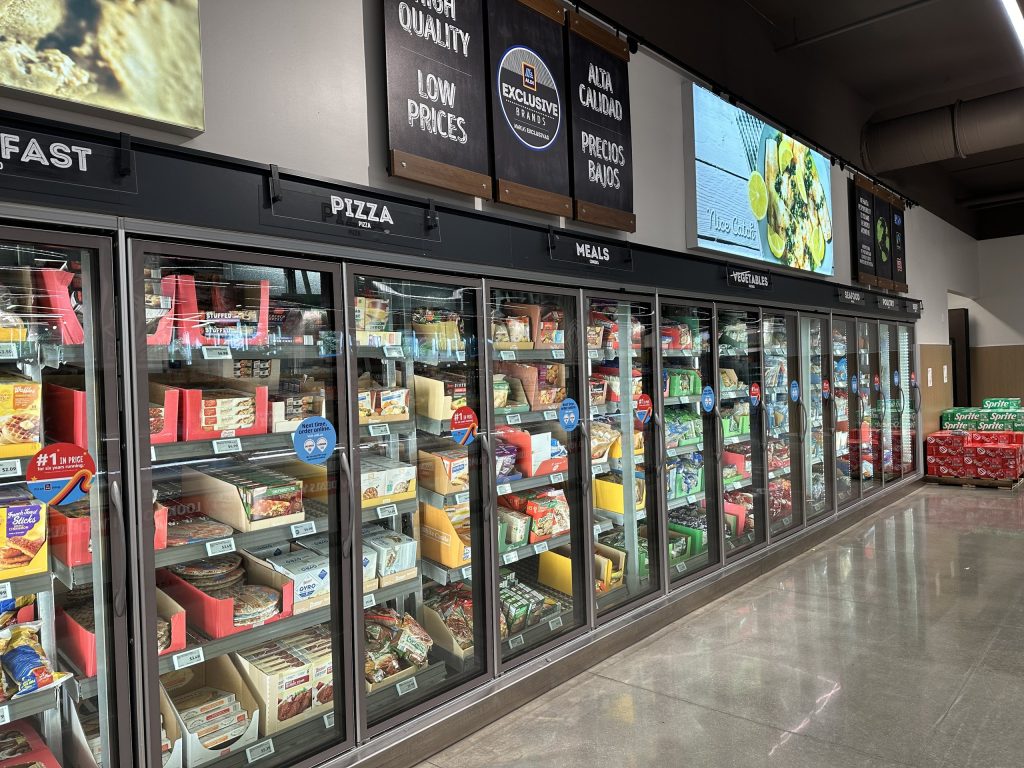
UK Secretly Fixed a Supermarket Fridge Hack Flaw Before Hackers Could Strike
Britain has quietly fixed a security flaw in the computer systems that control supermarket fridges and freezers, after a secret three-week operation to protect tens of thousands of appliances from hackers. The flaw could have let attackers take control of the refrigeration systems in supermarkets, warehouses, restaurants, petrol stations and stadiums — and spoil the food inside them.
The operation was kept secret until Friday, 20 November 2026, so that hackers would not learn about the weakness and exploit it first. By the time the news became public, the fix had already been developed and rolled out, and thousands of fridge controllers had been taken off the open internet.
The discovery came just weeks after a wave of cyberattacks knocked out commercial fridges and freezers across Europe, from Sweden to Belgium, forcing shops to throw away millions of euros’ worth of food. Britain thought it had escaped the attacks — but only because its supermarkets use different equipment. When ethical hackers looked more closely, they found Britain had a problem of its own.
What happened in Britain
The flaw was found in late October by Neil McCourt, an ethical hacker at refrigeration consultancy Omega Solutions. McCourt specialises in fridge telemetry — the technology that lets businesses monitor and control their refrigeration systems remotely.
McCourt was helping a British retailer check that its fridges were not exposed to the same problems that had hit supermarkets in France and elsewhere in Europe. Instead, he found a separate weakness in the controllers widely used in Britain.
Those controllers are made by Resource Data Management (RDM), a company based in Glasgow. A single RDM controller can remotely manage the temperatures of dozens of fridges and freezers, which is exactly what makes a flaw in one so dangerous: one successful attack could have affected large numbers of appliances through a relatively small number of devices.
McCourt passed his findings to cybersecurity firm Pen Test Partners, whose hardware security team — led by Andrew Tierney, with Aaron Thacker and others — checked the work, confirmed the flaw, and found a whole series of additional weaknesses in the same devices.
“The issue has been largely mitigated, though smaller cold chain operators may still be exposed,” Pen Test Partners said in a write-up of the operation published on 20 November.
The secret three-week operation
Once the flaw was confirmed, a large and quiet effort began. Britain’s National Cyber Security Centre (NCSC), the Department for Environment, Food and Rural Affairs (Defra), the Food Standards Agency, the British Retail Consortium, RDM and the security researchers all worked together to contact supermarkets and their supply chains, find the exposed controllers and fix the problem.
The NCSC issued an urgent alert to supermarkets. Before the fix could be applied, the affected companies took their fridge controllers off the open internet and moved them onto private networks, or protected them behind virtual private networks (VPNs).
“Significant efforts were made to address it in a very short space of time, resulting in teams at retailers working evenings and weekends,” Pen Test Partners said. The operation lasted about three weeks, and the researchers say some supermarket cyber teams had “a lot of work to do at very short notice”.
The researchers also used Shodan, a search engine that finds devices connected to the internet, to track down exposed controllers. They found thousands of them. Using location data and other public information, they worked out which organisations operated the devices, contacted the people responsible and had the controllers taken off the internet. After supermarkets, the exposed devices typically belonged to food manufacturers and operators of large cold storage warehouses.
Some controllers could not be identified without breaking into them, which the researchers were not prepared to do — so a number of smaller operators may still be exposed, and the researchers have not published the details of the flaws, to avoid handing hackers a ready-made guide.
RDM, the manufacturer, has released new firmware — updated software for the controllers — that should fix the problems. The company had been working around the clock to write it, according to Pen Test Partners, and even took it upon itself to track down controllers installed by third parties and send warnings to their operators.
RDM has disputed how serious the flaws are. Its chief executive, Ged Evans, said the weakness was found in a test environment, and argued the assessment went beyond standard testing because it included dismantling the company’s hardware. He said exploiting the flaw would have required an attacker to obtain a physical piece of equipment. The researchers disagree, saying the hardware can be bought cheaply online, including on eBay. Evans said RDM had acted at pace to address the issue, had already deployed first patch releases and was in proactive contact with customers, and the company said it had found no evidence of malicious activity involving its controllers and was continuing to work with the NCSC.
How the European fridge hacks worked
To understand why Britain acted so urgently, it helps to look at what happened across the rest of Europe.
In October 2026, hackers attacked commercial refrigeration systems in France. French intelligence and cyber agencies later accused Iran’s Revolutionary Guards of carrying out the attack, which targeted 700 commercial sites and caused 15 fires after the hackers raised temperatures inside the refrigeration systems.
Then, earlier in November, a wave of cyberattacks knocked out commercial fridges and freezers from Sweden to Belgium. A third wave of attacks on 1 and 2 November hit supermarkets across seven European countries. Shops were forced to throw away millions of euros’ worth of food, and in some cases the overheated equipment caught fire.
Hackers heated supermarket freezers to 50°C across 11 European countries, and the European Union described the attacks as an attack on the food supply itself.
The attacks worked because modern commercial fridges and freezers are connected to the internet. In France and much of continental Europe, the systems used controllers made by the Danish company Danfoss. Many of those controllers were exposed to the public internet, often through mobile phone-style connections called cellular modems, and they carried known security weaknesses.
The weaknesses had been disclosed by security researchers at Claroty in May 2025, and the same flaws had been exploited as far back as 2022. The controllers also had a backdoor account — a hidden way in — whose daily password was generated from the date, making it possible for an attacker to work it out.
Once inside, the hackers could change the temperature settings remotely, warming fridges and freezers until the food inside was ruined. Germany’s information security office has since warned that some Danfoss industrial cooling appliances still have vulnerabilities.
France later blamed Iran’s Revolutionary Guard for the supermarket fridge cyberattacks, although the picture across the whole wave of attacks remains unclear, and not every incident has been publicly attributed.
Why supermarket fridges are connected to the internet
It may seem strange that a fridge needs an internet connection at all. But in a modern supermarket, refrigeration is managed centrally, not fridge by fridge.
A single controller can monitor the temperature of dozens of cabinets, send an alert if one starts warming up, and let engineers adjust settings without visiting the shop. For a supermarket chain with hundreds of stores, or a warehouse holding tonnes of frozen food, that remote control saves time and money — and it can catch a failing fridge before the food inside is lost.
The problem is that every device connected to the internet is also a possible way in for an attacker. If the controller is reachable from anywhere in the world, and its password is weak or its software is out of date, a hacker does not need to set foot in the shop to turn the freezers off.
That is why the advice from the security researchers is simple: take refrigeration controllers off the public internet, put them behind a VPN or on a private network, and apply the latest firmware update from the manufacturer.
What could have gone wrong in Britain
Britain was lucky in one way. Its refrigeration industry mostly uses RDM controllers rather than the Danfoss controllers that were attacked in France and elsewhere, so the European attacks did not spread directly to British shops. Researchers said there had been small incidents in small suppliers, but nothing widespread.
The danger was that the RDM controllers had a related weakness — not identical to the Danfoss flaw, but similar enough that an attacker who understood one could probably find the other. The researchers found that multiple supermarkets, retailers and supply chain operators were exposed, with their controllers reachable from the internet.
Had hackers found the flaw first, the consequences could have been serious. Supermarkets would have had to throw away large amounts of chilled and frozen food. Warehouses and food manufacturers could have lost whole cold stores. And in the worst case, overheated refrigeration equipment could have caught fire, as it did at 15 sites in France.
The timing would have been bad, too. The attacks in Europe came as winter approached, when food supply chains are already under strain, and the British operation took place in the run-up to the busiest shopping weeks of the year.
Is the danger over?
Mostly, but not completely. The researchers say the issue has been “largely mitigated” for the big supermarkets, and RDM has released firmware that should fix the problems found. The NCSC shared security advice with food and retail organisations to make sure they took steps to protect themselves.
But the researchers are clear that the job is not finished. Smaller cold chain operators — the small warehouses, food producers and distributors that keep chilled food moving between farms, factories and shops — may still have controllers connected to the internet. The supply chain for chilled and frozen food is complex, and the researchers say they have no idea how far down it the warnings have reached.
“These are harder to find than the Danfoss issues were. That buys time, not protection,” Pen Test Partners warned. “Get the controllers off the public internet and apply the firmware update.”
The NCSC declined to comment on the report when contacted by Reuters, but it is known for sending early warning alerts to organisations it believes may be at risk.
Why this story matters
The fridge hacks are a reminder that cyberattacks are no longer only about stealing data or money. They can hit the physical systems that keep food fresh, hospitals running and water flowing. A hacker who can raise the temperature in a freezer by a few degrees can destroy tonnes of food without ever touching it.
They are also a reminder that the devices we rarely think about — a temperature controller in a supermarket, a sensor in a warehouse — can be the weakest link in a country’s infrastructure. The equipment is often installed by one company, managed by another and forgotten about for years, running old software with default passwords.
In this case, the system worked. An ethical hacker found the flaw, a security firm checked it, the manufacturer fixed it, the government sounded the alarm, and the supermarkets did the unglamorous work of taking devices offline and updating firmware — all without the public knowing until the danger had mostly passed.
The lesson for everyone else is the same one the researchers keep repeating: if a device does not need to be on the public internet, take it off. And if it does, keep its software up to date. The next flaw may not be found by the good guys first.
Frequently asked questions
What is the supermarket fridge hack?
Hackers attacked the internet-connected controllers that manage commercial fridges and freezers in supermarkets and warehouses. By changing the temperature settings remotely, they warmed the appliances until food spoiled. Attacks in France in October 2026 hit 700 commercial sites and caused 15 fires, and further attacks in November hit supermarkets from Sweden to Belgium.
What did Britain fix?
British researchers found a security flaw in refrigeration controllers made by Glasgow-based Resource Data Management (RDM), which are widely used in British supermarkets. A secret three-week operation took the controllers off the open internet, and RDM released new firmware to fix the flaw.
Who found the flaw?
Ethical hacker Neil McCourt of refrigeration consultancy Omega Solutions found the weakness in late October 2026. Cybersecurity firm Pen Test Partners validated his findings and found additional vulnerabilities in the same devices.
Was any food spoiled in Britain?
No widespread incident was reported in Britain. Researchers said there had been small incidents in small suppliers, but nothing widespread, and the European attacks did not spread to British supermarkets, largely because Britain uses different equipment.
Who was behind the European fridge attacks?
French intelligence and cyber agencies accused Iran’s Revolutionary Guards of carrying out the October attack in France. Not every incident in the wider wave of attacks has been publicly attributed.
Are British fridges safe now?
The researchers say the issue has been largely fixed for the big supermarkets, but smaller cold chain operators may still be exposed if their controllers remain connected to the public internet. Their advice is to take controllers offline or behind a VPN and install the latest firmware.
Conclusion
Britain’s supermarkets narrowly avoided joining the list of victims in Europe’s fridge hacking wave. A flaw in the controllers that manage tens of thousands of British fridges and freezers was found by an ethical hacker, confirmed by security researchers, and fixed in a secret three-week operation before attackers could use it.
The episode shows how much of everyday life now depends on devices most people never see — and how quickly a small weakness in one of them can become a threat to the food supply. The fix is in place and the firmware is out, but the researchers’ warning still stands: the smaller operators further down the supply chain may not have heard it yet, and a device left on the public internet is an open invitation.
Sources
- Reuters: “UK finds fix for fridge and freezer vulnerability after European hacks”
- Pen Test Partners: “The fridge hack UK supermarkets narrowly avoided?”
- Firstpost: “Inside UK’s secret operation to protect fridges from hackers”
- Cybernews: “Secret rescue saves tens of thousands of UK fridges from hackers”
