
UN Chief Urges the World to Rein In ‘Merciless’ Killer Robots as Geneva Talks Decide Their Future
The world’s top diplomat has a blunt warning for every government on Earth: stop machines from deciding who lives and who dies.
United Nations Secretary-General António Guterres on Monday, 16 November 2026, urged countries to agree on strict, legally binding rules for lethal autonomous weapons systems — the AI-powered weapons often called “killer robots”. Speaking by video message to a major conference in Geneva, he told delegates to “seize this moment” before the technology spreads beyond control.
“I call on you to move towards negotiating a legally binding instrument to regulate autonomous weapon systems — including clear prohibitions and restrictions,” Guterres said. “Take action to prevent the use and spread of these merciless weapons.”
“We must never stop shielding civilians from the carnage and devastation of armed conflict, and preventing unnecessary suffering,” he added.
The appeal comes as representatives from 128 countries gather in Geneva this week for the 7th Review Conference of the Convention on Certain Conventional Weapons (CCW). Their task: decide whether to open formal negotiations on binding international rules for weapons that can choose and attack targets on their own.
What happened in Geneva
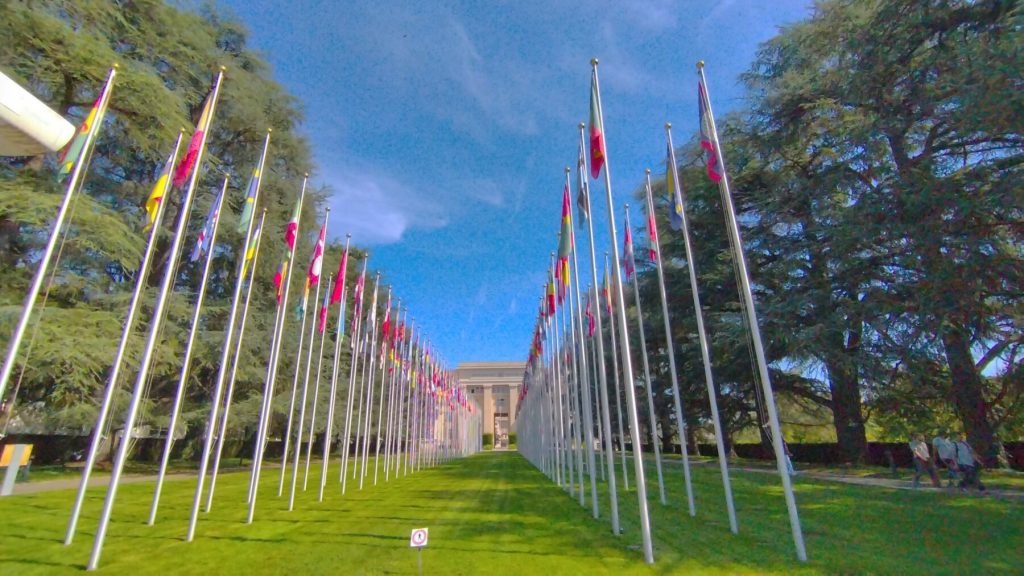
The conference opened on Monday, 16 November 2026, at the United Nations in Geneva, Switzerland. It brings together the 128 countries that have formally joined the Convention on Certain Conventional Weapons — the treaty that, for more than 40 years, has set common rules to reduce suffering caused by landmines, improvised explosive devices, incendiary weapons and explosive remnants of war.
This week’s meeting is the convention’s review conference, and lethal autonomous weapons systems are at the top of its agenda. Delegates must decide whether to launch negotiations on a new, legally binding instrument to regulate them — and if so, how fast to move and how strong the rules should be.
Guterres addressed delegates from more than 120 Member States. “Even war has limits,” he told them, “and the nature of warfare is changing.” He warned that “new technologies, including autonomous weapons systems, present new humanitarian, legal, ethical and security challenges”.
The UN human rights chief, Volker Türk, made a similar appeal on Friday, 13 November, urging states to agree urgently to a treaty on autonomous weapons. “A machine must never have the power to decide whether a human being survives or dies,” Türk said.
He called for bans on autonomous weapons that target people — whether by design or in practice — and on weapons whose functions and effects cannot be fully understood, predicted, explained and controlled by their human users. Human judgement and responsibility, he stressed, must remain at the centre of decisions involving the use of force, because machines do not understand the value of human life and cannot make the complex judgements required by international law.
What exactly are ‘killer robots’?
Lethal autonomous weapons systems, known by the short name LAWS, are weapons that use artificial intelligence to identify, select and attack targets with little or no human involvement. Unlike a traditional weapon, which a human aims and fires, an autonomous system can be switched on and left to make its own targeting decisions.
Not every weapon with a computer inside counts. A guided missile that a human operator aims at a chosen target is not autonomous in this sense. The debate in Geneva is about systems that can pick their own targets — and pull the trigger — without a person making the final call.
That is why campaigners and the UN use the phrase “killer robots”. It is not about human-shaped machines marching across a battlefield. It is about software and sensors deciding, in seconds, whether a person, a vehicle or a building is a target — and acting on that decision without a human in the loop.
Armies around the world are racing to build these systems. Warfare, as the UN chief put it, is undergoing a radical transformation as militaries use artificial intelligence to find and strike targets more quickly and more accurately. The fear is that the same speed that makes the technology attractive also makes it dangerous: a machine cannot feel doubt, show mercy, or understand context the way a person can. And if the software makes a mistake, there may be no human to stop it in time.
Why the UN chief is sounding the alarm now
Guterres has been warning about this for years. In 2023, he and the president of the International Committee of the Red Cross (ICRC), Mirjana Spoljaric, jointly called on states to negotiate a legally binding instrument on autonomous weapons and conclude it by 2026. That deadline has now arrived — and there is still no treaty.
The pressure has grown for three reasons.
First, the technology is moving fast. The UN human rights chief warned last week that autonomous weapons systems could soon become widely accessible, not just to the world’s biggest armies but to many more states and groups. Once the technology spreads, putting it back in the box becomes far harder.
Second, the world has already moved part of the way. In December 2023, the UN General Assembly adopted Resolution 78/241, confirming that lethal autonomous weapons systems must respect the laws of war. It passed with 152 countries in favour, four against and 11 abstentions. Then last month, in October 2026, 163 states adopted a further resolution calling for negotiations on rules governing autonomous weapons. The direction of travel is clear — but the rules themselves do not yet exist.
Third, the Geneva conference is the moment when that direction has to turn into a decision. The meeting runs this week, and its outcome will shape whether negotiations start now, start slowly, or stall altogether. Human Rights Watch warned that the meeting would leave civilians “dangerously exposed” if it failed to act decisively.
The world is split — and five countries voted no
The October vote at the UN General Assembly showed just how wide the divide is. While 163 states backed the call for negotiations, five countries voted against: the United States, Russia, Belarus, Israel and North Korea. Nine more abstained, including Iran, Saudi Arabia and China.
China’s position has been described by experts as a “carefully cultivated ambiguity” — neither openly blocking the talks nor clearly backing binding rules. That matters, because the countries with the most advanced military technology are also the ones most reluctant to have their hands tied.
Washington has proposed a five-year process to develop a non-binding instrument — essentially a set of voluntary guidelines. Non-governmental organisations and the ICRC want the opposite: a one-year timeline towards binding rules. The gap between five years of voluntary guidance and one year of hard law is the central argument in Geneva. The contest over AI is not limited to the battlefield: the United States is also moving to name its biggest AI firms, including Nvidia, Microsoft, Amazon and OpenAI, as America’s AI “national champions” (read our report).
Seven countries — Austria, Belgium, Brazil, Ireland, Mexico, New Zealand and Panama — proposed last month that negotiations on a new legally binding agreement should be launched. According to the Stop Killer Robots campaign, around 130 countries now support new international rules. But under the convention’s rules, decisions require full consensus, so any single country can block an agreement.
Even before Monday’s discussions could begin, Russia’s representative objected to observers — including the European Union and civil society groups — being allowed to take part in the debate. The move forced a temporary suspension of the proceedings. Campaigners suggested it was an attempt to dodge criticism of Russia’s alleged use of such weapons in Ukraine. Diplomacy around the war continues in parallel: recent talks in Abu Dhabi ended with a prisoner-swap deal but no ceasefire yet (read our report).
“States must ensure that Russia, or any of the handful of governments blocking progress, are not allowed to hold the future hostage,” said Anna Hehir, head of military AI governance at the Future of Life Institute. “The stakes are too high.”
The two weapons the Red Cross wants banned outright
The International Committee of the Red Cross, which works in war zones around the world, is calling for a ban on two categories of autonomous weapons.
The first is “unpredictable autonomous weapons” — systems whose behaviour cannot be reliably foreseen or controlled. If even the people who built the weapon cannot say what it will do, the ICRC argues, it should never be used.
The second is weapons designed, or used, to directly target humans. A machine that selects people as targets crosses a line that should never be crossed, the organisation says.
“States have a crucial responsibility to ensure that the future of warfare is not handed over to machines,” ICRC president Mirjana Spoljaric said ahead of the conference. “Future generations will judge whether leaders acted to prevent a world where machines autonomously kill humans.”
The ICRC’s position is shared by many humanitarian groups. Their argument is simple: international law requires that attacks distinguish between fighters and civilians, and that the harm to civilians is weighed against the military advantage. Those are human judgements. A machine, however fast, does not understand the value of a human life.
The roadblocks in Geneva
The talks in Geneva face several hard problems.
The first is consensus. The Convention on Certain Conventional Weapons makes decisions only when all its parties agree. That rule has produced strong treaties in the past, but it also gives any one country a veto. With the United States, Russia and others opposed to binding rules, reaching agreement this week will be difficult, and observers have cautioned that a deal to start talks is far from certain.
The second is the definition. Countries disagree about what exactly counts as an autonomous weapon. Some want a narrow definition covering only the most advanced systems. Others want a broad one that catches the technology as it develops. Until they agree on what they are regulating, they cannot agree on how to regulate it.
The third is time. Every year without rules is a year in which the technology spreads further. North Korea, one of the five countries that voted against the October resolution, last week boasted of a new AI-enabled torpedo system. The longer the talks take, the more such systems will exist — and the harder they will be to control.
The fourth is enforcement. Even a treaty is only as strong as the willingness of countries to follow it. Critics of a slow, voluntary approach say that without binding rules, the world will end up with promises that nobody is forced to keep.
What happens next
The Geneva conference continues this week, and its decisions will be closely watched. There are three broad outcomes.
The best outcome for campaigners would be a decision to open negotiations on a legally binding instrument, with a clear and short timetable. The ICRC and humanitarian groups are pushing for a one-year path to binding rules.
A middle outcome would be agreement to keep talking — a longer process, or a non-binding set of guidelines of the kind the United States has proposed. That would keep the issue alive but would not produce hard law any time soon.
The worst outcome, in the eyes of campaigners, would be deadlock — a conference that ends without any decision at all, leaving the technology unregulated for another year or more.
Whatever happens in Geneva, the debate will not end there. The UN General Assembly has already shown that a large majority of countries want rules. The question is whether the countries with the weapons will accept them — and whether the rest of the world can find a way to move forward even if a few holdouts refuse.
Why this matters for ordinary people
It is easy to see autonomous weapons as a distant problem for generals and diplomats. It is not. The rules decided in Geneva will shape the wars of the coming decades — and wars do not stay on battlefields.
Autonomous weapons lower the threshold for using force. A country that can send machines instead of soldiers may be more willing to fight. They also spread: technology developed by one army is copied, stolen or sold, and eventually ends up in the hands of many more. The UN human rights chief’s warning that these weapons could soon become widely accessible is a warning about everyone’s safety, not just soldiers’.
There is also a simple moral question at the heart of the debate. Should a machine ever be allowed to decide that a human being should die? Guterres, Türk and the Red Cross all answer no. This week in Geneva, 128 countries must decide whether they agree — and what they are willing to do about it.
Frequently asked questions
What are lethal autonomous weapons systems?
They are weapons that use artificial intelligence to identify, select and attack targets with little or no human involvement. They are often called “killer robots”, although they are usually software and sensors rather than human-shaped machines.
What did the UN chief actually say?
António Guterres told the Geneva conference: “I urge you to seize this moment. Take action to prevent the use and spread of these merciless weapons.” He called on countries to negotiate a legally binding instrument with “clear prohibitions and restrictions”.
Which countries oppose binding rules?
At the UN General Assembly last month, 163 states backed negotiations, while five countries voted against and nine abstained. The United States has proposed a five-year process for a non-binding instrument instead.
What does the Red Cross want banned?
The ICRC wants a ban on two categories: unpredictable autonomous weapons, and weapons designed or used to directly target humans.
What happens if Geneva fails to agree?
Campaigners warn that civilians would be left “dangerously exposed”. Without binding rules, development of autonomous weapons would continue unchecked, and the technology would spread to more countries and groups. The debate would return to the UN General Assembly, but there would be no treaty.
Conclusion
The Geneva conference is a rare moment: the world has a chance to set rules for a powerful new weapon before it becomes commonplace. History shows that it is far easier to ban a weapon before armies depend on it than after.
Guterres has now put the choice in plain words. Countries can move towards a legally binding treaty with clear bans and limits — or they can let machines take over decisions about life and death, and hope for the best.
The delegates in Geneva have a week to decide. The rest of the world will live with the answer.
Sources
- UN News, “Guterres calls for a legally binding instrument for ‘killer robots’”: https://news.un.org/en/story/2026/11/1168810
- Dawn (AFP), “UN chief urges countries to rein in ‘merciless’ killer robots”: https://www.dawn.com/news/2044951/un-chief-urges-countries-to-rein-in-merciless-killer-robots
- Hürriyet Daily News, “UN chief urges ‘action’ to rein in ‘merciless’ autonomous weapons”: https://www.hurriyetdailynews.com/amp/un-chief-urges-action-to-rein-in-merciless-autonomous-weapons-229462
This article is for general information and education only. It is not legal or financial advice.
