
Pakistan Minister’s India Visit for SCO Dialogue Sparks Political Row in Delhi
Pakistan’s Climate Change Minister, Dr Musadik Masood Malik, is set to travel to New Delhi this week for a regional dialogue — the first visit by a Pakistani federal minister to India in more than three years. But before he has even boarded a plane, the trip has already set off a political argument in India, with opposition leaders asking the government what, exactly, has changed since the Pahalgam terror attack.
The row shows how sensitive any contact between India and Pakistan remains, even when the meeting is about culture and civilisation rather than borders or security. It also shows why this short visit matters far beyond the three days it will last.
What happened on Tuesday
On Tuesday, 17 November 2026, leaders of India’s main opposition party, the Congress, questioned the Indian government’s decision to invite Pakistan to the Shanghai Cooperation Organisation (SCO) Civilisational Dialogue Forum, which India is hosting in New Delhi from 20 to 22 November.
Congress MP Manish Tewari asked what had changed since the terrorist attack in the Baisaran Valley in Pahalgam last year to justify inviting Pakistan.
“The fundamental point is that it has now been more than a year and six months since the terrorist attack in the Baisaran Valley. So, what has changed? Has Pakistan expressed regret? Has any action been taken against the terrorist infrastructure in Pakistan?” Tewari asked while speaking to the news agency PTI.
He argued that India’s longstanding position on Pakistan remained unchanged, and that Islamabad must end its alleged support for terrorism directed against India.
Former External Affairs Minister and senior Congress leader Salman Khurshid also criticised the government, saying its Pakistan policy lacked clarity.
“The government’s policy is never clear. What kind of policy is this? Whatever they intend to show, do, or say, they should at least make it clear. That way, we can formulate our response once we have a clear understanding of their position,” Khurshid said.
The criticism came just three days before the forum is due to open, and it put the government on the defensive over a decision it had presented as routine.
Who is going, and when
Pakistan announced on Saturday, 14 November, that it had nominated Dr Musadik Masood Malik, the federal minister for climate change and environmental coordination, to represent the country at the dialogue in New Delhi.
The visit will be the first by a Pakistani federal minister to India since May 2023, when then foreign minister Bilawal Bhutto-Zardari visited Goa to attend a meeting of the SCO Council of Foreign Ministers. That trip was itself the first visit by a senior Pakistani official to India in about 12 years.
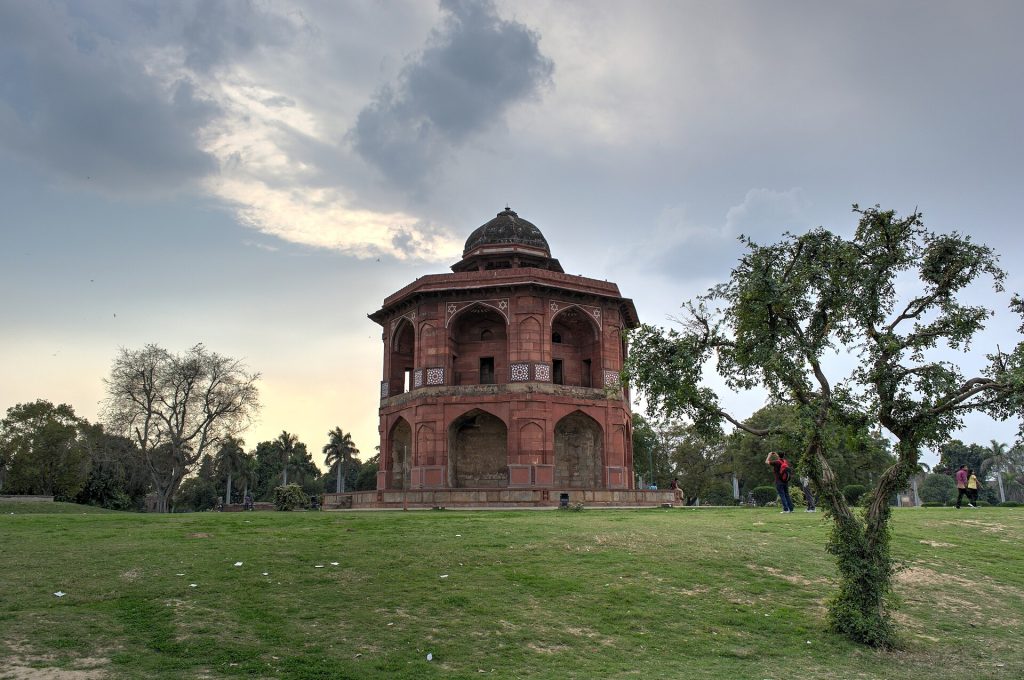
The forum runs from 20 to 22 November at Delhi’s historic Purana Qila, the 16th-century fort that gives the event its setting. Indian Prime Minister Narendra Modi is expected to open the forum.
Pakistan’s Foreign Office said the government “remains committed to promoting dialogue among civilisations and fostering people-to-people contacts within the SCO framework in a spirit of mutual respect.”
It is worth noting that India did not originally invite Mr Malik by name. According to The Statesman, New Delhi had invited Pakistan’s minister for national heritage and culture, Aurangzeb Khan Khichi, and Islamabad later chose Mr Malik instead. India had announced on 28 October that invitations had been extended to all SCO member states, including Pakistan, in keeping with established practice. At a press briefing on Friday, Indian foreign ministry spokesperson Randhir Jaiswal confirmed the invitations and said New Delhi looked forward to hosting the gathering.
For the background to the announcement itself, see our earlier report: Pakistan to Send a Minister to India for the First Time in Over Three Years for SCO Dialogue in New Delhi.
What is the SCO Civilisational Dialogue Forum?
The forum is a new idea, and this is its first edition. It was proposed by Prime Minister Modi at the SCO Council of Heads of State summit in Tianjin, China, in September 2025. India then offered to host the first meeting.
The SCO, or Shanghai Cooperation Organisation, is a regional group founded at a summit in Shanghai in 2001. Its members include China, Russia, India, Pakistan and the Central Asian states, along with Iran and Belarus. The group works on security, trade, energy and cultural cooperation across Eurasia.
This forum is different from the SCO’s usual security and trade meetings. It is about culture, history and ideas. Four areas are in focus: cultural expression, art and architecture, language and literature, and religious and philosophical traditions.
India invited culture-minister-level delegations from all SCO member states, as well as the group’s dialogue partners and one observer country. The idea, as India has presented it, is to use shared history and culture as a way to build understanding between countries that often disagree on politics.
That is exactly why the forum is interesting — and why it is controversial. It brings countries that are in conflict into the same room to talk about something other than the conflict itself.
Why the opposition is angry
To understand the Congress party’s reaction, you have to go back to April last year, when terrorists attacked tourists in the Baisaran Valley near Pahalgam in Indian-administered Kashmir. The attack, and the military confrontation between India and Pakistan that followed in May 2025, pushed relations between the two countries to one of their lowest points in years.
Since then, the Indian government has kept its distance from Pakistan. Official engagement has been largely confined to multilateral forums — meetings where both countries happen to be members, rather than meetings arranged between the two of them.
That is the background to Tewari’s question: “What has changed?” His argument is that if Pakistan has not expressed regret for the Pahalgam attack and has not acted against what India calls terrorist infrastructure, then inviting Pakistan to a high-profile event in Delhi sends the wrong signal.
Khurshid’s criticism was broader. He did not only object to this invitation; he said the government’s whole approach to Pakistan was unclear, and that the opposition could not judge a policy it could not see.
The government, for its part, has treated the invitation as a matter of protocol. India is hosting an SCO event, Pakistan is an SCO member, and members are invited as a matter of course. The forum is about culture, not about bilateral relations, and the invitation does not mean the two countries are resuming normal diplomatic contact.
That distinction — between a multilateral invitation and a bilateral opening — is the heart of the argument. The opposition says the public will not see it that way. The government says the distinction is real and well understood.
A short history of visits that changed nothing — and still mattered
The last few years have produced a pattern: rare, carefully managed visits between the two countries that produce headlines but no breakthrough.
In May 2023, Bilawal Bhutto-Zardari went to Goa for the SCO foreign ministers’ meeting. It was the first visit by a senior Pakistani official to India in about 12 years. There were no formal bilateral talks.
In October 2024, Indian External Affairs Minister S. Jaishankar visited Islamabad for an SCO Council of Heads of Government meeting. It was the first visit by an Indian foreign minister to Pakistan in nearly a decade. Again, there were no formal bilateral talks.
More recently, in late September 2026, India’s SCO National Coordinator, Alok Dimri, visited Islamabad for a preparatory meeting ahead of the next SCO summit. He told PTV News at the time: “This is my first time on Pakistani soil; these SCO-related programmes will continue throughout the year and culminate in the Islamabad summit.”
Each of these visits was small in itself. None of them reopened trade, restored full diplomatic ties, or led to a leaders’ meeting. But each one kept a channel open, and each one showed that the two countries could still sit in the same room when a regional organisation required it.
Mr Malik’s visit fits that pattern. It is not a bilateral visit. There is no announced meeting with an Indian minister on a one-to-one basis. But it is the first time in more than three years that a Pakistani minister will be on Indian soil, and that alone makes it significant.
Why this visit matters for Pakistan
For Pakistan, the visit has several layers of meaning.
First, it is a sign that Pakistan is still being treated as a normal member of the regional organisations it belongs to. Being invited, and accepting, is a basic part of membership. Staying away would have been the bigger statement.
Second, the visit comes at a moment when Pakistan is playing a larger regional role. Pakistan has assumed the rotating chairmanship of the SCO Council of Heads of State for the 2026–27 term, and it is scheduled to host the organisation’s summit in Islamabad in August 2027. How India responds to that summit — and whether its leaders travel to Islamabad — will be watched closely, and Mr Malik’s reception in Delhi this week may set the tone.
Third, the visit comes just after a busy diplomatic week in Islamabad. Pakistan hosted the 30th meeting of the Council of Ministers of the Economic Cooperation Organisation (ECO), a ten-member regional group, which ended on Monday, 16 November. For more on that meeting, see our report: Pakistan Hosts ECO Foreign Ministers in Islamabad: What the 30th Council Meeting Means for Regional Trade. The SCO forum is a different stage, but the message Pakistan wants to send is similar: it is an active, engaged member of the region’s institutions.
Fourth, there is a practical point. Pakistan’s Foreign Office has framed the visit in the language of dialogue between civilisations and people-to-people contact. That is deliberately soft language. It avoids the hard questions — Kashmir, terrorism, trade — and focuses on the one area where the two countries can still talk without a political cost.
What it means for India–Pakistan relations
The honest answer is: not very much, yet — and possibly more than it looks.
Nothing about this visit suggests that India and Pakistan are about to resume normal relations. Trade between the two countries remains suspended. There are no bilateral talks scheduled. The opposition row in Delhi shows how politically costly even a small step can be for the Indian government.
But the visit does keep something alive. The SCO has become the main place where the two countries still meet. Every visit under its umbrella, however modest, preserves the habit of contact. And habits matter in diplomacy: when the political moment finally changes, the countries that have kept talking find it easier to talk again.
There is also a specific reason to watch what happens in Delhi. Mr Malik’s participation is being viewed as a possible sign of Islamabad’s interest in easing tensions with New Delhi. It could also help create a friendlier atmosphere for India’s leadership to take part in the SCO summit that Islamabad will host next year. If the Delhi visit goes smoothly, it becomes easier for India to send a senior figure to Islamabad in August 2027. If it goes badly, the opposite is true.
What happens next
Several things are worth watching over the coming days:
First, whether the forum goes ahead as planned on 20 November, and whether Mr Malik travels as announced. A last-minute change would be a story in itself.
Second, whether Mr Malik meets any Indian minister on the sidelines. No bilateral meeting has been announced, but these events often produce informal conversations that are only reported afterwards.
Third, whether the opposition’s criticism grows louder or fades once the event begins. The Congress party’s questions are aimed at the government, but they also put pressure on the government to make sure the visit produces no images or statements that look like a concession.
Fourth, what Mr Malik himself says in Delhi. His remarks, and the way they are received in India and Pakistan, will shape how the visit is remembered.
And fifth, what this means for the SCO summit in Islamabad in August 2027. Pakistan will host, and India will have to decide at what level to attend. The events of this week will be part of that decision.
For now, the picture is simple: a Pakistani minister is going to Delhi for the first time in more than three years, to talk about culture and civilisation, and the trip has already become a political argument. In India–Pakistan relations, even a small step is never just a small step.
Frequently asked questions
Who is visiting India from Pakistan?
Climate Change Minister Dr Musadik Masood Malik will represent Pakistan at the SCO Civilisational Dialogue Forum in New Delhi from 20 to 22 November 2026.
Why is the visit significant?
It will be the first visit by a Pakistani federal minister to India since May 2023, when then foreign minister Bilawal Bhutto-Zardari visited Goa for an SCO meeting.
What is the SCO Civilisational Dialogue Forum?
It is a new forum proposed by Indian Prime Minister Narendra Modi at the SCO summit in Tianjin in September 2025. It focuses on cultural expression, art and architecture, language and literature, and religious and philosophical traditions. This is its first edition, hosted by India at the Purana Qila in Delhi.
Why is India’s opposition objecting?
Congress leaders, including MP Manish Tewari and former foreign minister Salman Khurshid, say the government has not explained what has changed since the Pahalgam terror attack in April last year to justify inviting Pakistan. They argue Pakistan has not expressed regret or acted against terrorist infrastructure.
Does the invitation mean India and Pakistan are resuming normal relations?
No. The invitation was extended to all SCO members as a matter of protocol for a multilateral event. Trade remains suspended, no bilateral talks have been announced, and official engagement is still largely confined to regional forums.
When will Pakistan host the SCO next?
Pakistan has assumed the rotating chairmanship of the SCO Council of Heads of State for the 2026–27 term and is scheduled to host the organisation’s summit in Islamabad in August 2027.
Sources
- Dawn — “Musadik nominated for SCO dialogue in New Delhi”
- The Week — “‘What has changed since Pahalgam?’: Opposition questions Modi govt over SCO invitation to Pakistan”
- NDTV — “‘What’s Your Policy?’ Opposition Attacks Centre Over SCO Invite To Pak”
- The Statesman — “Pakistan Minister Musadik Malik to visit Delhi for SCO Civilisational Dialogue Forum, first ministerial visit since 2023”
- Moneycontrol — “Oppn questions Centre over Pakistan’s SCO invite: ‘What has changed since Pahalgam?’”
This article is for general information and education only. It is not legal or financial advice.

Pingback: Pakistan Invites India and SCO Nations to Dialogue on Culture, Heritage and Climate Change - Findivoza